

Financial Literacy
Millennials: Which Money Milestones Matter vs. Peer Pressure

Where millennials stand: average millennial 401(k) $82,600–$94,300 (Fidelity-based), up 26.1% in a year; total 401(k) savings rate 14.4% for all savers (9.6% employee, 4.8% employer); median net worth $135,600 for ages 35–44 (average $549,600) and about $39,000 under 35 (2022 survey); 60.8% of households aged 35–44 owned a home in 2025; only 46% of Americans could cover three months of expenses. Debt and pressure points: card APR about 20.9%; ages 30–39 held $222.3 billion of card debt (Q2 2026); 50% of card holders aged 30–44 carried a balance; 19.7% of millennials have a 401(k) loan; Northwestern Mutual’s retirement “magic number” is $1.46 million; Fidelity counted 654,000 401(k) millionaires. My arithmetic: $5,000 at 20.9% costs $1,045 a year and takes 15 months to clear at $400 a month; a 4.8% employer match on a $75,000 salary is $3,600; $500 a month at 7% reaches about $900,500 from age 30, $610,000 from 35 and $405,000 from 40; $300 a month of “keeping up,” invested instead, would reach about $243,000 in 25 years.
This guide separates the milestones that genuinely change your financial life from those that mostly satisfy other people. It gives a priority order backed by 2026 data on savings, net worth, housing and debt, and works through the math so you can see what each choice costs. It does not tell you how to live; it tries to make sure that when you spend on something, you chose it.
But averages hide a lot. The average net worth for ages 35 to 44 was $549,600, more than four times the median, because a few very wealthy households pull it up. Cash is thin: the median bank balance for ages 35 to 44 was about $7,500 in 2022, and only 46% of Americans could cover three months of expenses, per Bankrate. Debt is real: ages 30 to 39 held $222.3 billion of card debt in the second quarter, and half of card holders aged 30 to 44 carried a balance, per a compilation of Fed data. Use the median, not the average, to see where you stand.
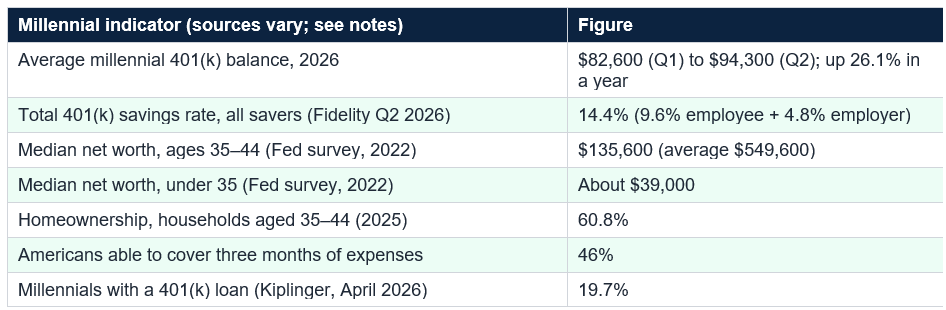
Median net worth for ages 35–44: $135,600 (average $549,600). Average millennial 401(k): $82,600–$94,300; total savings rate 14.4%. 60.8% of households aged 35–44 own a home. Only 46% of Americans could cover three months of expenses; card APR about 20.9%.
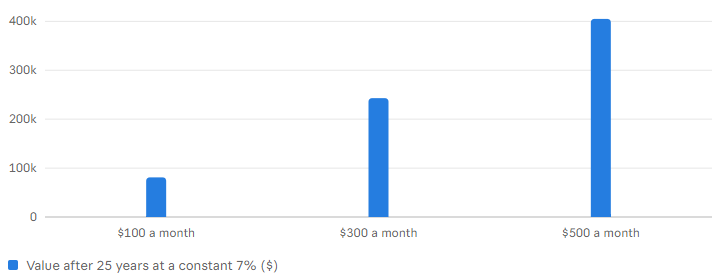
The cost of keeping up is concrete. In my arithmetic, $300 a month of spending you do not really value, invested at a constant 7% instead, would grow to about $243,000 in 25 years, from $90,000 contributed ($81,000 at $100 a month, $405,000 at $500). The returns are hypothetical, but small recurring spending adds up. The goal is not to spend nothing but to spend on purpose; a useful test is whether you would still want something if no one ever saw it.
Start small and automate: aim for $1,000 quickly, then build toward three months of essential spending. At $3,500 a month of essentials that is $10,500, which at $500 a month takes 21 months, and six months is $21,000. Keep it in an insured high-yield savings account, which paid about 4.35% at the top in early November. This milestone makes every other one safer, however dull it looks next to a vacation photo.
If you carry card debt, you are not alone: half of card holders aged 30 to 44 carried a balance, according to a compilation of Federal Reserve data. List your debts, pay minimums on all, put extra money on the highest rate and consider a lower-rate consolidation only if it truly lowers your cost. Student loans and mortgages at lower rates can be treated differently, depending on the rate.
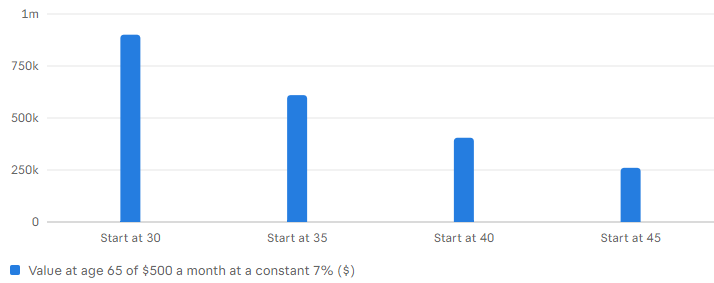
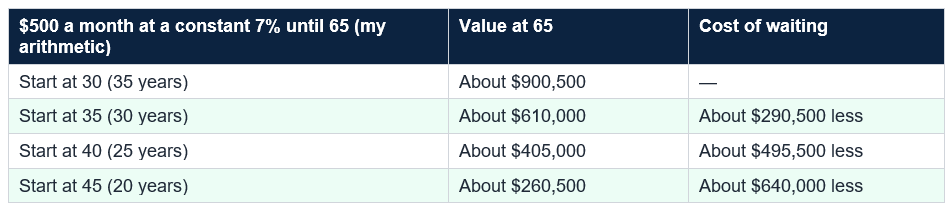
Starting early is the biggest lever. In my arithmetic, $500 a month at a constant 7% reaches about $900,500 by age 65 if you start at 30, about $610,000 at 35 and about $405,000 at 40: a five-year delay costs about $290,500 and a ten-year delay about $495,500. The returns are hypothetical, but the pattern is real, and if you are past 30, starting at 40 is still worth $405,000 in this example, far better than waiting.
Think of this stage as building a floor: a person with one can take risks, change jobs or buy a home with more confidence, while a person without one is a bad month from the debt cycle, however impressive their milestones look. It is also the stage to automate, so savings and debt payments leave your account on payday and your decisions do not rely on willpower. The less often you must decide, the less pressure can influence you.
A sensible test is readiness, not age. Do you have stable income, an emergency fund that survives the down payment and a payment you could carry if your income dipped? Have you compared renting and owning, including maintenance, and will you stay several years? If yes, buying may be a good step; if not, renting while you build savings is a legitimate choice, not a failure.
A useful habit is the sinking fund, a savings pot for a known future expense filled monthly: a $15,000 wedding in two years is about $625 a month, and a $4,000 trip in 12 months about $333, which makes the trade-off visible. When the monthly number hurts, adjust the plan instead of borrowing. Spend generously on milestones you truly value and cut the ones you only feel obliged to do.
The tell is how a goal feels when no one would know: if you would still want it in private, it is probably yours; if it matters only when others can see it, it is likely pressure. A household saving steadily, with a median net worth of $135,600 in the late 30s and early 40s, is doing something right, and the $549,600 average mostly reflects a few wealthy outliers.
Usually worth chasing Often mostly pressure
Then build a 12-month plan: month one, open a high-yield savings account and automate $200 or more; months two to six, finish the starter fund and attack the highest-rate debt; by month six, capture the full match; by month twelve, raise your savings rate by a point or two and review your goals. Plans work because they remove decisions, and pressure works because it adds them.
This week, set up one automatic transfer to a high-yield savings account, even $100. Next, find out your employer’s match and whether you are getting all of it. Those two steps beat any milestone on someone else’s list. Common mistakes include comparing yourself with averages and headlines, spending on milestones before building a cushion, buying a home by a deadline, ignoring the employer match, carrying card debt while investing, borrowing from your 401(k) and thinking it is too late; starting later still beats not starting.
The math shows what matters: a $5,000 card balance costs $1,045 a year, $500 a month from age 30 grows to about $900,500 against $405,000 from age 40 and $300 a month of keeping up, invested instead, would reach about $243,000 in 25 years. Decide what a good life means to you, fund it on purpose, automate the basics and let the comparison game go.
A starter emergency fund and getting out of high-interest debt, followed by capturing any employer 401(k) match, then building toward saving about 15% of income for retirement. These pay off whatever your life looks like, unlike milestones set by peers. Bankrate found only 46% of Americans could cover three months of expenses, and card interest near 20.9% costs more than most investments earn.
Do I need to own a home by 35?
No. About 60.8% of households headed by someone aged 35 to 44 owned their home in 2025, according to Census data cited by one site, which means roughly four in ten did not. Buying makes sense when you have stable income, an emergency fund after the down payment and a payment you can carry with margin. At a 7.24% mortgage rate, a $334,000 loan costs about $2,276 a month before taxes, insurance and repairs.
How much should a millennial have saved?
Averages mislead. Fidelity-based sources put the average millennial 401(k) at $82,600 to $94,300 in 2026, while the median net worth for households aged 35 to 44 was $135,600 in the Fed’s 2022 survey, against an average of $549,600. Compare yourself with your own plan, such as saving about 15% of income, not with social media or a headline number. This is general education, not personal advice.
Is it too late to start investing at 35 or 40?
No, but time matters. In my arithmetic, $500 a month at a constant 7% grows to about $900,500 if you start at 30, $610,000 at 35 and $405,000 at 40, by age 65. Each five-year delay costs a lot, but starting later is still far better than not starting. Increase contributions with every raise, and capture any employer match first.
How do I resist social pressure to spend?
Decide your priorities in advance and automate them: savings and debt payments leave your account before spending money does, and a monthly fun budget removes guilt and comparison. In my illustration, $300 a month of keeping up, invested instead at 7%, would grow to about $243,000 in 25 years. Define what a good life means for you and spend generously on that, not on what others post.
Table of Contents
- The Checklist You Never Wrote
- The Short Answer: A Priority Ladder
- Where Millennials Actually Stand
- Where the Pressure Comes From
- Priority 1: A Safety Net
- Priority 2: Escape High-Interest Debt
- Priority 3: The Match and a 15% Habit
- Priority 4: A Full Emergency Fund and the Basics
- The Home Question
- Weddings, Kids and Trips: Milestones With a Budget
- Milestones That Are Mostly Pressure
- A Simple Decision Framework
- Common Mistakes
- Conclusion
- Frequently Asked Questions
Time is the biggest lever: $500 a month at 7% until age 65, by starting age ($)
Value at 65 ($) by Author's hypothetical arithmetic with monthly compounding; a five-year delay from 30 costs about $290,500 and a ten-year delay about $495,500; not a forecast
The price of keeping up: what monthly spending could grow to if invested for 25 years ($)
Value after 25 years ($) by Author's hypothetical arithmetic (7% constant return, monthly compounding); contributions would be $30,000, $90,000 and $150,000; the point is intentional spending, not zero spending
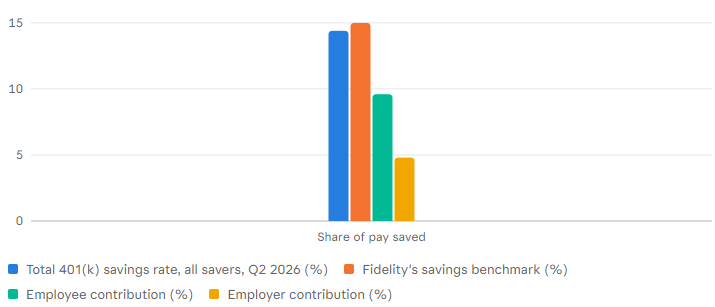
Closer than you think: 401(k) savings rate vs. the 15% benchmark (% of pay)
% of pay by Fidelity Q2 2026 retirement analysis: 14.4% total (9.6% employee + 4.8% employer) for all 401(k) savers, not millennials alone; Fidelity's recommended benchmark is 15% a year
The Checklist You Never Wrote
Most of us carry an invisible checklist of money milestones: buy a home by 30, have a wedding that photographs well, have kids on schedule, hit a million by 40, take the trips, drive something nice. Nobody wrote it down, yet it feels as if everyone else is ticking boxes, because people online show the boxes they have ticked, not the debt behind them. For millennials, now roughly 30 to 45, the checklist has collided with student loans, high home prices and a decade of inflation.This guide separates the milestones that genuinely change your financial life from those that mostly satisfy other people. It gives a priority order backed by 2026 data on savings, net worth, housing and debt, and works through the math so you can see what each choice costs. It does not tell you how to live; it tries to make sure that when you spend on something, you chose it.
The Short Answer: A Priority Ladder
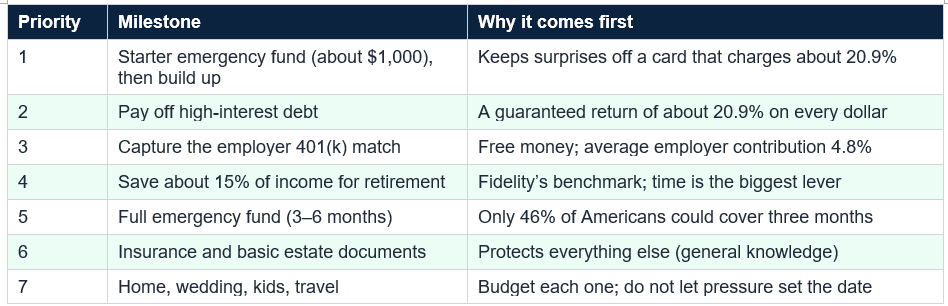
Do the unglamorous things first: build a starter emergency fund, clear high-interest debt, capture any employer 401(k) match, work up to saving about 15% of income for retirement and then grow your emergency fund to three to six months of expenses. Those moves pay off whatever your life looks like. A home, a wedding, children and travel are legitimate goals, but each deserves a budget and a timeline you can afford, not one set by peers, and milestones like a million dollars by 40 are mostly benchmarks, not requirements.
Where Millennials Actually Stand
The data give a more forgiving picture than social media. Fidelity’s Q2 2026 analysis found the average millennial 401(k) balance rose 14.2% in the quarter and 26.1% in a year, with Fidelity-based sources putting it at $82,600 (Q1) and $94,300 (Q2). The total savings rate for 401(k) savers, 14.4%, is a record, driven by a 9.6% employee rate and a 4.8% employer match, close to Fidelity’s 15% benchmark. The Federal Reserve’s latest survey, from 2022, found a median net worth of $135,600 for households aged 35 to 44 and about $39,000 under 35.But averages hide a lot. The average net worth for ages 35 to 44 was $549,600, more than four times the median, because a few very wealthy households pull it up. Cash is thin: the median bank balance for ages 35 to 44 was about $7,500 in 2022, and only 46% of Americans could cover three months of expenses, per Bankrate. Debt is real: ages 30 to 39 held $222.3 billion of card debt in the second quarter, and half of card holders aged 30 to 44 carried a balance, per a compilation of Fed data. Use the median, not the average, to see where you stand.
Median net worth for ages 35–44: $135,600 (average $549,600). Average millennial 401(k): $82,600–$94,300; total savings rate 14.4%. 60.8% of households aged 35–44 own a home. Only 46% of Americans could cover three months of expenses; card APR about 20.9%.
Where the Pressure Comes From
Pressure has recognizable sources. Benchmarks are one: Northwestern Mutual’s 2026 retirement “magic number” is $1.46 million and Fidelity counts 654,000 401(k) millionaires, headlines that can make a typical balance feel like failure. Homeownership is another: 60.8% of households aged 35 to 44 own, which can make the rest feel behind, though renting is a normal choice. Social media adds a constant stream of weddings, trips and purchases; I did not retrieve a reliable 2026 survey quantifying its effect on spending, so I claim no number.The cost of keeping up is concrete. In my arithmetic, $300 a month of spending you do not really value, invested at a constant 7% instead, would grow to about $243,000 in 25 years, from $90,000 contributed ($81,000 at $100 a month, $405,000 at $500). The returns are hypothetical, but small recurring spending adds up. The goal is not to spend nothing but to spend on purpose; a useful test is whether you would still want something if no one ever saw it.
Priority 1: A Safety Net
The first milestone is the least photogenic: a starter emergency fund. Bankrate found 47% of Americans could cover a $1,000 emergency, 46% three months of expenses and only 27% six months. Without a cushion, every surprise lands on a credit card or a retirement loan, and Kiplinger reported that 19.7% of millennials have an outstanding 401(k) loan. A cushion keeps you from borrowing at 20% or raiding your future.Start small and automate: aim for $1,000 quickly, then build toward three months of essential spending. At $3,500 a month of essentials that is $10,500, which at $500 a month takes 21 months, and six months is $21,000. Keep it in an insured high-yield savings account, which paid about 4.35% at the top in early November. This milestone makes every other one safer, however dull it looks next to a vacation photo.
Priority 2: Escape High-Interest Debt
Next, high-interest debt. The average card APR was about 20.9% in the second quarter, so a $5,000 balance costs about $1,045 a year in interest, three times the $350 that $5,000 earns at a 7% market return in my arithmetic. Paying it off is a guaranteed 20.9% return: at $400 a month the balance takes 15 months to clear, with about $688 of interest. That beats almost any investment, which is why it ranks above investing beyond the employer match.If you carry card debt, you are not alone: half of card holders aged 30 to 44 carried a balance, according to a compilation of Federal Reserve data. List your debts, pay minimums on all, put extra money on the highest rate and consider a lower-rate consolidation only if it truly lowers your cost. Student loans and mortgages at lower rates can be treated differently, depending on the rate.
Priority 3: The Match and a 15% Habit
Once you have a starter cushion, take the employer match, which is free money. Fidelity reports an average employer contribution of 4.8%, so on a $75,000 salary that is $3,600 a year, but only if you contribute enough to receive it. Then work toward Fidelity’s benchmark of about 15% of income, $11,250 a year on $75,000, including the match; the record 14.4% total rate means many people are close. Increase your rate with each raise.Starting early is the biggest lever. In my arithmetic, $500 a month at a constant 7% reaches about $900,500 by age 65 if you start at 30, about $610,000 at 35 and about $405,000 at 40: a five-year delay costs about $290,500 and a ten-year delay about $495,500. The returns are hypothetical, but the pattern is real, and if you are past 30, starting at 40 is still worth $405,000 in this example, far better than waiting.
Priority 4: A Full Emergency Fund and the Basics
With the match captured and debt under control, build the emergency fund to three to six months of essential spending, which is more than most Americans have. Then cover the basics that protect everything else: health insurance, disability and life insurance if others depend on your income and simple estate documents such as a will and beneficiary designations (general knowledge). Nobody posts about these, but they prevent a setback from becoming a disaster and make later milestones, such as a home or a family, safer.Think of this stage as building a floor: a person with one can take risks, change jobs or buy a home with more confidence, while a person without one is a bad month from the debt cycle, however impressive their milestones look. It is also the stage to automate, so savings and debt payments leave your account on payday and your decisions do not rely on willpower. The less often you must decide, the less pressure can influence you.
The Home Question
Homeownership is the milestone with the most social weight. About 60.8% of households aged 35 to 44 owned a home in 2025, per a compilation of Census data, so roughly four in ten did not, and many are doing fine. Buying can build equity and stability, but at a 7.24% mortgage rate (late October) the principal and interest on a $334,000 loan is about $2,276 a month, before taxes, insurance and repairs, and a home is a large, concentrated, hard-to-sell asset.A sensible test is readiness, not age. Do you have stable income, an emergency fund that survives the down payment and a payment you could carry if your income dipped? Have you compared renting and owning, including maintenance, and will you stay several years? If yes, buying may be a good step; if not, renting while you build savings is a legitimate choice, not a failure.
Weddings, Kids and Trips: Milestones With a Budget
Weddings, children and trips are among life’s best moments, and they are worth money; the problem is spending by default. Give each one a budget before you plan, fund it in advance in a separate savings account and agree on the number with your partner. Children bring recurring costs, so build the cushion first, and trips are easiest to control with a monthly fun-money line.A useful habit is the sinking fund, a savings pot for a known future expense filled monthly: a $15,000 wedding in two years is about $625 a month, and a $4,000 trip in 12 months about $333, which makes the trade-off visible. When the monthly number hurts, adjust the plan instead of borrowing. Spend generously on milestones you truly value and cut the ones you only feel obliged to do.
Milestones That Are Mostly Pressure
Some milestones are more about status than finances. A million dollars by 40 is a benchmark: the Northwestern Mutual magic number of $1.46 million is about 10.8 times the median net worth for ages 35 to 44 of $135,600, which shows how far headline numbers sit from typical households. A particular car, a big home or a perfect lifestyle are choices, not requirements, and early retirement can be a worthwhile goal as a plan, not a race against strangers online.The tell is how a goal feels when no one would know: if you would still want it in private, it is probably yours; if it matters only when others can see it, it is likely pressure. A household saving steadily, with a median net worth of $135,600 in the late 30s and early 40s, is doing something right, and the $549,600 average mostly reflects a few wealthy outliers.
Usually worth chasing Often mostly pressure
A Simple Decision Framework
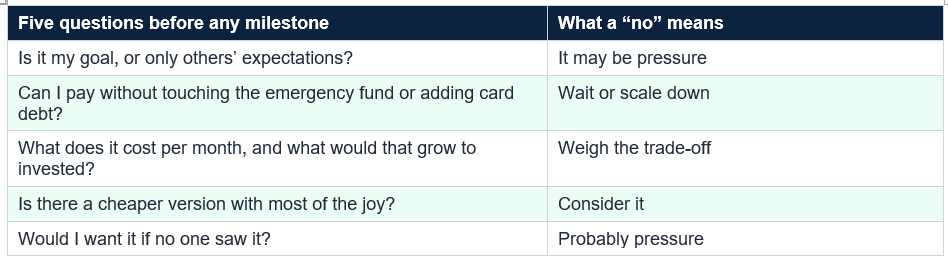
When a milestone tempts you, ask five questions (in the table below). If it passes, spend with a clear conscience; if not, wait, scale down or skip.Then build a 12-month plan: month one, open a high-yield savings account and automate $200 or more; months two to six, finish the starter fund and attack the highest-rate debt; by month six, capture the full match; by month twelve, raise your savings rate by a point or two and review your goals. Plans work because they remove decisions, and pressure works because it adds them.
This week, set up one automatic transfer to a high-yield savings account, even $100. Next, find out your employer’s match and whether you are getting all of it. Those two steps beat any milestone on someone else’s list. Common mistakes include comparing yourself with averages and headlines, spending on milestones before building a cushion, buying a home by a deadline, ignoring the employer match, carrying card debt while investing, borrowing from your 401(k) and thinking it is too late; starting later still beats not starting.
Conclusion
The milestones millennials should prioritize are the least glamorous: a starter emergency fund, an exit from high-interest debt, the full employer match, a steady 15% savings habit and a three-to-six-month cushion. They protect and grow everything else. Homes, weddings, children and travel are real goals, but each deserves a budget and a timeline you choose. The data are kinder than the posts: median net worth for ages 35 to 44 was $135,600, about 39% of that age group do not own a home and total 401(k) saving is at a record 14.4%.The math shows what matters: a $5,000 card balance costs $1,045 a year, $500 a month from age 30 grows to about $900,500 against $405,000 from age 40 and $300 a month of keeping up, invested instead, would reach about $243,000 in 25 years. Decide what a good life means to you, fund it on purpose, automate the basics and let the comparison game go.
Frequently Asked Questions
Which money milestone should millennials prioritize first?A starter emergency fund and getting out of high-interest debt, followed by capturing any employer 401(k) match, then building toward saving about 15% of income for retirement. These pay off whatever your life looks like, unlike milestones set by peers. Bankrate found only 46% of Americans could cover three months of expenses, and card interest near 20.9% costs more than most investments earn.
Do I need to own a home by 35?
No. About 60.8% of households headed by someone aged 35 to 44 owned their home in 2025, according to Census data cited by one site, which means roughly four in ten did not. Buying makes sense when you have stable income, an emergency fund after the down payment and a payment you can carry with margin. At a 7.24% mortgage rate, a $334,000 loan costs about $2,276 a month before taxes, insurance and repairs.
How much should a millennial have saved?
Averages mislead. Fidelity-based sources put the average millennial 401(k) at $82,600 to $94,300 in 2026, while the median net worth for households aged 35 to 44 was $135,600 in the Fed’s 2022 survey, against an average of $549,600. Compare yourself with your own plan, such as saving about 15% of income, not with social media or a headline number. This is general education, not personal advice.
Is it too late to start investing at 35 or 40?
No, but time matters. In my arithmetic, $500 a month at a constant 7% grows to about $900,500 if you start at 30, $610,000 at 35 and $405,000 at 40, by age 65. Each five-year delay costs a lot, but starting later is still far better than not starting. Increase contributions with every raise, and capture any employer match first.
How do I resist social pressure to spend?
Decide your priorities in advance and automate them: savings and debt payments leave your account before spending money does, and a monthly fun budget removes guilt and comparison. In my illustration, $300 a month of keeping up, invested instead at 7%, would grow to about $243,000 in 25 years. Define what a good life means for you and spend generously on that, not on what others post.
0 Comments
Be the first to share your thoughts on this article.