

Investing
What Is Online Stock Trading? Accountant Explains

Table of Contents
- From Wall Street to Your Smartphone
- What Is Online Stock Trading?
- How Does Online Stock Trading Work? The Step-by-Step Mechanics
- Trading vs Investing: A Critical Distinction
- Types of Online Stock Trading: From Day Trading to Index Investing
- The Five Essential Order Types Every Trader Must Know
- How to Start Online Stock Trading: The Step-by-Step Beginner Checklist
- Step 1: Choose Your Trading Platform
- Step 2: Open and Fund Your Account
- Step 3: Learn Before You Trade with Real Money
- Step 4: Start Small and Diversify
- Tax on Online Stock Trading: UK and US Essentials
- United Kingdom
- United States
- Conclusion
- Frequently Asked Questions (FAQ)
- What is online stock trading?

From Wall Street to Your Smartphone
Two decades ago, buying shares in a public company required a telephone call to a stockbroker, who would place the order on your behalf and charge a commission that made small transactions economically unviable. The barrier to stock market participation was high, the process was opaque, and the knowledge required to navigate it was either expensive to acquire or locked behind professional qualifications. That world has been replaced entirely. In 2026, anyone with a smartphone and a few pounds or dollars can buy a fractional share of Apple, Nvidia, or the entire S&P 500 index in under two minutes, commission-free, from a platform that provides real-time prices, company research, tax reports, and portfolio analytics in one interface.Online stock trading is the process of buying and selling publicly listed shares and other financial instruments — including ETFs, bonds, and derivatives — through internet-based platforms, without requiring a physical broker intermediary. The NYSE reported average daily trading volume of approximately 1.54 billion shares valued at $80.6 billion in mid-November 2025. Nasdaq, home to most major technology companies, often surpasses 9 billion shares traded per day. The US stock market capitalisation is expected to reach $60.4 trillion by 2026, according to Statista. The global online trading platform market itself — the software, apps, and services that enable retail participation in these markets — was valued at $11.57 billion in 2026, projected to reach $18.50-19.87 billion by 2033-2034.
This guide explains online stock trading comprehensively for anyone approaching it fresh in 2026: what it is, how the markets work, the types of trading from day trading to long-term investing, the order types that control every transaction, how to open a trading account in the UK and US, the key platforms available, the tax implications in both countries, the statistics on who is trading and how, and the critical risk realities that every new trader needs to understand before committing capital.
What Is Online Stock Trading?
Online stock trading is the process of buying and selling shares in publicly listed companies — and, more broadly, any tradeable financial asset including ETFs, bonds, indices, commodities, and derivatives — through an internet-connected platform provided by a regulated broker or investment platform. NIFMA Academy's 2026 beginners' guide defines it in its most useful form: 'Online trading is the process of buying and selling financial assets like stocks using internet-based platforms. In simple words, online trading gives you direct control over your investments without needing a middleman.'When you buy a share in a company through an online platform, you are purchasing a small ownership stake in that business. LiteFinance's April 2026 guide articulates what share ownership means: 'A stock is a security that represents ownership in a company, allowing an investor to participate in its performance and receive dividends. Stock trading involves buying and selling shares. Unlike currency trading, it gives you ownership of a stake in a business and the right to receive a portion of the company's profits if it pays dividends.' As a shareholder, you benefit from two potential sources of return: capital appreciation if the share price rises above your purchase price, and dividend income if the company distributes a portion of its profits to shareholders.
The mechanics of online stock trading flow through four interconnected components: the stock exchange (such as the NYSE, Nasdaq, or the London Stock Exchange), which provides the regulated marketplace where buyers and sellers meet; the broker or trading platform, which connects individual investors to the exchange; the trading account, through which you place orders and hold your investments; and the clearing and settlement system, which ensures that after a trade executes, the shares are transferred to the buyer and the cash is transferred to the seller (standard settlement is T+1 in the US — one business day after the trade — and T+2 in most European markets including the UK, though the UK has announced plans to move to T+1).
The scale of modern online trading: NYSE: $80.6 billion traded daily. US market cap: $60.4 trillion. Online trading platform market: $11.57 billion in 2026. — BestBrokers (January 2026): NYSE average daily trading volume approximately 1.54 billion shares valued at $80.6 billion in mid-November 2025. Nasdaq often surpasses 9 billion shares/day. Statista: US stock market capitalisation expected to reach $60.4 trillion by 2026. Fortune Business Insights: global online trading platform market $11.57 billion in 2026, growing to $18.50 billion by 2034 at 6% CAGR. BestBrokers (June 11, 2026): retail investors contributed approximately $20 billion in net stock purchases; Goldman Sachs forecast $425 billion in inflows by end of 2025
How Does Online Stock Trading Work? The Step-by-Step Mechanics
The process of making an online trade is now remarkably simple at the user interface level — but understanding the mechanics behind each step ensures you know what you are doing and why:- Choose an asset: Select the stock, ETF, or other instrument you want to buy or sell. You identify it by its ticker symbol (AAPL for Apple, NVDA for Nvidia, VOD for Vodafone on the LSE). The platform displays the current bid price (what buyers are offering) and ask price (what sellers are asking) — the spread between these two is one of the costs of trading.
- Decide the direction: Online platforms allow you to go long (buy, expecting the price to rise) or, on some platforms and instruments including CFDs and spread bets, go short (sell without owning the asset, expecting the price to fall). For most beginners buying shares outright, the direction is long — you buy and hope to sell later at a higher price. IG International: 'When you trade on shares, you'll take a long or short position and your profit — or loss — will depend on your prediction.'
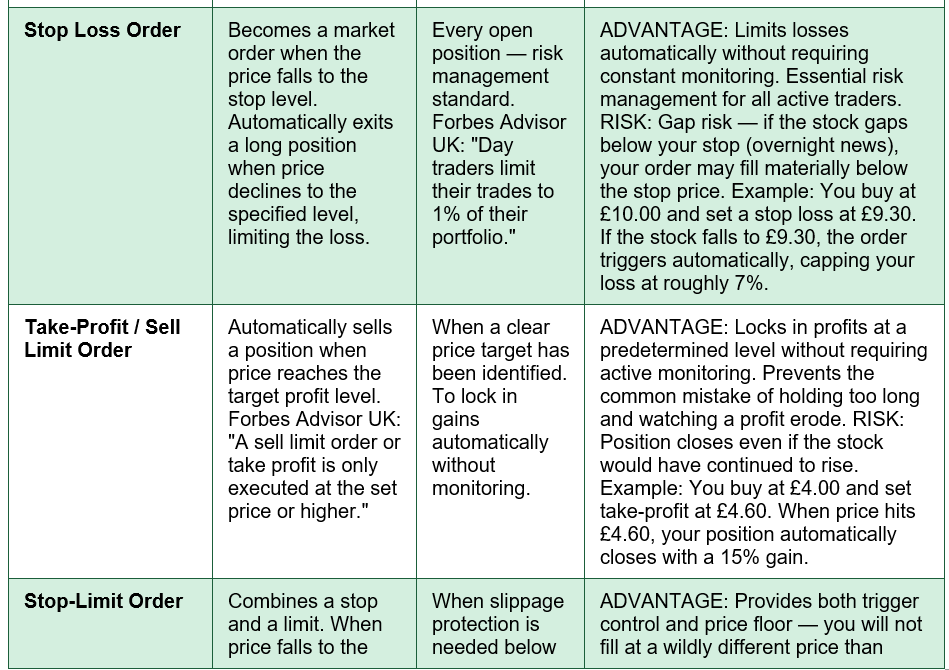
- Choose your order type: The order type determines at what price and under what conditions your trade executes. The five main order types are covered in detail later in this guide: market, limit, stop loss, take-profit, and stop-limit. Beginners typically start with market orders (immediate execution) and limit orders (price-specific execution). Always set a stop loss on any active trade position.
- Set your position size: Decide how many shares you are buying. On platforms supporting fractional shares (Trading 212, Freetrade, Robinhood, Fidelity), you can buy a fraction of a share — useful when high-priced stocks like Amazon ($200+) or Nvidia ($100+) would otherwise require large capital commitments. Forbes Advisor UK advises: 'As a rule of thumb, day traders limit their trades to an amount equal to 1% of their portfolios to minimise losses.' This sizing discipline applies to all active trading, not just day trading.
- Execute the trade: Click Buy or Sell. The platform routes your order to the exchange (for exchange-traded instruments) or executes it internally against the platform's inventory (for CFDs and OTC instruments). For a market order in a liquid stock, execution happens in milliseconds.
- Monitor and manage: After execution, your position appears in your portfolio. You monitor it against your original thesis and manage it according to your predetermined stop loss and take-profit levels. When you decide to close the position — whether at a profit or a loss — you execute the opposite order (sell to close a long position; buy to close a short position).
Trading vs Investing: A Critical Distinction
Before going further, it is essential to clarify a distinction that many beginners conflate. Forbes Advisor UK articulates it directly: 'As a starting point, it is important to understand the difference between the terms trading and investing. Ultimately, they refer to the length of time that shares are held. Day traders usually buy and sell shares within a short period, often less than 24 hours, whereas investors tend to work on a buy and hold strategy, with shares held for periods often lasting several years.'Trading is active management of positions with the goal of profiting from short-term price movements — whether intraday (day trading), over days and weeks (swing trading), or months (position trading). Trading requires more time, knowledge, and psychological discipline than investing. It involves careful analysis of price charts, market conditions, earnings calendars, and macroeconomic news. It also involves accepting more frequent losses as a normal part of the process, as no strategy wins on every trade.
Investing is the long-term commitment of capital to assets — typically through a buy-and-hold strategy in quality companies or diversified index funds — with the expectation of growing wealth over years and decades through capital appreciation and dividend income. Investing requires less active monitoring than trading and is more forgiving of individual bad decisions in a diversified portfolio. The evidence overwhelmingly supports long-term investing as the approach most likely to generate positive real returns for ordinary individuals.
Who is trading online in 2026? The demographics of online stock trading have shifted dramatically over the past decade. BestBrokers (June 11, 2026): 'In 2025, the face of stock trading is no longer defined by Wall Street brokers in suits or exclusive financial hubs. The modern trader is just as likely to be a 23-year-old in Mumbai, a mother of two investing from her Toronto condo, or a college student trading on an app on their phone.' Key 2026 statistics: 40% of day traders are aged 25-34; retail investors contributed $20 billion in net stock purchases over a recent three-month period; US households now own 38% of directly held US equities (SIFMA); mobile apps captured 54% of the US online trading platform market in 2024; the female investor base at UK platform Nutmeg rose from 24% in 2013 to 41% in 2025 — the gender gap in investing is narrowing significantly.
Types of Online Stock Trading: From Day Trading to Index Investing
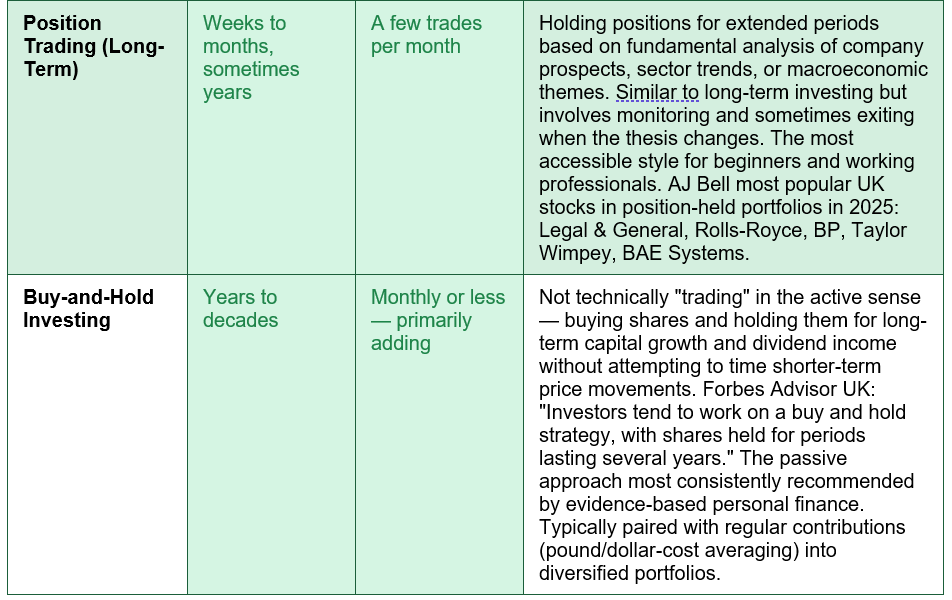
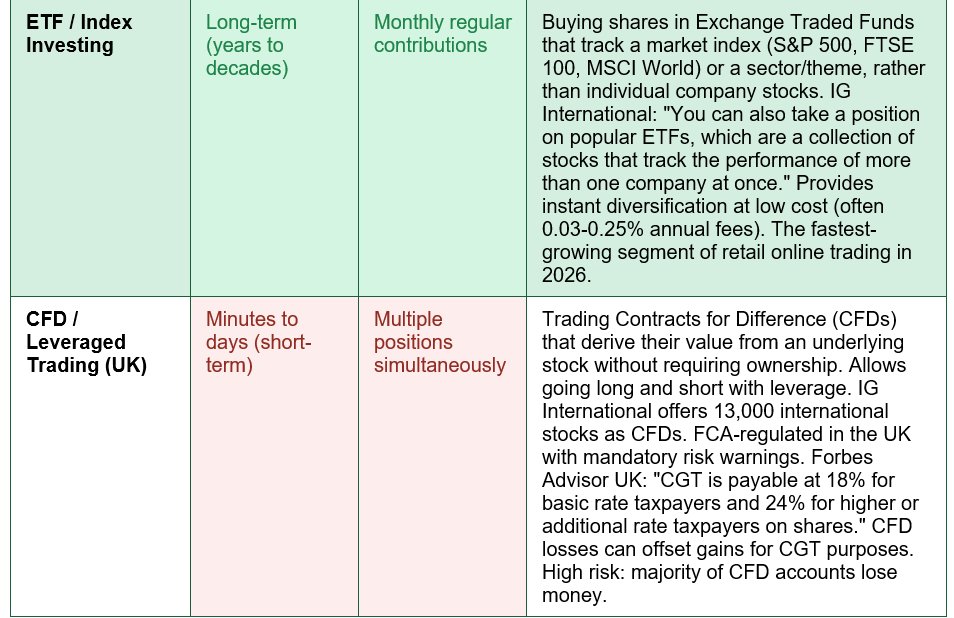
Online stock trading encompasses a wide spectrum of styles and time horizons. Understanding which approach suits your time availability, financial knowledge, and risk tolerance is one of the most important decisions any new market participant makes: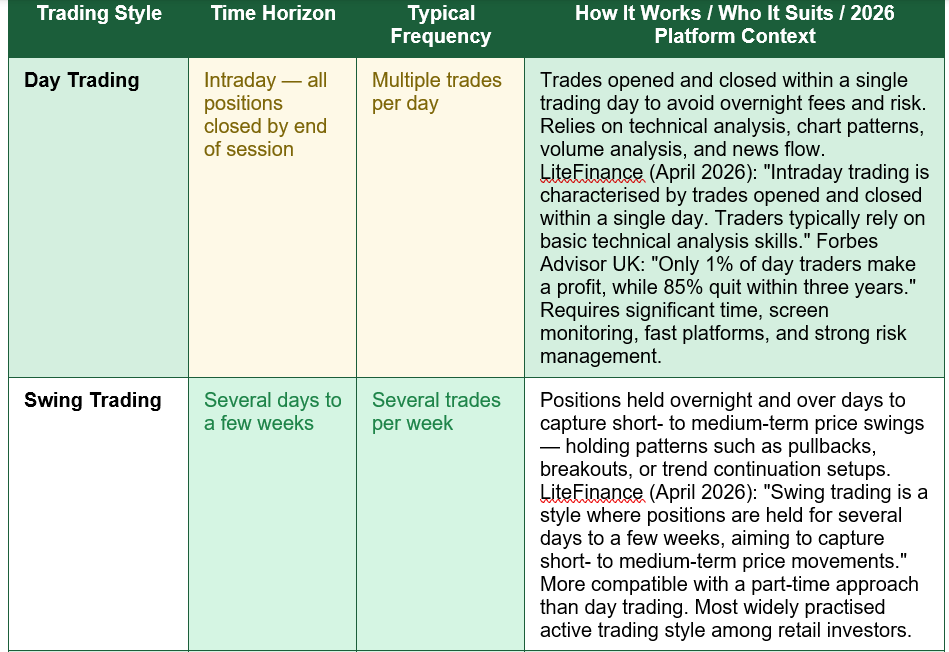
The Five Essential Order Types Every Trader Must Know
Every online trade is executed through a specific order type that determines when, at what price, and under what conditions the transaction occurs. Understanding order types is foundational — using the wrong order type in the wrong market condition is one of the most common and most costly beginner mistakes: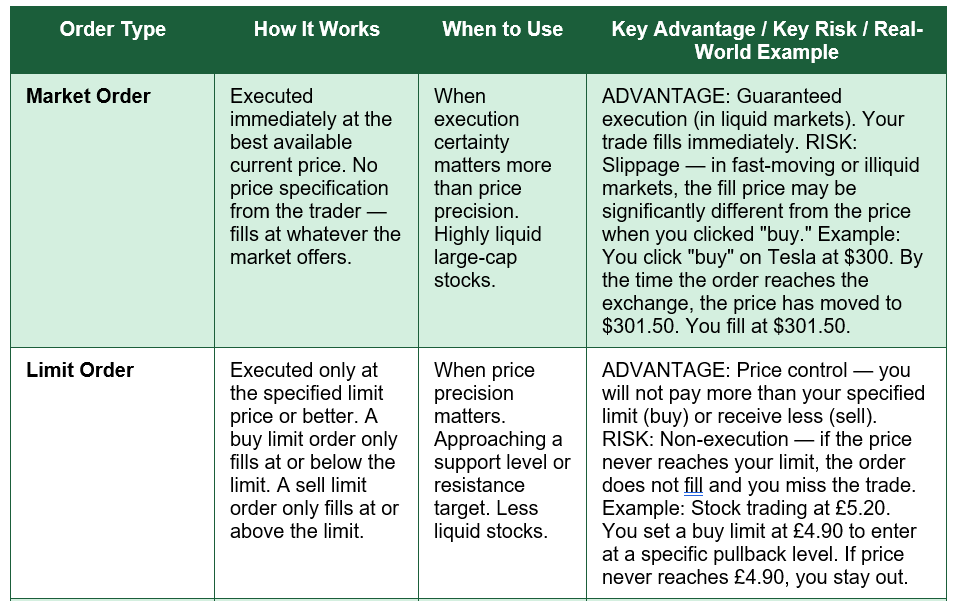

How to Start Online Stock Trading: The Step-by-Step Beginner Checklist
Step 1: Choose Your Trading Platform
The platform choice is one of the most consequential early decisions. Key criteria: regulation (in the UK, all platforms must be FCA-authorised; in the US, FINRA and SEC regulated); fees (commission per trade, platform fee, foreign exchange conversion fees, withdrawal fees); asset coverage (UK stocks only, or US stocks, ETFs, and global markets?); account types offered (Stocks and Shares ISA, SIPP, general dealing account in the UK; Roth IRA, Traditional IRA, taxable brokerage in the US); minimum deposit; and quality of research and educational tools.Popular UK platforms in 2026 include Hargreaves Lansdown (largest UK retail platform, wide asset coverage, higher fees), AJ Bell (strong ISA and SIPP offering, competitive fees), Freetrade (commission-free, app-based, fractional shares), Trading 212 (commission-free, fractional shares, ISA), and Vanguard UK (best for ETF-focused buy-and-hold investors, very low fees on Vanguard funds). For US investors: Fidelity, Charles Schwab, and Robinhood for commission-free retail trading; Interactive Brokers for sophisticated multi-market access.
Step 2: Open and Fund Your Account
Account opening is entirely online for most platforms: personal identification (passport or driving licence), address verification, National Insurance number (UK) or Social Security Number (US), and bank account linking. UK investors should open a Stocks and Shares ISA as their first account — all capital gains and dividend income within the ISA are completely exempt from tax, up to the £20,000 annual allowance in 2025/26. Forbes Advisor UK: 'It makes sense to use up your tax-free annual stocks and shares ISA allowance of £20,000 first.' For US investors, a Roth IRA ($7,000 annual contribution limit, 2026) provides tax-free growth on all gains.Step 3: Learn Before You Trade with Real Money
Most reputable platforms offer demo accounts funded with virtual money — allowing new traders to practice placing orders, managing positions, and testing strategies without any real capital at risk. IG International: 'Your account will be credited with $20,000 in virtual funds to practise without having to risk any real money.' Demo accounts are essential for beginners. The transition to live trading should only occur after you have demonstrated consistent profitable performance in the demo environment and have a clear understanding of risk management.Step 4: Start Small and Diversify
When transitioning to live trading, begin with small position sizes and spread capital across multiple assets rather than concentrating in one stock. For buy-and-hold investors, a low-cost global equity ETF (such as Vanguard's FTSE All-World ETF or iShares MSCI World ETF) provides instant diversification across thousands of companies in one purchase. For active traders, start with highly liquid, large-cap stocks (Apple, Microsoft, HSBC) where bid-ask spreads are tighter and information is more readily available.THE MOST POPULAR STOCKS AMONG UK AND US ONLINE TRADERS IN 2025: Forbes Advisor UK (June 2026) reports the most popular UK-listed stocks among AJ Bell's DIY investors in 2025: Legal & General, Rolls-Royce, BP, Taylor Wimpey, and BAE Systems. The most popular US-listed stocks among the same UK retail investors: Nvidia, Tesla, Strategy (formerly MicroStrategy), Amazon, and Palantir. In the US, BestBrokers (January 2026) found that nine of the ten most actively traded stocks by value in mid-November 2025 were Nasdaq-listed, with Nvidia, Tesla, and Amazon consistently among the highest-volume names. The Information Technology sector held the highest S&P 500 weighting (36.12%) and consistently dominated daily trading turnover in late 2025.
Tax on Online Stock Trading: UK and US Essentials
United Kingdom
UK investors face two main taxes on stock trading profits: Capital Gains Tax (CGT) and Income Tax on dividends. CGT applies when you sell shares at a profit. Forbes Advisor UK (June 2026): 'CGT is payable at 18% for basic rate taxpayers and 24% for higher or additional rate taxpayers on shares (2025/2026). The annual tax-free allowance is £3,000.' The £3,000 annual CGT allowance has been significantly reduced from £12,300 in 2020/21 — UK investors now need to be more careful about realising gains outside tax-advantaged wrappers.The UK Stocks and Shares ISA provides complete exemption from both CGT and income tax on all investments held within it — making it the most important tool for any UK retail investor. Within the £20,000 annual ISA allowance, all trading profits, dividends, and interest are tax-free regardless of amount. UK investors should fully utilise their ISA allowance before trading in taxable accounts. Stamp Duty Reserve Tax (SDRT) of 0.5% applies on purchases of UK-listed shares in a regular account — but not within an ISA, and not on ETFs traded on the LSE. There is no SDRT on purchases of US or other overseas shares.
United States
US investors pay Capital Gains Tax on profits from selling shares. Short-term capital gains (assets held under one year) are taxed at ordinary income rates (up to 37%). Long-term capital gains (assets held over one year) are taxed at preferential rates of 0%, 15%, or 20% depending on income level, plus a potential 3.8% Net Investment Income Tax (NIIT) for high earners. The tax incentive to hold investments for over 12 months is one of the strongest structural reasons to prefer long-term investing over short-term trading for US residents. Roth IRA and Traditional IRA accounts provide tax-advantaged environments for US investors: Roth IRA contributions are after-tax but all growth and qualified withdrawals are tax-free; Traditional IRA contributions may be tax-deductible and grow tax-deferred.THE HARD TRUTH ABOUT ACTIVE TRADING: Online trading is far more accessible in 2026 than at any point in history. But accessibility has not changed the underlying statistical reality of active trading outcomes. Forbes Advisor UK cites Day Trade Review: 'Only 1% of day traders make a profit, while 85% of day traders quit within the first three years.' The majority of short-term active traders underperform the market on a risk-adjusted basis, with most losing money net of trading costs, taxes, and the psychological costs of managing losing positions. This does not mean online trading is inaccessible or impossible to do profitably — it means it requires the same level of preparation, study, and discipline as any other skilled professional pursuit. The alternative — a long-term, low-cost, diversified buy-and-hold approach through an ISA or Roth IRA — has a far stronger statistical track record for the majority of individual investors. The decision of whether to actively trade or passively invest is one of the most consequential financial decisions any individual makes, and should be approached with clear-eyed assessment of the evidence.
Conclusion
Online stock trading is the process of buying and selling shares and other financial instruments through internet-based platforms — giving individual investors direct access to the same markets that were once exclusively the domain of professional brokers and institutional capital. The numbers confirm its scale: the NYSE processes $80.6 billion in daily transactions; the US equity market capitalisation stands at $60.4 trillion; the global online trading platform market was valued at $11.57 billion in 2026; and 40% of active day traders are between 25 and 34 years old. What was once a specialist activity for the wealthy and professionally qualified has become an accessible, affordable, and widely adopted form of financial participation.The spectrum of online trading styles — from day trading (same-day open and close), through swing trading (days to weeks), position trading (weeks to months), and long-term buy-and-hold investing — reflects the breadth of approaches that the same online platforms now support. For most beginners, the evidence strongly supports beginning at the long-duration end of that spectrum: diversified buy-and-hold investing in low-cost ETFs within a tax-advantaged wrapper (UK Stocks and Shares ISA, SIPP; US Roth IRA, 401(k)), gradually learning market mechanics and building a track record in a demo account before committing to active trading strategies.
The five order types — market, limit, stop loss, take-profit, and stop-limit — are the practical tools through which every online trader controls how, when, and at what price their trades execute. Understanding them fully, using stop losses on every active position, and sizing positions in line with a defined risk management framework are the non-negotiable foundations of responsible online trading. The 1% of day traders who are consistently profitable are not more intelligent or luckier than the 99% — they are more disciplined, more prepared, and more systematic in their approach to risk management than those who treat trading as intuition rather than skill.
0 Comments
Be the first to share your thoughts on this article.