

Taxes
Dividend Tax Net: How to Protect Your Investments

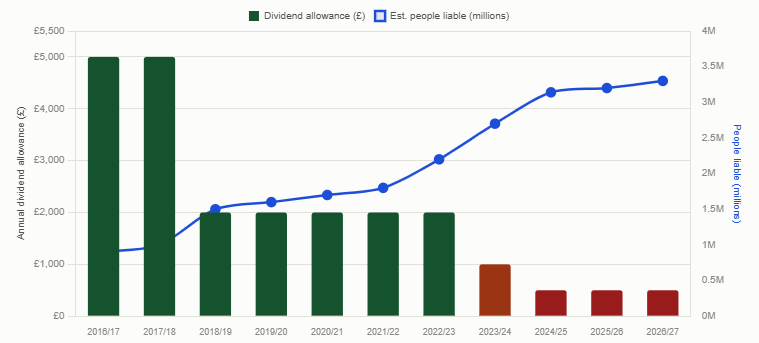
The dividend allowance has been slashed from £5,000 in 2016 to just £500 today. An estimated 3.2 million people are now liable for dividend tax in 2025/26. From April 2026, the basic rate of dividend tax rose by two percentage points. ISAs remain the most powerful and completely legal way to escape the net entirely.

Allowance History and People Affected
Tax rates: Outside ISA vs Inside ISA
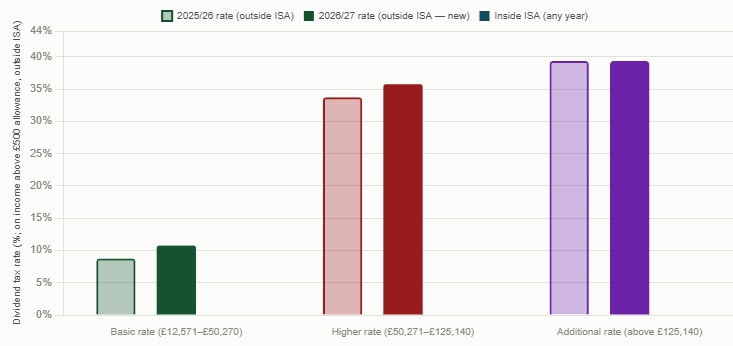
The mechanism is straightforward and the trend is clear. In 2016/17, the first £5,000 of dividend income was tax-free. That allowance has been cut relentlessly: to £2,000 in 2018/19, to £1,000 in 2023/24, to £500 in 2024/25, where it remains, frozen until at least April 2028. Meanwhile, dividend tax rates themselves rose from 6 April 2026, with the basic rate moving from 8.75 percent to 10.75 percent and the higher rate from 33.75 percent to 35.75 percent. Frozen income tax thresholds compound the problem further by dragging investors into higher bands as wages and portfolio values rise.
Laith Khalaf, head of investment analysis at AJ Bell, summarised the direction of travel precisely: ‘Combined with frozen tax thresholds dragging more people into higher tax bands, this could mean heaps more tax for those with even modestly-sized portfolios.’ This guide explains exactly what the rules are in 2026/27, who is affected, and — most importantly — what legal steps are available to reduce or eliminate the dividend tax bill entirely.
The Numbers: 3.2 million people now liable for dividend tax in 2025/26 (FOI figures, AJ Bell/MoneyWeek August 2026). Dividend allowance: £5,000 in 2016 → £500 today. From April 2026: basic-rate dividend tax rose to 10.75%; higher rate to 35.75%. Average new dividend tax bill: ~£382 (AJ Bell/Saga). ISA dividends: zero tax, no reporting, no limit on earnings within the wrapper.
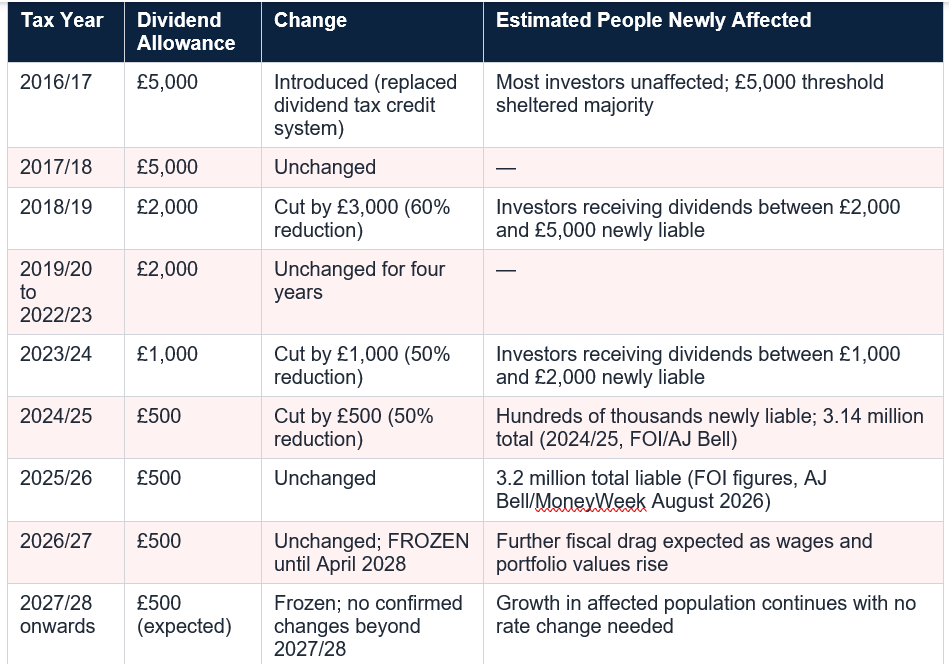
The cumulative effect is dramatic. An investor who in 2016/17 could receive £5,000 in annual dividends entirely tax-free now finds the first £500 sheltered and every pound above that subject to tax. For a basic-rate taxpayer receiving £3,000 in annual dividends outside an ISA, the £2,500 above the allowance generates a tax bill of £268.75 in 2026/27 (at the new 10.75 percent basic rate). In 2016/17, the same investor paid nothing. That shift in tax liability was driven entirely by changes to the allowance, not changes in the investor’s behaviour or income.
Laith Khalaf, Head of Investment Analysis, AJ Bell (cited in MoneyWeek, August 2026): While much attention is given to frozen income tax thresholds, the sharp reduction in the dividend allowance has quietly pulled hundreds of thousands of people into paying tax on investment income for the first time. The government has repeatedly said it wants to encourage greater participation in investing, but reducing the tax-free allowance has moved in the opposite direction.
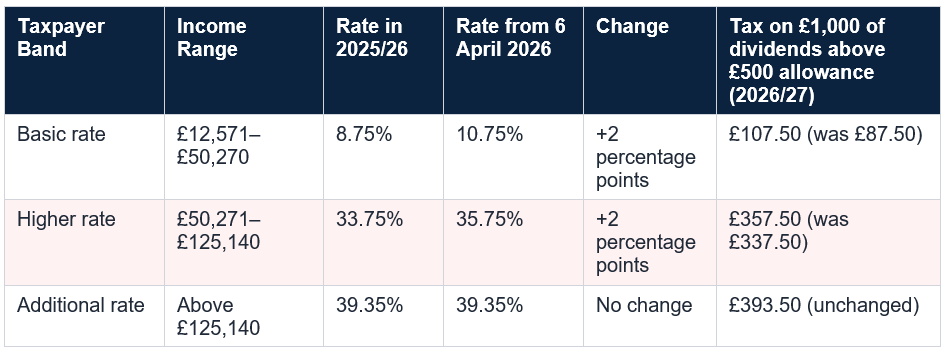
The practical impact for investors with portfolios outside ISAs or pensions: for every £1,000 of dividends above the £500 allowance, a basic-rate taxpayer pays £20 more per year in 2026/27 than in 2025/26. For a higher-rate taxpayer, the additional annual cost is £20 per £1,000 of excess dividends. Alexander & Co’s April 2026 analysis puts the aggregate effect concisely: £10,000 in dividends outside an ISA could face approximately £190 more tax under the new rates compared to the prior year.
The additional rate taxpayers — those with income above £125,140 — are the only group whose dividend tax rate has not risen. The burden of the April 2026 rate increase falls entirely on basic-rate and higher-rate taxpayers, which is also the group most likely to be newly caught by the shrinking allowance. The policy direction is consistent: broader exposure at higher rates for a growing proportion of ordinary investors.
Watch Out: The High-Income Child Benefit Charge (HICBC) applies to adjusted net income over £60,000. Dividend income counts toward adjusted net income for HICBC purposes. An investor with a salary of £58,000 who receives £5,000 in dividends outside an ISA has an adjusted net income of £63,000, triggering HICBC. The effective marginal tax rate in this band, factoring in both dividend tax and HICBC, can be considerably higher than the headline rate suggests.
Three compounding fiscal drag effects for dividend investors in 2026/27:
The ISA allowance for 2026/27 is £20,000 per person per tax year. That £20,000 can be split across a Cash ISA, a Stocks and Shares ISA, an Innovative Finance ISA, and a Lifetime ISA (subject to the LISA’s own £4,000 annual cap within the £20,000 total). Unused allowance cannot be carried forward to the next tax year; it resets on 6 April. Critically, existing ISA funds — including all the dividends reinvested inside the ISA over previous years — remain sheltered indefinitely. There is no cap on the total pot size an ISA can reach; the £20,000 limits annual contributions, not the total held.
Capital gains within a Stocks and Shares ISA are also exempt from Capital Gains Tax. Inside the wrapper, none of the investment income or gains needs to be declared on a Self Assessment return.
Watch Out: You cannot directly transfer an existing general investment account into an ISA. You must sell the investment, transfer the cash proceeds into the ISA, and then repurchase. This is a ‘bed and ISA’ transaction and it crystallises any capital gains at the time of sale. For investments standing at a significant gain, it is worth considering the CGT position before proceeding — which is where professional advice is valuable.
Two distinct advantages of pension wrappers for dividend income:
Transferring dividend-paying investments to a lower-earning spouse or civil partner can reduce the household dividend tax bill in several ways:
For couples where one partner has little or no other income, structuring investment income to use both partners’ Personal Allowances efficiently can produce a combined tax-free dividend income of £26,140 per year before any dividend tax becomes due outside ISA wrappers.
Two additional considerations for Personal Allowance planning:
The salary-dividend split remains widely used for remuneration efficiency in owner-managed businesses: the director pays themselves a salary just above the National Insurance Lower Earnings Limit (to preserve state pension entitlement) and takes additional income as dividends from company profits. Above the £500 allowance, those dividends are taxed at dividend rates rather than income tax rates, which are lower. However, the April 2026 rate rises reduce the advantage: basic-rate dividend tax at 10.75 percent is now less attractive relative to the basic rate of income tax than it was at 8.75 percent.
The new disclosure rules in 2025/26 Self Assessment for directors of close companies introduce automatic £60 penalties per omission for undisclosed information in the prescribed format (Pro Tax Accountant, July 2026). Directors who are uncertain about their reporting obligations should ensure they are working with a qualified accountant for their Self Assessment submission.
Additional complexity for directors with portfolio investments: dividends from the director’s own company and dividends from a personal investment portfolio are both dividend income for tax purposes. They are aggregated against the same £500 allowance and the same income tax bands. A director who takes £8,000 in company dividends and £2,000 from a stock portfolio has £10,000 in total dividend income for the year, with the first £500 tax-free and the remaining £9,500 taxed at the applicable band rate.
The ISA wrapper’s protection extends to savings interest as well as dividends and capital gains: interest earned on cash held within an ISA is completely tax-free and not counted against the Personal Savings Allowance. As the savings interest rate rises from April 2027, the ISA wrapper becomes progressively more valuable for savers as well as equity investors.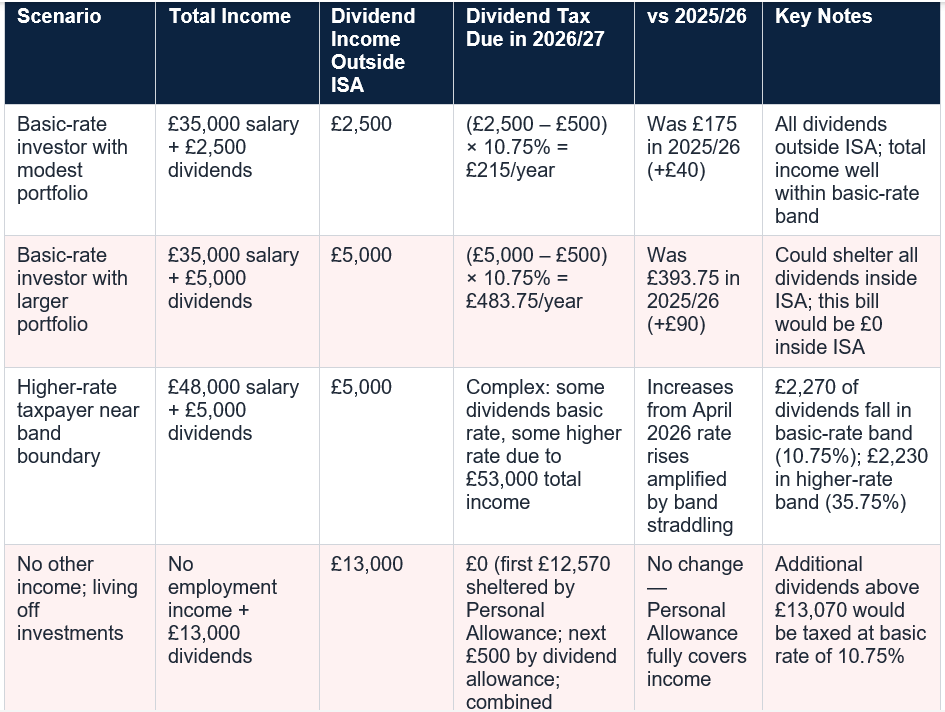
The structural response for most UK investors is equally clear: the Stocks and Shares ISA wrapper is the most powerful and most readily available legal protection available. Dividends inside an ISA are permanently and completely tax-free, at any amount, in any tax year, regardless of future rate changes. They do not require reporting, do not interact with income tax bands, and do not trigger Self Assessment obligations. At £20,000 of new annual allowance per person — £40,000 for a couple — investors can systematically move dividend-generating assets into permanent tax protection over time.
For investors with income above the basic-rate threshold, pension contributions add a second layer of protection, with the additional benefit of upfront tax relief at the marginal rate. For couples, inter-spouse transfers allow both sets of allowances and ISA limits to be used efficiently. For those already in Self Assessment, proactive planning before the end of each tax year determines how much of the dividend bill is avoidable.
The government’s stated goal of encouraging investment participation and the reality of a £500 dividend allowance do not obviously coexist. But the ISA framework, used consistently, makes the conflict largely academic for investors willing to act before the end of each tax year rather than after.
The dividend allowance for 2026/27 is £500. This is the amount of dividend income you can receive outside an ISA or pension each year before dividend tax applies. The allowance has been at £500 since 2024/25 and is frozen at this level until at least April 2028, according to the government's published plans. Before the £500 level, the allowance was £1,000 in 2023/24, £2,000 from 2018/19 to 2022/23, and £5,000 from 2016/17 to 2017/18. The allowance is a 0% tax band, not an exemption — it still counts toward your income for band purposes. Any dividend income above £500 (outside an ISA or pension) is taxed at the applicable dividend rate for your income band.
What are the dividend tax rates in 2026/27 in the UK?
From 6 April 2026, UK dividend tax rates are: basic rate (income £12,571–£50,270): 10.75% (up from 8.75% in 2025/26); higher rate (income £50,271–£125,140): 35.75% (up from 33.75%); additional rate (income above £125,140): 39.35% (unchanged). For the first £500 of dividend income, the rate is 0% (the dividend allowance). Dividends from investments held inside an ISA or pension are taxed at 0% regardless of amount and do not need to be reported. The Finance Act 2026 legislated the April 2026 increases for the ordinary and upper dividend rates; the additional rate was not changed. Verify current rates at GOV.UK before acting on these figures.
How do I protect my investments from dividend tax in the UK?
The four main legal strategies for reducing or eliminating UK dividend tax are: (1) Use a Stocks and Shares ISA — dividends inside an ISA are completely tax-free, at any amount, and do not need to be reported. The ISA allowance is £20,000 per person per year in 2026/27. (2) Make pension contributions — dividends inside a SIPP or workplace pension are tax-free, and contributions receive tax relief at your marginal rate. (3) Transfer investments to a lower-earning spouse or civil partner — each person has their own £500 allowance, £12,570 Personal Allowance, and £20,000 ISA allowance. (4) Use unused Personal Allowance — if your other income is below £12,570, the unused portion can shelter dividend income at 0%. The most powerful and universally applicable strategy is the ISA wrapper. Consult a qualified financial adviser for advice specific to your situation.
Do I have to pay tax on dividends inside an ISA?
No. Dividends received from investments held inside any ISA — including a Stocks and Shares ISA, Cash ISA, Lifetime ISA, or Innovative Finance ISA — are completely tax-free. They do not count toward the £500 dividend allowance, do not push you into a higher tax band, and do not need to be declared on a Self Assessment return. There is no limit on the amount of dividends you can receive tax-free inside an ISA once the investment is within the wrapper, regardless of how large the portfolio grows over time. Capital gains inside an ISA are also exempt from Capital Gains Tax. The annual allowance limits how much new money you can put into ISAs each year (£20,000 in 2026/27), but it does not limit the dividends earned on existing ISA investments.
When do I need to file a Self Assessment return because of dividend income?
You must tell HMRC if your dividend income outside an ISA exceeds £500 in a tax year. The specific route depends on how much you receive: if your dividend income is between £500 and £10,000, you can ask HMRC to collect the tax through your PAYE tax code (if you are an employee) rather than filing a full Self Assessment return. If your dividend income outside an ISA exceeds £10,000, you must file a Self Assessment return. If you are already in Self Assessment for any reason (self-employment, being a company director, being a landlord, or other reasons), you must declare all dividend income regardless of amount, including amounts within the £500 allowance. The deadline to notify HMRC that you need to register for Self Assessment is 5 October following the end of the relevant tax year. Keep records of all dividends received, including dividend vouchers, platform statements, and consolidated tax certificates.
How many people are now paying dividend tax in the UK?
An estimated 3.2 million individuals are liable for dividend tax in 2025/26, up from 3.14 million in 2024/25, according to Freedom of Information figures obtained by AJ Bell and reported by MoneyWeek in August 2026. The majority of those paying dividend tax are basic-rate taxpayers, with an average dividend tax bill of approximately £382 for 2025/26. The number of taxpayers in the dividend tax net has grown significantly since 2016, when the allowance stood at £5,000. The combination of the dividend allowance being cut from £5,000 to £500 since 2016, frozen income tax thresholds, and rising share portfolios means that more investors are caught each year without any change in their investment behaviour. The dividend allowance remains frozen at £500 until at least April 2028, meaning the population of dividend taxpayers is expected to continue growing.
Allowance History and People Affected
Tax rates: Outside ISA vs Inside ISA
Table of Contents
- A Quiet Tax That Is Catching More and More People
- The Shrinking Dividend Allowance: From £5,000 to £500 in a Decade
- The April 2026 Rate Rise: What Changed and What It Costs You
- How Dividend Tax Actually Works in 2026/27
- Who Is Now Paying Dividend Tax? The 3.2 Million Figure Explained
- Fiscal Drag: The Invisible Tax That Amplifies the Dividend Problem
- Protection Strategy #1: Move Dividend Investments into a Stocks and Shares ISA
- Protection Strategy #2: Use Pension Contributions to Shelter Income
- Protection Strategy #3: Spread Investments Between Spouses or Civil Partners
- Protection Strategy #4: Use Your Personal Allowance Intelligently
- The Self-Assessment Trap: When You Must Tell HMRC
- Directors and Company Owners: The Additional Complexity
- What Comes Next: The Savings and Rental Income Rate Rises from April 2027
- Worked Examples: What the Tax Looks Like in Practice
- Conclusion: The ISA Wrapper Is the Most Powerful Tool You Have
- Frequently Asked Questions
A Quiet Tax That Is Catching More and More People
An estimated 3.2 million individuals are now liable for dividend tax in 2025/26, up from 3.14 million in 2024/25, according to Freedom of Information figures obtained by AJ Bell and cited in a MoneyWeek analysis published in late August 2026. The majority of those now paying the tax are basic-rate taxpayers — people with relatively modest investment portfolios, not wealthy high earners. Their average tax bill is approximately £382 for the year. The amount is not ruinous. But it comes with an obligation to notify HMRC, file a Self Assessment return or request a tax code adjustment, and track dividend income going forward in a way that most investors have never needed to do before.The mechanism is straightforward and the trend is clear. In 2016/17, the first £5,000 of dividend income was tax-free. That allowance has been cut relentlessly: to £2,000 in 2018/19, to £1,000 in 2023/24, to £500 in 2024/25, where it remains, frozen until at least April 2028. Meanwhile, dividend tax rates themselves rose from 6 April 2026, with the basic rate moving from 8.75 percent to 10.75 percent and the higher rate from 33.75 percent to 35.75 percent. Frozen income tax thresholds compound the problem further by dragging investors into higher bands as wages and portfolio values rise.
Laith Khalaf, head of investment analysis at AJ Bell, summarised the direction of travel precisely: ‘Combined with frozen tax thresholds dragging more people into higher tax bands, this could mean heaps more tax for those with even modestly-sized portfolios.’ This guide explains exactly what the rules are in 2026/27, who is affected, and — most importantly — what legal steps are available to reduce or eliminate the dividend tax bill entirely.
The Numbers: 3.2 million people now liable for dividend tax in 2025/26 (FOI figures, AJ Bell/MoneyWeek August 2026). Dividend allowance: £5,000 in 2016 → £500 today. From April 2026: basic-rate dividend tax rose to 10.75%; higher rate to 35.75%. Average new dividend tax bill: ~£382 (AJ Bell/Saga). ISA dividends: zero tax, no reporting, no limit on earnings within the wrapper.
The Shrinking Dividend Allowance: From £5,000 to £500 in a Decade
The history of the dividend allowance is a consistent story of reduction. When the current system of dividend taxation was introduced in April 2016 — replacing a previous dividend tax credit system — the annual tax-free dividend allowance was set at £5,000. At that level, the vast majority of individual investors in the UK paid no dividend tax at all. The allowance was designed to be generous enough to shelter most ordinary investors while bringing dividend income more formally into the tax system.The cumulative effect is dramatic. An investor who in 2016/17 could receive £5,000 in annual dividends entirely tax-free now finds the first £500 sheltered and every pound above that subject to tax. For a basic-rate taxpayer receiving £3,000 in annual dividends outside an ISA, the £2,500 above the allowance generates a tax bill of £268.75 in 2026/27 (at the new 10.75 percent basic rate). In 2016/17, the same investor paid nothing. That shift in tax liability was driven entirely by changes to the allowance, not changes in the investor’s behaviour or income.
Laith Khalaf, Head of Investment Analysis, AJ Bell (cited in MoneyWeek, August 2026): While much attention is given to frozen income tax thresholds, the sharp reduction in the dividend allowance has quietly pulled hundreds of thousands of people into paying tax on investment income for the first time. The government has repeatedly said it wants to encourage greater participation in investing, but reducing the tax-free allowance has moved in the opposite direction.
The April 2026 Rate Rise: What Changed and What It Costs You
From 6 April 2026, dividend tax rates rose for all but the highest-rate taxpayers. The changes were announced in the Autumn Budget 2024 and legislated through the Finance Act 2026:The practical impact for investors with portfolios outside ISAs or pensions: for every £1,000 of dividends above the £500 allowance, a basic-rate taxpayer pays £20 more per year in 2026/27 than in 2025/26. For a higher-rate taxpayer, the additional annual cost is £20 per £1,000 of excess dividends. Alexander & Co’s April 2026 analysis puts the aggregate effect concisely: £10,000 in dividends outside an ISA could face approximately £190 more tax under the new rates compared to the prior year.
The additional rate taxpayers — those with income above £125,140 — are the only group whose dividend tax rate has not risen. The burden of the April 2026 rate increase falls entirely on basic-rate and higher-rate taxpayers, which is also the group most likely to be newly caught by the shrinking allowance. The policy direction is consistent: broader exposure at higher rates for a growing proportion of ordinary investors.
4. How Dividend Tax Actually Works in 2026/27
Understanding exactly how dividend tax is calculated prevents the most common errors in both planning and reporting. The mechanics:- Dividends are taxed after other income: your non-dividend income (salary, self-employment income, pension income, rental income) uses up the Personal Allowance (£12,570) and lower income tax bands first. Dividends are then stacked on top of that income. This means your marginal rate on dividends may be higher than your average income tax rate.
- The £500 allowance is a 0% band, not an exemption: the £500 dividend allowance is taxed at 0 percent, but it still occupies space in your income tax band. A director taking £40,000 in salary and £8,000 in dividends would find that the £500 allowance sits within the basic-rate band, and £7,500 in dividends above the allowance is taxed at the basic rate. The allowance does not reduce taxable income for band purposes.
- Dividends can straddle more than one band: if your total income including dividends crosses the £50,270 higher-rate threshold, the dividends that fall above it will be taxed at the higher rate of 35.75 percent rather than the basic rate of 10.75 percent. This banding effect makes total income — not just dividend income in isolation — the relevant number.
- Personal Allowance provides additional shelter: if your non-dividend income is below £12,570, the unused portion of your Personal Allowance can shelter dividend income above the £500 allowance at a 0 percent rate. A person with no other income could receive £13,070 in dividends entirely tax-free (£12,570 Personal Allowance plus £500 dividend allowance).
- ISA and pension dividends are invisible to the system: dividends from investments held inside ISAs or pension wrappers are completely ignored. They do not count toward the £500 allowance, do not affect band calculations, and do not need to be reported to HMRC.
Watch Out: The High-Income Child Benefit Charge (HICBC) applies to adjusted net income over £60,000. Dividend income counts toward adjusted net income for HICBC purposes. An investor with a salary of £58,000 who receives £5,000 in dividends outside an ISA has an adjusted net income of £63,000, triggering HICBC. The effective marginal tax rate in this band, factoring in both dividend tax and HICBC, can be considerably higher than the headline rate suggests.
Who Is Now Paying Dividend Tax? The 3.2 Million Figure Explained
The 3.2 million people now liable for dividend tax in 2025/26 include three broad groups:1. Direct Shareholders in Individual Companies
Investors who hold individual UK company shares in general investment accounts (not ISAs) and who receive dividend payments that take their total dividend income above £500. As Equiniti’s March 2026 analysis of 7.8 million individual shareholder accounts found, 88.7 percent received dividends of £250 or less in 2024/25. However, 397,189 shareholders received between £250 and £500 — approaching the threshold — and a significant number above that threshold are now caught by the reduced allowance.2. Fund and Investment Trust Investors Outside ISAs
Investors in equity funds, investment trusts, and unit trusts held outside ISAs or SIPPs who receive income distributions. Fund distributions that represent dividend income from underlying holdings are treated as dividends for tax purposes. An investor holding a FTSE All-Share tracker fund outside an ISA will receive dividend distributions from the underlying companies, which count toward their £500 limit.3. Company Directors and Business Owners
Directors of owner-managed companies who take some or all of their remuneration as dividends rather than salary — a widely used tax-efficient remuneration structure under which lower National Insurance contributions apply. These individuals are already in Self Assessment and must declare all dividend income regardless of amount, including amounts within the £500 allowance (the allowance reduces tax to zero on those dividends but the income must still be reported). From 2025/26, directors of close companies face new disclosure rules in their Self Assessment returns, with automatic £60 penalties per omission.Fiscal Drag: The Invisible Tax That Amplifies the Dividend Problem
Fiscal drag is the mechanism by which frozen tax thresholds — held in place while wages and investment income rise with inflation — gradually pull more people into higher tax bands and tax liabilities without any change in nominal tax rates. It is currently operating simultaneously across the UK tax system in ways that interact specifically with dividend income.Three compounding fiscal drag effects for dividend investors in 2026/27:
- The dividend allowance has been frozen at £500 until April 2028 (Uniwide Formations, May 2026). As dividend payments from FTSE companies grow with corporate earnings over time, the proportion of that income above £500 expands automatically, increasing the taxable amount year on year with no change in the law required.
- The Personal Allowance has been frozen at £12,570, now until 2028 and with the Finance Act 2026 extending aspects of the freeze to 2031 for some thresholds. As employment income rises with inflation and wage growth, more of it fills the basic-rate band, leaving less room for dividend income before the higher rate is reached. An investor who was firmly in the basic-rate band in 2022 may find themselves straddling the higher-rate threshold in 2026 without having received a significant pay rise in real terms.
- The higher-rate threshold of £50,270 has also been frozen. Dividend income that straddles this threshold attracts the 35.75 percent higher rate on the portion above it — substantially more expensive than the 10.75 percent basic rate. As more investors’ total income (salary plus dividends) approaches £50,270, the proportion of their dividend income taxed at the higher rate increases.
Protection Strategy #1: Move Dividend Investments into a Stocks and Shares ISA
The Stocks and Shares ISA (S&S ISA) is the most powerful and most widely available legal protection against dividend tax. Dividends received from investments held inside a Stocks and Shares ISA are completely tax-free: no dividend tax at any rate, at any amount, in any tax year. They do not count toward the £500 allowance. They do not push income into a higher band. They do not need to be reported to HMRC. They are, in the words of ukdividendtaxcalculator.co.uk, ‘invisible to the UK dividend tax system.’The ISA allowance for 2026/27 is £20,000 per person per tax year. That £20,000 can be split across a Cash ISA, a Stocks and Shares ISA, an Innovative Finance ISA, and a Lifetime ISA (subject to the LISA’s own £4,000 annual cap within the £20,000 total). Unused allowance cannot be carried forward to the next tax year; it resets on 6 April. Critically, existing ISA funds — including all the dividends reinvested inside the ISA over previous years — remain sheltered indefinitely. There is no cap on the total pot size an ISA can reach; the £20,000 limits annual contributions, not the total held.
Capital gains within a Stocks and Shares ISA are also exempt from Capital Gains Tax. Inside the wrapper, none of the investment income or gains needs to be declared on a Self Assessment return.
Watch Out: You cannot directly transfer an existing general investment account into an ISA. You must sell the investment, transfer the cash proceeds into the ISA, and then repurchase. This is a ‘bed and ISA’ transaction and it crystallises any capital gains at the time of sale. For investments standing at a significant gain, it is worth considering the CGT position before proceeding — which is where professional advice is valuable.
Protection Strategy #2: Use Pension Contributions to Shelter Income
Pension contributions receive tax relief at the investor’s marginal rate — a 40 percent taxpayer contributing £10,000 to their pension effectively pays £6,000 net after relief — and dividends received within a pension wrapper (Self-Invested Personal Pension, SIPP, or workplace pension) are completely tax-free. For high-income investors with significant dividend portfolios, pension wrappers are particularly powerful.Two distinct advantages of pension wrappers for dividend income:
- Dividend income inside the pension is not taxable in any year. Like ISAs, pension wrappers make dividend income invisible to the tax system while the investment grows.
- A pension contribution reduces your adjusted net income. If your total income including dividends exceeds £60,000 and you are affected by the High-Income Child Benefit Charge, a pension contribution reduces the adjusted net income used to calculate the HICBC. The effective marginal tax rate in the £60,000 to £80,000 band (where HICBC tapers) can make pension contributions particularly efficient.
Protection Strategy #3: Spread Investments Between Spouses or Civil Partners
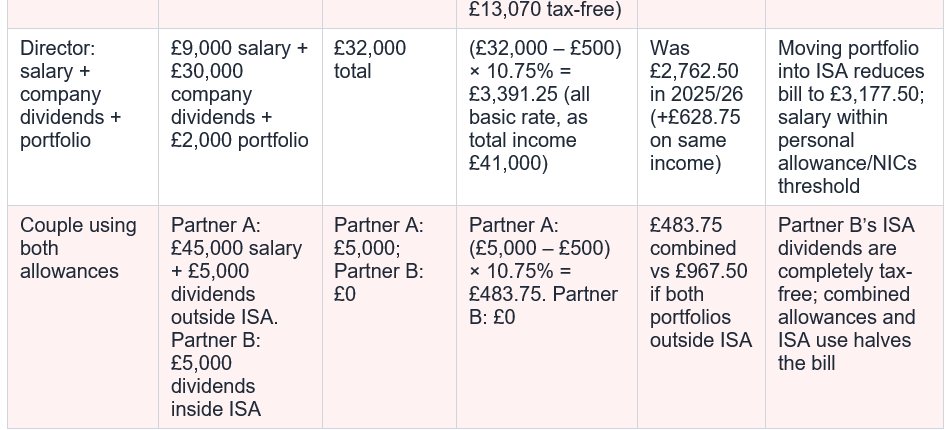
Each person has their own £500 dividend allowance, their own £12,570 Personal Allowance, and their own £20,000 ISA allowance. A couple who hold all dividend-paying investments in one partner’s name — perhaps because one partner is the higher earner or the investments were accumulated by one partner — are using only one set of allowances when two are available.Transferring dividend-paying investments to a lower-earning spouse or civil partner can reduce the household dividend tax bill in several ways:
- The receiving partner’s lower marginal rate applies to dividend income above the £500 allowance. A transfer from an additional-rate taxpayer (paying 39.35 percent) to a basic-rate partner (paying 10.75 percent) reduces the effective dividend tax rate on the same income by 28.6 percentage points.
- If the receiving partner has unused Personal Allowance — for example, a partner who works part-time and has non-dividend income below £12,570 — dividend income up to the unused portion of the Personal Allowance is sheltered at 0 percent in addition to the £500 allowance.
- Both partners can use their own ISA allowances. A couple can invest up to £40,000 in new ISA contributions each year (2 x £20,000), effectively doubling the rate at which dividend-paying investments can be moved into a tax-free wrapper.
Protection Strategy #4: Use Your Personal Allowance Intelligently
If you have dividend income but low or no other income — for example, if you are retired, not working, or taking a career break — your Personal Allowance of £12,570 can shelter significant dividend income at zero percent, in addition to the £500 dividend allowance. A person with no other taxable income can receive £13,070 in dividends entirely tax-free each year: £12,570 covered by the Personal Allowance plus £500 by the dividend allowance.For couples where one partner has little or no other income, structuring investment income to use both partners’ Personal Allowances efficiently can produce a combined tax-free dividend income of £26,140 per year before any dividend tax becomes due outside ISA wrappers.
Two additional considerations for Personal Allowance planning:
- Marriage Allowance: if one partner’s income is below the Personal Allowance and the other is a basic-rate taxpayer, the lower-earning partner can transfer £1,260 of their unused Personal Allowance to the higher earner, reducing the higher earner’s tax bill by up to £252 per year.
- Salary sacrifice: for company directors and employees, structuring salary below the Personal Allowance threshold and taking additional income as dividends (to the extent the business generates distributable profits) uses the allowance structure as intended — though directors must balance this against the state pension entitlement, which requires National Insurance contributions above the lower earnings limit.
The Self-Assessment Trap: When You Must Tell HMRC
One of the most practically disruptive consequences of the shrinking dividend allowance is the Self Assessment reporting obligation that it triggers for investors who have never previously filed a tax return. The rules in 2026/27:- Under £500 in dividends outside an ISA: no reporting required, assuming you are not already in Self Assessment. Tax is nil; no action needed.
- £500 to £10,000 in dividends outside an ISA: you must tell HMRC. For PAYE employees, the most straightforward route is to request that HMRC adjust your tax code to collect the dividend tax through your payslip. Alternatively, register for Self Assessment and file a return.
- Over £10,000 in dividends outside an ISA: you must file a Self Assessment return. No exceptions.
- Already in Self Assessment (directors, landlords, self-employed): you must declare all dividend income regardless of amount, including amounts within the £500 allowance. The allowance reduces your tax liability to zero on that portion but the income must appear in the return.
Directors and Company Owners: The Additional Complexity
For directors of owner-managed limited companies, the dividend tax landscape in 2025/26 and 2026/27 has become materially more complex, with new disclosure requirements adding administrative burden to the existing tax cost.The salary-dividend split remains widely used for remuneration efficiency in owner-managed businesses: the director pays themselves a salary just above the National Insurance Lower Earnings Limit (to preserve state pension entitlement) and takes additional income as dividends from company profits. Above the £500 allowance, those dividends are taxed at dividend rates rather than income tax rates, which are lower. However, the April 2026 rate rises reduce the advantage: basic-rate dividend tax at 10.75 percent is now less attractive relative to the basic rate of income tax than it was at 8.75 percent.
The new disclosure rules in 2025/26 Self Assessment for directors of close companies introduce automatic £60 penalties per omission for undisclosed information in the prescribed format (Pro Tax Accountant, July 2026). Directors who are uncertain about their reporting obligations should ensure they are working with a qualified accountant for their Self Assessment submission.
Additional complexity for directors with portfolio investments: dividends from the director’s own company and dividends from a personal investment portfolio are both dividend income for tax purposes. They are aggregated against the same £500 allowance and the same income tax bands. A director who takes £8,000 in company dividends and £2,000 from a stock portfolio has £10,000 in total dividend income for the year, with the first £500 tax-free and the remaining £9,500 taxed at the applicable band rate.
What Comes Next: Savings and Rental Income Rate Rises from April 2027
The dividend rate rises of April 2026 are the first instalment in a broader programme of passive income taxation that Alexander & Co’s April 2026 analysis describes as narrowing ‘the advantage of passive income over salary.’ From April 2027, savings interest income and rental income will also face rate increases of two percentage points across all bands:- Savings interest: basic rate rises from 20 to 22 percent; higher rate from 40 to 42 percent; additional rate from 45 to 47 percent.
- Rental income: the same increases apply.
The ISA wrapper’s protection extends to savings interest as well as dividends and capital gains: interest earned on cash held within an ISA is completely tax-free and not counted against the Personal Savings Allowance. As the savings interest rate rises from April 2027, the ISA wrapper becomes progressively more valuable for savers as well as equity investors.
Worked Examples: What the Tax Looks Like in Practice
Conclusion
Three million people paying dividend tax. An allowance that has shrunk ninety percent from its 2016 level. Dividend tax rates rising in April 2026 for the first time in years. Savings and rental income rates rising in April 2027. The direction of UK passive income taxation is clear, consistent, and unlikely to reverse in the near term.The structural response for most UK investors is equally clear: the Stocks and Shares ISA wrapper is the most powerful and most readily available legal protection available. Dividends inside an ISA are permanently and completely tax-free, at any amount, in any tax year, regardless of future rate changes. They do not require reporting, do not interact with income tax bands, and do not trigger Self Assessment obligations. At £20,000 of new annual allowance per person — £40,000 for a couple — investors can systematically move dividend-generating assets into permanent tax protection over time.
For investors with income above the basic-rate threshold, pension contributions add a second layer of protection, with the additional benefit of upfront tax relief at the marginal rate. For couples, inter-spouse transfers allow both sets of allowances and ISA limits to be used efficiently. For those already in Self Assessment, proactive planning before the end of each tax year determines how much of the dividend bill is avoidable.
The government’s stated goal of encouraging investment participation and the reality of a £500 dividend allowance do not obviously coexist. But the ISA framework, used consistently, makes the conflict largely academic for investors willing to act before the end of each tax year rather than after.
Frequently Asked Questions
What is the UK dividend allowance in 2026/27?The dividend allowance for 2026/27 is £500. This is the amount of dividend income you can receive outside an ISA or pension each year before dividend tax applies. The allowance has been at £500 since 2024/25 and is frozen at this level until at least April 2028, according to the government's published plans. Before the £500 level, the allowance was £1,000 in 2023/24, £2,000 from 2018/19 to 2022/23, and £5,000 from 2016/17 to 2017/18. The allowance is a 0% tax band, not an exemption — it still counts toward your income for band purposes. Any dividend income above £500 (outside an ISA or pension) is taxed at the applicable dividend rate for your income band.
What are the dividend tax rates in 2026/27 in the UK?
From 6 April 2026, UK dividend tax rates are: basic rate (income £12,571–£50,270): 10.75% (up from 8.75% in 2025/26); higher rate (income £50,271–£125,140): 35.75% (up from 33.75%); additional rate (income above £125,140): 39.35% (unchanged). For the first £500 of dividend income, the rate is 0% (the dividend allowance). Dividends from investments held inside an ISA or pension are taxed at 0% regardless of amount and do not need to be reported. The Finance Act 2026 legislated the April 2026 increases for the ordinary and upper dividend rates; the additional rate was not changed. Verify current rates at GOV.UK before acting on these figures.
How do I protect my investments from dividend tax in the UK?
The four main legal strategies for reducing or eliminating UK dividend tax are: (1) Use a Stocks and Shares ISA — dividends inside an ISA are completely tax-free, at any amount, and do not need to be reported. The ISA allowance is £20,000 per person per year in 2026/27. (2) Make pension contributions — dividends inside a SIPP or workplace pension are tax-free, and contributions receive tax relief at your marginal rate. (3) Transfer investments to a lower-earning spouse or civil partner — each person has their own £500 allowance, £12,570 Personal Allowance, and £20,000 ISA allowance. (4) Use unused Personal Allowance — if your other income is below £12,570, the unused portion can shelter dividend income at 0%. The most powerful and universally applicable strategy is the ISA wrapper. Consult a qualified financial adviser for advice specific to your situation.
Do I have to pay tax on dividends inside an ISA?
No. Dividends received from investments held inside any ISA — including a Stocks and Shares ISA, Cash ISA, Lifetime ISA, or Innovative Finance ISA — are completely tax-free. They do not count toward the £500 dividend allowance, do not push you into a higher tax band, and do not need to be declared on a Self Assessment return. There is no limit on the amount of dividends you can receive tax-free inside an ISA once the investment is within the wrapper, regardless of how large the portfolio grows over time. Capital gains inside an ISA are also exempt from Capital Gains Tax. The annual allowance limits how much new money you can put into ISAs each year (£20,000 in 2026/27), but it does not limit the dividends earned on existing ISA investments.
When do I need to file a Self Assessment return because of dividend income?
You must tell HMRC if your dividend income outside an ISA exceeds £500 in a tax year. The specific route depends on how much you receive: if your dividend income is between £500 and £10,000, you can ask HMRC to collect the tax through your PAYE tax code (if you are an employee) rather than filing a full Self Assessment return. If your dividend income outside an ISA exceeds £10,000, you must file a Self Assessment return. If you are already in Self Assessment for any reason (self-employment, being a company director, being a landlord, or other reasons), you must declare all dividend income regardless of amount, including amounts within the £500 allowance. The deadline to notify HMRC that you need to register for Self Assessment is 5 October following the end of the relevant tax year. Keep records of all dividends received, including dividend vouchers, platform statements, and consolidated tax certificates.
How many people are now paying dividend tax in the UK?
An estimated 3.2 million individuals are liable for dividend tax in 2025/26, up from 3.14 million in 2024/25, according to Freedom of Information figures obtained by AJ Bell and reported by MoneyWeek in August 2026. The majority of those paying dividend tax are basic-rate taxpayers, with an average dividend tax bill of approximately £382 for 2025/26. The number of taxpayers in the dividend tax net has grown significantly since 2016, when the allowance stood at £5,000. The combination of the dividend allowance being cut from £5,000 to £500 since 2016, frozen income tax thresholds, and rising share portfolios means that more investors are caught each year without any change in their investment behaviour. The dividend allowance remains frozen at £500 until at least April 2028, meaning the population of dividend taxpayers is expected to continue growing.
0 Comments
Be the first to share your thoughts on this article.