
Finance
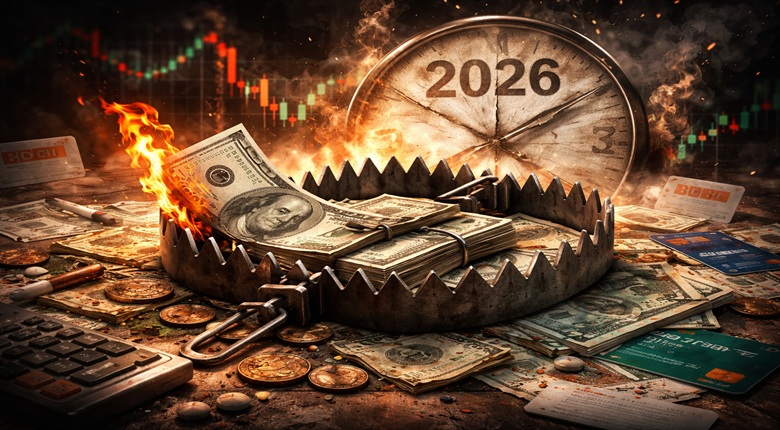
The 2026 Financial Nihilism Trap: The Money Mistake 80% Are Making

In the early months of 2026, a new and unsettling term began to dominate the headlines of personal finance journals and the feeds of social media influencers alike: "Financial Nihilism." It isn't just a catchy phrase; it's a profound psychological shift that has taken root among the youngest generations of the American workforce. As the cost of a standard "middle-class" life—homeownership, a stable retirement, and a family—continues to decouple from median wages, a staggering 80% of Gen Z and Millennials report feeling "financially behind".
This feeling of being permanently behind has birthed a dangerous new mindset. If the traditional milestones of adulthood feel mathematically impossible, many young adults are asking: Why bother saving at all? This is the essence of financial nihilism—the belief that the economic game is rigged, the old rules are dead, and the only logical response is to live for today, consequences be damned.
But this nihilism has led to what we are calling the "Massive Money Mistake" of 2026: Doom Spending. Instead of building the very foundations that could eventually provide them with leverage, millions are funneling their "surplus" cash into high-end experiences, luxury "treats," and speculative gambles like sports betting and meme coins. They are trading their future autonomy for a fleeting sense of control in an unpredictable world.
This article is a deep dive into the "Nihilism Trap." We will explore the brutal statistics that drive this despair, the psychology of "doom spending" that is hollowing out young bank accounts, and the high-risk gambles that 73% of struggling adults are using to "catch up". Most importantly, we will provide a roadmap to escape the trap and reclaim your financial agency in an economy that seems designed to take it away.
Frequently Asked Questions (FAQ)
For many young adults, the "American Dream" has shifted from a tangible goal to a "fairytale." With homeownership costs reaching record highs and the median house price in many major cities requiring an income of over $140,000 to be considered "affordable," the traditional path of saving 10-20% of your income for a down payment feels like a 30-year sentence for a prize that may never arrive.
This "Nihilism Gap" is exacerbated by the K-Shaped Squeeze. While those with existing assets (homes, stocks, and high-value skills) have seen their net worth grow, the "aspirational" class of young workers is being squeezed by stagnant wages and a permanent reset in the cost of essentials. When you see that a decade of disciplined saving might only buy you a one-bedroom condo in a "tier-two" city, the motivation to save at all begins to evaporate.

In 2026, doom spending often manifests as:
"Doom spending is the financial equivalent of smoking. It feels good in the moment, it helps you cope with stress, but it's slowly hollowing out your future health." — Excerpt from erneroy.com Financial Analysis, March 2026.
This behavior creates a self-fulfilling prophecy: you spend because you feel you can't save enough, and because you spend, you truly can't save enough. Breaking this cycle requires a radical shift from nihilism back to Agency.
While these purchases provide a temporary "dopamine hit," they also prevent the accumulation of a meaningful emergency fund. This behavior creates a self-fulfilling prophecy: you spend because you feel you can't save enough, and because you spend, you truly can't save enough. Breaking this cycle requires a radical shift from nihilism back to Agency.
In 2026, this manifests as a surge in spending on luxury goods, high-end dining, and premium experiences. While these purchases may provide temporary relief, they also prevent the accumulation of a meaningful emergency fund. This loss of capital then feeds back into the cycle of nihilism, making the "next" high-risk bet feel even more necessary.
This is the ultimate high-stakes gamble. Instead of a disciplined 7-10% return in the stock market over 30 years, young adults are betting their "last" $5,000 on a 1% chance at a $1 million payout.
In 2026, this manifests as:
The danger of this "Lottery Ticket" mentality is that it often results in the total loss of capital. When a $5,000 investment goes to zero, it's not just $5,000 that's lost—it's the foundation of a future emergency fund or a down payment. This loss then feeds back into the cycle of nihilism, making the "next" high-risk bet feel even more necessary.
The Solution: Micro-Wins. Instead of focusing on the "big" goals, the financially re-engaged focus on the $5,000 Buffer. This is a high-yield savings account (HYSA) with exactly $5,000 in it. Why $5,000? Because it's a "meaningful" amount of money that can cover almost any immediate emergency—a car repair, a medical bill, or a month of rent.
Once you hit the $5,000 buffer, your brain shifts from "Survival Mode" to "Strategic Mode." You no longer feel like a victim of every minor setback. You have Agency. From there, you can set the next micro-goal: $10,000, then $20,000. Each win builds the psychological momentum needed to stay disciplined.
This is the ultimate high-stakes gamble. Instead of a disciplined 7-10% return in the stock market over 30 years, young adults are betting their "last" $5,000 on a 1% chance at a $1 million payout. This behavior is driven by the belief that the "traditional" way to build wealth—saving, investing in a diversified portfolio, and staying the course—is a "sucker's game."
The logic goes: "I'll never have enough to buy a house anyway, so I might as well put $2,000 on a 50-to-1 shot." In 2026, this manifests as a surge in spending on highly volatile, non-productive assets with the hope of a "moonshot" gain. The danger of this "Lottery Ticket" mentality is that it often results in the total loss of capital. When a $5,000 investment goes to zero, it's not just $5,000 that's lost—it's the foundation of a future emergency fund or a down payment. This loss then feeds back into the cycle of nihilism, making the "next" high-risk bet feel even more necessary.
With homeownership costs reaching record highs and the median house price in many major cities requiring an income of over $140,000 to be considered "affordable," the traditional path of saving 10-20% of your income for a down payment feels like a 30-year sentence for a prize that may never arrive. This "Nihilism Gap" is exacerbated by the K-Shaped Squeeze. While those with existing assets (homes, stocks, and high-value skills) have seen their net worth grow, the "aspirational" class of young workers is being squeezed by stagnant wages and a permanent reset in the cost of essentials.
When you see that a decade of disciplined saving might only buy you a one-bedroom condo in a "tier-two" city, the motivation to save at all begins to evaporate. This "Financial Nihilism" in investing is a direct reflection of this despair.
In 2026, the traditional career path is being disrupted by AI and automation. But this disruption also creates New Opportunities:
The "Values-Based" Audit: Ask yourself: "Does this $80 dinner or $200 concert ticket truly align with my long-term goals and values?" If the answer is "No," then it's a "Doom Spend." If the answer is "Yes," then it's an "Intentional Indulgence."
By aligning your spending with your values, you reclaim your purchasing power. You stop being a passive consumer of "escapism" and start being an active builder of your own life. This shift in mindset is the ultimate antidote to financial nihilism.
But if the goal is shifted to a $5,000 Buffer, the 25-year-old can achieve it within 6-12 months of disciplined saving. This "Micro-Win" provides a tangible sense of progress and agency. Once the $5,000 buffer is hit, the 25-year-old can set the next micro-goal: $10,000, then $20,000. Each win builds the psychological momentum needed to stay disciplined.
In 2026, the traditional career path is being disrupted by AI and automation. But this disruption also creates New Opportunities:
The solution is to re-engage with your own financial life. By building a Micro-Win Strategy, embracing Strategic Optimism, and practicing Values-Based Spending, you can move from a state of despair back to a state of Agency.
The system is tough, but you are tougher. You have the tools, the technology, and the community to build a life of true security and freedom. The choice is yours: will you stay in the "Nihilism Trap," or will you start building your own future?
This feeling of being permanently behind has birthed a dangerous new mindset. If the traditional milestones of adulthood feel mathematically impossible, many young adults are asking: Why bother saving at all? This is the essence of financial nihilism—the belief that the economic game is rigged, the old rules are dead, and the only logical response is to live for today, consequences be damned.
But this nihilism has led to what we are calling the "Massive Money Mistake" of 2026: Doom Spending. Instead of building the very foundations that could eventually provide them with leverage, millions are funneling their "surplus" cash into high-end experiences, luxury "treats," and speculative gambles like sports betting and meme coins. They are trading their future autonomy for a fleeting sense of control in an unpredictable world.
This article is a deep dive into the "Nihilism Trap." We will explore the brutal statistics that drive this despair, the psychology of "doom spending" that is hollowing out young bank accounts, and the high-risk gambles that 73% of struggling adults are using to "catch up". Most importantly, we will provide a roadmap to escape the trap and reclaim your financial agency in an economy that seems designed to take it away.
Table of Contents
- The Statistics of Despair: Why 80% Feel "Behind"
- Anatomy of the "Massive Money Mistake": What is Doom Spending?
- The High-Risk Gamble: Why 73% Are Turning to Speculative Assets
- Breaking the Trap: The 3 Pillars of Financial Re-Engagement
- Pillar 1: The "Micro-Win" Strategy and the $5,000 Buffer
- Pillar 2: Strategic Optimism and the 2026 Opportunities
- Pillar 3: Values-Based Spending vs. Doom Spending
Frequently Asked Questions (FAQ)
The Statistics of Despair: Why 80% Feel "Behind"
In 2026, the data behind the "Financial Nihilism" trend is as stark as it is widespread. According to the Northwestern Mutual 2026 Planning & Progress Study, 80% of Gen Z and 75% of Millennials report feeling "financially behind". This isn't just a subjective feeling; it's a reflection of a decoupling between traditional career progression and the ability to afford a "standard" middle-class life.For many young adults, the "American Dream" has shifted from a tangible goal to a "fairytale." With homeownership costs reaching record highs and the median house price in many major cities requiring an income of over $140,000 to be considered "affordable," the traditional path of saving 10-20% of your income for a down payment feels like a 30-year sentence for a prize that may never arrive.
| Generation | Feel Financially Behind (2026) | Turning to High-Risk Assets to "Catch Up" |
| Gen Z | 80% | 32% |
| Millennials | 75% | 35% |
| Gen X | 66% | 10% |
| Boomers+ | 51% | 3% |
This "Nihilism Gap" is exacerbated by the K-Shaped Squeeze. While those with existing assets (homes, stocks, and high-value skills) have seen their net worth grow, the "aspirational" class of young workers is being squeezed by stagnant wages and a permanent reset in the cost of essentials. When you see that a decade of disciplined saving might only buy you a one-bedroom condo in a "tier-two" city, the motivation to save at all begins to evaporate.
Anatomy of the "Massive Money Mistake": What is Doom Spending?
The most visible symptom of financial nihilism is "Doom Spending." This is the act of spending money on non-essential, often luxury items or experiences as a coping mechanism for long-term economic stress. In 2026, it has evolved from the "Lipstick Index"—buying small luxuries during a recession—to what we call the "Escapism Index."The Psychology of the "Treat Yourself" Trap
When the "big" goals (like a $500,000 home or a $2 million retirement fund) feel impossible, the brain shifts its focus to Instant Gratification. This is a psychological reflex: "If I can't afford a house, I might as well have the $80 dinner and the $200 concert tickets."In 2026, doom spending often manifests as:
- Luxury Travel: Taking "once-in-a-lifetime" vacations every year because "life is short and the world is unstable."
- Premium Experiences: Spending a significant portion of monthly income on high-end dining, wellness services, and entertainment.
- Micro-Luxuries: Frequent, small purchases (high-end coffee, skincare, tech gadgets) that provide a temporary "dopamine hit" but prevent the accumulation of a meaningful emergency fund.
The Opportunity Cost: Stealing from Your Future Self
The "Massive Money Mistake" isn't the $80 dinner itself; it's the compounding time that is lost. In a high-interest-rate environment like 2026, even small amounts of money can grow significantly over time. By consistently "doom spending" $500 a month, a 25-year-old is essentially forfeiting hundreds of thousands of dollars in potential wealth by age 55."Doom spending is the financial equivalent of smoking. It feels good in the moment, it helps you cope with stress, but it's slowly hollowing out your future health." — Excerpt from erneroy.com Financial Analysis, March 2026.
This behavior creates a self-fulfilling prophecy: you spend because you feel you can't save enough, and because you spend, you truly can't save enough. Breaking this cycle requires a radical shift from nihilism back to Agency.
Case Study: The "Escapism Index" in Action
To understand how "Doom Spending" manifests in 2026, consider the "Escapism Index." This is a new behavioral indicator that tracks spending on high-end, non-essential experiences during times of economic stress. For many young adults, a $2,000 "treat yourself" vacation or a $500 luxury skincare haul is a way to reclaim a sense of control in an unpredictable world.While these purchases provide a temporary "dopamine hit," they also prevent the accumulation of a meaningful emergency fund. This behavior creates a self-fulfilling prophecy: you spend because you feel you can't save enough, and because you spend, you truly can't save enough. Breaking this cycle requires a radical shift from nihilism back to Agency.
The "Treat Yourself" Trap and the Psychology of Despair
The "Treat Yourself" trap is a powerful psychological reflex. When the "big" goals (like a $500,000 home or a $2 million retirement fund) feel impossible, the brain shifts its focus to Instant Gratification. This is a coping mechanism for long-term economic stress.In 2026, this manifests as a surge in spending on luxury goods, high-end dining, and premium experiences. While these purchases may provide temporary relief, they also prevent the accumulation of a meaningful emergency fund. This loss of capital then feeds back into the cycle of nihilism, making the "next" high-risk bet feel even more necessary.
The High-Risk Gamble: Why 73% Are Turning to Speculative Assets
The second symptom of financial nihilism is the "Lottery Ticket" Mentality. When you feel behind, you often look for shortcuts. In 2026, the data shows that 73% of U.S. adults who are drawn to high-risk assets like crypto, sports betting, and prediction markets say it's because they feel financially behind and believe traditional methods are too slow. Among Gen Z, that number jumps to 80%.This is the ultimate high-stakes gamble. Instead of a disciplined 7-10% return in the stock market over 30 years, young adults are betting their "last" $5,000 on a 1% chance at a $1 million payout.
The Rise of "Financial Nihilism" in Investing
This behavior is driven by the belief that the "traditional" way to build wealth—saving, investing in a diversified portfolio, and staying the course—is a "sucker's game." The logic goes: "I'll never have enough to buy a house anyway, so I might as well put $2,000 on a 50-to-1 shot."In 2026, this manifests as:
- Crypto and Meme Coins: Investing in highly volatile, non-productive assets with the hope of a "moonshot" gain.
- Sports Betting and Prediction Markets: Using apps to place bets on anything from the outcome of a basketball game to the next election.
- Options and Leveraged Trading: Using complex financial instruments to amplify gains (and losses) in the pursuit of a "quick win."
The danger of this "Lottery Ticket" mentality is that it often results in the total loss of capital. When a $5,000 investment goes to zero, it's not just $5,000 that's lost—it's the foundation of a future emergency fund or a down payment. This loss then feeds back into the cycle of nihilism, making the "next" high-risk bet feel even more necessary.
Breaking the Trap: The 3 Pillars of Financial Re-Engagement
To escape the "Nihilism Trap," you must move from Nihilism (Nothing matters) to Agency (I can make it matter). This doesn't mean ignoring the real economic challenges of 2026; it means choosing a different strategy to navigate them.Pillar 1: The "Micro-Win" Strategy and the $5,000 Buffer
The biggest mistake young adults make is setting "impossible" goals. If your goal is a $500,000 down payment, and you only have $1,000 in your bank account, your brain will naturally shut down and choose "doom spending" instead.The Solution: Micro-Wins. Instead of focusing on the "big" goals, the financially re-engaged focus on the $5,000 Buffer. This is a high-yield savings account (HYSA) with exactly $5,000 in it. Why $5,000? Because it's a "meaningful" amount of money that can cover almost any immediate emergency—a car repair, a medical bill, or a month of rent.
Once you hit the $5,000 buffer, your brain shifts from "Survival Mode" to "Strategic Mode." You no longer feel like a victim of every minor setback. You have Agency. From there, you can set the next micro-goal: $10,000, then $20,000. Each win builds the psychological momentum needed to stay disciplined.
The "Lottery Ticket" Mentality and the High-Stakes Gamble
In 2026, the data shows that 73% of U.S. adults who are drawn to high-risk assets like crypto, sports betting, and prediction markets say it's because they feel financially behind and believe traditional methods are too slow [1]. Among Gen Z, that number jumps to 80%.This is the ultimate high-stakes gamble. Instead of a disciplined 7-10% return in the stock market over 30 years, young adults are betting their "last" $5,000 on a 1% chance at a $1 million payout. This behavior is driven by the belief that the "traditional" way to build wealth—saving, investing in a diversified portfolio, and staying the course—is a "sucker's game."
The logic goes: "I'll never have enough to buy a house anyway, so I might as well put $2,000 on a 50-to-1 shot." In 2026, this manifests as a surge in spending on highly volatile, non-productive assets with the hope of a "moonshot" gain. The danger of this "Lottery Ticket" mentality is that it often results in the total loss of capital. When a $5,000 investment goes to zero, it's not just $5,000 that's lost—it's the foundation of a future emergency fund or a down payment. This loss then feeds back into the cycle of nihilism, making the "next" high-risk bet feel even more necessary.
The Rise of "Financial Nihilism" in Investing
The rise of "financial nihilism" in investing is a direct reflection of a challenging economic reality. For many young adults, the "traditional" way to build wealth—saving, investing in a diversified portfolio, and staying the course—feels like a "fairytale."With homeownership costs reaching record highs and the median house price in many major cities requiring an income of over $140,000 to be considered "affordable," the traditional path of saving 10-20% of your income for a down payment feels like a 30-year sentence for a prize that may never arrive. This "Nihilism Gap" is exacerbated by the K-Shaped Squeeze. While those with existing assets (homes, stocks, and high-value skills) have seen their net worth grow, the "aspirational" class of young workers is being squeezed by stagnant wages and a permanent reset in the cost of essentials.
When you see that a decade of disciplined saving might only buy you a one-bedroom condo in a "tier-two" city, the motivation to save at all begins to evaporate. This "Financial Nihilism" in investing is a direct reflection of this despair.
Pillar 2: Strategic Optimism and the 2026 Opportunities
The second pillar of financial re-engagement is Strategic Optimism. This is the belief that while the old economic model is broken, the 2026 economy offers new and powerful opportunities for those who are paying attention.In 2026, the traditional career path is being disrupted by AI and automation. But this disruption also creates New Opportunities:
- AI-Driven Income: Using AI tools to automate tasks, create content, or build micro-businesses that generate high-value income with minimal overhead.
- Geographic Arbitrage: Using remote work and "Slow-mading" to earn a "high-hub" salary while living in a "low-cost" region (as discussed on erneroy.com).
- Skill-Based Freelancing: Moving from "time-intensive" errands to "high-value" skill marketing and professional proof assets.
Pillar 3: Values-Based Spending vs. Doom Spending
The final pillar is a shift from "Doom Spending" to Values-Based Spending. This isn't about "not spending money"; it's about spending money on things that actually matter to you.The "Values-Based" Audit: Ask yourself: "Does this $80 dinner or $200 concert ticket truly align with my long-term goals and values?" If the answer is "No," then it's a "Doom Spend." If the answer is "Yes," then it's an "Intentional Indulgence."
By aligning your spending with your values, you reclaim your purchasing power. You stop being a passive consumer of "escapism" and start being an active builder of your own life. This shift in mindset is the ultimate antidote to financial nihilism.
Case Study: The "Micro-Win" Strategy in Action
To understand how the "Micro-Win" strategy works, consider a 25-year-old with $1,000 in their bank account and a $500,000 down payment goal. This goal is "impossible" and will likely lead to "doom spending."But if the goal is shifted to a $5,000 Buffer, the 25-year-old can achieve it within 6-12 months of disciplined saving. This "Micro-Win" provides a tangible sense of progress and agency. Once the $5,000 buffer is hit, the 25-year-old can set the next micro-goal: $10,000, then $20,000. Each win builds the psychological momentum needed to stay disciplined.
The Power of "Strategic Optimism" in 2026
Strategic optimism is the belief that while the old economic model is broken, the 2026 economy offers new and powerful opportunities for those who are paying attention. This is a radical shift from the "nihilism" that currently dominates the financial conversation among young adults.In 2026, the traditional career path is being disrupted by AI and automation. But this disruption also creates New Opportunities:
- AI-Driven Income: Using AI tools to automate tasks, create content, or build micro-businesses that generate high-value income with minimal overhead.
- Geographic Arbitrage: Using remote work and "Slow-mading" to earn a "high-hub" salary while living in a "low-cost" region.
- Skill-Based Freelancing: Moving from "time-intensive" errands to "high-value" skill marketing and professional proof assets.
Conclusion
The "Financial Nihilism" trap of 2026 is real, and it's a direct reflection of a challenging economic reality. But for the 80% of young adults who feel "behind," the solution isn't to give up and "doom spend" your future away.The solution is to re-engage with your own financial life. By building a Micro-Win Strategy, embracing Strategic Optimism, and practicing Values-Based Spending, you can move from a state of despair back to a state of Agency.
The system is tough, but you are tougher. You have the tools, the technology, and the community to build a life of true security and freedom. The choice is yours: will you stay in the "Nihilism Trap," or will you start building your own future?
0 Comments
Be the first to share your thoughts on this article.