

Investing
Tiger Global Added Nvidia, Cerebras, and Intel: The Smart Money

Chase Coleman's Tiger Global raised its stakes in three AI chip stocks last quarter. Here is what the filing shows, and what it does not. Nvidia +7.2% to 12M shares; Cerebras +48.3% to 4.45M; Intel +30.4% to 5.54M; reported total $20.173B; 13F filed within 45 days.
Chase Coleman's Tiger Global filed its third-quarter 13F on 16 November, and the three chip stocks in the headline all show higher share counts. Nvidia rose 7.2% to 12 million shares, Cerebras rose 48.3% to about 4.45 million, and Intel rose 30.4% to about 5.54 million. So "loading up" is fair for Cerebras and Intel, and a bit generous for Nvidia, where the increase is modest. It is also worth knowing that in the previous quarter's filing, reports described Tiger trimming Nvidia while building Cerebras and Intel. The picture is a rotation inside AI chips, not a one-way bet (my reading of the filings). The bigger lesson is how to read the data. A 13F is a snapshot of long positions at the end of a quarter, filed up to 45 days later. It tells you what Tiger owned on 30 September, not what it owns today, and not why.
Key takeaway: Tiger Global added to all three chip stocks in Q3, but a 13F is a delayed, long-only snapshot. Use it as a starting point for your own research, not a signal to copy.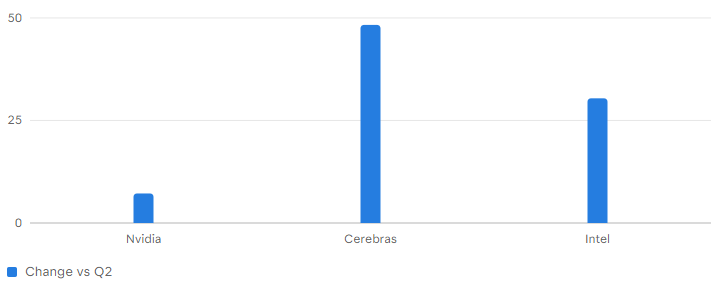
Form 13F is required of institutional managers with at least $100 million in qualifying assets. Managers must file within 45 days after each calendar quarter. Short positions do not have to be disclosed and are not netted against the long positions that are reported. That matters a lot. Zacks warns that 13F data is stale, because a position being listed does not mean the firm still holds it. Finimize puts it simply: you are seeing what Tiger reported holding at quarter-end, not a live playbook.

Source: StockHub summary of the 13F; Nvidia and Intel percentages also confirmed by and. Percentages are changes in shares held, not price moves or dollar amounts. Nvidia is the largest holding at 13.59% of the reported portfolio, which works out to roughly $2.7 billion (my calculation: 13.59% of $20.173 billion). Cerebras was the sixth-largest of the top ten at 3.92% according to a Chinese-language report, which I read through a translation. That would be roughly $790 million (my calculation).
In plain share terms, Tiger bought about 801,227 more Nvidia shares, 1,447,347 more Cerebras shares and 1,291,678 more Intel shares (my calculation from the table). Notice that the Nvidia add is the smallest percentage but the largest dollar-based position, because Nvidia is the biggest holding by far. The reported total is $20.173 billion, all in stocks, with no options reported.
Because 13F data is delayed, I cannot tell whether Tiger bought before or after the leadership news. The filing covers the period to 30 September, while the CEO change came later (my reading, based on the timing in the Morningstar note). So Tiger's add is not a verdict on the new situation. What to watch: the permanent CEO announcement, customer orders, and whether Tiger's next filing, due in February, shows the stake rising or falling.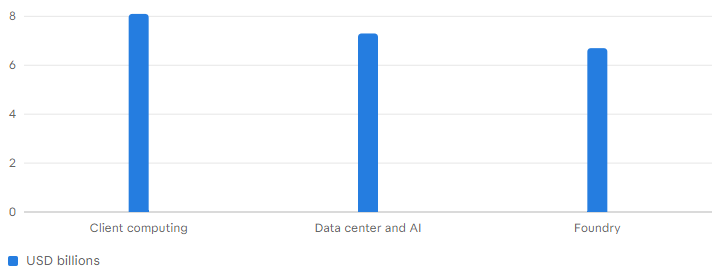
Here is a cautious inference. If the 3.92% weight is right, the position was worth about $790 million on 30 September, which implies roughly $178 a share (my calculation: $790 million divided by 4,446,347 shares). That would mean Cerebras traded below its $185 IPO price at quarter-end. This depends on a translated, secondary source, so please check it against the actual filing. The bull case is its wafer-scale chips and multi-year deals with OpenAI and Amazon Web Services. The bear case is valuation. At the first-day close, one analysis said the company was valued at nearly $95 billion against 2025 revenue of $510 million. Valuation figures vary by source, from $40 billion to $86 billion depending on the basis, so treat any single number carefully.
But there are red flags. Fourth-quarter guidance was revenue of $15 billion to $16 billion and non-GAAP EPS of $0.25, well below the $0.43 consensus. Intel also warned that the PC market will shrink into the second half. Year to date, it reported a net loss of $11.4 billion, including a $12.6 billion fair-value loss and a $3.9 billion goodwill impairment. Tiger's quarter-end snapshot came before that earnings report. Whether it added, held or sold after the weak guidance is unknown (my reading). That is the 13F limitation in one example.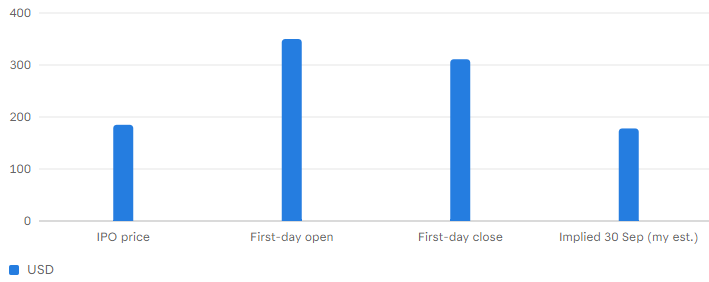
Third, size. For a $20 billion portfolio, a 7% change in Nvidia is a small adjustment. Adding 1.4 million Cerebras shares is a larger move in percentage terms but still a modest dollar bet compared with the portfolio (my reasoning). Fourth, price. Your entry price will differ from Tiger's. I did not find current share prices for Cerebras, Intel or Nvidia that I could cite, so I have not tried to say whether any of them is cheap or expensive today.
For these three, the questions differ. For Nvidia: how will leadership change affect execution? For Cerebras: can revenue grow into a valuation that was priced after a big first-day jump? For Intel: can foundry progress offset a weak fourth-quarter outlook? Also think about concentration. Nvidia, Cerebras and Intel are all tied to AI infrastructure spending. If you already hold chips or big tech funds, you may own this theme several times over (my reasoning). A diversified approach, and a plan for what you will do if a stock falls sharply, matter more than copying anyone.

Summary of points made above. Sources as listed. Not a ranking or a recommendation. If you want to check the filing yourself, the SEC publishes 13F reports on its EDGAR database, which lets you compare quarters directly instead of relying on summaries (general guidance, not drawn from the sources above). The next Tiger filing, covering 31 December, would be due about 45 days after year-end, around mid-February. Finally, remember that Tiger itself has changed its mind within a year. It trimmed Nvidia and bought Cerebras in one quarter, then added to Nvidia in the next.
Nvidia (up 7.2% to 12 million shares), Cerebras (up 48.3% to about 4.45 million) and Intel (up 30.4% to about 5.54 million).
When was the 13F filed?
16 November 2026, covering holdings as of 30 September.
Does a 13F show everything a fund owns?
No. It lists long positions in qualifying US securities, not short positions, and it can be filed up to 45 days after quarter-end.
How big is Tiger Global's reported portfolio?
$20.173 billion at the end of Q3, down from $23.982 billion in Q2.
Should I copy Tiger Global's trades?
That is a personal decision and this post is not advice. The filing is delayed and does not explain motives.
Table of Contents
- Who Tiger Global is, and what a 13F can and cannot show
- What the third-quarter filing says
- Nvidia: a small add to the biggest position
- Cerebras: the newcomer Tiger keeps building
- Intel: the turnaround with a rough outlook
- The rest of the portfolio
- What the filing cannot tell you
- How to use a 13F sensibly
- Conclusion
- FAQ
Chase Coleman's Tiger Global filed its third-quarter 13F on 16 November, and the three chip stocks in the headline all show higher share counts. Nvidia rose 7.2% to 12 million shares, Cerebras rose 48.3% to about 4.45 million, and Intel rose 30.4% to about 5.54 million. So "loading up" is fair for Cerebras and Intel, and a bit generous for Nvidia, where the increase is modest. It is also worth knowing that in the previous quarter's filing, reports described Tiger trimming Nvidia while building Cerebras and Intel. The picture is a rotation inside AI chips, not a one-way bet (my reading of the filings). The bigger lesson is how to read the data. A 13F is a snapshot of long positions at the end of a quarter, filed up to 45 days later. It tells you what Tiger owned on 30 September, not what it owns today, and not why.
Key takeaway: Tiger Global added to all three chip stocks in Q3, but a 13F is a delayed, long-only snapshot. Use it as a starting point for your own research, not a signal to copy.
Tiger Global Q3 2026: change in shares held (%)
Who Tiger Global is, and what a 13F can and cannot show
Tiger Global Management is a New York firm run by Chase Coleman III, who trained under Julian Robertson at Tiger Management. A Motley Fool piece described Coleman as overseeing nearly $30 billion at the time of the fourth-quarter 2025 filing. The latest filing reports a total of $20.173 billion, down from $23.982 billion the quarter before.Form 13F is required of institutional managers with at least $100 million in qualifying assets. Managers must file within 45 days after each calendar quarter. Short positions do not have to be disclosed and are not netted against the long positions that are reported. That matters a lot. Zacks warns that 13F data is stale, because a position being listed does not mean the firm still holds it. Finimize puts it simply: you are seeing what Tiger reported holding at quarter-end, not a live playbook.
What the third-quarter filing says
Here are the headline changes from the Q3 filing, which was filed on 16 November.Source: StockHub summary of the 13F; Nvidia and Intel percentages also confirmed by and. Percentages are changes in shares held, not price moves or dollar amounts. Nvidia is the largest holding at 13.59% of the reported portfolio, which works out to roughly $2.7 billion (my calculation: 13.59% of $20.173 billion). Cerebras was the sixth-largest of the top ten at 3.92% according to a Chinese-language report, which I read through a translation. That would be roughly $790 million (my calculation).
In plain share terms, Tiger bought about 801,227 more Nvidia shares, 1,447,347 more Cerebras shares and 1,291,678 more Intel shares (my calculation from the table). Notice that the Nvidia add is the smallest percentage but the largest dollar-based position, because Nvidia is the biggest holding by far. The reported total is $20.173 billion, all in stocks, with no options reported.
Nvidia: a small add to the biggest position
Start with what the filing says. Tiger went from 11,198,773 to 12,000,000 Nvidia shares, a 7.2% increase. That is small, and it is a rise from a position that had been trimmed the quarter before. I would call it a top-up, not a pile-in. Meanwhile Nvidia itself is in an unusual spot. Morningstar cut its fair value estimate by about 19%, to $250 from $310, after founder and CEO Jensen Huang resigned amid investigations. A news item in the Newsquawk feed also said Nvidia's board was reportedly not considering bringing Huang back, citing CNBC and an unnamed source. I treat that as an unconfirmed report.Because 13F data is delayed, I cannot tell whether Tiger bought before or after the leadership news. The filing covers the period to 30 September, while the CEO change came later (my reading, based on the timing in the Morningstar note). So Tiger's add is not a verdict on the new situation. What to watch: the permanent CEO announcement, customer orders, and whether Tiger's next filing, due in February, shows the stake rising or falling.
Intel Q3 2026 revenue by segment (USD billions)
Cerebras: the newcomer Tiger keeps building
Cerebras is the most interesting part. It debuted on Nasdaq on 14 May, with an IPO price of $185 for 30 million shares. The stock opened at $350 and closed at $311.07, a 68% jump, then fell about 10% the next day. At the IPO price it carried a fully diluted valuation of about $56.4 billion. Tiger bought 2,999,000 shares worth about $662.78 million in the second quarter, 2.76% of the portfolio at that time. Reports described it as a new position and the 12th-largest holding. In Q3 it added 1,447,347 more shares (my calculation: 4,446,347 minus 2,999,000), taking the position up 48.3%.Here is a cautious inference. If the 3.92% weight is right, the position was worth about $790 million on 30 September, which implies roughly $178 a share (my calculation: $790 million divided by 4,446,347 shares). That would mean Cerebras traded below its $185 IPO price at quarter-end. This depends on a translated, secondary source, so please check it against the actual filing. The bull case is its wafer-scale chips and multi-year deals with OpenAI and Amazon Web Services. The bear case is valuation. At the first-day close, one analysis said the company was valued at nearly $95 billion against 2025 revenue of $510 million. Valuation figures vary by source, from $40 billion to $86 billion depending on the basis, so treat any single number carefully.
Intel: the turnaround with a rough outlook
Intel's stake rose 30.4%, from 4,252,690 to 5,544,368 shares. Tiger had also boosted its Intel position in the second quarter. That makes it a two-quarter build. The business is improving in places. Third-quarter revenue was $16.5 billion, up 21%, with non-GAAP earnings per share of $0.52. Data Center and AI revenue was $7.3 billion, up 78%, and Intel Foundry revenue was $6.7 billion, up 58%. Intel also completed a $23 billion public equity offering during the quarter.But there are red flags. Fourth-quarter guidance was revenue of $15 billion to $16 billion and non-GAAP EPS of $0.25, well below the $0.43 consensus. Intel also warned that the PC market will shrink into the second half. Year to date, it reported a net loss of $11.4 billion, including a $12.6 billion fair-value loss and a $3.9 billion goodwill impairment. Tiger's quarter-end snapshot came before that earnings report. Whether it added, held or sold after the weak guidance is unknown (my reading). That is the 13F limitation in one example.
The rest of the portfolio
The three adds sit inside a bigger reshuffle. Tiger cut Meta by 20.4% to 2.2 million shares and trimmed TSMC by 35.8%. Alphabet and Sea were each reduced by roughly 42% to 43% [5]. Reports also say Tiger nearly exited Spotify. The top buys by change in portfolio weight were Nvidia, Ferrari, Cerebras, Danaher and MercadoLibre. Nvidia's weight rose by 4.24 percentage points, Cerebras by 1.15. The new position list also includes Bending Spoons. The takeaway: Tiger is not simply buying "AI". It is selling some large platform and chip names while adding others. That kind of rotation is normal for an active manager, and it is a reminder not to read one filing as a theme (my reasoning). One more caution on the totals: the reported value fell about 16% from $23.982 billion to $20.173 billion (my calculation). That reflects price moves and trades combined, so it does not show how Tiger performed.Cerebras share price points (USD)
What the filing cannot tell you
First, timing. A filing covering 30 September was made public on 16 November, and anything could have changed since. Second, motive. StockHub itself notes that the data alone cannot establish the reasons for trades. A fund may add for a long-term thesis, a hedge, a rebalance or a trade against a short position that the 13F does not show. It also helps to remember who is on the other side of these trades. Tiger can be right about a company and still be early, or wrong and lucky. One quarter of buying says little about the next few years, and hedge funds are judged on very different time frames than most long-term savers (my reasoning). If your plan is to hold for a decade, a fund's quarterly shuffle is background noise, not a signal.Third, size. For a $20 billion portfolio, a 7% change in Nvidia is a small adjustment. Adding 1.4 million Cerebras shares is a larger move in percentage terms but still a modest dollar bet compared with the portfolio (my reasoning). Fourth, price. Your entry price will differ from Tiger's. I did not find current share prices for Cerebras, Intel or Nvidia that I could cite, so I have not tried to say whether any of them is cheap or expensive today.
How to use a 13F sensibly
A practical routine can help. Pick one stock from a filing, write down in two sentences why you think the business might succeed, then list the three things that could prove you wrong. If you cannot do both, you probably do not understand the stock well enough yet (my suggestion). Revisit the note after the company's next earnings report and see whether the facts matched your thesis. Treat a 13F as a reading list, not a trade list. If a manager you respect adds a stock, ask why that could be a good business, then check the company's own numbers.For these three, the questions differ. For Nvidia: how will leadership change affect execution? For Cerebras: can revenue grow into a valuation that was priced after a big first-day jump? For Intel: can foundry progress offset a weak fourth-quarter outlook? Also think about concentration. Nvidia, Cerebras and Intel are all tied to AI infrastructure spending. If you already hold chips or big tech funds, you may own this theme several times over (my reasoning). A diversified approach, and a plan for what you will do if a stock falls sharply, matter more than copying anyone.
Summary of points made above. Sources as listed. Not a ranking or a recommendation. If you want to check the filing yourself, the SEC publishes 13F reports on its EDGAR database, which lets you compare quarters directly instead of relying on summaries (general guidance, not drawn from the sources above). The next Tiger filing, covering 31 December, would be due about 45 days after year-end, around mid-February. Finally, remember that Tiger itself has changed its mind within a year. It trimmed Nvidia and bought Cerebras in one quarter, then added to Nvidia in the next.
Conclusion
Tiger Global's Q3 filing shows it added to Nvidia, Cerebras and Intel, by 7.2%, 48.3% and 30.4% respectively. It is a useful clue about where an experienced tech investor was leaning at the end of September. But the filing is stale by design, covers only long positions, and says nothing about why. Since then Nvidia has changed its CEO and Intel has issued weak guidance. This is general education, not advice, and I am not a financial adviser. Do your own research before making any decision.FAQ
Which AI chip stocks did Tiger Global add in Q3 2026?Nvidia (up 7.2% to 12 million shares), Cerebras (up 48.3% to about 4.45 million) and Intel (up 30.4% to about 5.54 million).
When was the 13F filed?
16 November 2026, covering holdings as of 30 September.
Does a 13F show everything a fund owns?
No. It lists long positions in qualifying US securities, not short positions, and it can be filed up to 45 days after quarter-end.
How big is Tiger Global's reported portfolio?
$20.173 billion at the end of Q3, down from $23.982 billion in Q2.
Should I copy Tiger Global's trades?
That is a personal decision and this post is not advice. The filing is delayed and does not explain motives.
0 Comments
Be the first to share your thoughts on this article.