

Hustle
When Is Using Your Car for a Side Hustle Worth It The Math!

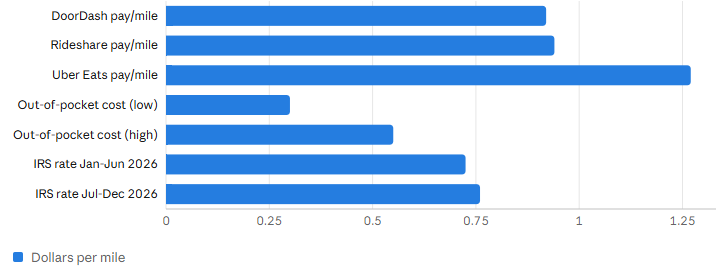
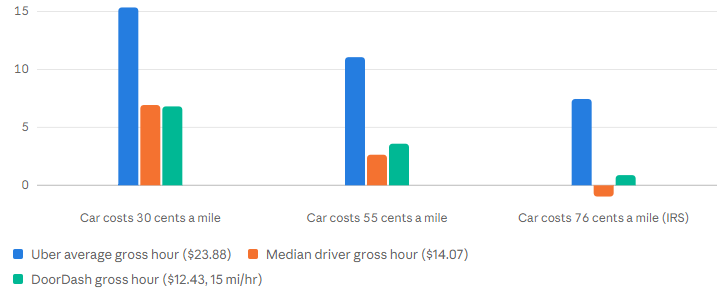
Uber drivers gross $23.88 per active hour (about 21.2 hours a week, $522 a week); median $14.07 an hour before vehicle costs; pay per mile about $0.94 for rideshare, $0.92 for DoorDash and $1.27 for Uber Eats; published net-after-expenses estimates range from about $5 to $18 an hour. Car costs: the IRS business mileage rate was 72.5 cents (January–June 2026) and 76 cents from July 1 (a rare midyear rise after fuel prices jumped); gas averaged $3.85 in mid-July; the rate covers fuel, depreciation, maintenance, insurance and registration. Self-employment tax is 15.3% of 92.35% of net profit (about 14.1%). My arithmetic (20 miles per active hour): a $23.88 gross hour nets about $15.35 after self-employment tax if your car costs 30 cents a mile, $11.06 at 55 cents and $7.45 at 76 cents; at the median $14.07 gross it falls to $6.93, $2.64 and below zero. To net $15 an hour at 55 cents a mile you need about $1.42 of gross pay per mile.
$ per mile by Gridwise (pay per mile); industry blogs (out-of-pocket 30-55 cents); IRS Notice 2026-10 and July 13 announcement
But a car is not free. Every mile burns fuel, wears tires and brakes and quietly lowers the value of the thing you count on to get to work. The question is whether gig platforms pay enough per mile and per hour to cover everything your car costs you, plus a tax bill most people forget. This guide walks through the numbers so you can decide before you turn the ignition on.
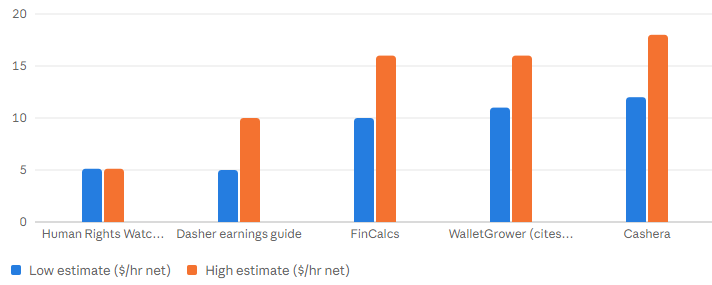
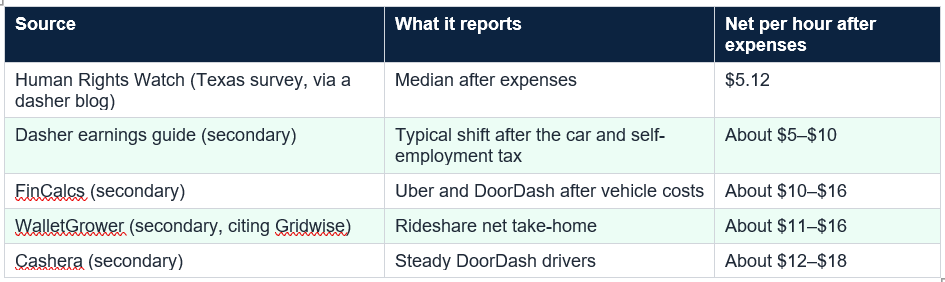
What drivers keep after expenses is where estimates diverge: industry blogs put net pay at $11 to $16 an hour for rideshare, $12 to $18 for steady delivery drivers and, in a more pessimistic analysis, $5 to $10, while a Human Rights Watch survey of Texas gig workers found a median of $5.12. The spread reflects different costs, markets and assumptions, and it is the main reason to measure your own numbers.
The other measure is out-of-pocket cost: fuel, maintenance, tires and extra insurance, without depreciation. Industry blogs put it at about 30 to 55 cents a mile, with fuel at 10 to 20 cents, wear at 10 to 15 cents and rideshare or delivery insurance adding $20 to $80 a month. The gap to 76 cents is mostly depreciation: the value your car loses with every mile. You do not write that check today, but you pay it when you sell or replace the car. I could not retrieve AAA’s 2026 ownership-cost study, so I use these two benchmarks.
Cost measure Per mile On 10,000 gig miles

Take Gridwise’s Uber average of $23.88 per active hour and an assumption of my own: 20 miles driven for every active hour, including unpaid driving. At 30 cents a mile the car costs $6 an hour, leaving $17.88, or about $15.35 after self-employment tax. At 55 cents, it costs $11 an hour, leaving about $11.06. At the IRS all-in 76 cents, it costs $15.20, leaving about $7.45. The same hour can pay twice as much, or half as much, depending on what your car really costs.

Now try the median driver, who grosses $14.07 an hour. At 20 miles an hour, 30 cents a mile leaves about $6.93 after self-employment tax, 55 cents about $2.64 and 76 cents a loss of about a dollar. For a DoorDash hour at the Gridwise 2025 average of $12.43 and 15 miles an hour, the numbers are about $6.81, $3.59 and $0.88. That is the arithmetic behind surveys finding some drivers netting very little. To net $15 an hour at a 55-cent cost, I estimate you need about $1.42 of gross pay per mile, far above the platform averages.

Averages hide the best and worst drivers. Some experienced delivery drivers accept only orders paying about $2 a mile, according to one blog, which would roughly double the margins above.
The deduction is valuable, but it is not cash. In my illustration, the $760 saves roughly $199 in a 12% bracket and about $275 in a 22% bracket, once you include the self-employment tax it reduces. It lowers your taxable profit, not the money you spent, so a driver can have a big deduction and a thin cash profit at the same time.

Wear is third. The average American drives about 14,263 miles a year, so adding 10,000 to 20,000 gig miles can double annual mileage, advancing every maintenance interval and hastening replacement. One analysis calls depreciation the largest hidden cost, and the IRS rate builds it in. Fourth is platform risk: pay rates change, deactivation can end income overnight and tips are not guaranteed. Treat the hustle as a bonus, not a necessity.
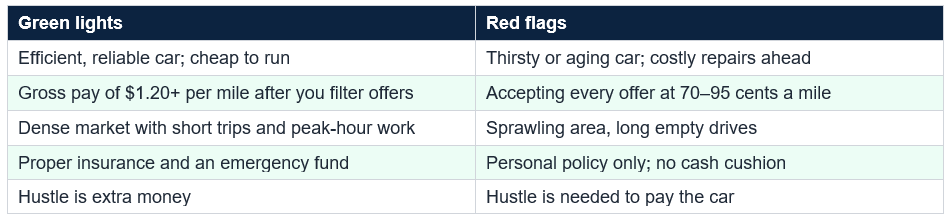
It tends not to work when you drive a thirsty or aging car, live in a sprawling area with long, low-paying trips, cannot say no to bad offers or would depend on the income. If your alternative is a part-time job paying $15 an hour with no vehicle wear, the job may beat driving for $7 to $11 an hour net. The right comparison is profit per hour against the next-best use of that hour.
Consider the alternatives, too. A side hustle that does not depend on a car, such as tutoring, freelance work or selling items online, has no per-mile cost at all, and a smaller, efficient car or a bike for urban delivery can lower the cost per mile. The goal is to make sure each mile earns more than it costs.
Also track unpaid miles, the distance from home to your first pickup and between jobs, where many drivers lose money, and compute your actual miles per active hour; mine was an assumption of 20. If yours is 12 the math improves a lot, and if it is 30 it gets much worse. Review every season, since gas prices, platform pay and your car’s age all change the answer.
So do the math before you drive: know your cost per mile, filter for higher-paying offers, keep unpaid miles low, get proper insurance and compare profit per hour with your other options. If the numbers work, the car can be a good partner in a side hustle; if not, you will have saved yourself wear, tax and trouble. A tax professional can help with your deductions.
Published estimates range from about $5 to $18 an hour, depending on the platform, market, vehicle and what costs are counted. Gridwise puts the median Uber driver at $14.07 an hour before vehicle costs, and a Human Rights Watch survey of Texas gig workers found $5.12 after expenses. The reliable number is your own: track miles, hours and pay for two weeks.
What is the IRS mileage rate for 2026?
It was 72.5 cents for January through June 2026 and rose to 76 cents from July 1 through December 31, a rare midyear increase announced July 13 because of high fuel prices. It is designed to cover fuel, depreciation, maintenance, insurance and registration.
Can I deduct my car costs for a gig?
Generally yes, for business miles, as a self-employed driver, using the standard mileage rate or actual expenses, with good mileage records. At 76 cents a mile, 1,000 business miles is a $760 deduction, which in my illustration saves roughly $200 to $290 in income and self-employment taxes depending on your bracket. Confirm the rules with a tax professional.
Does self-employment tax apply to gig driving?
Yes. Gig drivers are generally independent contractors who owe self-employment tax of 15.3% on 92.35% of net profit, about 14.1% effective, in addition to income tax. I subtract it in the break-even examples; the mileage deduction lowers the profit it applies to.
Is it worth driving my car for gigs if it is already paid off?
It can be better than for someone with a car payment, because fixed costs exist anyway. But wear still accrues: fuel, tires, maintenance and lost resale value per mile. The IRS 76 cents is a conservative all-in estimate; your out-of-pocket cost may be lower, though depreciation still hits your car’s value.
Table of Contents
- The Side Hustle You Already Own
- The Short Answer
- What Gig Drivers Actually Earn in 2026
- What Your Car Really Costs Per Mile
- The Break-Even Formula
- The Margin Is Thinner Than You Think
- Taxes: The Deduction and the Bill
- Hidden Risks
- When It Is Worth It and When It Is Not
- How to Make a Car Side Hustle Pay Better
- A Two-Week Test Before You Commit
- Conclusion
- Frequently Asked Questions
The thin margin: gig pay per mile vs. what a mile costs your car ($ per mile)
$ per mile by Gridwise (pay per mile); industry blogs (out-of-pocket 30-55 cents); IRS Notice 2026-10 and July 13 announcement
Net hourly pay after car costs and self-employment tax, by cost per mile ($ per hour)
Net $ per hour by Author's arithmetic: 20 miles per active hour (15 for delivery) is my assumption; about 14.1% effective SE tax; before income tax
Why you must measure your own: published net-hourly estimates for gig driving ($/hr)
Net dollars per hour by Mostly secondary industry sources, 2025-2026; methods and cost assumptions differ widely
The Side Hustle You Already Own
If you own a car, you may feel like you are sitting on a free side hustle: open an app, drive when you want, get paid. The pitch is irresistible when a few extra hundred dollars a month would help, and in 2026, with inflation at 3.7% and gas prices pushed up by the conflict with Iran, the appeal is easy to understand.But a car is not free. Every mile burns fuel, wears tires and brakes and quietly lowers the value of the thing you count on to get to work. The question is whether gig platforms pay enough per mile and per hour to cover everything your car costs you, plus a tax bill most people forget. This guide walks through the numbers so you can decide before you turn the ignition on.
The Short Answer
A car side hustle is worth it when pay per mile is comfortably higher than your car’s true cost per mile, when you waste few unpaid miles, when your hourly profit after car costs and self-employment tax beats what else you could do with the time and when you are covered for the risks. Average pay is about 92 to 94 cents a mile for DoorDash and rideshare, and the IRS values the all-in cost of driving at 76 cents, a razor-thin margin. The hustle usually works for people with cheap-to-run cars, efficient routes and the discipline to refuse low-paying jobs.What Gig Drivers Actually Earn in 2026
Gridwise, which analyzes real earnings from more than 500,000 drivers, reports that the average Uber driver grosses $23.88 per active hour, working about 21.2 hours a week for roughly $522 in gross pay. But the median driver earns $14.07 an hour before gas and vehicle costs. Pay per mile is about $0.94 for rideshare, about $0.92 for DoorDash and $1.27 for Uber Eats, where it fell 2.6% over the year. Bonuses add about 7.2% per trip.What drivers keep after expenses is where estimates diverge: industry blogs put net pay at $11 to $16 an hour for rideshare, $12 to $18 for steady delivery drivers and, in a more pessimistic analysis, $5 to $10, while a Human Rights Watch survey of Texas gig workers found a median of $5.12. The spread reflects different costs, markets and assumptions, and it is the main reason to measure your own numbers.
What Your Car Really Costs Per Mile
There are two ways to measure car cost, with very different answers. The IRS standard mileage rate, set from an annual study of fixed and variable costs, was 72.5 cents per mile for January through June 2026 and 76 cents from July 1, after a rare midyear increase because of high fuel prices. It is designed to cover fuel, depreciation, maintenance, insurance and registration. Gas averaged $3.85 a gallon in mid-July, according to AAA via SHRM.The other measure is out-of-pocket cost: fuel, maintenance, tires and extra insurance, without depreciation. Industry blogs put it at about 30 to 55 cents a mile, with fuel at 10 to 20 cents, wear at 10 to 15 cents and rideshare or delivery insurance adding $20 to $80 a month. The gap to 76 cents is mostly depreciation: the value your car loses with every mile. You do not write that check today, but you pay it when you sell or replace the car. I could not retrieve AAA’s 2026 ownership-cost study, so I use these two benchmarks.
Cost measure Per mile On 10,000 gig miles
The Break-Even Formula
Net hourly profit equals gross pay per hour, minus miles per hour multiplied by cost per mile, then reduced by self-employment tax, which is 15.3% on 92.35% of net profit, about 14.1% effective, on top of income tax. To hit a $15 target, divide $15 by 0.859 to get about $17.46 of profit before that tax, then add the car cost per hour.Take Gridwise’s Uber average of $23.88 per active hour and an assumption of my own: 20 miles driven for every active hour, including unpaid driving. At 30 cents a mile the car costs $6 an hour, leaving $17.88, or about $15.35 after self-employment tax. At 55 cents, it costs $11 an hour, leaving about $11.06. At the IRS all-in 76 cents, it costs $15.20, leaving about $7.45. The same hour can pay twice as much, or half as much, depending on what your car really costs.
The Margin Is Thinner Than You Think
Compare pay per mile with cost per mile. Against the IRS all-in 76 cents, DoorDash at about 92 cents and rideshare at about 94 cents leave a margin of 16 to 18 cents a mile, and Uber Eats at $1.27 leaves 51 cents, before self-employment tax. Against a 55-cent cost the margins are about 37, 39 and 72 cents; against 30 cents, 62, 64 and 97. Those margins decide whether an hour of driving makes money.Now try the median driver, who grosses $14.07 an hour. At 20 miles an hour, 30 cents a mile leaves about $6.93 after self-employment tax, 55 cents about $2.64 and 76 cents a loss of about a dollar. For a DoorDash hour at the Gridwise 2025 average of $12.43 and 15 miles an hour, the numbers are about $6.81, $3.59 and $0.88. That is the arithmetic behind surveys finding some drivers netting very little. To net $15 an hour at a 55-cent cost, I estimate you need about $1.42 of gross pay per mile, far above the platform averages.
Averages hide the best and worst drivers. Some experienced delivery drivers accept only orders paying about $2 a mile, according to one blog, which would roughly double the margins above.
Taxes: The Deduction and the Bill
Gig drivers are generally independent contractors, which means two tax effects: self-employment tax of about 14.1% effective on net profit, on top of income tax, and a deduction for business use of your car. With the standard mileage rate, every 1,000 business miles at 76 cents is a $760 deduction ($725 at 72.5 cents). The rate covers fuel, depreciation, maintenance, insurance and registration, so you do not deduct those separately. Rules differ for actual expenses, and you need a mileage log.The deduction is valuable, but it is not cash. In my illustration, the $760 saves roughly $199 in a 12% bracket and about $275 in a 22% bracket, once you include the self-employment tax it reduces. It lowers your taxable profit, not the money you spent, so a driver can have a big deduction and a thin cash profit at the same time.
Hidden Risks
Money is not the only thing on the line. Insurance comes first: personal auto policies may not cover you while you are logged into an app, so rideshare or delivery endorsements are often needed, roughly $20 to $80 a month in the estimates I found, and more for commercial policies. Accidents are second: a collision during a gig can mean a deductible, a claim on your record and income lost while the car is repaired.Wear is third. The average American drives about 14,263 miles a year, so adding 10,000 to 20,000 gig miles can double annual mileage, advancing every maintenance interval and hastening replacement. One analysis calls depreciation the largest hidden cost, and the IRS rate builds it in. Fourth is platform risk: pay rates change, deactivation can end income overnight and tips are not guaranteed. Treat the hustle as a bonus, not a necessity.
When It Is Worth It and When It Is Not
A car side hustle tends to work when most of these are true: your car is fuel-efficient, reliable and cheap to run; your market has dense, short, well-paying trips; you can work at peak times and decline poor offers; your gross pay per mile is at least about $1.20 to $1.40 (my rule of thumb from the math above); and you have insurance coverage and an emergency fund for repairs.It tends not to work when you drive a thirsty or aging car, live in a sprawling area with long, low-paying trips, cannot say no to bad offers or would depend on the income. If your alternative is a part-time job paying $15 an hour with no vehicle wear, the job may beat driving for $7 to $11 an hour net. The right comparison is profit per hour against the next-best use of that hour.
How to Make a Car Side Hustle Pay Better
If you decide to drive, a few habits swing the economics. Set a minimum pay per mile and decline offers below it; some experienced drivers hold out for about $2 a mile. Work peak demand, such as dinner rushes and event nights. Cut unpaid miles by staying in one dense zone and stacking apps. Keep the car well maintained, and track every mile, because the deduction is only as good as your log.Consider the alternatives, too. A side hustle that does not depend on a car, such as tutoring, freelance work or selling items online, has no per-mile cost at all, and a smaller, efficient car or a bike for urban delivery can lower the cost per mile. The goal is to make sure each mile earns more than it costs.
A Two-Week Test Before You Commit
The best way to answer the question is to measure it. For two weeks, record your odometer before and after each shift, your active hours, your gross pay including tips and your fuel costs. Then compute gross pay per mile, gross per hour and profit per hour using the break-even formula with both a cash cost and an all-in cost, subtract about 14% for self-employment tax and compare the result with what you could earn elsewhere. If net profit per hour is under about $10 even with a cash-cost estimate, think hard before continuing.Also track unpaid miles, the distance from home to your first pickup and between jobs, where many drivers lose money, and compute your actual miles per active hour; mine was an assumption of 20. If yours is 12 the math improves a lot, and if it is 30 it gets much worse. Review every season, since gas prices, platform pay and your car’s age all change the answer.
Conclusion
Using your car for a side hustle is worth it when each mile pays more than it costs, and in 2026 that margin is thinner than most people expect. Average pay of about 92 to 94 cents a mile for DoorDash and rideshare sits against an IRS all-in cost of 76 cents, and published net-hourly estimates range from about $5 to $18. In my illustration, a $23.88 gross hour nets about $15.35 if your car costs 30 cents a mile, $11.06 at 55 cents and $7.45 at 76 cents, after self-employment tax.So do the math before you drive: know your cost per mile, filter for higher-paying offers, keep unpaid miles low, get proper insurance and compare profit per hour with your other options. If the numbers work, the car can be a good partner in a side hustle; if not, you will have saved yourself wear, tax and trouble. A tax professional can help with your deductions.
Frequently Asked Questions
How much do gig drivers really make after car expenses?Published estimates range from about $5 to $18 an hour, depending on the platform, market, vehicle and what costs are counted. Gridwise puts the median Uber driver at $14.07 an hour before vehicle costs, and a Human Rights Watch survey of Texas gig workers found $5.12 after expenses. The reliable number is your own: track miles, hours and pay for two weeks.
What is the IRS mileage rate for 2026?
It was 72.5 cents for January through June 2026 and rose to 76 cents from July 1 through December 31, a rare midyear increase announced July 13 because of high fuel prices. It is designed to cover fuel, depreciation, maintenance, insurance and registration.
Can I deduct my car costs for a gig?
Generally yes, for business miles, as a self-employed driver, using the standard mileage rate or actual expenses, with good mileage records. At 76 cents a mile, 1,000 business miles is a $760 deduction, which in my illustration saves roughly $200 to $290 in income and self-employment taxes depending on your bracket. Confirm the rules with a tax professional.
Does self-employment tax apply to gig driving?
Yes. Gig drivers are generally independent contractors who owe self-employment tax of 15.3% on 92.35% of net profit, about 14.1% effective, in addition to income tax. I subtract it in the break-even examples; the mileage deduction lowers the profit it applies to.
Is it worth driving my car for gigs if it is already paid off?
It can be better than for someone with a car payment, because fixed costs exist anyway. But wear still accrues: fuel, tires, maintenance and lost resale value per mile. The IRS 76 cents is a conservative all-in estimate; your out-of-pocket cost may be lower, though depreciation still hits your car’s value.
0 Comments
Be the first to share your thoughts on this article.