
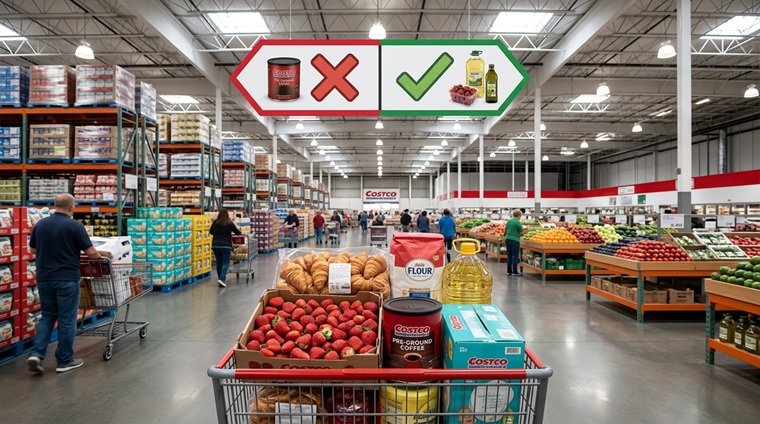
Spending
12 Worst Things To Buy At Costco (And What to Buy Instead)

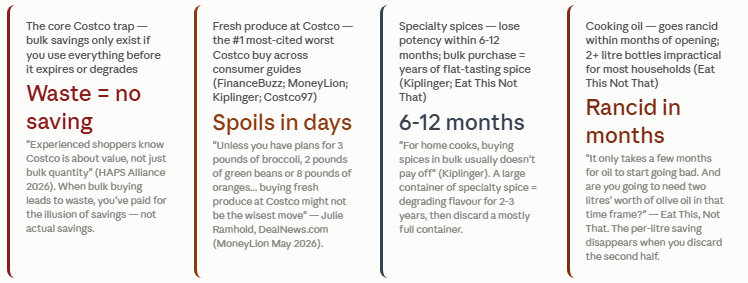
Bulk isn’t always better. From fresh produce that spoils before you finish it to spices that lose their punch after six months, these are the items consumer experts and loyal Costco members agree you should leave on the shelf.
Costco is genuinely one of the best places to save money on groceries, household essentials, and big-ticket items. The membership pays for itself quickly if you buy the right things. But the bulk model has a built-in trap: the savings only materialise when you actually use everything you buy before it expires, degrades, or turns out not to be cheaper per unit than alternatives. Consumer analyst Julie Ramhold of DealNews.com, speaking to MoneyLion in May 2026, captured the core principle: unless you have plans for everything in that package — all three pounds of broccoli, all 12 croissants, all two litres of olive oil — the apparent deal dissolves into food waste and storage clutter. This article covers the 12 items where multiple sources of consumer advice and expert commentary consistently agree: the Costco bulk buy does not deliver the value it promises. For each one, we explain why and tell you what to buy instead.
Costco is a genuinely excellent retailer. The Kirkland Signature brand consistently outperforms comparable products in consumer tests. The rotisserie chicken at $4.99 is one of the most famous loss-leaders in American retail history. The electronics section regularly undercuts major retailers on big-ticket items. For the right purchases — paper towels used daily by a large family, high-quality protein consumed weekly, household items you know you will use every single month — a Costco membership pays for itself many times over.
But the bulk model creates a specific cognitive trap that catches both new and experienced members. The trap is this: per-unit prices that are genuinely cheaper per pound or per item only represent real savings if you consume all of what you buy before it expires, degrades, or loses its quality. The moment you throw away a half-used container of something that went bad, or discard a spice that lost its potency months ago, the per-unit arithmetic collapses. The HAPS Alliance 2026 Costco shopping guide put the principle clearly: ‘Experienced shoppers know Costco is about value, not just bulk quantity.’ The 12 items in this article are the ones where that calculation most consistently fails.
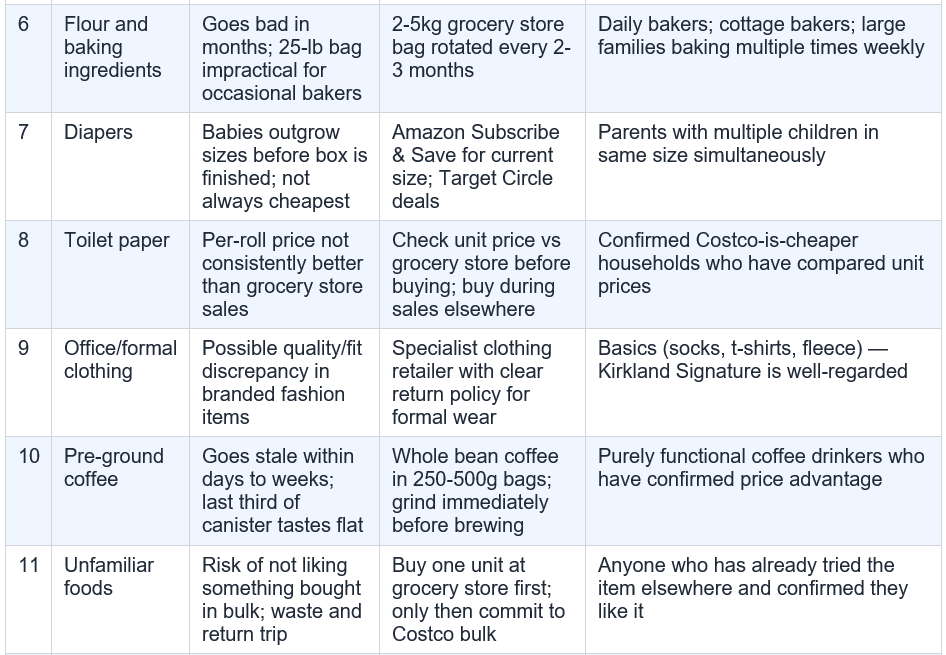
Julie Ramhold, consumer analyst at DealNews.com (MoneyLion, May 2026): 'Unless you have plans for 3 pounds of broccoli, 2 pounds of green beans or 8 pounds of oranges, buying fresh produce at Costco might not be the wisest move to make. That just diminishes the value overall and leads to food waste.' HAPS Alliance 2026: 'Experienced shoppers know Costco is about value, not just bulk quantity.' Sources cited.
The Costco test before you put anything in the trolley: (1) Will I genuinely use all of this before it expires or degrades? (2) Is this actually cheaper per unit than my grocery store? (3) Do I have storage space for this? (4) Have I bought this from Costco before and been happy with the quality? If any answer is no or uncertain: leave it on the shelf.
Spoils in days. Hard to inspect quality in bulk packaging. A mouldy carton = paying for the whole thing regardless. 'Unless you have plans for 3 pounds of broccoli' (Julie Ramhold, DealNews.com; GOBankingRates May 2026).
Fresh baked goods go stale within 1-3 days unless frozen immediately. A pack of 12 croissants for a household of 2-3 means freezing most of them on day one (GOBankingRates May 2026).
Cooking oils go rancid within months of opening. 'It only takes a few months for oil to start going bad' (Eat This, Not That). Most households cannot use 2+ litres of olive oil before degradation. Not a genuine saving.
Spices lose potency within 6-12 months. Buying in bulk means cooking with flat-tasting spice for 2-3 years, then discarding. 'For home cooks, buying spices in bulk usually doesn't pay off' (Kiplinger).
Soda available in bulk at most grocery stores, often at competitive per-can prices. Not a unique Costco value. Some Target 24-packs beat Costco pricing (Eat This, Not That). Storage space cost is real.
Flour goes bad in months. A 25-lb bag is impractical for most households. Moisture absorption, pest risk, and storage constraints make bulk flour a poor choice unless you bake very frequently (FinanceBuzz 2026).
Babies outgrow sizes quickly. A 250-count box of Size 2 diapers may last longer than the baby stays in Size 2. Storage challenge. Per-diaper price not always better than Target or Amazon Subscribe & Save (FinanceBuzz 2026).
The per-roll price at grocery stores often matches or beats Costco — particularly during sales. Storage space for a 36-pack has a real cost. 'You may be better off buying at the grocery store' (FinanceBuzz 2026).
Branded fashion items and dress shoes at Costco may be lower-quality versions of the retail product. 'For items to wear to the office or in dressier settings, you'll probably want to shop elsewhere' (Ramhold, DealNews.com; MoneyLion 2026).
Pre-ground coffee goes stale within days to weeks of opening. A 3lb canister lasts months — the final portion will taste notably flat (we3travel July 2025). Coffee is best freshly ground in smaller quantities.
Bulk buying something you have never tried means committing 2-3 servings worth of usage to discover you don't like it — plus a trip back for a return. 'Experimenting with new food may not be best when buying in bulk' (FinanceBuzz 2026).
Cleaning chemicals degrade over months — bleach loses disinfecting power within 3-6 months, dishwasher tablets absorb moisture and cake. 'Over time, a lot of cleaning supplies lose their effectiveness' (Costco97, November 2025).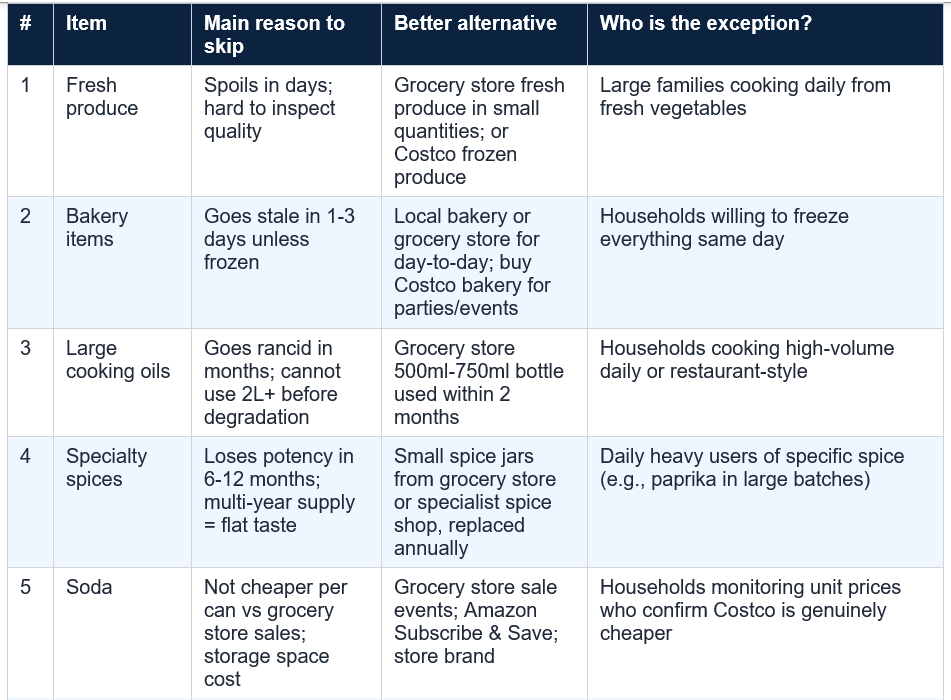

Julie Ramhold summarised the produce problem perfectly: ‘That just diminishes the value overall and leads to food waste.’ The same logic applies to every item on this list. When bulk buying leads to waste, you have not saved money. You have paid for the illusion of savings. The fix is not to avoid Costco — it is to check the list, compare the unit price, assess your storage, and ask yourself honestly whether you will use all of it.
No. Multiple consumer guides confirm that Costco's per-unit prices are not consistently the cheapest option for all items. FinanceBuzz's 2026 Costco analysis notes that for soda, toilet paper, and some diapers, per-unit pricing at regular grocery stores, Target, or Amazon Subscribe & Save can match or beat Costco. Eat This, Not That found that buying 24 cans of certain soda brands at Target can be more than a dollar cheaper than the equivalent Costco case. The HAPS Alliance 2026 Costco guide notes that 'experienced shoppers know Costco is about value, not just bulk quantity' — and that means comparing unit prices before buying. The items where Costco genuinely excels on price tend to be: Kirkland Signature products (private label), large format household staples consumed daily (paper towels, laundry detergent for large families), quality proteins (rotisserie chicken, salmon), and electronics. Sources: FinanceBuzz 2026; Eat This, Not That; HAPS Alliance 2026.
What fresh produce is actually worth buying at Costco?
The core problem with fresh produce at Costco is the quantity relative to typical household consumption speed. However, some fresh produce categories work better than others. Items that either last longer in the fridge or can be frozen immediately are more manageable: whole fruits and vegetables with firm skins (apples, oranges, potatoes, carrots) last longer and are less likely to degrade before use. The better recommendation, confirmed by multiple Costco guides, is to buy already-frozen produce at Costco rather than fresh: frozen fruits and vegetables cannot go bad, and Costco's frozen section often offers genuine bulk value. For households with large families who cook from fresh produce daily, the calculus changes: a 3-pound bag of broccoli consumed across the week represents genuine savings. Sources: FinanceBuzz 2026; MoneyLion / Julie Ramhold May 2026; we3travel July 2025.
Why do some brand-name items at Costco seem lower quality?
This is a persistent observation among Costco shoppers, particularly for branded clothing and shoes. FinanceBuzz's 2026 guide explains the most commonly cited theory: Costco can sell branded items for less because it gets lower-quality inventory — variations or off-spec products that the brand does not sell through its primary retail channels. This is not confirmed by Costco or the brands themselves, and it may not apply to all branded items. However, Julie Ramhold of DealNews.com (MoneyLion May 2026) supports the general caution for dressy or formal clothing specifically, recommending shopping elsewhere for office wear and formal dressings. The Kirkland Signature products, by contrast, are widely praised as matching or exceeding the quality of premium branded alternatives in many categories — the quality concern applies primarily to the occasional branded third-party item sold at Costco, not to the Kirkland own-brand range. Sources: FinanceBuzz 2026; MoneyLion / Ramhold May 2026.
Is Costco worth it for small households or single people?
This depends heavily on which items you buy. A single person or small household can still get significant value from a Costco membership on non-perishable items they use consistently: Kirkland Signature vitamins, household cleaning products in quantities they will use within a few months, electronics, quality proteins they will freeze, and certain shelf-stable grocery items. The items to avoid are the same ones on this list, but the caution is higher for small households because consumption rates are lower and the window before spoilage or degradation is tighter. The general guidance: Costco membership is worth it for small households who buy strategically (non-perishables, frozen foods, regular-use items) and avoid th
What are the absolute best things to buy at Costco?
While this article focuses on the worst buys, it is worth noting what Costco does exceptionally well. Multiple consumer guides agree: rotisserie chicken (famous value proposition), Kirkland Signature products generally (own-brand quality comparable to premium brands), bulk paper towels and tissues for large households, laundry detergent in quantities you will use within 3-4 months, quality protein (salmon fillets, chicken breasts) that can be portioned and frozen, vitamins and supplements (significantly cheaper than pharmacy pricing), electronics at competitive prices, and gasoline (where Costco typically offers below-average local prices). The pattern: Costco excels on items with long shelf lives, items used daily by large households, and items where the Kirkland Signature brand competes directly with premium alternatives. It fails on items that spoil, degrade, or are available at competitive per-unit prices elsewhere. Sources: FinanceBuzz 2026; Kiplinger; Costco97.com.
Costco is genuinely one of the best places to save money on groceries, household essentials, and big-ticket items. The membership pays for itself quickly if you buy the right things. But the bulk model has a built-in trap: the savings only materialise when you actually use everything you buy before it expires, degrades, or turns out not to be cheaper per unit than alternatives. Consumer analyst Julie Ramhold of DealNews.com, speaking to MoneyLion in May 2026, captured the core principle: unless you have plans for everything in that package — all three pounds of broccoli, all 12 croissants, all two litres of olive oil — the apparent deal dissolves into food waste and storage clutter. This article covers the 12 items where multiple sources of consumer advice and expert commentary consistently agree: the Costco bulk buy does not deliver the value it promises. For each one, we explain why and tell you what to buy instead.
Table of Contents
- Why Bulk Isn’t Always Better: The Core Costco Trap
- The Four Reasons Something Fails as a Costco Buy
- Item #1 [FRESH PRODUCE]: Fresh Fruits and Vegetables
- Item #2 [BAKERY ITEMS]: Bread, Muffins, Croissants, and Baked Goods
- Item #3 [COOKING OIL]: Large Bottles of Cooking Oil (Olive Oil, Vegetable Oil)
- Item #4 [SPICES]: Specialty Spices in Bulk
- Item #5 [SODA]: Soda and Fizzy Drinks
- Item #6 [FLOUR & BAKING]: Flour and Bulk Baking Ingredients
- Item #7 [DIAPERS]: Diapers (Nappies) in Massive Bulk
- Item #8 [TOILET PAPER]: Toilet Paper — A Sacred Bulk Item That Isn’t Always a Deal
- Item #9 [FASHION CLOTHING]: Office Wear, Dress Clothes, and Fashion Shoes
- Item #10 [PRE-GROUND COFFEE]: Pre-Ground Coffee in Large Bulk Canisters
- Item #11 [UNFAMILIAR FOODS]: New Foods You’ve Never Tried Before
- Item #12 [CLEANING SUPPLIES]: Cleaning Supplies and Household Chemicals in Bulk
- The Quick-Reference Scorecard
- Conclusion: Costco Is Brilliant for the Right Things
- Frequently Asked Questions
Why Bulk Isn’t Always Better: The Core Costco Trap
Costco is a genuinely excellent retailer. The Kirkland Signature brand consistently outperforms comparable products in consumer tests. The rotisserie chicken at $4.99 is one of the most famous loss-leaders in American retail history. The electronics section regularly undercuts major retailers on big-ticket items. For the right purchases — paper towels used daily by a large family, high-quality protein consumed weekly, household items you know you will use every single month — a Costco membership pays for itself many times over.But the bulk model creates a specific cognitive trap that catches both new and experienced members. The trap is this: per-unit prices that are genuinely cheaper per pound or per item only represent real savings if you consume all of what you buy before it expires, degrades, or loses its quality. The moment you throw away a half-used container of something that went bad, or discard a spice that lost its potency months ago, the per-unit arithmetic collapses. The HAPS Alliance 2026 Costco shopping guide put the principle clearly: ‘Experienced shoppers know Costco is about value, not just bulk quantity.’ The 12 items in this article are the ones where that calculation most consistently fails.
Julie Ramhold, consumer analyst at DealNews.com (MoneyLion, May 2026): 'Unless you have plans for 3 pounds of broccoli, 2 pounds of green beans or 8 pounds of oranges, buying fresh produce at Costco might not be the wisest move to make. That just diminishes the value overall and leads to food waste.' HAPS Alliance 2026: 'Experienced shoppers know Costco is about value, not just bulk quantity.' Sources cited.
The Four Reasons Something Fails as a Costco Buy
Every item on this list fails for at least one of four reasons. Understanding them makes the 12 worst items — and the principle behind them — easier to remember next time you are tempted by a large-format display.- Spoilage: the item expires before a typical household can use it. Affects fresh produce, bakery items, deli meats, and milk.
- Degradation: the item does not technically expire but loses its quality over time. Affects spices, cooking oils, pre-ground coffee, and cleaning chemicals.
- Price parity: Costco’s bulk price is not cheaper per unit than alternatives at regular grocery stores, discount retailers, or Amazon Subscribe & Save. Affects soda, toilet paper, and some diapers.
- Quality discrepancy: the item is a different (often lower) quality version of what you expect from the brand. Affects some fashion clothing and shoes.
The Costco test before you put anything in the trolley: (1) Will I genuinely use all of this before it expires or degrades? (2) Is this actually cheaper per unit than my grocery store? (3) Do I have storage space for this? (4) Have I bought this from Costco before and been happy with the quality? If any answer is no or uncertain: leave it on the shelf.
#1 FRESH PRODUCE: Fresh Fruits and Vegetables
Fresh produce is one of the most consistently cited poor Costco purchases across multiple sources, and the reason is straightforward: strawberries, berries, cucumbers, leafy greens, and other perishables have a shelf life of days to a week. When you buy three pounds of broccoli, eight pounds of oranges, or a large carton of strawberries, the clock starts immediately. Julie Ramhold, consumer analyst at DealNews.com, speaking to GOBankingRates in May 2026, was direct: ‘Unless you have plans for 3 pounds of broccoli, 2 pounds of green beans or 8 pounds of oranges, buying fresh produce at Costco might not be the wisest move to make.’ FinanceBuzz’s 2026 guide notes the additional problem: buying in bulk keeps you from spotting obvious quality issues that would stand out in a smaller package — you might accidentally buy a half-mouldy carton of strawberries without realising it, which means you have even less time to consume what remains. The exception: households with large families that cook heavily from fresh produce every day, or those who freeze produce immediately on purchase.Spoils in days. Hard to inspect quality in bulk packaging. A mouldy carton = paying for the whole thing regardless. 'Unless you have plans for 3 pounds of broccoli' (Julie Ramhold, DealNews.com; GOBankingRates May 2026).
#2 BAKERY ITEMS: Bread, Muffins, Croissants, and Baked Goods
The in-store bakery section at Costco is one of its most visually appealing areas. The muffins are enormous. The croissants are piled high. The baked goods are dramatically good value on a per-item price basis. The problem is the same one that affects all fresh perishables: they are only fresh for a short window, and the window is significantly shorter than the time it takes most households to work through 12 croissants or a giant pack of muffins. Julie Ramhold, speaking to MoneyLion in May 2026, noted: ‘If you don’t freeze them the same day you buy them, you run the risk of them going stale or worse.’ She added: ‘Most items will be decent after being frozen even for long periods of time as long as you wrap them well, but fresh baked goods are often better when they’re, well, fresh.’ The we3travel July 2025 guide specifically flagged that recipe changes at Costco have reduced value and satisfaction in some baked goods, and that dryness problems make certain baked goods less enjoyable than earlier offerings. Unless you are buying for a gathering, a large family, or planning to freeze immediately, the bakery section is a spending trap.Fresh baked goods go stale within 1-3 days unless frozen immediately. A pack of 12 croissants for a household of 2-3 means freezing most of them on day one (GOBankingRates May 2026).
#3 COOKING OIL: Large Bottles of Cooking Oil (Olive Oil, Vegetable Oil)
Olive oil is one of the classic examples of a Costco item that looks like excellent value but often is not. The large format bottles — 2 litres or more — appear dramatically cheaper per litre than the same oil at a standard grocery store. And they are cheaper per litre. The problem: cooking oils, and especially olive oil, go rancid over time once opened and exposed to air and light. Eat This, Not That’s Costco guide states the case plainly: ‘It only takes a few months for oil to start going bad. And are you going to need two litres’ worth of olive oil in that time frame?’ Rancid oil not only tastes unpleasant but loses its nutritional properties. For a household that uses olive oil occasionally for salad dressings and light sautéing, a 2-litre Costco bottle might last 9-12 months, by which point the second half will have degraded significantly. Unless you are cooking for a large family or restaurant-level volumes, the apparent per-unit saving is outweighed by the degradation cost and the waste.Cooking oils go rancid within months of opening. 'It only takes a few months for oil to start going bad' (Eat This, Not That). Most households cannot use 2+ litres of olive oil before degradation. Not a genuine saving.
#4 SPICES: Specialty Spices in Bulk
Spices are a classic example of the Costco bulk trap. They look like exceptional value: a large bottle of cumin or smoked paprika for barely more than a small jar at the grocery store. The calculation is straightforward until you factor in potency. Spices don’t spoil in a way that makes them unsafe, but they do lose their flavour and aroma within six to twelve months of opening. Buying a large container of a specialty spice you use occasionally means cooking with progressively weaker flavour for the next two to three years, or throwing out a mostly full container when you finally accept the spice has lost its punch. Kiplinger’s worst Costco buys guide is clear: ‘For home cooks, buying spices in bulk usually doesn’t pay off.’ Eat This, Not That notes: ‘While you might be OK buying staples like salt and pepper at Costco, you won’t want to buy specialty spices in bulk at the warehouse club.’ The exception: high-volume users who go through a specific spice quickly (cayenne in a household that makes hot sauce weekly, for example).Spices lose potency within 6-12 months. Buying in bulk means cooking with flat-tasting spice for 2-3 years, then discarding. 'For home cooks, buying spices in bulk usually doesn't pay off' (Kiplinger).
#5 SODA: Soda and Fizzy Drinks
Soda might seem like a natural Costco purchase: it is non-perishable, widely consumed, and sold in enormous multipacks. But soda is one of the few items where Costco’s per-unit pricing is not consistently advantageous. Costco97.com’s November 2025 guide notes that soda is readily available in bulk format at most regular grocery stores, and that Costco’s pricing is not always better on a per-can basis — particularly during grocery store sale events. FinanceBuzz’s 2026 guide agrees: ‘Unlike a lot of other Costco staples, sodas are sold in bulk in most grocery stores.’ The Eat This, Not That Costco guide found that buying 24 cans at Target can be more than a dollar cheaper than the equivalent Costco case for some soda brands. Additionally, a 36-pack of soda requires a significant amount of storage space, and households that do not drink soda daily may find the purchase more convenient than cost-effective. If you monitor grocery store sales or use warehouse clubs’ pricing against soda on sale at Target or Amazon Subscribe & Save, you may find consistent savings without the Costco premium.Soda available in bulk at most grocery stores, often at competitive per-can prices. Not a unique Costco value. Some Target 24-packs beat Costco pricing (Eat This, Not That). Storage space cost is real.
#6 FLOUR & BAKING: Flour and Bulk Baking Ingredients
Flour is a pantry staple with a reasonable shelf life — typically 6-12 months for all-purpose flour if stored in a cool, dry place. That sounds like sufficient time to use a 25-pound Costco bag. It is not, for most households. The average household uses flour occasionally for pancakes, baking, and coating, not daily. FinanceBuzz’s 2026 guide notes that flour doesn’t spoil as fast as fruits and vegetables, ‘but it still goes bad after a few months.’ More practically, a 25-pound bag of flour requires a significant storage container, keeps absorbing moisture over time even when sealed, and can attract pantry pests. The same logic applies to bulk sugar, yeast, baking powder, and cornmeal — all have limited shelf lives once opened, and most households bake infrequently enough that buying in the smallest available unit at a regular grocery store produces better quality results and less waste. The exception: someone who bakes bread daily, runs a cottage bakery, or has a large family that bakes weekly.Flour goes bad in months. A 25-lb bag is impractical for most households. Moisture absorption, pest risk, and storage constraints make bulk flour a poor choice unless you bake very frequently (FinanceBuzz 2026).
#7 DIAPERS: Diapers (Nappies) in Massive Bulk
Diapers seem like an obvious Costco win: they are a guaranteed necessity for parents, non-perishable, and expensive in small quantities. The problem is the intersection of sizing and consumption rate. Babies grow fast — faster, in many cases, than a parent can work through a 250-diaper box of a specific size. FinanceBuzz’s 2026 guide notes the storage challenge and the awkward reality: ‘Unless you are buying for triplets, it may be better to buy less elsewhere.’ FinanceBuzz’s companion Costco guide also highlights diapers as more convenient to buy in bulk but notes that the per-unit pricing may not be better than grocery stores. Costco97.com’s November 2025 analysis concurs, noting that Costco doesn’t always offer the best per-diaper price, and that moving on to the next size before finishing a bulk box is a genuine risk that parents routinely underestimate. The exception: parents of multiple children simultaneously, or those buying ahead knowing they have several months in a specific size.Babies outgrow sizes quickly. A 250-count box of Size 2 diapers may last longer than the baby stays in Size 2. Storage challenge. Per-diaper price not always better than Target or Amazon Subscribe & Save (FinanceBuzz 2026).
#8 TOILET PAPER: Toilet Paper — A Sacred Bulk Item That Isn’t Always a Deal
Toilet paper is perhaps the most iconic Costco purchase — the giant pack visible from across the warehouse has become almost a cultural symbol of bulk buying. But the assumption that Costco’s toilet paper is the cheapest per-roll option is not always true. FinanceBuzz’s 2026 worst Costco buys guide notes explicitly: ‘On a per-roll basis, you may be better off buying your toilet paper at the grocery store rather than a bulk warehouse.’ Multiple sources agree that the real cost of the bulk toilet paper purchase includes not just the price per roll but the storage space consumed — a 36-pack of double rolls occupies considerable space in a cupboard or garage that has an opportunity cost. The calculation depends heavily on which brand you compare, which grocery store you use, and whether you catch store sale events. Before defaulting to the Costco toilet paper purchase, compare the per-sheet or per-roll price against the grocery store equivalent during a sale.The per-roll price at grocery stores often matches or beats Costco — particularly during sales. Storage space for a 36-pack has a real cost. 'You may be better off buying at the grocery store' (FinanceBuzz 2026).
#9 FASHION CLOTHING: Office Wear, Dress Clothes, and Fashion Shoes
Costco sells branded clothing at prices that seem too good to be true — and sometimes, according to persistent shopper feedback, they are. FinanceBuzz’s 2026 guide notes that some Costco shoppers have bought cheaper brand-name items like shoes at Costco only to be disappointed in the quality and fit, ‘speculating that Costco can sell branded items for less because it gets lower-quality inventory.’ Julie Ramhold, consumer analyst at DealNews.com, offered a nuanced view to MoneyLion in May 2026: ‘With things like jackets and socks, you’re probably fine to shop at Costco, but for items to wear to the office or in dressier settings, you’ll probably want to shop elsewhere.’ The principle here is not that Costco clothing is uniformly poor quality — the Kirkland Signature basics (t-shirts, socks, jeans) are widely praised. It is that the occasional branded fashion item, the dress shoes, the formal work blouse, or the fashion trainer bought on impulse at Costco, may disappoint precisely because it needs to perform well in contexts where quality and fit are noticeable. Not a product category to browse at Costco without specific prior knowledge of the item.Branded fashion items and dress shoes at Costco may be lower-quality versions of the retail product. 'For items to wear to the office or in dressier settings, you'll probably want to shop elsewhere' (Ramhold, DealNews.com; MoneyLion 2026).
#10 PRE-GROUND COFFEE: Pre-Ground Coffee in Large Bulk Canisters
Costco sells large canisters of pre-ground coffee that seem like exceptional value for coffee-drinkers. The we3travel July 2025 guide included bulk pre-ground coffee in its worst Costco buys list, and the reason is freshness. Once ground, coffee begins to stale within a few days to a couple of weeks in the best conditions, as the surface area exposed to oxygen increases dramatically compared to whole beans. A 1.36kg (3lb) canister of pre-ground coffee will last most households two to four months. By the final third of that canister, the coffee will have lost significant flavour complexity compared to its initial state. For households that care about coffee quality, buying smaller quantities of freshly roasted whole beans and grinding immediately before brewing produces a dramatically better result. For households that use coffee purely for caffeine with little attention to flavour, the Costco bulk ground coffee may be acceptable value for money.Pre-ground coffee goes stale within days to weeks of opening. A 3lb canister lasts months — the final portion will taste notably flat (we3travel July 2025). Coffee is best freshly ground in smaller quantities.
#11 UNFAMILIAR FOODS: New Foods You’ve Never Tried Before
This is the Costco mistake that every seasoned member has made at least once. The warehouse is full of intriguing items — an enormous tub of a sauce you have not tried before, a 2kg bag of a grain you saw in a recipe, a large pack of a snack that sounded appealing from the display description. The impulse to try new things at Costco is natural and is actively encouraged by the product layout and sample culture. But buying in bulk before confirming you actually like something converts a small experiment into a large, potentially expensive commitment. FinanceBuzz’s 2026 guide put it simply: ‘Experimenting with a new food or trying something different may not be the best idea when you’re buying in bulk.’ The HAPS Alliance 2026 Costco guide lists impulse buying as one of the top Costco mistakes, noting that large product displays specifically encourage it. Costco does have a generous return policy for food items, but returning a partially used product requires effort and the journey back to the store.Bulk buying something you have never tried means committing 2-3 servings worth of usage to discover you don't like it — plus a trip back for a return. 'Experimenting with new food may not be best when buying in bulk' (FinanceBuzz 2026).
#12 CLEANING SUPPLIES: Cleaning Supplies and Household Chemicals in Bulk
Cleaning products — dishwasher tablets, laundry detergent, bleach, multi-surface sprays — seem like ideal Costco buys. They are non-perishable, widely used, and sold at apparent discounts in large formats. The less-discussed reality is that many household chemicals degrade over time, losing effectiveness as active ingredients break down. Costco97.com’s November 2025 guide noted: ‘Over time, a lot of cleaning supplies and household items lose their effectiveness, or just go bad.’ Bleach, for example, loses a significant portion of its disinfecting power within three to six months of manufacture (often several months before purchase), meaning a large bulk purchase of bleach may be considerably less effective by the time you reach the second bottle. Dishwasher tablets, when exposed to humidity, can cake and dissolve unevenly. Aerosol sprays can lose propellant pressure. For a household using these products constantly, the bulk quantities are consumed fast enough to avoid these issues. For a household of two people using one bottle of bleach every three months, buying a six-bottle pack is buying degradation.Cleaning chemicals degrade over months — bleach loses disinfecting power within 3-6 months, dishwasher tablets absorb moisture and cake. 'Over time, a lot of cleaning supplies lose their effectiveness' (Costco97, November 2025).
The Quick-Reference Scorecard
Conclusion
None of the twelve items on this list makes Costco a bad place to shop. They make Costco a place to shop with a list, a unit-price comparison habit, and an honest assessment of your actual consumption rate before reaching for the large-format container. The items that make Costco genuinely excellent — the rotisserie chicken, the Kirkland Signature basics, the large-format olive oil if you genuinely use it fast enough, the bulk paper towels for a large family, the electronics, the seasonal travel deals, and the branded goods available at genuine discounts — are not mentioned in this article because they do not need warnings. This article is specifically about the twelve categories where the bulk model’s logic falls apart.Julie Ramhold summarised the produce problem perfectly: ‘That just diminishes the value overall and leads to food waste.’ The same logic applies to every item on this list. When bulk buying leads to waste, you have not saved money. You have paid for the illusion of savings. The fix is not to avoid Costco — it is to check the list, compare the unit price, assess your storage, and ask yourself honestly whether you will use all of it.
Frequently Asked Questions
Is Costco always the cheapest option for bulk items?No. Multiple consumer guides confirm that Costco's per-unit prices are not consistently the cheapest option for all items. FinanceBuzz's 2026 Costco analysis notes that for soda, toilet paper, and some diapers, per-unit pricing at regular grocery stores, Target, or Amazon Subscribe & Save can match or beat Costco. Eat This, Not That found that buying 24 cans of certain soda brands at Target can be more than a dollar cheaper than the equivalent Costco case. The HAPS Alliance 2026 Costco guide notes that 'experienced shoppers know Costco is about value, not just bulk quantity' — and that means comparing unit prices before buying. The items where Costco genuinely excels on price tend to be: Kirkland Signature products (private label), large format household staples consumed daily (paper towels, laundry detergent for large families), quality proteins (rotisserie chicken, salmon), and electronics. Sources: FinanceBuzz 2026; Eat This, Not That; HAPS Alliance 2026.
What fresh produce is actually worth buying at Costco?
The core problem with fresh produce at Costco is the quantity relative to typical household consumption speed. However, some fresh produce categories work better than others. Items that either last longer in the fridge or can be frozen immediately are more manageable: whole fruits and vegetables with firm skins (apples, oranges, potatoes, carrots) last longer and are less likely to degrade before use. The better recommendation, confirmed by multiple Costco guides, is to buy already-frozen produce at Costco rather than fresh: frozen fruits and vegetables cannot go bad, and Costco's frozen section often offers genuine bulk value. For households with large families who cook from fresh produce daily, the calculus changes: a 3-pound bag of broccoli consumed across the week represents genuine savings. Sources: FinanceBuzz 2026; MoneyLion / Julie Ramhold May 2026; we3travel July 2025.
Why do some brand-name items at Costco seem lower quality?
This is a persistent observation among Costco shoppers, particularly for branded clothing and shoes. FinanceBuzz's 2026 guide explains the most commonly cited theory: Costco can sell branded items for less because it gets lower-quality inventory — variations or off-spec products that the brand does not sell through its primary retail channels. This is not confirmed by Costco or the brands themselves, and it may not apply to all branded items. However, Julie Ramhold of DealNews.com (MoneyLion May 2026) supports the general caution for dressy or formal clothing specifically, recommending shopping elsewhere for office wear and formal dressings. The Kirkland Signature products, by contrast, are widely praised as matching or exceeding the quality of premium branded alternatives in many categories — the quality concern applies primarily to the occasional branded third-party item sold at Costco, not to the Kirkland own-brand range. Sources: FinanceBuzz 2026; MoneyLion / Ramhold May 2026.
Is Costco worth it for small households or single people?
This depends heavily on which items you buy. A single person or small household can still get significant value from a Costco membership on non-perishable items they use consistently: Kirkland Signature vitamins, household cleaning products in quantities they will use within a few months, electronics, quality proteins they will freeze, and certain shelf-stable grocery items. The items to avoid are the same ones on this list, but the caution is higher for small households because consumption rates are lower and the window before spoilage or degradation is tighter. The general guidance: Costco membership is worth it for small households who buy strategically (non-perishables, frozen foods, regular-use items) and avoid th
What are the absolute best things to buy at Costco?
While this article focuses on the worst buys, it is worth noting what Costco does exceptionally well. Multiple consumer guides agree: rotisserie chicken (famous value proposition), Kirkland Signature products generally (own-brand quality comparable to premium brands), bulk paper towels and tissues for large households, laundry detergent in quantities you will use within 3-4 months, quality protein (salmon fillets, chicken breasts) that can be portioned and frozen, vitamins and supplements (significantly cheaper than pharmacy pricing), electronics at competitive prices, and gasoline (where Costco typically offers below-average local prices). The pattern: Costco excels on items with long shelf lives, items used daily by large households, and items where the Kirkland Signature brand competes directly with premium alternatives. It fails on items that spoil, degrade, or are available at competitive per-unit prices elsewhere. Sources: FinanceBuzz 2026; Kiplinger; Costco97.com.
0 Comments
Be the first to share your thoughts on this article.