

Financial Literacy
Money Stress? Here Is What To Do To Avoid a Financial Crisis

Build resilience by tracking cash flow, balancing a cushion against debt payments, and calling your bank or credit union before small stresses become big ones. 47% can cover a $1,000 emergency; 30% would use savings; 33% would borrow; household debt $19.1 trillion; card debt $1.285 trillion; 5.0% of debt delinquent.
% by Source: Bankrate, U.S. News
If money feels tight right now, you are far from alone, and acting early is the single most useful thing you can do. The short version is four moves. Track where your money really goes, watch for early warning signs, balance a small emergency cushion against debt payments, and contact your bank, credit union or lender before you miss a payment. That last step is the one people skip. FDIC consumer guidance says it is important to contact your bank to discuss your options before skipping any payments or taking other action that differs from your loan terms. The CFPB says the same: if you may fall behind on a mortgage, auto loan, credit card, student loan or other debt, call your lender and explain. This post walks through each step in plain language, with the latest numbers and a few honest caveats. It will not make the pressure vanish, but it can turn a looming crisis into a manageable plan.
Key takeaway: Small problems are cheaper and easier to fix than big ones. Know your numbers, build a small buffer, and talk to your lender before a missed payment, not after.
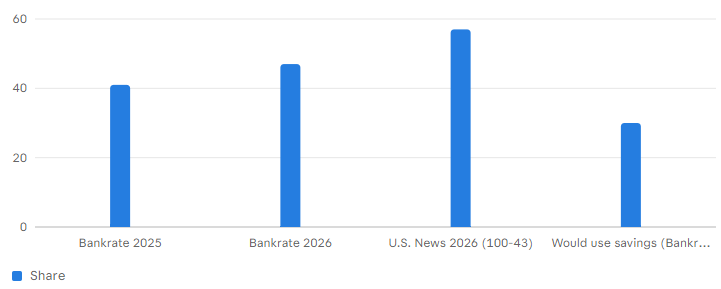
The surveys differ, which is worth noting. Bankrate's 2026 survey shows 47% saying they could cover $1,000, up from 41% a year earlier [4], while U.S. News reports 43% who could not. Different questions and methods give different numbers, so treat them as a rough range, not an exact count. Other pressures are building. Bankrate says 29% of Americans have more credit card debt than emergency savings. And the cost of living is not helping: wage growth of 3.1% trails inflation of 3.7% in the latest figures. That mix leaves cushions thinner. If you recognise yourself in these numbers, remember that financial stress is common, not a personal failing. The question is what to do next.
At the end of the month, add up each bucket and compare it with your income. If the first two buckets already use nearly everything you earn, you have a structural squeeze, and trimming small treats will not be enough. If there is a gap only in certain weeks, the problem may be timing, and a change in bill due dates could help.
Pay special attention to the weeks when several bills land together. A lender may allow you to move a due date, which can smooth out a month without changing what you owe.
Interest adds up quickly. Using a round example of a $1,500 card balance at 21%, the interest alone would be about $26 a month (my calculation), which is money that is neither reducing your balance nor building your buffer. The 21% figure is the average card rate cited by ABC30, though rates vary by card and borrower. The best time to act is when you notice the first sign, not the fifth. Few problems get cheaper by waiting.
A common way to think about it, and one that I find practical, is a two-stage approach. First, build a small starter buffer, perhaps one month of essential bills or a figure that would cover your most likely emergency, such as a car or phone repair. Second, direct extra money at the highest-interest debt while continuing the buffer at a smaller pace. That is a general principle, not advice for your particular case. Why not put everything into debt? Because a card balance at about 21% interest costs more than a savings account earns, but an emergency without a cushion usually lands on that same card. Why not save everything first? Because while you save, expensive debt keeps growing. The balance between the two is personal, depends on your job security and family situation, and can shift over time. One more principle: pay at least the minimum on every debt, always. Missing a minimum can bring late fees, a higher rate and credit score damage. If you cannot make even the minimum, that is the moment for the next step.
Prepare before you call. Write down your income, essential bills, what changed (job loss, medical bill, reduced hours) and what monthly payment you can realistically afford. Ask for the "hardship" or "customer assistance" team, take notes, record the date and name of the person you speak with, and ask for any agreement in writing. If you are not sure what to ask, here are some questions. What hardship options do you offer? Will the plan reduce my interest rate or waive fees? How long does it last? Will it be reported to the credit bureaus? What happens when it ends? Do I need to keep making payments during the plan?
So a hardship program is a tool, not a cure. It buys time and may lower costs while you stabilise, but the debt remains, and you will still need a plan to repay it. Think of it as a bridge, and use the time to fix the underlying cash flow problem. For mortgages, auto loans and student loans, the options differ: they may include forbearance, modified payment plans or deferment. Ask your servicer which apply to your loan, and check whether interest still accrues during any pause.
Be careful with anyone who promises to wipe out your debt. The CFPB flags upfront fees as a major red flag for debt relief services, unless it is a nonprofit credit counselling program entering you into a plan such as a DMP. A real counsellor will review your whole situation, explain the pros and cons, and not pressure you to sign on the first call. Also remember that a DMP is not the same as settlement or bankruptcy, which have different consequences for your credit and possibly your taxes. A reputable nonprofit can explain those alternatives so you can choose with open eyes.
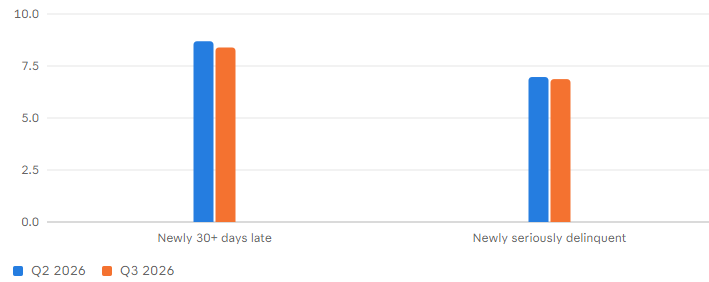
The data is not all bad. The rate of card balances newly 30 or more days late fell to 8.39% from 8.69%, and the rate turning seriously delinquent fell to 6.87% from 6.97%. But eMarketer notes the credit card delinquency gap between lower-income and higher-income households has widened by more than six percentage points since early 2024. In other words, the average hides a lot of difference between households. The average card rate is also uncertain. ABC30 cites about 21%, though other sources cite higher figures. Check your own statement for your real rate.
Look at your largest fixed costs too: housing, transport and insurance. Even a modest cut in one of those has more effect than skipping coffee for a year. If a big change is not practical now, a smaller one such as negotiating a due date or a payment plan with a utility may still help.
On the income side, consider short-term options such as extra hours, a side project or selling items you no longer need. These are not for everyone, and I do not want to suggest that anyone can simply work their way out. But a small, steady addition can help rebuild a buffer. Look also for help programs. Many utilities, local charities and community organisations offer assistance with bills during hardship, and a HUD-approved housing counsellor can advise on housing costs . Asking is not a sign of failure; it is what the programs are for.
Finally, think about what protects you from shocks: adequate insurance, a skills upgrade, a network of people who can help. The personal savings rate is a worrying signal here. The American Action Forum reported it fell from 5.5% a year earlier to 2.6% in April 2026, though another source cites FRED data showing about 4.5% in January. The figures are from different months, but both are far below the 1975 high of 17.3%.
Ask yourself a few honest questions. Do I know exactly what comes in and goes out each month? Which bill would I struggle with first if my income dropped? Do I have even a small cushion? Which debt costs the most? And have I spoken to my lender or credit union about the bills I am worried about? Also ask who you can talk to. Money stress affects sleep, relationships and health, and carrying it alone makes it heavier. A trusted friend, family member, a nonprofit counsellor or your doctor can all be part of the plan. If stress ever feels overwhelming, reach out to someone you trust or a local support service.
Household debt is at a record $19.1 trillion and more of it is slipping behind , so if you are stretched, you are in large company. Take one small step today, whether that is writing down your bills or making a single phone call. Small steps now can prevent much harder ones later.
Contact your lender or bank before you miss a payment, because many hardship programs require early outreach. Then list your income and essential bills so you know what you can afford.
Should I save or pay off debt first?
Usually both: build a small starter cushion, then put extra money toward the highest-interest debt while paying minimums on everything. Fortunly notes savers with at least $2,000 report higher financial well-being.
Will a hardship program hurt my credit?
It depends on the lender. Some accommodations do not affect your score, but some issuers report hardship plans, and earlier late payments stay on your report.
What is a debt management plan?
A structured repayment program run through a nonprofit credit counselling agency, where you repay 100% of your debt, potentially at a lower interest rate, usually with a small monthly fee.
How common is financial stress right now?
Very. Only 47% of Americans say they could cover a $1,000 emergency, and 5.0% of household debt is in some stage of delinquency.
Table of Contents
- Why so many households feel stretched
- Step 1: Track your household cash flow
- Step 2: Spot the early warning signs
- Step 3: Balance an emergency cushion with debt payments
- Step 4: Call your bank or credit union early
- What a hardship program can and cannot do
- Nonprofit credit counseling, and how to avoid scams
- What the latest debt data shows
- Trim the bills you can control
- Build lasting resilience
- Questions to ask yourself
- Conclusion
- FAQ
Share of Americans able to cover a $1,000 emergency (%)
% by Source: Bankrate, U.S. News
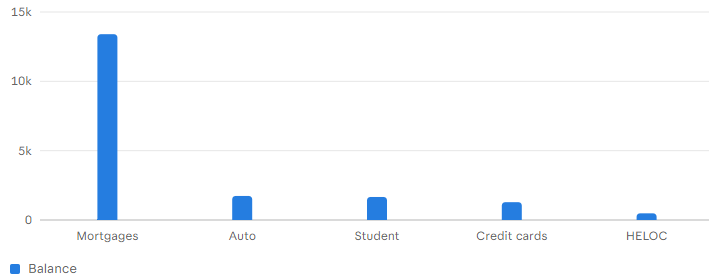
Household debt by type, Q3 2026 ($ billion)
$ billion by Source: New York Fed
Credit card delinquency transition rates (%)
% by Source: New York Fed via TheStreetIf money feels tight right now, you are far from alone, and acting early is the single most useful thing you can do. The short version is four moves. Track where your money really goes, watch for early warning signs, balance a small emergency cushion against debt payments, and contact your bank, credit union or lender before you miss a payment. That last step is the one people skip. FDIC consumer guidance says it is important to contact your bank to discuss your options before skipping any payments or taking other action that differs from your loan terms. The CFPB says the same: if you may fall behind on a mortgage, auto loan, credit card, student loan or other debt, call your lender and explain. This post walks through each step in plain language, with the latest numbers and a few honest caveats. It will not make the pressure vanish, but it can turn a looming crisis into a manageable plan.
Key takeaway: Small problems are cheaper and easier to fix than big ones. Know your numbers, build a small buffer, and talk to your lender before a missed payment, not after.
Why so many households feel stretched
Surveys paint a consistent picture. Bankrate's 2026 emergency savings report found that just 47% of Americans say they have enough liquidity or access to funds to cover a $1,000 emergency, while only 30% would pay it from savings. About a third, 33%, said they would go into debt to pay it. A separate U.S. News survey found that 43% could not cover a $1,000 expense from savings, and a third did not have enough to cover even one month of living expenses.The surveys differ, which is worth noting. Bankrate's 2026 survey shows 47% saying they could cover $1,000, up from 41% a year earlier [4], while U.S. News reports 43% who could not. Different questions and methods give different numbers, so treat them as a rough range, not an exact count. Other pressures are building. Bankrate says 29% of Americans have more credit card debt than emergency savings. And the cost of living is not helping: wage growth of 3.1% trails inflation of 3.7% in the latest figures. That mix leaves cushions thinner. If you recognise yourself in these numbers, remember that financial stress is common, not a personal failing. The question is what to do next.
Step 1: Track your household cash flow
You cannot fix what you cannot see. The first step is a clear picture of your household cash flow: what comes in, what goes out and when. This does not need fancy software. A spreadsheet, a notebook or your bank's own spending tool will do. Here is a simple method, which is my own suggestion, not a sourced rule. Over the next 30 days, write down every source of income and every payment. Sort them into three buckets: fixed bills you must pay (rent or mortgage, utilities, insurance, minimum debt payments), flexible essentials (groceries, fuel, transport) and everything else.At the end of the month, add up each bucket and compare it with your income. If the first two buckets already use nearly everything you earn, you have a structural squeeze, and trimming small treats will not be enough. If there is a gap only in certain weeks, the problem may be timing, and a change in bill due dates could help.
Pay special attention to the weeks when several bills land together. A lender may allow you to move a due date, which can smooth out a month without changing what you owe.
Step 2: Spot the early warning signs
Stress usually shows up in small ways first. Look for patterns such as using a credit card for groceries because your account is empty by mid-month, paying only the minimum on cards, dipping into savings every month, or paying one bill late to cover another. Bankrate found that 37% of American adults dipped into their emergency savings in the year before its 2026 survey. Another warning sign is relying on debt for everyday spending. Bankrate's survey found that a third of Americans would borrow to cover a $1,000 emergency. If borrowing has become your normal way of getting through the month, that is a signal to step back and review your budget before the balance grows.Interest adds up quickly. Using a round example of a $1,500 card balance at 21%, the interest alone would be about $26 a month (my calculation), which is money that is neither reducing your balance nor building your buffer. The 21% figure is the average card rate cited by ABC30, though rates vary by card and borrower. The best time to act is when you notice the first sign, not the fifth. Few problems get cheaper by waiting.
Step 3: Balance an emergency cushion with debt payments
The classic dilemma is whether to save or pay off debt. There is no single right answer, and the truth is you usually need both. A cushion matters because without one, any surprise forces you to borrow, which can undo your progress. Fortunly's roundup notes that workers without emergency savings are 13 times more likely to take a hardship withdrawal from a 401(k), and that holding at least $2,000 is associated with a 21% increase in overall financial well-being. That is a secondary source, but the direction is sensible.A common way to think about it, and one that I find practical, is a two-stage approach. First, build a small starter buffer, perhaps one month of essential bills or a figure that would cover your most likely emergency, such as a car or phone repair. Second, direct extra money at the highest-interest debt while continuing the buffer at a smaller pace. That is a general principle, not advice for your particular case. Why not put everything into debt? Because a card balance at about 21% interest costs more than a savings account earns, but an emergency without a cushion usually lands on that same card. Why not save everything first? Because while you save, expensive debt keeps growing. The balance between the two is personal, depends on your job security and family situation, and can shift over time. One more principle: pay at least the minimum on every debt, always. Missing a minimum can bring late fees, a higher rate and credit score damage. If you cannot make even the minimum, that is the moment for the next step.
Step 4: Call your bank or credit union early
This is the step the headline advice rests on. If you think you may not be able to make a payment, contact your bank, credit union or lender before you miss it. BestMoney says most lenders offer hardship programs, but often only if you reach out before the account becomes 30 days delinquent. Gerald adds that most hardship programs require proactive outreach and may not be advertised publicly. Why does early contact help? Lenders generally prefer a borrower who is trying to work something out to one who disappears. I cannot promise any outcome, but early contact opens more options, such as a temporary lower interest rate, reduced payments, a due-date change or a short pause. Late payments made before you enroll in a plan remain on your credit report, which is another reason to call first.Prepare before you call. Write down your income, essential bills, what changed (job loss, medical bill, reduced hours) and what monthly payment you can realistically afford. Ask for the "hardship" or "customer assistance" team, take notes, record the date and name of the person you speak with, and ask for any agreement in writing. If you are not sure what to ask, here are some questions. What hardship options do you offer? Will the plan reduce my interest rate or waive fees? How long does it last? Will it be reported to the credit bureaus? What happens when it ends? Do I need to keep making payments during the plan?
What a hardship program can and cannot do
A hardship program is a temporary arrangement that changes the terms of your account. NerdWallet describes a credit card hardship program as a payment plan, negotiated through your issuer, that may temporarily lower interest and waive fees, often for a short period such as three months or longer. Bills.com says most are offered directly by your lender, not by third-party companies. There are limits. NerdWallet notes some issuers require you to meet with a credit counsellor or sign an agreement and set up automatic withdrawals. Bills.com says the effect on your credit depends on the lender: in many cases an accommodation that reduces your minimum payment to zero should not affect your score, but some issuers report hardship plans to the credit bureaus.So a hardship program is a tool, not a cure. It buys time and may lower costs while you stabilise, but the debt remains, and you will still need a plan to repay it. Think of it as a bridge, and use the time to fix the underlying cash flow problem. For mortgages, auto loans and student loans, the options differ: they may include forbearance, modified payment plans or deferment. Ask your servicer which apply to your loan, and check whether interest still accrues during any pause.
Nonprofit credit counseling, and how to avoid scams
If you have several debts or your lender cannot help, a nonprofit credit counsellor may be the next step. CBS News says counselling agencies can help you enrol in a debt management program and build a repayment plan that works with your income. Bills.com describes a debt management plan (DMP) as a structured repayment program in which the counsellor works with creditors to potentially lower your interest rate while you repay 100% of what you owe, and notes that accounts typically need to be closed . Costs are modest. BestMoney says a DMP is typically free or low-cost, around $20 to $50 a month, and recommends agencies accredited by the National Foundation for Credit Counseling (NFCC) or the Financial Counseling Association of America. Gerald lists nonprofit counsellors and HUD-approved housing counsellors as options that can often help for free or at low cost.Be careful with anyone who promises to wipe out your debt. The CFPB flags upfront fees as a major red flag for debt relief services, unless it is a nonprofit credit counselling program entering you into a plan such as a DMP. A real counsellor will review your whole situation, explain the pros and cons, and not pressure you to sign on the first call. Also remember that a DMP is not the same as settlement or bankruptcy, which have different consequences for your credit and possibly your taxes. A reputable nonprofit can explain those alternatives so you can choose with open eyes.
What the latest debt data shows
The wider picture shows why so many people are feeling the squeeze. The New York Fed reported that total household debt rose by $334 billion, or 1.8%, in the third quarter of 2026 to $19.1 trillion. Credit card balances reached a record $1.285 trillion. More borrowers are behind. At the end of September, 5.0% of household debt was in some stage of delinquency, up from 4.7% three months earlier [8]. Student loans are a particular pressure point: the share of student loan balances 90 or more days past due rose to 10.9% from 10.6%.The data is not all bad. The rate of card balances newly 30 or more days late fell to 8.39% from 8.69%, and the rate turning seriously delinquent fell to 6.87% from 6.97%. But eMarketer notes the credit card delinquency gap between lower-income and higher-income households has widened by more than six percentage points since early 2024. In other words, the average hides a lot of difference between households. The average card rate is also uncertain. ABC30 cites about 21%, though other sources cite higher figures. Check your own statement for your real rate.
10. Trim the bills you can control
Once you know your numbers, look for bills you can lower. Call your internet, phone and insurance providers and ask for their best current rate. Review subscriptions you no longer use. Shop around for car insurance, which has been rising. If you have a mortgage or auto loan at a high rate and your credit has improved, ask about refinancing, but check the fees first.Look at your largest fixed costs too: housing, transport and insurance. Even a modest cut in one of those has more effect than skipping coffee for a year. If a big change is not practical now, a smaller one such as negotiating a due date or a payment plan with a utility may still help.
On the income side, consider short-term options such as extra hours, a side project or selling items you no longer need. These are not for everyone, and I do not want to suggest that anyone can simply work their way out. But a small, steady addition can help rebuild a buffer. Look also for help programs. Many utilities, local charities and community organisations offer assistance with bills during hardship, and a HUD-approved housing counsellor can advise on housing costs . Asking is not a sign of failure; it is what the programs are for.
Build lasting resilience
Resilience is built in calm periods, not in the middle of a crisis. Over time, aim to automate a small transfer to savings on payday, even if it is only $10 or $25 a week. Keep your emergency money in an insured account that earns interest but is separate from daily spending, and keep it boring. Review your finances on a schedule, perhaps monthly for ten minutes, to catch problems early. Keep a list of your debts with rates and minimums. Check your credit reports for errors. And plan for known irregular expenses, such as car registration or annual insurance, by setting aside a little each month.Finally, think about what protects you from shocks: adequate insurance, a skills upgrade, a network of people who can help. The personal savings rate is a worrying signal here. The American Action Forum reported it fell from 5.5% a year earlier to 2.6% in April 2026, though another source cites FRED data showing about 4.5% in January. The figures are from different months, but both are far below the 1975 high of 17.3%.
Ask yourself a few honest questions. Do I know exactly what comes in and goes out each month? Which bill would I struggle with first if my income dropped? Do I have even a small cushion? Which debt costs the most? And have I spoken to my lender or credit union about the bills I am worried about? Also ask who you can talk to. Money stress affects sleep, relationships and health, and carrying it alone makes it heavier. A trusted friend, family member, a nonprofit counsellor or your doctor can all be part of the plan. If stress ever feels overwhelming, reach out to someone you trust or a local support service.
Conclusion
Avoiding a financial crisis rarely comes down to one big move. It is the steady habits that matter: know your cash flow, notice the early warning signs, keep a small buffer, pay the minimums, and talk to your bank or credit union before a payment is missed. Programs and counsellors exist to help, but most work best when you contact them early.Household debt is at a record $19.1 trillion and more of it is slipping behind , so if you are stretched, you are in large company. Take one small step today, whether that is writing down your bills or making a single phone call. Small steps now can prevent much harder ones later.
FAQ
What should I do first if I cannot pay my bills?Contact your lender or bank before you miss a payment, because many hardship programs require early outreach. Then list your income and essential bills so you know what you can afford.
Should I save or pay off debt first?
Usually both: build a small starter cushion, then put extra money toward the highest-interest debt while paying minimums on everything. Fortunly notes savers with at least $2,000 report higher financial well-being.
Will a hardship program hurt my credit?
It depends on the lender. Some accommodations do not affect your score, but some issuers report hardship plans, and earlier late payments stay on your report.
What is a debt management plan?
A structured repayment program run through a nonprofit credit counselling agency, where you repay 100% of your debt, potentially at a lower interest rate, usually with a small monthly fee.
How common is financial stress right now?
Very. Only 47% of Americans say they could cover a $1,000 emergency, and 5.0% of household debt is in some stage of delinquency.
0 Comments
Be the first to share your thoughts on this article.