

Finance
7 Money Moves for Gen Z to Make Before a First Raise in 2027

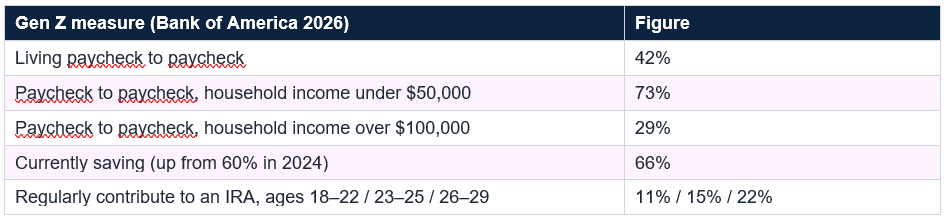
Gen Z in 2026 (Bank of America, Ipsos, 1,133 adults aged 18–29): 42% live paycheck to paycheck (73% under $50,000 household income; 29% over $100,000); 66% are saving (up from 60% in 2024); only 11% of ages 18–22, 15% of 23–25 and 22% of 26–29 regularly contribute to an IRA. The 2027 raise: average salary increase budgets 3.4%–3.6% (WTW 3.4%; Mercer, Payscale and Salary.com 3.5%; WorldatWork 3.6%); merit about 3.0%–3.2%; 79% of workers scheduled for an increase; September inflation 3.7%, so a 3.5% raise is about −0.2% in real terms. My arithmetic (age 23, $50,000 salary growing 3.5%, 7% return, 42 years): saving 3% flat builds about $553,000; raising the rate 1 point a year to 10% about $1.63 million; 10% from the start about $1.84 million. A 3.5% raise is $1,750 a year before tax.
The trick is to build the habits first, while the budget is tight and the choices are clear, so the raise has somewhere to go. This guide lays out seven moves to make in 2027 before your first raise, with 2026 data on how Gen Z is doing, what raises look like and what each move is worth. None requires a high income, and all are more powerful the earlier you start.
There is good news too. About 66% of Gen Z say they are saving, up from 60% in 2024, and 54% would put an extra $300 a month into savings, a higher share than any older generation. But retirement lags: only 11% of 18 to 22-year-olds, 15% of 23 to 25-year-olds and 22% of 26 to 29-year-olds regularly contribute to an IRA, and just 26% of Gen Z households earning over $100,000 contribute to a 401(k). Gen Z has the intention. What it needs is the system.
Now compare with inflation, which was 3.7% in September. A 3.5% raise on a $50,000 salary is $1,750 before tax and, by my arithmetic, a loss of about 0.2% in purchasing power. After income and payroll taxes, which I assume take a quarter to a third of a raise, perhaps $1,200 to $1,300 reaches your pocket. That is real money, but not a transformation, so the first raise should not be your whole plan.
Then automate. The best money habit is the one you do not have to remember. Set up automatic transfers on payday to savings, your 401(k) and any debt payment above the minimum, and live on what is left. Vanguard’s data show automatic enrollment lifts plan participation to 94% from 64%. If $300 a month sounds out of reach, start at $25 a paycheck. Consistency beats size.
Keep the fund somewhere safe that pays something. Top savings accounts paid about 4.34% to 4.50% in October, according to MyMoneyBlog, versus a 0.38% average savings rate. At $300 a month, $7,500 takes about 25 months before interest, so use windfalls such as a tax refund to speed it up. A cushion also gives you leverage: you can negotiate or leave a bad job without panic.
Here is an illustration. A $3,000 balance at 20.9% with a $100 monthly payment takes about 43 months and costs about $1,281 in interest; at $200 a month it clears in about 18 months for about $508, saving about $770. Pay more than the minimum, target the highest rate first and, when you can, pay in full. Use cards to build credit, as about half of Gen Z do, but treat the balance as a bill, not a loan.

Gen Z saves mostly for short-term goals, which Bank of America’s analysts note makes retirement feel abstract. One 2026 compilation puts the average Gen Z 401(k) balance at about $17,000 (median about $5,200), though it is a secondary source. The 2026 401(k) limit is $24,500, but most young workers are nowhere near it. The goal at the start is not the limit. It is the match, then one more point.
In my illustration, $300 a month, $3,600 a year, invested at a constant 7% from 23 to 65 grows to about $830,000. You do not need to max it out: start with an amount you can sustain and increase it when your pay rises. Prioritize your match first, then the Roth.
Here is what the difference looks like. Imagine you are 23, earn $50,000 with 3.5% annual raises and earn 7% a year. If you stay at a 3% savings rate for 42 years, you end with about $553,000. If you raise your rate by one point a year until you reach 10%, you end with about $1.63 million. If you start at 10% from day one, about $1.84 million. The one-point-a-year habit reaches about 89% of the ending balance of starting at 10%, without the shock.

When you do ask, prepare. Document your wins, check market pay for your role and know the typical raise: about 3.4% to 3.6% across the surveys. Ask for the raise your results justify, not the average. Also protect your credit, since a good score lowers the cost of renting, borrowing and insuring, and be wary of Buy Now, Pay Later, which one survey found 77% of Gen Z and millennials use to cover essentials.
Your move: Before your next review, write three numbers: what you earn now, what the market pays for your role and what the typical raise is (about 3.5%). Then write three wins from the last year. That page is your negotiation.
You do not need a high income, a perfect budget or market genius. You need automation and a plan for the raise before it arrives. In my illustration, raising your savings rate one point a year instead of staying at 3% turns about $553,000 into about $1.63 million over a career. Start small, start now and let the raise go to work instead of to your lifestyle. This is general education, not personalized advice.
Employer surveys project average 2027 salary increase budgets of about 3.4% to 3.6%, with merit increases around 3.0% to 3.2%. Payscale found 79% of workers are scheduled for a base pay increase. On a $50,000 salary, a 3.5% raise is about $1,750 before tax. Promotions and job changes can bring larger jumps.
Is a 3.5% raise enough to beat inflation?
Not at the moment. Inflation was 3.7% in September 2026, so a 3.5% raise is roughly a 0.2% loss of purchasing power by my arithmetic. That is why building skills and negotiating matter, and why locking in savings habits before the raise helps.
What should Gen Z do first with extra money?
A common order: a $1,000 starter fund, any 401(k) employer match, credit card debt near 21%, then three to six months of emergency savings and a Roth IRA. The order can change with your situation, for example if your card debt is large.
Is a Roth IRA a good idea for someone early in their career?
Often, because Roth withdrawals in retirement are tax-free, which suits people in low tax brackets who expect higher incomes later. The 2026 limit is $7,500, and the 2027 limit had not been announced when I wrote this. You need earned income at least equal to your contribution. This is general education, not personal advice.
I live paycheck to paycheck. Do these moves still apply?
Yes, scaled down. Bank of America’s 2026 study found 42% of Gen Z live paycheck to paycheck, including 29% of those earning over $100,000. Start with one small automatic transfer, even $25 a paycheck, and one concrete step such as getting your match. Small, automatic habits beat big, occasional ones.
Table of Contents
- Why Do This Before the Raise?
- The Short Answer: Seven Moves
- Where Gen Z Stands in 2026
- What a 2027 Raise Really Looks Like
- Move 1: Know Your Number and Automate It
- Move 2: Build Emergency Savings
- Move 3: Beat 21% Card Debt
- Move 4: Capture the 401(k) Match
- Move 5: Open a Roth IRA
- Move 6: Pre-Commit the Raise
- Move 7: Invest in Your Earning Power
- Putting the Moves in Order
- Conclusion
- Frequently Asked Questions
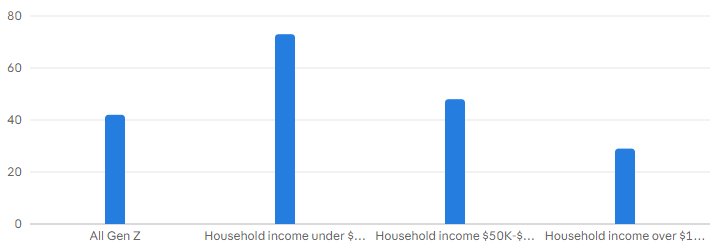
Gen Z and the paycheck squeeze: who lives paycheck to paycheck (%)
% living paycheck to paycheck by Bank of America 2026 Better Money Habits (Ipsos, 1,133 adults aged 18-29), via MarketScreener and InvestmentNews
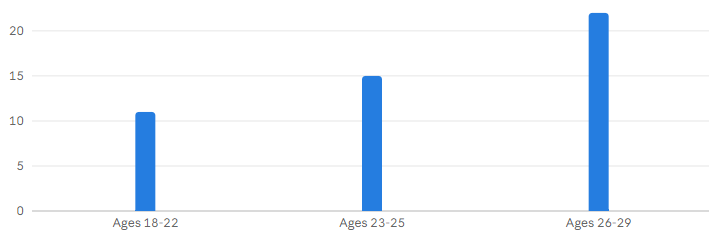
Retirement is lagging: Gen Z who regularly contribute to an IRA, by age (%)
% regularly contributing by Bank of America 2026 Better Money Habits; only 26% of Gen Z households earning over $100K contribute to a 401(k)
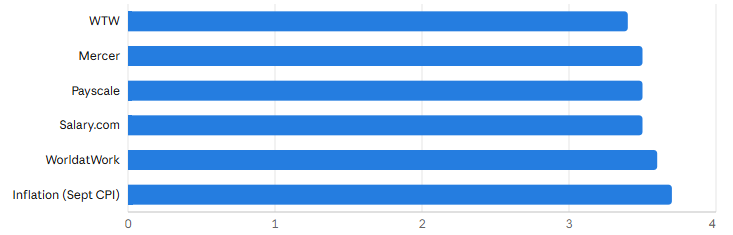
The raise reality: 2027 salary budgets vs. September 2026 inflation (%)
Percent by Employer projections (WorldatWork, WTW, Mercer, Payscale, Salary.com) vs. First Trust CPI summary; merit raises about 3.0%-3.2%
Why Do This Before the Raise?
Most people plan to get their money in order when they earn more. It is a lovely idea and a quiet trap. The raise arrives, rent and subscriptions rise to meet it and a year later the extra income has vanished into a nicer life with no more security. Economists call this lifestyle creep, and it is hardest to resist early in a career, when more room in the budget feels like a reward.The trick is to build the habits first, while the budget is tight and the choices are clear, so the raise has somewhere to go. This guide lays out seven moves to make in 2027 before your first raise, with 2026 data on how Gen Z is doing, what raises look like and what each move is worth. None requires a high income, and all are more powerful the earlier you start.
The Short Answer: Seven Moves
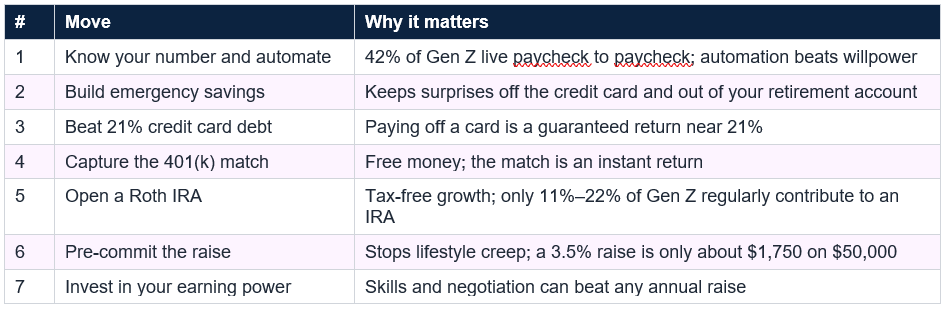
In order: know your number and automate saving, build emergency savings, beat credit card debt near 21%, capture your 401(k) match, open a Roth IRA, pre-commit part of every raise to savings and invest in your earning power. The first six protect the money you have; the seventh grows the money you will earn. Together they matter more than any single investment pick.
Where Gen Z Stands in 2026
Bank of America’s 2026 Better Money Habits study, an Ipsos survey of 1,133 adults aged 18 to 29, paints a mixed picture. About 42% of Gen Z say they live paycheck to paycheck, including 73% of those in households earning under $50,000, 48% of those earning $50,000 to $100,000 and even 29% above $100,000. The squeeze peaks at ages 23 to 25, at 51%, versus 36% of the youngest group and 43% of the oldest.There is good news too. About 66% of Gen Z say they are saving, up from 60% in 2024, and 54% would put an extra $300 a month into savings, a higher share than any older generation. But retirement lags: only 11% of 18 to 22-year-olds, 15% of 23 to 25-year-olds and 22% of 26 to 29-year-olds regularly contribute to an IRA, and just 26% of Gen Z households earning over $100,000 contribute to a 401(k). Gen Z has the intention. What it needs is the system.
What a 2027 Raise Really Looks Like
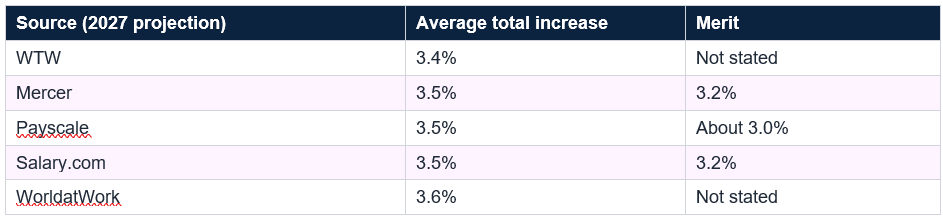
Employers are planning modest increases. WTW projects average 2027 salary increase budgets of 3.4%, Mercer, Payscale and Salary.com 3.5% and WorldatWork 3.6%, with merit increases around 3.0% to 3.2%. WTW calls it the “land of 3%.” Payscale found that 79% of workers are scheduled for a base pay increase, down from 84% projected a year earlier.Now compare with inflation, which was 3.7% in September. A 3.5% raise on a $50,000 salary is $1,750 before tax and, by my arithmetic, a loss of about 0.2% in purchasing power. After income and payroll taxes, which I assume take a quarter to a third of a raise, perhaps $1,200 to $1,300 reaches your pocket. That is real money, but not a transformation, so the first raise should not be your whole plan.
Move 1: Know Your Number and Automate It
Start by learning what you actually spend. Pull three months of statements and sort spending into essentials, such as rent, food, transport, insurance and minimum debt payments, and everything else. Your essentials total is the most important number in your financial life, because it sets your emergency fund target and shows how much room you really have. Bank of America found that 69% of Gen Z checks their balance when stressed about money, so you are not alone.Then automate. The best money habit is the one you do not have to remember. Set up automatic transfers on payday to savings, your 401(k) and any debt payment above the minimum, and live on what is left. Vanguard’s data show automatic enrollment lifts plan participation to 94% from 64%. If $300 a month sounds out of reach, start at $25 a paycheck. Consistency beats size.
Move 2: Build Emergency Savings
Emergency savings are the structural fix for living paycheck to paycheck. Bankrate’s 2026 report found that 29% of Americans have more credit card debt than emergency savings, and Gen Z was the generation most likely to have neither, so many young adults are one surprise away. Aim first for a $1,000 starter fund, then three to six months of essentials: if yours are $2,500 a month, that is $7,500 to $15,000.Keep the fund somewhere safe that pays something. Top savings accounts paid about 4.34% to 4.50% in October, according to MyMoneyBlog, versus a 0.38% average savings rate. At $300 a month, $7,500 takes about 25 months before interest, so use windfalls such as a tax refund to speed it up. A cushion also gives you leverage: you can negotiate or leave a bad job without panic.
Move 3: Beat 21% Card Debt
Credit cards are the most expensive money most young people will ever touch. The average card rate was about 20.9% in the second quarter, and Americans owed $1.263 trillion on cards. A Bankrate survey cited by Self Financial found that 72% of Gen Z have put something off because of card debt. Paying off a card at 21% is a guaranteed 21% return, which almost no investment can match.Here is an illustration. A $3,000 balance at 20.9% with a $100 monthly payment takes about 43 months and costs about $1,281 in interest; at $200 a month it clears in about 18 months for about $508, saving about $770. Pay more than the minimum, target the highest rate first and, when you can, pay in full. Use cards to build credit, as about half of Gen Z do, but treat the balance as a bill, not a loan.
Move 4: Capture the 401(k) Match
If your employer offers a match, that is the best deal available to a young worker. Vanguard’s data, as summarized by Q3 Advisors, show 86% of its plans offer matching contributions. In my illustration, a 50% match on the first 6% of a $50,000 salary is $1,500 a year; invested at a constant 7% from age 23 to 65, that match alone grows to about $346,000. Skipping it means turning down part of your pay.Gen Z saves mostly for short-term goals, which Bank of America’s analysts note makes retirement feel abstract. One 2026 compilation puts the average Gen Z 401(k) balance at about $17,000 (median about $5,200), though it is a secondary source. The 2026 401(k) limit is $24,500, but most young workers are nowhere near it. The goal at the start is not the limit. It is the match, then one more point.
Move 5: Open a Roth IRA
A Roth IRA suits many early-career workers. Contributions are made with after-tax money and qualified withdrawals in retirement are tax-free, which is especially valuable if you are in a low tax bracket now and expect to earn more later. The 2026 limit is $7,500, and you need earned income at least equal to what you contribute. The IRS had not announced the 2027 limit when I wrote this, so check its newsroom.In my illustration, $300 a month, $3,600 a year, invested at a constant 7% from 23 to 65 grows to about $830,000. You do not need to max it out: start with an amount you can sustain and increase it when your pay rises. Prioritize your match first, then the Roth.
Move 6: Pre-Commit the Raise
This is the move that connects everything to the raise. Decide now what share of every raise goes to your future, before you see the bigger paycheck. A simple rule is to send half to savings or retirement and enjoy the rest. A related idea, often called save more tomorrow, is to raise your retirement contribution by one percentage point each time you get a raise or each year. You barely feel it, because the increase comes out of money you never had in hand.Here is what the difference looks like. Imagine you are 23, earn $50,000 with 3.5% annual raises and earn 7% a year. If you stay at a 3% savings rate for 42 years, you end with about $553,000. If you raise your rate by one point a year until you reach 10%, you end with about $1.63 million. If you start at 10% from day one, about $1.84 million. The one-point-a-year habit reaches about 89% of the ending balance of starting at 10%, without the shock.
Move 7: Invest in Your Earning Power
A raise of 3.5% is small next to what skills, credentials and job changes can do. Merit increases are about 3%, while promotions and job changes often deliver larger jumps, though the sources I found on those are not rigorous. The practical lesson is that the biggest lever on your lifetime money is your income, which grows fastest when you learn valuable skills and ask for more.When you do ask, prepare. Document your wins, check market pay for your role and know the typical raise: about 3.4% to 3.6% across the surveys. Ask for the raise your results justify, not the average. Also protect your credit, since a good score lowers the cost of renting, borrowing and insuring, and be wary of Buy Now, Pay Later, which one survey found 77% of Gen Z and millennials use to cover essentials.
Your move: Before your next review, write three numbers: what you earn now, what the market pays for your role and what the typical raise is (about 3.5%). Then write three wins from the last year. That page is your negotiation.
Putting the Moves in Order
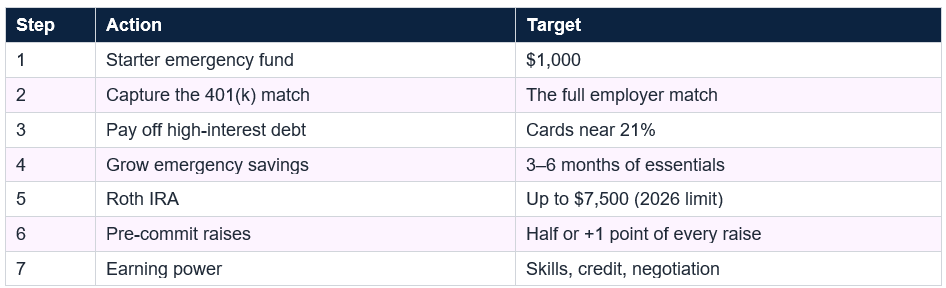
You do not have to do everything at once. A sensible order for most people: automate a $1,000 starter fund, capture your employer match, pay down credit card debt near 21%, build emergency savings toward three to six months, open and fund a Roth IRA, pre-commit your raises and keep investing in your skills throughout. If your card debt is large, it can come before the match, but do not skip the free money for long.
Conclusion
Gen Z faces a squeeze: 42% live paycheck to paycheck, raises are projected at about 3.5% while inflation is 3.7% and only 11% to 22% regularly contribute to an IRA. But 66% are saving, and a majority would save an extra $300 a month. The seven moves turn that intention into systems: know your number, build emergency savings, beat card debt, capture the match, open a Roth, pre-commit your raises and keep investing in yourself.You do not need a high income, a perfect budget or market genius. You need automation and a plan for the raise before it arrives. In my illustration, raising your savings rate one point a year instead of staying at 3% turns about $553,000 into about $1.63 million over a career. Start small, start now and let the raise go to work instead of to your lifestyle. This is general education, not personalized advice.
Frequently Asked Questions
How big will my first raise be in 2027?Employer surveys project average 2027 salary increase budgets of about 3.4% to 3.6%, with merit increases around 3.0% to 3.2%. Payscale found 79% of workers are scheduled for a base pay increase. On a $50,000 salary, a 3.5% raise is about $1,750 before tax. Promotions and job changes can bring larger jumps.
Is a 3.5% raise enough to beat inflation?
Not at the moment. Inflation was 3.7% in September 2026, so a 3.5% raise is roughly a 0.2% loss of purchasing power by my arithmetic. That is why building skills and negotiating matter, and why locking in savings habits before the raise helps.
What should Gen Z do first with extra money?
A common order: a $1,000 starter fund, any 401(k) employer match, credit card debt near 21%, then three to six months of emergency savings and a Roth IRA. The order can change with your situation, for example if your card debt is large.
Is a Roth IRA a good idea for someone early in their career?
Often, because Roth withdrawals in retirement are tax-free, which suits people in low tax brackets who expect higher incomes later. The 2026 limit is $7,500, and the 2027 limit had not been announced when I wrote this. You need earned income at least equal to your contribution. This is general education, not personal advice.
I live paycheck to paycheck. Do these moves still apply?
Yes, scaled down. Bank of America’s 2026 study found 42% of Gen Z live paycheck to paycheck, including 29% of those earning over $100,000. Start with one small automatic transfer, even $25 a paycheck, and one concrete step such as getting your match. Small, automatic habits beat big, occasional ones.
0 Comments
Be the first to share your thoughts on this article.