
Investing
How to Invest $100: 7 Smart Ways to Get Started Fast Explained

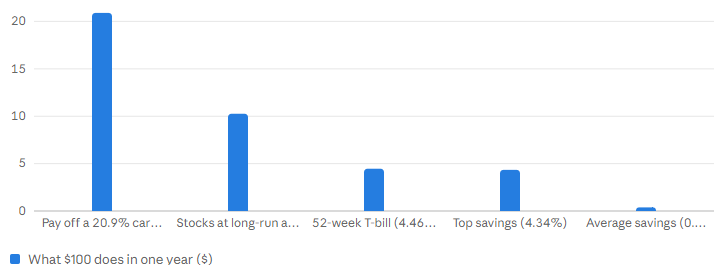
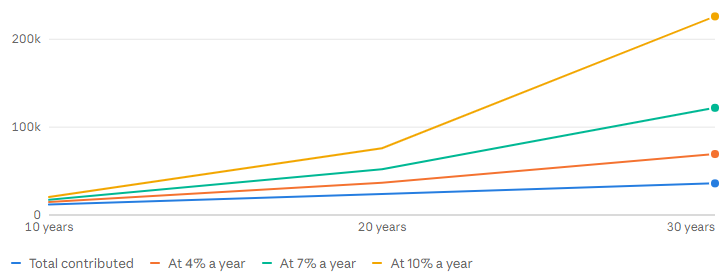
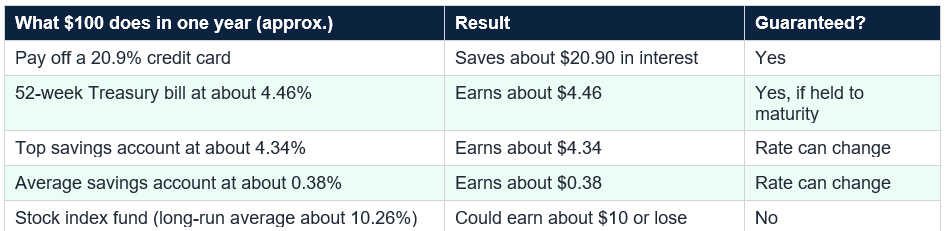
$0 account minimums; fractional shares from $1 (Fidelity, Robinhood) or $5 (Schwab Stock Slices). Index fund fees 0.015%–0.04%; Fidelity ZERO funds 0.00%. What $100 earns in a year: about $20.90 saved on a 20.9% card; $4.46 in a 52-week T-bill; $4.34 in a top savings account; $0.38 in an average savings account (stocks: no guarantee; long-run average about 10.26%). $100 a month for 30 years (contributions $36,000): about $69,405 at 4%, $121,997 at 7%, $226,049 at 10%. A 0.64% fund instead of 0.04% costs about $13,400 over 30 years (illustration). Readiness: only 47% of Americans could cover a $1,000 emergency (Bankrate 2026); 2026 Roth IRA limit $7,500; $100 a month is 16% of it. Average investor earned about 6.8% a year vs 10.2% for the S&P 500 (DALBAR).
Dollars per $100 per year by Rates: MyMoneyBlog (Oct 12), Experian, Federal Reserve (secondary); stocks can lose money
In 2026, the major brokers charge $0 to trade stocks and ETFs, many have no account minimum and fractional shares let you buy a slice of a company or fund for as little as $1. The hard part is knowing what to do with the money first, and then doing it again next month. This guide walks through seven sensible places to put $100, in an order that tends to work, with the 2026 numbers behind each.
These matter because a surprise bill without savings can force you to sell investments at a bad time or borrow at a high rate. A simple order: build a starter fund of about $1,000, pay down card debt, then invest. If $100 a month must cover all of that, split it, perhaps $50 to the card and $50 to savings, until the basics are in place.
Your move: List your cards by interest rate and send your extra $100 to the highest one while making the minimum on the rest. Keep a $1,000 starter fund first so new emergencies do not go back on the card.
The trade-off is that a bill is a loan for a fixed period, and selling early can mean a gain or a loss. Against 3.7% inflation in September, a 4.46% bill roughly keeps pace, and no more. It is a fine home for money you will need within a year or two, but not for money you want to grow over decades.
An I Bond is not a high-growth investment. It is a way to protect a small amount of savings from inflation with government backing. For most of the $100, a diversified stock fund is where long-term growth historically comes from.
Fractional shares make $100 workable. Fidelity and Robinhood allow fractional investing from $1, and Schwab’s Stock Slices start at $5, so you can put the whole $100 to work even in a fund whose share price is several hundred dollars. The evidence for keeping it broad is strong: S&P Dow Jones Indices found that 79% of active large-cap funds trailed the S&P 500 in 2025, and Hendrik Bessembinder found that the best 4.3% of US stocks created all of the market’s net gains since 1926.
Stock funds can fall sharply. The S&P 500 has averaged about 10.26% a year since 1928, according to Gitnux, but its worst calendar year was a 43.84% loss. Only invest money you will not need for at least several years.
Your own contributions can be withdrawn at any time without tax or penalty, which makes a Roth a flexible home for a beginner’s first dollars, though earnings withdrawn early may face taxes and a penalty. Inside the Roth, buy the same broad index fund and keep it invested. Leaving contributions in cash is a common mistake, and some brokers pay no interest on IRA cash.
Vanguard’s 2026 report found an average total savings rate, employee plus employer, of 12.1%, and recommends 12% to 15%. If you are far from that, start with what you can and raise your rate with each raise. Automatic enrollment lifts participation to 94% from 64%, which shows how much automation helps.
Do the arithmetic on that match. On $1,200 a year, a 1% match is $12 and a 3% match is $36, but Gold costs $50 a year, so the 3% match would not pay for itself at this level. Financer also notes the match can be clawed back if you leave within five years, and there is a $100 transfer-out fee. Paid features need to earn their keep.

The numbers: $100 a month for 30 years at 7%: about $121,997, on $36,000 contributed. A one-time $100 at 7% becomes about $761 in 30 years. Constant-return illustration only.
Behavior is the biggest factor. DALBAR research, cited by MyETFJourney, found that over 30 years the average investor earned about 6.8% a year versus 10.2% for the S&P 500, largely because of badly timed buying and selling. Automating your $100, and then leaving it alone, avoids most of that. If you want to experiment with individual stocks, use a small slice of play money, not your core.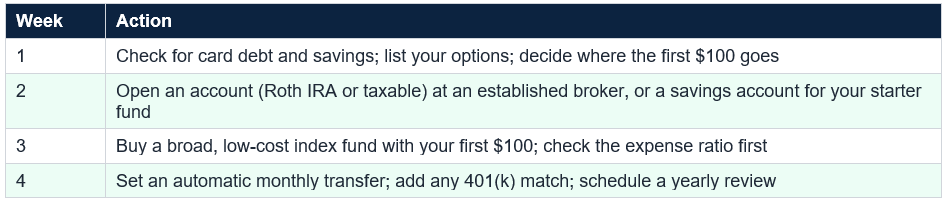
The real power is not the first $100 but the hundredth. At a constant 7%, $100 a month becomes about $122,000 in 30 years, far more than the $36,000 you put in. Start with what you can, automate it, keep fees low and ignore the noise. This is general education, not personalized advice, and a qualified adviser can help you tailor it.
Yes. Fidelity and Robinhood allow fractional shares from $1, Schwab’s Stock Slices start at $5, and the major brokers have $0 minimums. The habit matters more: $100 a month at a constant 7% grows to about $52,000 in 20 years on $24,000 contributed, an illustration, not a promise.
What is the best way to invest $100 for beginners?
For most beginners, a broad, low-cost index fund or ETF, ideally inside a Roth IRA, invested on a schedule. First make sure you have no high-interest card debt and at least a small emergency fund.
Should I pay off debt or invest $100?
If the debt is a credit card, usually pay it off first. The average card rate is about 21%, so $100 applied to a card saves roughly $21 a year, far more than the roughly $4 a top savings account pays on $100. Low-rate debt, such as some mortgages, is a different calculation.
Can I lose money investing $100?
Yes, in anything except insured savings and government securities held to maturity. The S&P 500’s worst calendar year was a 43.84% loss, which is why money you need within a few years should not be in stocks.
How often should I invest $100?
Whatever you can sustain, ideally automatically each payday or month. Regular investing, often called dollar-cost averaging, spreads your purchases over time and removes the need to guess the best day.
Table of Contents
- Why $100 Is Plenty to Start
- The Short Answer
- Step Zero: Check Two Things First
- Way 1: Pay Off Expensive Debt
- Way 2: Build a Starter Emergency Fund
- Way 3: Buy Treasury Bills
- Way 4: Try an I Bond
- Way 5: Buy a Broad Index Fund or ETF
- Way 6: Open a Roth IRA
- Way 7: Capture a 401(k) Match
- Where to Open the Account
- What $100 a Month Can Become
- Why Fees Matter Even at $100
- Mistakes to Avoid
- Your 30-Day Plan
- Conclusion
- Frequently Asked Questions
What a $100 does in a year: debt payoff vs. saving vs. investing ($)
Dollars per $100 per year by Rates: MyMoneyBlog (Oct 12), Experian, Federal Reserve (secondary); stocks can lose money
What $100 a month can become at constant returns ($)
Account value ($) by Author's illustration; real returns vary and can be negativeWhy $100 Is Plenty to Start
There is a quiet belief that investing is for people who already have money. A hundred dollars feels too small to matter, so it sits in a checking account, earning almost nothing. That belief was more true thirty years ago, when brokers charged commissions and funds demanded minimums. It is mostly false today.In 2026, the major brokers charge $0 to trade stocks and ETFs, many have no account minimum and fractional shares let you buy a slice of a company or fund for as little as $1. The hard part is knowing what to do with the money first, and then doing it again next month. This guide walks through seven sensible places to put $100, in an order that tends to work, with the 2026 numbers behind each.
The Short Answer
First make sure you do not have expensive credit card debt and that you have at least a small cushion. Then put your $100 into a broad, low-cost index fund, ideally inside a Roth IRA, and set up an automatic monthly purchase. That one habit, repeated for decades, beats nearly every clever alternative. The other six options below are variations on that theme, or sensible steps to take before it.Step Zero: Check Two Things First
Before you invest a dollar, check two things. First, do you have high-interest debt? Americans owed $1.263 trillion on credit cards at the end of June, according to the New York Fed, and the average card rate was about 21%, according to Federal Reserve data cited by a secondary source. Second, do you have any cash cushion? Bankrate’s 2026 survey found that only 47% of Americans could cover a $1,000 emergency.These matter because a surprise bill without savings can force you to sell investments at a bad time or borrow at a high rate. A simple order: build a starter fund of about $1,000, pay down card debt, then invest. If $100 a month must cover all of that, split it, perhaps $50 to the card and $50 to savings, until the basics are in place.
Way 1: Pay Off Expensive Debt
It is not glamorous, but paying down a 20.9% credit card is a guaranteed, tax-free return of 20.9%. No investment can promise that. A hundred dollars applied to a card saves about $20.90 a year in interest, compared with roughly $4 in a top savings account and an uncertain amount in the market. If you carry a balance, this is usually the best first use of spare cash.Your move: List your cards by interest rate and send your extra $100 to the highest one while making the minimum on the rest. Keep a $1,000 starter fund first so new emergencies do not go back on the card.
Way 2: Build a Starter Emergency Fund
A cushion is what lets you stay invested when life happens. At $100 a month, a $1,000 starter fund takes ten months. Keep it safe, insured and separate from spending. In mid-October, MyMoneyBlog found top savings accounts paying 4.34% to 4.50%, versus an FDIC average of about 0.38%, according to Experian. On $1,000, that is about $43 a year instead of about $4. This is not really investing, but it is the foundation, and it stops you from treating your investment account as an emergency fund, which tends to end badly.Way 3: Buy Treasury Bills
If you want a safe, short-term return, Treasury bills are worth a look. A 52-week bill paid about 4.46% on October 9, according to MyMoneyBlog, with interest exempt from state and local income tax. They are backed by the US government and sold through TreasuryDirect. As I understand the rules, the minimum purchase is $100, which fits this budget exactly.The trade-off is that a bill is a loan for a fixed period, and selling early can mean a gain or a loss. Against 3.7% inflation in September, a 4.46% bill roughly keeps pace, and no more. It is a fine home for money you will need within a year or two, but not for money you want to grow over decades.
Way 4: Try an I Bond
Series I savings bonds pay a rate tied to inflation, and bonds bought through October paid 4.26% for the first six months, according to MyMoneyBlog, after which the rate resets. As I understand the rules, they can be bought in small amounts, with a $25 minimum. There is a catch: you cannot cash them in during the first year, and cashing in before five years costs three months of interest.An I Bond is not a high-growth investment. It is a way to protect a small amount of savings from inflation with government backing. For most of the $100, a diversified stock fund is where long-term growth historically comes from.
Way 5: Buy a Broad Index Fund or ETF
This is the core move. A broad index fund holds hundreds or thousands of stocks in a single purchase, so you are not betting on one company. Top S&P 500 index funds charge 0.015% to 0.04% a year, according to Bankrate, and Fidelity offers ZERO funds with a 0.00% expense ratio, according to Finder. On $100, the fee on a 0.04% fund is about four cents a year.Fractional shares make $100 workable. Fidelity and Robinhood allow fractional investing from $1, and Schwab’s Stock Slices start at $5, so you can put the whole $100 to work even in a fund whose share price is several hundred dollars. The evidence for keeping it broad is strong: S&P Dow Jones Indices found that 79% of active large-cap funds trailed the S&P 500 in 2025, and Hendrik Bessembinder found that the best 4.3% of US stocks created all of the market’s net gains since 1926.
Stock funds can fall sharply. The S&P 500 has averaged about 10.26% a year since 1928, according to Gitnux, but its worst calendar year was a 43.84% loss. Only invest money you will not need for at least several years.
Way 6: Open a Roth IRA
A Roth IRA is not an investment. It is an account that holds investments, and it is one of the best containers for $100 a month. You contribute after-tax money, and qualified withdrawals in retirement are generally tax-free. The 2026 limit is $7,500, so $100 a month, or $1,200 a year, is 16% of the limit. You need earned income to contribute, and direct contributions phase out between $153,000 and $168,000 for single filers.Your own contributions can be withdrawn at any time without tax or penalty, which makes a Roth a flexible home for a beginner’s first dollars, though earnings withdrawn early may face taxes and a penalty. Inside the Roth, buy the same broad index fund and keep it invested. Leaving contributions in cash is a common mistake, and some brokers pay no interest on IRA cash.
Way 7: Capture a 401(k) Match
If your employer offers a 401(k) match, that can beat everything above. A match is an instant return on your contribution. On a $60,000 salary, a 3% match is worth $1,800 a year. If $100 a month is all you can afford, put it toward the match first, then use anything extra for other goals. The 2026 employee limit is $24,500, though few people approach it.Vanguard’s 2026 report found an average total savings rate, employee plus employer, of 12.1%, and recommends 12% to 15%. If you are far from that, start with what you can and raise your rate with each raise. Automatic enrollment lifts participation to 94% from 64%, which shows how much automation helps.
Where to Open the Account
Most beginners should choose a large, established broker. NerdWallet named Fidelity its Best Broker for Beginners in 2026, and Schwab was named best for customer service. Both have $0 account minimums, and Fidelity offers fractional shares from $1. Robinhood also offers fractional investing from $1 and an IRA match of 1%, or 3% with its Gold plan.Do the arithmetic on that match. On $1,200 a year, a 1% match is $12 and a 3% match is $36, but Gold costs $50 a year, so the 3% match would not pay for itself at this level. Financer also notes the match can be clawed back if you leave within five years, and there is a $100 transfer-out fee. Paid features need to earn their keep.
What $100 a Month Can Become
Here is why consistency matters. At a constant 7% annual return, $100 a month grows to about $17,308 after 10 years, $52,093 after 20 and $121,997 after 30. Your own contributions over those periods are $12,000, $24,000 and $36,000. The rest is growth. At 4%, the 30-year figure is about $69,405, and at 10% it is about $226,049. These are illustrations of my own, and real returns will vary.The numbers: $100 a month for 30 years at 7%: about $121,997, on $36,000 contributed. A one-time $100 at 7% becomes about $761 in 30 years. Constant-return illustration only.
Why Fees Matter Even at $100
Small fees compound just like returns. On $100 a month for 30 years at 7% before fees, a 0.04% index fund ends at about $121,039, while a 0.64% fund ends at about $107,655, a gap of roughly $13,400 on the same contributions. A fund with a similar name can charge many times more, so check the expense ratio before you buy.Mistakes to Avoid
The most common mistake is chasing a hot tip. A Swiss Finance Institute study found that 56% of finfluencers had negative skill, and confident advice is not good advice. Others include investing money you will need soon, leaving cash idle at 0%, ignoring fees, putting the whole $100 into one stock and checking your balance daily.Behavior is the biggest factor. DALBAR research, cited by MyETFJourney, found that over 30 years the average investor earned about 6.8% a year versus 10.2% for the S&P 500, largely because of badly timed buying and selling. Automating your $100, and then leaving it alone, avoids most of that. If you want to experiment with individual stocks, use a small slice of play money, not your core.
Your 30-Day Plan
Conclusion
A hundred dollars is enough to begin, and the order matters. Pay off card debt costing about 21%. Build a starter fund in an insured account paying 4% or more. Then invest the rest in a broad, low-cost index fund, ideally inside a Roth IRA, and capture any 401(k) match. Treasury bills and I Bonds can add a safe corner for money you need sooner.The real power is not the first $100 but the hundredth. At a constant 7%, $100 a month becomes about $122,000 in 30 years, far more than the $36,000 you put in. Start with what you can, automate it, keep fees low and ignore the noise. This is general education, not personalized advice, and a qualified adviser can help you tailor it.
Frequently Asked Questions
Is $100 enough to start investing?Yes. Fidelity and Robinhood allow fractional shares from $1, Schwab’s Stock Slices start at $5, and the major brokers have $0 minimums. The habit matters more: $100 a month at a constant 7% grows to about $52,000 in 20 years on $24,000 contributed, an illustration, not a promise.
What is the best way to invest $100 for beginners?
For most beginners, a broad, low-cost index fund or ETF, ideally inside a Roth IRA, invested on a schedule. First make sure you have no high-interest card debt and at least a small emergency fund.
Should I pay off debt or invest $100?
If the debt is a credit card, usually pay it off first. The average card rate is about 21%, so $100 applied to a card saves roughly $21 a year, far more than the roughly $4 a top savings account pays on $100. Low-rate debt, such as some mortgages, is a different calculation.
Can I lose money investing $100?
Yes, in anything except insured savings and government securities held to maturity. The S&P 500’s worst calendar year was a 43.84% loss, which is why money you need within a few years should not be in stocks.
How often should I invest $100?
Whatever you can sustain, ideally automatically each payday or month. Regular investing, often called dollar-cost averaging, spreads your purchases over time and removes the need to guess the best day.
0 Comments
Be the first to share your thoughts on this article.