

Real Estate
How to Work With Your Landlord to Save Cash 2026

Key Statistics: UK private rents rose 7.7% in the 12 months to March 2025 — the highest annual growth rate since ONS records began. Goodlord Rental Index: average void period for a private rental in England is approximately 22 days of lost income for landlords. A 22-day void costs a landlord renting at £1,500/month approximately £1,100 in lost income. Even a $50/month US rent reduction saves $600 per year; £50/month UK saving saves £600 per year. New UK law (1 May 2026): landlords can now only raise rent once every 52 weeks and must give 2 months’ notice. New UK law (May 2026): rent bidding banned — landlords cannot invite offers above the listed price or ask tenants to pay more than the advertised rent. US: Realtor.com November 2025 Rental Report: rental affordability improving for minimum-wage earners in some US markets. Skybriz 2026: the best time to negotiate a new lease is winter months (November to February) in the US, when rental demand is lowest. UK: the best time to negotiate renewal is 60 to 90 days before lease expiry. Hauzed (August 2026): the best negotiation moment when moving in is immediately after your application is accepted, before a holding deposit is paid.
In this environment, most tenants accept rent increases as a fact of life. They receive a letter, read the number, sigh, and either sign the new agreement or begin the exhausting process of finding somewhere cheaper. What surprisingly few tenants do is negotiate. Not because negotiation is impossible, but because most people have never been taught how, never been told it is acceptable, and have a vague sense that asking might damage the relationship with the person who holds the keys to their home.
This guide changes that. Working with your landlord to save cash is not confrontational. It is not difficult. It does not require a legal background or aggressive tactics. It requires preparation, timing, evidence, and a professional approach. The strategies in this article are drawn from current rental market practice in the UK and the US, updated for the significant legal changes that took effect in England and Wales in May 2026. Every strategy here has saved real tenants real money. None of them requires you to be anyone other than yourself.
The financial reality of a vacant property is the single most powerful piece of leverage a sitting tenant possesses. Goodlord’s Rental Index found that the average void period for a private rental in England is approximately 22 days of lost income. On a £1,500 per month property, a 22-day void costs the landlord approximately £1,100 in lost rent — before advertising costs, agent fees to re-let, or any cleaning and repair costs between tenancies.
Lemonade UK, June 2026: Landlords aren’t just looking for the highest rent. They’re looking for reliable tenants who pay on time, treat the property well, and create minimal hassle. If that’s you, it’s worth making that explicit.
A tenant who asks for £50 per month off their renewal rent is asking for £600 per year. If the landlord’s alternative is to lose a good tenant, re-list the property, pay an agent, void for 22 days, and hope the next tenant is as reliable, accepting the £600 discount is often the more economically rational choice. This is not charity. This is the landlord’s self-interest. Your job in a rent negotiation is to make this calculation visible.
UK Law Update (May 2026): From 1 May 2026 in England and Wales: (1) Landlords can now only raise rent ONCE every 52 weeks (one year). They must give TWO MONTHS’ notice before any rent increase takes effect. This replaces the previous rules under which more frequent increases were possible in periodic tenancies. (2) Rent bidding is now BANNED. Landlords cannot advertise a property in a way that invites offers above the asking price, and cannot ask a tenant to pay more than the listed rent. If a landlord or agent suggests paying more to secure a property, this is now unlawful under the amended Housing Act provisions.
These changes are significant for tenants in three specific ways:
How to research comparables:
Hauzed, August 2026: Pro Tip: The best negotiation moment is immediately after your application is accepted, before you have paid a holding deposit. Once money changes hands, your leverage drops sharply. Use the viewing or the acceptance call to open the conversation.
What makes a valuable tenant:
At renewal, combine your value case with your market research:
Script: ‘I’ve really enjoyed living here and would like to renew for another 12 months. I’ve noticed that three similar flats on [nearby street] are currently listed at £X, which is £50 less than my current rent. Given two years of on-time payments and no maintenance issues, would you be open to holding the rent at [current rate] or moving to £[comparable figure] for the new term?’
This script works because it does three things simultaneously: it expresses genuine desire to stay (reducing the landlord’s vacancy anxiety); it provides specific, evidenced market context for the request; and it frames the conversation as a professional negotiation rather than a complaint.
In the UK, following the May 2026 changes, if your landlord wants to raise the rent at renewal, they must serve a Section 13 notice (Form 4A), giving at least two months’ notice with the proposed amount and effective date. This notice gives you time to research and respond, not an obligation to immediately accept.
The most effective counter-offers:
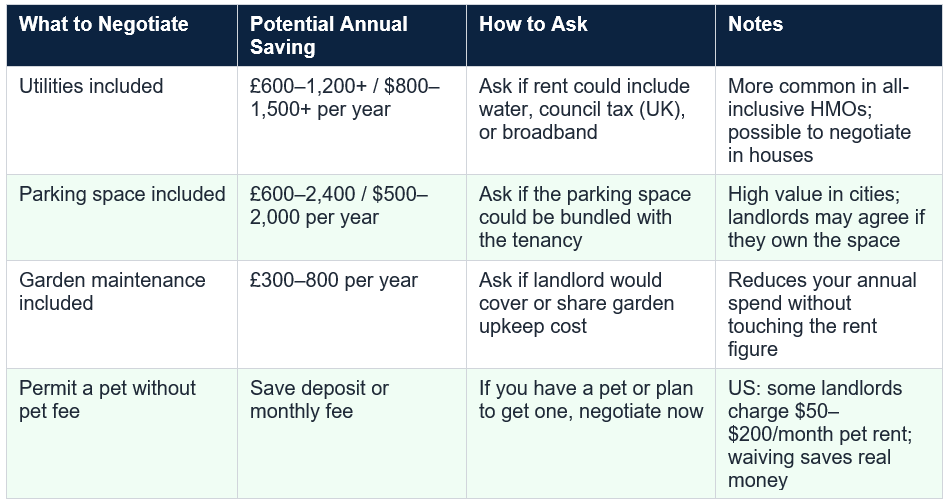
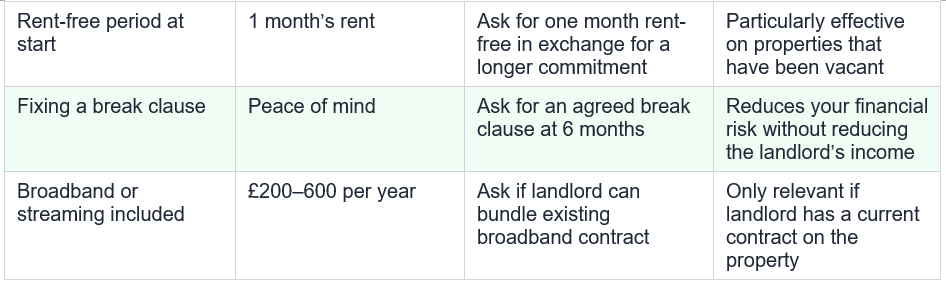
The key insight from this approach: landlords are often more willing to add non-cash value than to reduce the headline rent figure. The headline rent is what they quote to other tenants and to agents. Adding perks does not change that number. If your landlord has the parking space or the broadband contract and you negotiate them in, you have achieved real savings without asking them to formally reduce the rent.
Steps to challenge a rent increase:
This strategy requires having the liquid funds available to make the upfront payment without depleting your emergency fund. If you have that financial position, an upfront offer in exchange for a reduction can be presented as:
‘I’m in a position to pay six months’ rent upfront if we can agree a rate of £[X]. That would guarantee your income through [date] with no payment risk. Would that arrangement work for you?’
The landlord’s calculation: six months of guaranteed cash now, against the possibility of six monthly payments that might not arrive on the exact day expected. For many landlords, particularly those who manage the property themselves, this predictability has real financial and practical value. A 3 to 5 percent monthly discount in exchange for six months upfront is often achievable.
Important caution: paying large amounts of rent upfront is only advisable if you have written confirmation of the agreed terms, the property is clearly owned by the person you are paying, and you have verified their identity. Do not pay large upfront amounts to landlords you have not verified. Citizens Advice UK and HUD in the US both provide guidance on identifying fraudulent lettings.
A longer lease reduces the landlord’s costs in several specific ways:
This should be approached carefully and professionally. The legitimate approach is not withholding rent or making aggressive demands. It is:
And yet most tenants still do not have the conversation. They accept the increase, absorb the additional cost, or move and absorb the cost of moving instead. The reason is almost always the same: the conversation feels uncomfortable, confrontational, or unlikely to succeed.
Every strategy in this article is built around the same truth: rent negotiation is not a confrontation. It is a business conversation between two parties with aligned interests. The landlord wants a reliable, long-term tenant who pays on time and maintains the property. You want affordable housing and a stable home. These interests are compatible, and the negotiation is simply the process of making that compatibility explicit and financially concrete.
Even a £50 per month saving in the UK, or a $50 per month saving in the US, is £600 or $600 per year that stays in your pocket rather than going to your landlord. £600 per year over a five-year tenancy is £3,000. That is a genuine, life-affecting sum of money. It is available to anyone willing to send the email, make the call, or have the conversation. Start with Strategy 1. Do the research. Build the case. Have the conversation.
Yes. Landlords are often more flexible than tenants assume, particularly with sitting tenants at renewal. The key motivation is the cost of void periods and re-letting: Goodlord data shows the average void period costs a landlord approximately 22 days of lost rent. On a £1,500/month property that is approximately £1,100 in lost income before agent fees and re-letting costs. A £50/month rent reduction costs the landlord £600/year. If the alternative is losing a reliable tenant and facing a void period, the maths often favours the landlord accepting the reduction.
What is the new UK rent law that came in in May 2026?
From 1 May 2026 in England and Wales, landlords can only raise rent once every 52 weeks (compared to the more flexible rules for periodic tenancies that previously applied). They must give two months’ notice before any increase takes effect. Additionally, rent bidding is now banned: landlords cannot invite offers above the listed rent or ask tenants to pay more than the advertised price. These changes give tenants stronger protection against sudden increases and against being priced out by bidding wars.
What is the best time to negotiate rent?
For renewals (UK and US), begin 60 to 90 days before your lease end date. This gives both parties time to negotiate without deadline pressure. For new lettings in the UK, the Hauzed August 2026 guide identifies the best moment as immediately after application acceptance, before the holding deposit is paid. For new lettings in the US, Skybriz identifies winter months (November to February) as the optimal time, when rental demand is lowest and landlords are most motivated to fill vacancies.
What should I say to my landlord to lower my rent?
Lead with your value as a tenant (on-time payment history, property care), then provide specific evidence of comparable rents in the area (Rightmove, Zoopla in the UK; Zillow, Apartments.com in the US). Propose a specific figure rather than a vague request for ‘something lower.’ Offer something in return: a longer lease commitment, earlier rent payment, or handling of minor maintenance. Keep the conversation professional, specific, and in writing so there is a record of the agreed terms. See Section 14 for word-for-word scripts.
What can I negotiate besides the rent itself?
If the landlord won’t reduce the headline rent, negotiate utilities included in the rent, parking space, garden maintenance, a rent-free period at the start of a new lease, a pet allowance without pet fees, broadband included, or a break clause at six months. These non-cash additions can save hundreds of pounds or dollars per year without requiring the landlord to formally change the rent figure.
Can I challenge a rent increase in the UK?
Yes. If your UK landlord serves a Section 13 notice (Form 4A) proposing a rent increase, you can challenge it at the First-tier Tribunal (Property Chamber) if you believe the proposed rent is above the local market rate. The tribunal considers comparable rents in the area and can confirm, reduce, or increase the proposed rent. Shelter England’s website provides free guidance on the process. Since May 2026, the challenge must be submitted before the proposed increase takes effect, and the landlord must give two months’ notice before the increase.
Is paying rent upfront a good way to negotiate lower rent?
It can be, if you have the financial position to do it safely. Paying three to six months of rent upfront eliminates the landlord’s cash flow anxiety and provides guaranteed income certainty. In exchange, a 3 to 5 percent monthly reduction is often achievable. Important: only pay large upfront sums to a verified landlord with a written agreement confirming the terms. Do not pay large sums to unverified individuals. Citizens Advice (UK) and HUD (US) both provide guidance on verifying landlords and identifying fraudulent lettings.
Table of Contents
- The Conversation Most Tenants Never Have
- Why Landlords Are More Flexible Than You Think
- The New Legal Landscape: What Changed in 2026 (UK)
- Strategy 1: Do Your Market Research First
- Strategy 2: Time Your Negotiation Perfectly
- Strategy 3: Lead With Your Value as a Tenant
- Strategy 4: Negotiate the Renewal — Not Just the Starting Rent
- Strategy 5: Offer Something in Return
- Strategy 6: Negotiate Beyond the Rent Figure
- Strategy 7: Challenge an Unfair Rent Increase
- Strategy 8: Offer Upfront Rent to Secure a Lower Monthly Rate
- Strategy 9: Propose a Longer Lease for a Lower Rate
- Strategy 10: Handle Repairs as a Negotiating Tool
- The Word-for-Word Scripts That Work
- What to Do If the Landlord Says No
- Building a Long-Term Landlord Relationship That Saves Money
- Conclusion: Every Conversation You Don’t Have Is Money Left on the Table
- Frequently Asked Questions
The Conversation Most Tenants Never Have
UK private rents rose 7.7 percent in the 12 months to March 2025 — the highest annual growth rate since the ONS began collecting the data. In many UK cities, the average rent on a newly let property has increased by double digits over two to three years. In the United States, the November 2025 Realtor.com Rental Report found that affordability is improving marginally in some markets, but rents remain at historically elevated levels relative to incomes.In this environment, most tenants accept rent increases as a fact of life. They receive a letter, read the number, sigh, and either sign the new agreement or begin the exhausting process of finding somewhere cheaper. What surprisingly few tenants do is negotiate. Not because negotiation is impossible, but because most people have never been taught how, never been told it is acceptable, and have a vague sense that asking might damage the relationship with the person who holds the keys to their home.
This guide changes that. Working with your landlord to save cash is not confrontational. It is not difficult. It does not require a legal background or aggressive tactics. It requires preparation, timing, evidence, and a professional approach. The strategies in this article are drawn from current rental market practice in the UK and the US, updated for the significant legal changes that took effect in England and Wales in May 2026. Every strategy here has saved real tenants real money. None of them requires you to be anyone other than yourself.
Why Landlords Are More Flexible Than You Think
Before any negotiation, it helps to understand what your landlord actually wants. Most tenants assume landlords want the highest possible rent. This is partly true but not the whole picture. What landlords consistently report wanting, particularly those with single properties or small portfolios, is reliability. They want a tenant who pays on time, every time. Who does not generate maintenance calls at midnight. Who treats the property with care. Who does not disappear between tenancies and leave the property vacant.The financial reality of a vacant property is the single most powerful piece of leverage a sitting tenant possesses. Goodlord’s Rental Index found that the average void period for a private rental in England is approximately 22 days of lost income. On a £1,500 per month property, a 22-day void costs the landlord approximately £1,100 in lost rent — before advertising costs, agent fees to re-let, or any cleaning and repair costs between tenancies.
Lemonade UK, June 2026: Landlords aren’t just looking for the highest rent. They’re looking for reliable tenants who pay on time, treat the property well, and create minimal hassle. If that’s you, it’s worth making that explicit.
A tenant who asks for £50 per month off their renewal rent is asking for £600 per year. If the landlord’s alternative is to lose a good tenant, re-list the property, pay an agent, void for 22 days, and hope the next tenant is as reliable, accepting the £600 discount is often the more economically rational choice. This is not charity. This is the landlord’s self-interest. Your job in a rent negotiation is to make this calculation visible.
3. The New Legal Landscape: What Changed in 2026 (UK)
Before discussing negotiation strategies, UK tenants need to understand two significant legal changes that came into effect in May 2026 and fundamentally alter the landscape of rent negotiations:UK Law Update (May 2026): From 1 May 2026 in England and Wales: (1) Landlords can now only raise rent ONCE every 52 weeks (one year). They must give TWO MONTHS’ notice before any rent increase takes effect. This replaces the previous rules under which more frequent increases were possible in periodic tenancies. (2) Rent bidding is now BANNED. Landlords cannot advertise a property in a way that invites offers above the asking price, and cannot ask a tenant to pay more than the listed rent. If a landlord or agent suggests paying more to secure a property, this is now unlawful under the amended Housing Act provisions.
These changes are significant for tenants in three specific ways:
- You now have a full year’s stability after any rent increase: once your landlord has raised the rent, they cannot raise it again for 52 weeks. This gives you a longer horizon for financial planning than was previously guaranteed.
- The two months’ notice requirement gives you time to respond: you do not have to accept or decline a proposed increase at the moment you receive the notice. You have time to research comparable rents, build your case, and respond in writing before the proposed effective date.
- The rent bidding ban protects you when moving in: in a competitive rental market, tenants were previously put under pressure to bid above the asking price to secure a property. This is now illegal. If you encounter this, you can refuse and report it.
Strategy 1: Do Your Market Research First
No negotiation can succeed without evidence, and in rent negotiations, the evidence is comparables: the current market rents for similar properties in your area. This is the single most important preparation step, and the one that most tenants skip.How to research comparables:
- UK: use Rightmove, Zoopla, and OpenRent to search for similar properties (same number of bedrooms, similar size and condition, within half a mile of your property) currently listed for rent. Screenshot listings with the date and address. If similar properties nearby are cheaper, or if listings have been sitting on the market for weeks without being taken, you have solid grounds for negotiation.
- US: use Zillow, Apartments.com, Craigslist, and Realtor.com to check comparable listings in your neighbourhood. Note the asking rents, how long properties have been listed, and any concessions (free month’s rent, reduced deposit) being offered.
- Check both sides: if comparable properties are more expensive than your current rent, your negotiation position is weak. Acknowledge this honestly — if you are already getting good value, asking for a reduction without evidence is unlikely to succeed. Instead, focus on freezing the increase rather than seeking a reduction.
Strategy 2: Time Your Negotiation Perfectly
Timing is one of the most underestimated variables in rent negotiation. The same request, made at different points in the tenancy cycle, can produce dramatically different outcomes.For renewals (UK & US)
Begin the conversation 60 to 90 days before your lease end date. This gives both parties enough time to negotiate without the pressure of an imminent deadline. It demonstrates that you are organised and serious. And it prevents the landlord from simply increasing the rent at the last minute when your only alternative is to scramble for somewhere to move.For new lettings (UK)
The Hauzed August 2026 guide identifies the single best moment for negotiation: immediately after your application is accepted, before you have paid a holding deposit. Once money changes hands, your leverage drops sharply. The acceptance call is the moment to begin: ‘I’m very keen to proceed. Could we discuss the rent?’For new lettings (US)
Skybriz’s 2026 guide identifies winter months (November to February) as the optimal time for negotiating new leases in the US. Rental demand is lowest in winter, vacancy rates are higher, and landlords who have an empty unit in January are significantly more motivated to fill it than landlords in July’s competitive market.Hauzed, August 2026: Pro Tip: The best negotiation moment is immediately after your application is accepted, before you have paid a holding deposit. Once money changes hands, your leverage drops sharply. Use the viewing or the acceptance call to open the conversation.
Strategy 3: Lead With Your Value as a Tenant
Before you make any request, make your case. Your landlord needs to understand that you are the kind of tenant they do not want to lose. This is not self-promotion; it is factual communication of information the landlord actually needs to make a rational decision.What makes a valuable tenant:
- Payment history: if you have paid rent on time every month for the past year or two, say so. State the specific number of months of on-time payment without exception.
- Property care: if you have reported maintenance issues promptly, if the property is clean and well-maintained, if you have caused no problems for neighbours, document these.
- Low maintenance: if you have not required emergency callouts, have not made excessive maintenance requests, and have handled minor issues yourself, communicate this.
- Stability: if you intend to stay for another year or two, make this clear. Long-term tenants reduce costs and administrative burden for landlords.
Strategy 4: Negotiate the Renewal — Not Just the Starting Rent
The renewal is the moment of greatest leverage for sitting tenants. You are known. Your payment history is documented. The landlord has experienced what it is like to have you in the property. And the alternative to renewing with you is a process: re-listing, viewings, referencing, holding deposits, and the 22-day void period that costs real money.At renewal, combine your value case with your market research:
Script: ‘I’ve really enjoyed living here and would like to renew for another 12 months. I’ve noticed that three similar flats on [nearby street] are currently listed at £X, which is £50 less than my current rent. Given two years of on-time payments and no maintenance issues, would you be open to holding the rent at [current rate] or moving to £[comparable figure] for the new term?’
This script works because it does three things simultaneously: it expresses genuine desire to stay (reducing the landlord’s vacancy anxiety); it provides specific, evidenced market context for the request; and it frames the conversation as a professional negotiation rather than a complaint.
In the UK, following the May 2026 changes, if your landlord wants to raise the rent at renewal, they must serve a Section 13 notice (Form 4A), giving at least two months’ notice with the proposed amount and effective date. This notice gives you time to research and respond, not an obligation to immediately accept.
Strategy 5: Offer Something in Return
The most effective rent negotiations are not one-sided. They are exchanges. When you ask a landlord to reduce or freeze your rent, you increase your success rate significantly if you simultaneously offer something the landlord values.The most effective counter-offers:
- A longer lease commitment: offering to sign an 18-month or two-year lease instead of a 12-month lease gives the landlord extended income security and eliminates the re-letting cycle for another period. This is often worth £50 to £100 per month in rent reduction.
- Early rent payment: offering to pay on the first of every month (rather than a later date) or switching to quarterly payment improves the landlord’s cash flow predictability.
- Handling minor maintenance: if you are competent at basic DIY, offering to handle minor repairs (replacing lightbulbs, bleeding radiators, basic garden upkeep) reduces the landlord’s ongoing maintenance burden. This arrangement should be put in writing.
- Upfront payment: in the US market, Lemonade’s guide notes that some landlords offer discounts for paying multiple months in advance. Three months upfront, for example, eliminates payment uncertainty and may unlock a meaningful monthly discount.
Strategy 6: Negotiate Beyond the Rent Figure
If a landlord refuses to reduce the monthly rent figure, there are often other terms of the tenancy that can be negotiated and that have real financial value. LandKreek’s guide identifies several:The key insight from this approach: landlords are often more willing to add non-cash value than to reduce the headline rent figure. The headline rent is what they quote to other tenants and to agents. Adding perks does not change that number. If your landlord has the parking space or the broadband contract and you negotiate them in, you have achieved real savings without asking them to formally reduce the rent.
Strategy 7: Challenge an Unfair Rent Increase (UK)
If your UK landlord has served a Section 13 notice proposing a rent increase you believe is above the market rate, you have a formal right of challenge. This is not a hostile action; it is a legal process the government has specifically created for this purpose.Steps to challenge a rent increase:
- Check the notice is valid: confirm it is Form 4A (or the prescribed equivalent), that the notice period is correct (at least one month for a monthly tenancy, and under new rules two months must be given), and that the proposed start date is at least one month away. An invalid notice gives you grounds to request the landlord reissue it, extending your timeline.
- Research comparables immediately: within a few days of receiving the notice, pull three to five current listings for similar properties in your area and screenshot them with the date. This evidence forms the basis of your challenge or negotiation response.
- Respond in writing: email your landlord acknowledging the notice and proposing an alternative. Include your comparable evidence. A professional, evidence-based written response is more likely to produce a negotiated outcome than no response or an angry call.
- Apply to the First-tier Tribunal if agreement cannot be reached: the tribunal considers comparable rents in the local area. It can confirm the proposed increase, reduce it, or (in rare cases) increase it. Shelter England’s guidance on Section 13 notices explains the exact process and what makes a notice invalid.
11. Strategy 8: Offer Upfront Rent to Secure a Lower Monthly Rate
In both the UK and the US, paying several months of rent upfront is one of the most effective ways to negotiate a meaningful reduction in the monthly rate. The mechanism is straightforward: the landlord’s primary anxiety is cash flow — will the rent arrive on time every month? Paying three or six months in advance eliminates that anxiety entirely for the covered period.This strategy requires having the liquid funds available to make the upfront payment without depleting your emergency fund. If you have that financial position, an upfront offer in exchange for a reduction can be presented as:
‘I’m in a position to pay six months’ rent upfront if we can agree a rate of £[X]. That would guarantee your income through [date] with no payment risk. Would that arrangement work for you?’
The landlord’s calculation: six months of guaranteed cash now, against the possibility of six monthly payments that might not arrive on the exact day expected. For many landlords, particularly those who manage the property themselves, this predictability has real financial and practical value. A 3 to 5 percent monthly discount in exchange for six months upfront is often achievable.
Important caution: paying large amounts of rent upfront is only advisable if you have written confirmation of the agreed terms, the property is clearly owned by the person you are paying, and you have verified their identity. Do not pay large upfront amounts to landlords you have not verified. Citizens Advice UK and HUD in the US both provide guidance on identifying fraudulent lettings.
Strategy 9: Propose a Longer Lease for a Lower Rate
The longer lease offer is one of the cleanest negotiating strategies available to tenants in any market. By committing to stay for 18 months or two years rather than the standard 12, you eliminate the landlord’s annual re-letting cycle, reduce their administrative burden, and provide income certainty that has genuine financial value.A longer lease reduces the landlord’s costs in several specific ways:
- No agent re-letting fee for another 6 to 12 months (typical agent fees are 8 to 14 percent of annual rent)
- No void period for another 6 to 12 months
- No referencing, Right to Rent checks (UK), or credit checks for another period
- No property cleaning, redecoration, or inventory admin for another period
Strategy 10: Handle Repairs as a Negotiating Tool
Outstanding repairs and maintenance issues are the third most common source of financial savings available through landlord negotiation, after rent reduction and non-cash additions. The mechanism is simple: if your landlord is failing to address legitimate repair or maintenance obligations, you have grounds to link that failure to the rent conversation.This should be approached carefully and professionally. The legitimate approach is not withholding rent or making aggressive demands. It is:
- Document all outstanding repair issues in writing: email your landlord with a clear description of each issue, a photograph, and a polite request for a timeline. This creates a written record that has legal standing.
- Quantify the impact: if a broken heating system has required you to use electric heaters (£200 in additional energy costs), or if a damp problem has damaged your belongings, document the financial impact.
- Link the repair issue to the rent conversation: at renewal, you can reasonably say: ‘I’d be happy to renew, and I’d like to discuss two things: the outstanding [boiler/window/damp] issue, and the rent. Comparable properties in the area that don’t have this issue are listing at £X.’
The Word-for-Word Scripts That Work
Script 1: Rent reduction at renewal (UK)
I’ve been really happy here and would love to renew. I’ve been looking at the current market and found three similar properties within half a mile currently listed at between £1,350 and £1,400, compared to my current rent of £1,500. Given my payment record over the past [X] months, I’d really appreciate it if we could discuss either holding the rent at the current level or moving to something closer to the market rate.’Script 2: Challenging a rent increase
Thank you for the Section 13 notice. I’ve been checking comparable rentals in the area and the properties I’ve found for similar size and specification are listing at around £[X], which is below the proposed new rent. Could we discuss a figure that’s more aligned with the current market? I’m very keen to stay, and I’ve attached screenshots of the comparables I found. Happy to discuss.’Script 3: Negotiating a new letting
I’m very interested in the property and would love to proceed. Would there be any flexibility on the rent if I committed to a longer lease — say 18 months? I can provide references from my current landlord and proof of income if that’s helpful.’Script 4: US winter negotiation
I’ve seen the unit has been listed for [X] weeks. I’d like to move in on [date], but I’d need the rent to work at $[X] to make it work financially. I have strong credit, stable employment, and can provide references. I’m also happy to sign a 14-month lease to take you through the slower winter period.’15. What to Do If the Landlord Says No
Not every negotiation will succeed, and that is normal. LandKreek’s guide is explicit: not every negotiation will go your way, and that’s okay. Here are the options when the answer is no:- Ask for a deferred reduction: propose that if you pay on time for the first six months, you revisit the conversation and agree a small discount. This keeps the door open while demonstrating confidence in your own reliability.
- Try a different lever: if the landlord won’t reduce the rent, ask about utilities, parking, a rent-free period at the start, or a break clause. A no on rent is not a no on everything.
- Request a written explanation: asking the landlord to explain in writing why the rent cannot be reduced is not aggressive. It may prompt them to reconsider, and it documents their position for future reference.
- Walk away: if the rent is genuinely unaffordable and the landlord will not negotiate, the most powerful negotiating tool available to you is leaving. Skybriz notes: ‘Walking away is sometimes the strongest negotiating tactic. If the landlord sees you’re serious, they might come back with a better offer.’ Give one month’s clear notice that you are moving, and see if a counter-offer follows.
- Report rent bidding (UK): if a UK landlord has asked you to pay above the advertised rent, this is now unlawful under May 2026 changes. Report it to the local council’s housing team.
16. Building a Long-Term Landlord Relationship That Saves Money
The most valuable asset in any tenant’s financial toolkit is a good relationship with their landlord. Not a friendship, necessarily, but a professional relationship characterised by mutual respect, clear communication, and demonstrated reliability. This relationship pays dividends repeatedly:- Slower rent increases: landlords who trust and value their tenants consistently raise rents more slowly or less frequently than the market. A good tenant is genuinely worth something below market rate to avoid the cost and risk of replacement.
- Faster repairs: landlords who trust tenants respond to maintenance issues more quickly, reducing the period of inconvenience and the risk of a problem worsening.
- Flexibility in difficult months: a landlord who respects a tenant is far more likely to allow a short delay in payment during a genuine financial emergency than one who has only communicated through formal notices.
- Discretion on small rule breaks: a trusted tenant who asks to have a cat is far more likely to receive a yes than an unknown tenant making the same request.
17. Conclusion: Every Conversation You Don’t Have Is Money Left on the Table
UK private rents have risen 7.7 percent. Average void periods cost landlords £1,100 per property. New laws give UK tenants stronger protections around rent increases and ban rent bidding entirely. The market and the law have never been better aligned to support a professional, evidence-backed rent negotiation.And yet most tenants still do not have the conversation. They accept the increase, absorb the additional cost, or move and absorb the cost of moving instead. The reason is almost always the same: the conversation feels uncomfortable, confrontational, or unlikely to succeed.
Every strategy in this article is built around the same truth: rent negotiation is not a confrontation. It is a business conversation between two parties with aligned interests. The landlord wants a reliable, long-term tenant who pays on time and maintains the property. You want affordable housing and a stable home. These interests are compatible, and the negotiation is simply the process of making that compatibility explicit and financially concrete.
Even a £50 per month saving in the UK, or a $50 per month saving in the US, is £600 or $600 per year that stays in your pocket rather than going to your landlord. £600 per year over a five-year tenancy is £3,000. That is a genuine, life-affecting sum of money. It is available to anyone willing to send the email, make the call, or have the conversation. Start with Strategy 1. Do the research. Build the case. Have the conversation.
Frequently Asked Questions
Can you really negotiate rent with a landlord?Yes. Landlords are often more flexible than tenants assume, particularly with sitting tenants at renewal. The key motivation is the cost of void periods and re-letting: Goodlord data shows the average void period costs a landlord approximately 22 days of lost rent. On a £1,500/month property that is approximately £1,100 in lost income before agent fees and re-letting costs. A £50/month rent reduction costs the landlord £600/year. If the alternative is losing a reliable tenant and facing a void period, the maths often favours the landlord accepting the reduction.
What is the new UK rent law that came in in May 2026?
From 1 May 2026 in England and Wales, landlords can only raise rent once every 52 weeks (compared to the more flexible rules for periodic tenancies that previously applied). They must give two months’ notice before any increase takes effect. Additionally, rent bidding is now banned: landlords cannot invite offers above the listed rent or ask tenants to pay more than the advertised price. These changes give tenants stronger protection against sudden increases and against being priced out by bidding wars.
What is the best time to negotiate rent?
For renewals (UK and US), begin 60 to 90 days before your lease end date. This gives both parties time to negotiate without deadline pressure. For new lettings in the UK, the Hauzed August 2026 guide identifies the best moment as immediately after application acceptance, before the holding deposit is paid. For new lettings in the US, Skybriz identifies winter months (November to February) as the optimal time, when rental demand is lowest and landlords are most motivated to fill vacancies.
What should I say to my landlord to lower my rent?
Lead with your value as a tenant (on-time payment history, property care), then provide specific evidence of comparable rents in the area (Rightmove, Zoopla in the UK; Zillow, Apartments.com in the US). Propose a specific figure rather than a vague request for ‘something lower.’ Offer something in return: a longer lease commitment, earlier rent payment, or handling of minor maintenance. Keep the conversation professional, specific, and in writing so there is a record of the agreed terms. See Section 14 for word-for-word scripts.
What can I negotiate besides the rent itself?
If the landlord won’t reduce the headline rent, negotiate utilities included in the rent, parking space, garden maintenance, a rent-free period at the start of a new lease, a pet allowance without pet fees, broadband included, or a break clause at six months. These non-cash additions can save hundreds of pounds or dollars per year without requiring the landlord to formally change the rent figure.
Can I challenge a rent increase in the UK?
Yes. If your UK landlord serves a Section 13 notice (Form 4A) proposing a rent increase, you can challenge it at the First-tier Tribunal (Property Chamber) if you believe the proposed rent is above the local market rate. The tribunal considers comparable rents in the area and can confirm, reduce, or increase the proposed rent. Shelter England’s website provides free guidance on the process. Since May 2026, the challenge must be submitted before the proposed increase takes effect, and the landlord must give two months’ notice before the increase.
Is paying rent upfront a good way to negotiate lower rent?
It can be, if you have the financial position to do it safely. Paying three to six months of rent upfront eliminates the landlord’s cash flow anxiety and provides guaranteed income certainty. In exchange, a 3 to 5 percent monthly reduction is often achievable. Important: only pay large upfront sums to a verified landlord with a written agreement confirming the terms. Do not pay large sums to unverified individuals. Citizens Advice (UK) and HUD (US) both provide guidance on verifying landlords and identifying fraudulent lettings.
0 Comments
Be the first to share your thoughts on this article.