

Spending
Why Over-50 Shoppers Are Cutting Food Costs in 2026

The AARP survey data, the fixed-income squeeze, the specific strategies that are actually working — and what the grocery industry is watching closely

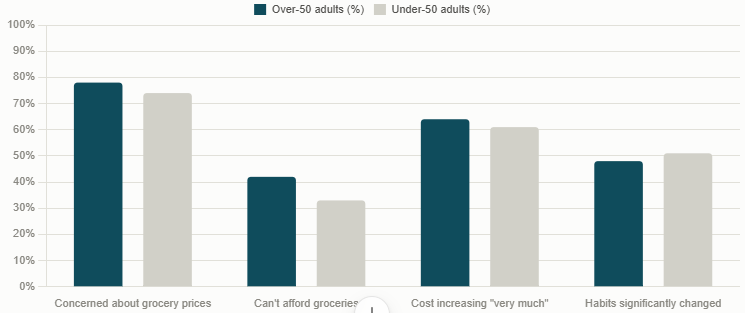
This is not an impression. It is the documented finding of the most comprehensive survey of American food spending attitudes conducted in 2025. The AARP Humantel Food & Economy Survey, carried out in December 2025 among 4,216 US adults weighted to US Census benchmarks, found that 78 percent of adults aged 50 and over are concerned about grocery prices. More strikingly, more than four in ten adults in this age group say that grocery prices now cost more than they can comfortably afford.
This article examines why older Americans are disproportionately affected by food inflation, what they are cutting from their shopping baskets as a result, and — critically — the specific strategies that over-50 shoppers are using in 2026 to bring their grocery bills under meaningful control without sacrificing nutritional quality or the enjoyment of eating.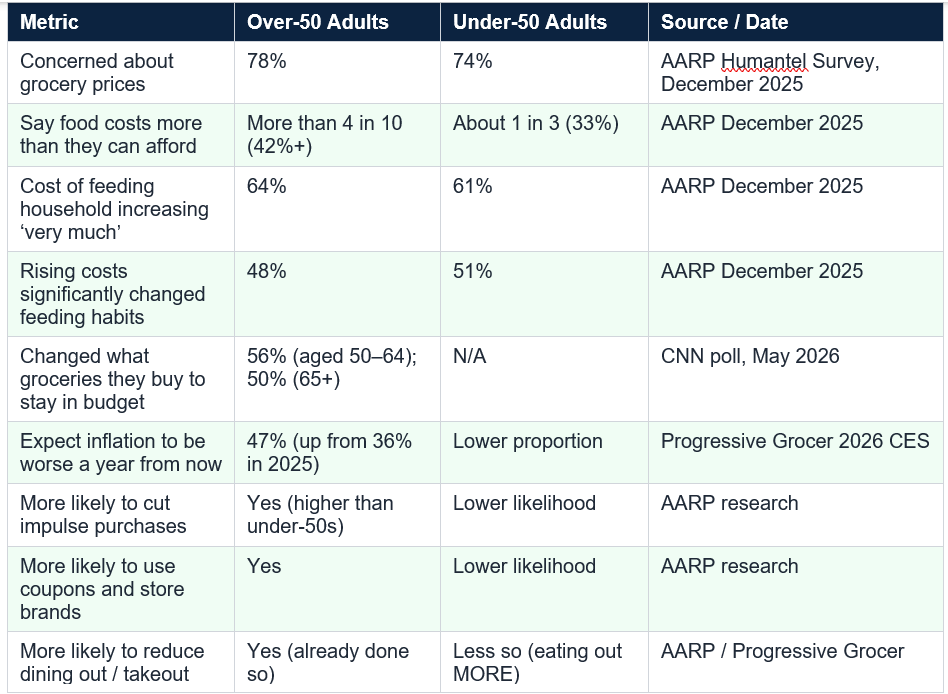
The Data: 78% of over-50s are concerned about grocery prices. 4 in 10 say food costs more than they can comfortably afford — compared to 1 in 3 adults under 50. This 9-percentage-point gap is the clearest finding in the AARP December 2025 research.
Joan Salge Blake, Nutrition Professor, Boston University (AARP, July 2026): Grocery shopping is an ‘Olympic sport’ — with the right game plan and training, bargain hunters can overcome budget-busting hurdles and avoid costly mistakes. Healthy eating doesn’t have to be expensive.
The 2026 Social Security Cost-of-Living Adjustment (COLA) was 2.8 percent, according to the NCOA. This is the annual increase in Social Security benefits designed to keep pace with inflation. But as NCOA’s President and CEO Ramsey Alwin noted: ‘Once again, older adults will have to make heart-wrenching decisions about whether to spend their fixed incomes on health care, food, or housing.’ A 2.8 percent COLA against a grocery price increase of 3.8 percent (USDA August 2026) means that Social Security income is losing ground to food prices in real terms in 2026.
The practical consequence: an over-50 household receiving $2,000 per month in Social Security saw a 2.8 percent COLA add $56 per month to their income in 2026. Their monthly grocery bill, if it increased at the USDA’s 3.8 percent rate, went up by approximately $16 per month — based on the USDA Low-Cost plan figure of $428/month for a couple aged 51 to 70. The COLA outpaced grocery inflation in this scenario, but only barely — and Medicare premium increases consumed much of the COLA increase, leaving many seniors with less real income for groceries than in 2025.
The Data: 2026 Social Security COLA: 2.8%. US food price inflation August 2026: 3.8% YoY (USDA). USDA Low-Cost weekly food budget for a man aged 51–70: $67. For a woman: $60.10. Average American monthly grocery spend: $438 (USDA data).
The case for switching is straightforward and well-documented. The Thrifty Apartment’s June 2026 analysis noted that many store-brand products are made by the same manufacturers that produce national brands, often with very similar ingredients. By swapping a handful of pantry staples, canned goods, dairy products, and frozen foods for generic versions, shoppers can easily shave hundreds of dollars off their annual grocery bills.
The specific categories where the store-brand switch delivers the clearest value with the least quality sacrifice:
The conventional approach to meal planning starts with deciding what you want to eat and then shopping for the ingredients. Benjamin Lorr, author of The Secret Life of Groceries, advocates a more budget-effective alternative: the reverse-engineering approach. ‘Reverse-engineering your meals is a great way to save money,’ he told AARP in December 2025. Rather than starting with desired meals and then shopping, start with what is on sale and at lowest price — and build the week’s meals around those items.
This approach requires an initial shift in routine but delivers consistent savings because it naturally aligns grocery spending with the most discounted items each week:
Food retail expert Phil Lempert told NPR: ‘People are using shopping lists more than ever before. People are shopping more online, because they can compare prices easier. People are tired of getting ripped off on food prices.’ The retail landscape has shifted dramatically in favour of the budget-conscious shopper: Aldi and Lidl have expanded aggressively across the US, offering deeply discounted private-label products across almost every grocery category.
Store-switching options ranked by typical savings versus traditional supermarket:
The specific opportunity: if a household spends $100 per week on groceries and qualifies for a 5 percent senior discount one day per week, the annual saving is approximately $260. At a 10 percent discount, the annual saving reaches $520. These are meaningful sums for fixed-income households.
Key senior discount and programme options to explore:
The Thrifty Apartment’s June 2026 analysis described this shift: ‘Gone are the days of clipping dozens of paper coupons. Many grocery store apps now offer personalised discounts, digital coupons, cashback offers, and member-only pricing that can save shoppers money with just a few taps on their phone.’
The specific digital tools generating the most savings for over-50 shoppers in 2026:
AARP’s July 2026 budget stretching guide noted that meat prices jumped 12.3 percent from September 2024 to September 2025, and suggested that alternative protein sources such as lentils, beans, and tofu often cost less than meat while still providing essential nutrients. This is not a dietary compromise: legumes, eggs, tinned fish, and chicken thighs are all high-quality protein sources that significantly undercut the cost of premium beef.
Practical protein substitution that maintains nutritional quality:
The nutritional case: frozen vegetables are typically flash-frozen within hours of harvest, preserving more nutrients than ‘fresh’ produce that has spent three to ten days in transit and cold storage before reaching the supermarket shelf. A 2025 study published in BMC Nutrition linked dietary variety with healthy ageing — and frozen vegetables make it significantly easier to maintain dietary variety year-round regardless of seasonal price fluctuations.
Specific buying shifts that capture the frozen-versus-fresh saving:
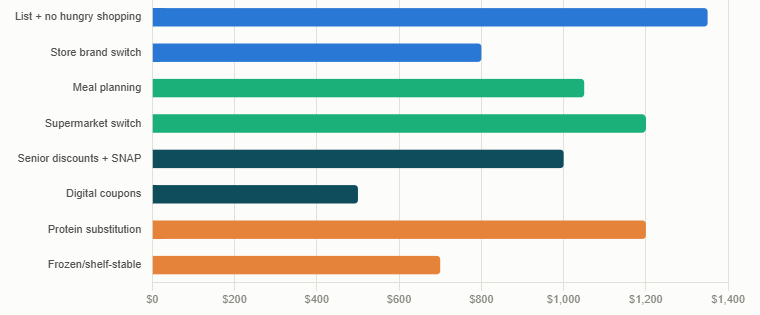
For a household that shops weekly, eliminating the hungry-shopping premium of $26 per trip would save approximately $1,350 per year. Even if the actual per-trip saving is half that — $13 on average — the annual total is $676. This is a saving that requires no dietary change, no store switch, and no couponing effort. It requires only the discipline of having breakfast before the weekly shopping trip.
Closely related behavioural strategies that compound the savings: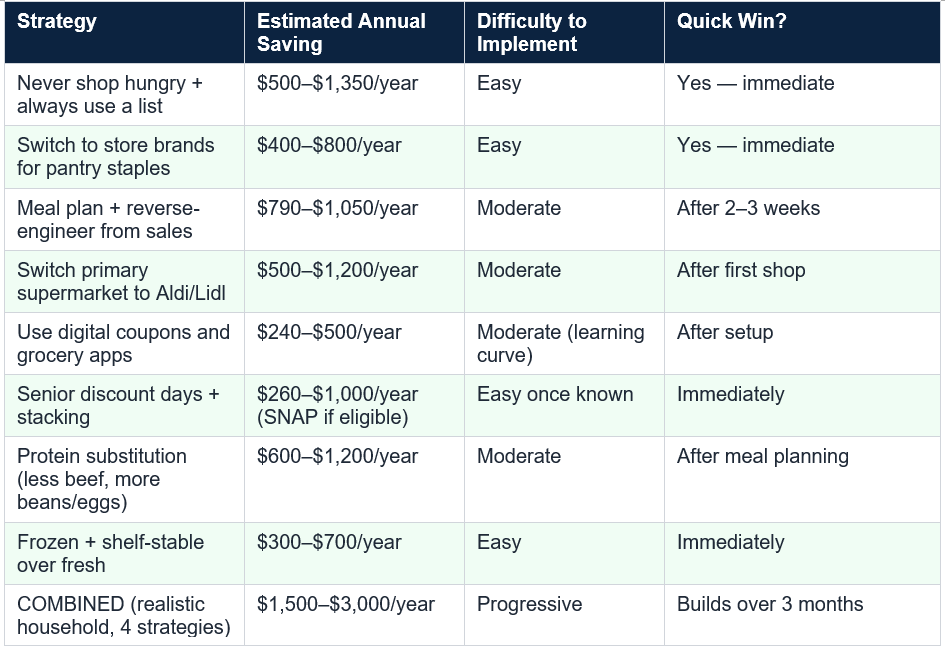
The figures above are estimates based on publicly available research including AARP, Family Credit, SavingAdvice, and consumer surveys from 2025 and 2026. Individual savings will vary based on household size, current spending patterns, local grocery prices, and which strategies are consistently applied. The combined row represents a realistic household that implements the four easiest strategies (list discipline, store brand switch, senior discounts, and one supermarket change) without fundamentally restructuring their diet.
The NPR May 2026 analysis of discount grocery trends found that Aldi and Lidl are among the fastest-growing grocery formats in the US, directly fuelled by budget-conscious shoppers who have concluded that premium-format traditional supermarkets are no longer worth the price premium. Consumer Reports’ price comparison data, which found Aldi and Lidl more than 8 percent cheaper than Walmart on a comparable basket, gives these shoppers a documented analytical basis for their switch.
The AlixPartners December 2025 international consumer survey found that grocery is the only category expected to see an overall increase in consumer outlays in 2026 — meaning people are not buying less food, but they are increasingly focused on value and willing to switch retailers to achieve even modest savings. For over-50 shoppers on fixed incomes, this willingness to switch, to compare, and to strategise is not merely a preference. It is a financial necessity.
But the over-50 shopper is also, by a wide range of survey measures, the most disciplined and strategically aware grocery shopper in the market. They are more likely than younger shoppers to use coupons, buy store brands, stick to a list, and cut impulse purchases. They have already done much of the easy work. What remains available is the structural strategy: switching supermarkets, mastering digital tools, unlocking senior discounts, rethinking protein, and embracing the freezer.
The eight strategies in this article, applied consistently across a household, can realistically deliver $1,500 to $3,000 in annual grocery savings without sacrificing nutritional quality or the enjoyment of eating. In an environment where the COLA does not keep pace with food prices and where the levers of discretionary spending have already been pulled, this is not a small number. It is the difference between a grocery budget that feels like a crisis and one that feels manageable.
Three compounding factors explain the disproportionate impact. First, many over-50 shoppers have already eliminated restaurant meals, impulse buys, and discretionary spending in prior years, leaving groceries as one of the last areas where costs can still be controlled. Second, the categories inflating most sharply in 2026 — beef (+11.8% YoY), fresh tomatoes (+19.5%), coffee (+12.9%) — are precisely the staples that older adults buy most consistently. Third, fixed incomes (Social Security COLA 2.8% in 2026) are not keeping pace with food price inflation (USDA: 3.8% YoY in August 2026), meaning every grocery price increase represents a real reduction in purchasing power.
What has the AARP survey found about over-50 grocery shoppers in 2025–2026?
The AARP Humantel Food & Economy Survey conducted in December 2025 (n=4,216 US adults, weighted to Census benchmarks) found that 78% of adults aged 50-plus are concerned about grocery prices. More than 4 in 10 adults 50-plus said grocery prices now cost more than they can comfortably afford, compared with one-third of adults under 50. 64% said the cost of feeding their household is increasing ‘very much,’ and 48% said rising costs have significantly changed how they feed their households.
What are the most effective ways for over-50 shoppers to reduce grocery costs?
The eight strategies with the strongest documented savings are: (1) never shop hungry and always use a list ($500–$1,350/year saving); (2) switch to store brands for pantry staples ($400–$800/year); (3) meal planning using the reverse-engineer-from-sales approach (15–20% reduction in spend); (4) switch primary supermarket to Aldi or Lidl (8%+ below Walmart per Consumer Reports); (5) master digital coupons and grocery apps; (6) unlock senior discount days and SNAP eligibility; (7) reduce expensive beef in favour of eggs, beans, and legumes ($600–$1,200/year); and (8) buy frozen and shelf-stable instead of premium fresh.
Do grocery stores offer senior discounts in 2026?
Some chains continue to offer age-based senior discount days, though programmes have been reduced at some retailers since 2020. Harris Teeter offers VIC Card holders aged 60+ approximately 5% off on Thursdays. Publix offers 5% discounts on Wednesdays in some regions. Some stores offer up to 15% monthly discounts for seniors aged 55+. SavingAdvice’s May 2026 analysis notes that Kroger has reduced many of its dedicated senior discount days, with focus shifting to digital coupons and app-based rewards. Always ask your store directly, as programmes vary by location and are not always clearly advertised.
Is SNAP available to seniors and how do they apply?
Yes. SNAP (Supplemental Nutrition Assistance Program) is available to qualifying low-income adults of all ages, including seniors on fixed incomes. Many eligible seniors do not apply for SNAP because they are unaware of their eligibility. As of August 2026, SNAP is fully funded through September 2026. To check eligibility and apply, visit benefits.gov or the USDA’s SNAP website. The NCOA’s BenefitsCheckUp tool at benefitscheckup.org helps older adults identify all federal and state benefit programmes they may qualify for.
How much can over-50 shoppers realistically save by implementing these strategies?
Estimates from AARP, Family Credit, and SavingAdvice suggest that consistently implementing a combination of four or more of the eight strategies can generate $1,500 to $3,000 in annual grocery savings for a typical household. Individual results vary by household size, current spending patterns, local grocery prices, and consistency of implementation. The easiest starting point — combining list discipline, store-brand switching, senior discount days, and one supermarket change — can deliver $1,000 to $2,000 per year without requiring significant dietary changes.
Table of Contents
- When the Grocery List Becomes a Budget Crisis
- The Numbers That Tell the Full Story
- Why Over-50 Shoppers Feel the Squeeze More Than Anyone Else
- The Fixed Income Problem
- What Over-50 Shoppers Are Cutting First
- Strategy 1: Abandoning Brand Loyalty for Store Brands
- Strategy 2: Meal Planning and the Reverse-Engineering Approach
- Strategy 3: Switching Supermarkets and Shopping Discount Grocers
- Strategy 4: Unlocking Senior Discount Days and Programmes
- Strategy 5: Mastering Digital Coupons and Grocery Apps
- Strategy 6: Rethinking Protein — Less Beef, More Beans
- Strategy 7: Buying Frozen and Shelf-Stable Instead of Fresh
- Strategy 8: Avoiding the Hungry Shopping Trap
- How Much Can Over-50 Shoppers Realistically Save?
- What the Grocery Industry Is Watching
- Conclusion: Fixed Incomes, Flexible Strategies
- Frequently Asked Questions
Sentiment By Age
Annual Savings By Strategy
When the Grocery List Becomes a Budget Crisis
There is a particular irony in the experience of the over-50 grocery shopper in 2026. They have done everything right. They stuck to the list. They skipped the impulse buys. They cut back on restaurant meals. They passed on the Ibérico ham and the artisan cheese and the premium coffee. And yet, they arrive at the checkout and the total is still higher than it was a month ago, higher than last year, higher than they had budgeted for, and higher than their income comfortably covers.This is not an impression. It is the documented finding of the most comprehensive survey of American food spending attitudes conducted in 2025. The AARP Humantel Food & Economy Survey, carried out in December 2025 among 4,216 US adults weighted to US Census benchmarks, found that 78 percent of adults aged 50 and over are concerned about grocery prices. More strikingly, more than four in ten adults in this age group say that grocery prices now cost more than they can comfortably afford.
This article examines why older Americans are disproportionately affected by food inflation, what they are cutting from their shopping baskets as a result, and — critically — the specific strategies that over-50 shoppers are using in 2026 to bring their grocery bills under meaningful control without sacrificing nutritional quality or the enjoyment of eating.
The Numbers That Tell the Full Story
The Data: 78% of over-50s are concerned about grocery prices. 4 in 10 say food costs more than they can comfortably afford — compared to 1 in 3 adults under 50. This 9-percentage-point gap is the clearest finding in the AARP December 2025 research.
Why Over-50 Shoppers Feel the Squeeze More Than Anyone Else
The data shows a clear pattern: over-50 shoppers are more worried, more affected, and more behaviorally changed by grocery inflation than younger shoppers. Understanding why requires looking at three compounding factors.Factor 1: Fewer remaining levers to pull
Younger shoppers are responding to high grocery prices partly by eating out more, snacking more, and shifting spending patterns. Progressive Grocer’s March 2026 Consumer Expenditures Study noted that Millennials are spending less on groceries partly because they are eating more takeout and dining in restaurants. For over-50 shoppers, particularly those on fixed incomes, this substitution is not available. Many have already cut restaurant meals and impulse purchases in prior years. The grocery store is often one of the few remaining areas where they can still try to control costs. AARP’s analysis is explicit: many seniors have already cut back on restaurant meals, impulse purchases, and nonessential spending, leaving groceries as one of the few remaining areas where they can try to control expenses.Factor 2: Longer exposure to cumulative inflation
Grocery prices rose approximately 25 percent cumulatively between 2020 and 2024. The year-over-year rate has moderated to 2.7 percent (June 2025 to June 2026, per AARP July 2026 data) and 3.8 percent (August 2026, USDA), but these modest rates sit on top of an already dramatically elevated base. A weekly grocery basket that cost $100 in 2019 costs approximately $130 in 2026. For an over-50 household with a fixed income that has not grown proportionally, the cumulative damage is compounding every month.Factor 3: Category-specific inflation in essential staples
The categories that have inflated most sharply in the current cycle happen to be the categories that older adults buy most consistently: protein (beef and veal up 11.8 percent year-over-year), fresh produce (tomatoes up 19.5 percent), and beverages (coffee up 12.9 percent). AARP’s July 2026 grocery shopping guide identified these as the specific categories where shoppers are feeling the sharpest pain. Older adults who have been buying the same grocery list for decades — the same brand of coffee, the same cuts of meat, the same fresh produce — have seen the cost of that unchanged list increase by more than general inflation suggests.Joan Salge Blake, Nutrition Professor, Boston University (AARP, July 2026): Grocery shopping is an ‘Olympic sport’ — with the right game plan and training, bargain hunters can overcome budget-busting hurdles and avoid costly mistakes. Healthy eating doesn’t have to be expensive.
The Fixed Income Problem
The reason the over-50 grocery price squeeze is qualitatively different from what younger shoppers experience is the fixed income constraint. Many over-50 adults, particularly those who have retired, are living on income that is largely predetermined: Social Security, a pension or annuity, or required minimum distributions from retirement accounts. Unlike a working-age adult who can theoretically negotiate a raise, take on extra work, or shift to a higher-paying job when costs rise, a retiree’s income is, by definition, largely fixed.The 2026 Social Security Cost-of-Living Adjustment (COLA) was 2.8 percent, according to the NCOA. This is the annual increase in Social Security benefits designed to keep pace with inflation. But as NCOA’s President and CEO Ramsey Alwin noted: ‘Once again, older adults will have to make heart-wrenching decisions about whether to spend their fixed incomes on health care, food, or housing.’ A 2.8 percent COLA against a grocery price increase of 3.8 percent (USDA August 2026) means that Social Security income is losing ground to food prices in real terms in 2026.
The practical consequence: an over-50 household receiving $2,000 per month in Social Security saw a 2.8 percent COLA add $56 per month to their income in 2026. Their monthly grocery bill, if it increased at the USDA’s 3.8 percent rate, went up by approximately $16 per month — based on the USDA Low-Cost plan figure of $428/month for a couple aged 51 to 70. The COLA outpaced grocery inflation in this scenario, but only barely — and Medicare premium increases consumed much of the COLA increase, leaving many seniors with less real income for groceries than in 2025.
The Data: 2026 Social Security COLA: 2.8%. US food price inflation August 2026: 3.8% YoY (USDA). USDA Low-Cost weekly food budget for a man aged 51–70: $67. For a woman: $60.10. Average American monthly grocery spend: $438 (USDA data).
What Over-50 Shoppers Are Cutting First
The AARP December 2025 survey is specific about which food categories over-50 shoppers are eliminating or reducing first as prices rise. The cuts fall into three clear clusters:- Premium and specialty foods: the organic aisle, specialty cheese, and premium meat cuts are the first casualties. AARP specifically identified organic products, specialty cheese, premium meat, and other upgraded foods as the areas where older adults are making the most concessions. The SavingAdvice May 2026 analysis noted that the difference between conventional and premium products becomes harder to justify when the entire grocery bill is already elevated.
- Premium beef and expensive protein: the American Ag Network’s March 2026 survey of 823 grocery shoppers found that beef ranked first as the food that budget-pressured shoppers are cutting, named by 36 percent of respondents. Premium steaks are particularly likely to be deferred or replaced with cheaper alternatives: ground beef, poultry, pork, eggs, and beans. The Cheapism August 2026 analysis found that Boomers are taking smaller steak portions paired with more vegetables to reduce cost while maintaining the experience.
- Impulse purchases and non-essentials: older adults are more likely than younger shoppers to eliminate impulse purchases entirely. AARP’s research found that over-50 shoppers lean more heavily on coupons, store brands, and deliberate shopping lists than their younger counterparts, whose response to high prices includes eating out more rather than cutting supermarket spending.
Strategy 1: Abandoning Brand Loyalty for Store Brands
Brand loyalty is one of the most expensive habits in a grocery shopper’s repertoire — and it is one that over-50 shoppers are relinquishing at an accelerating rate in 2026. SavingAdvice’s May 2026 analysis identified long-standing brand loyalty as one of the key structural reasons why over-50 shoppers have historically paid more than they needed to. Many seniors continue purchasing familiar national brands they have trusted for decades, even as generic and store-brand alternatives become significantly cheaper.The case for switching is straightforward and well-documented. The Thrifty Apartment’s June 2026 analysis noted that many store-brand products are made by the same manufacturers that produce national brands, often with very similar ingredients. By swapping a handful of pantry staples, canned goods, dairy products, and frozen foods for generic versions, shoppers can easily shave hundreds of dollars off their annual grocery bills.
The specific categories where the store-brand switch delivers the clearest value with the least quality sacrifice:
- Canned vegetables, beans, and fruit: the contents are regulated commodities. Store-brand canned tomatoes contain the same tomatoes as premium-branded versions at a fraction of the price.
- Pasta, rice, and grains: commodities where brand adds no nutritional or taste value. Store-brand pasta saves 30 to 50 percent relative to national brands.
- Milk, eggs, and butter: regulated products where quality is standardised. Store-brand dairy is consistently rated equivalent to national brands in consumer testing.
- Frozen vegetables: store-brand frozen peas, corn, and mixed vegetables are nutritionally equivalent to fresh and nationally branded frozen versions, often at 40 to 60 percent less.
Strategy 2: Meal Planning and the Reverse-Engineering Approach
Meal planning is consistently identified as one of the most powerful tools available to budget-conscious grocery shoppers of any age — and it is particularly valuable for over-50 households where portion management and food waste reduction are especially important. Family Credit’s June 2026 guide estimated that meal planning cuts grocery spending by 15 to 20 percent for households that do it consistently.The conventional approach to meal planning starts with deciding what you want to eat and then shopping for the ingredients. Benjamin Lorr, author of The Secret Life of Groceries, advocates a more budget-effective alternative: the reverse-engineering approach. ‘Reverse-engineering your meals is a great way to save money,’ he told AARP in December 2025. Rather than starting with desired meals and then shopping, start with what is on sale and at lowest price — and build the week’s meals around those items.
This approach requires an initial shift in routine but delivers consistent savings because it naturally aligns grocery spending with the most discounted items each week:
- Check the supermarket weekly circular before building the week’s meal plan. Most store sales cycle every few weeks, so regularly consulted shoppers quickly learn which items rotate on promotion.
- Build 4 to 5 core meals per week around the proteins, vegetables, and grains on promotion that week. This does not restrict variety — it shifts which variety is chosen.
- Use leftovers intentionally. AARP’s December 2025 budget stretching guide noted that using leftovers to make soups and stews is a win-win for wallet and time. Almost any cooked ingredient can be repurposed into soup or stew, delivering another full meal or two from ingredients already purchased.
Strategy 3: Switching Supermarkets and Shopping Discount Grocers
One of the most impactful single decisions an over-50 grocery shopper can make is choosing where to shop. NPR’s May 2026 analysis reported Consumer Reports data comparing a basket of goods at dozens of US grocers: prices at Aldi and Lidl were more than 8 percent lower than at Walmart, which is itself significantly cheaper than traditional supermarket chains.Food retail expert Phil Lempert told NPR: ‘People are using shopping lists more than ever before. People are shopping more online, because they can compare prices easier. People are tired of getting ripped off on food prices.’ The retail landscape has shifted dramatically in favour of the budget-conscious shopper: Aldi and Lidl have expanded aggressively across the US, offering deeply discounted private-label products across almost every grocery category.
Store-switching options ranked by typical savings versus traditional supermarket:
- Aldi and Lidl: 8 percent or more below Walmart on a comparable basket (Consumer Reports). The savings relative to higher-cost traditional chains are often 15 to 25 percent on a full basket.
- Walmart Grocery: generally 10 to 15 percent below traditional supermarket pricing on comparable products.
- Warehouse clubs (Costco, Sam’s Club): significant per-unit savings on non-perishable staples, canned goods, coffee, paper products, and certain proteins. Best suited to households with storage space and predictable consumption of bulk quantities. Costco reported net sales of $28.41 billion for the March 2026 retail month, an 11.3 percent jump year-over-year — a clear signal that budget-conscious shoppers are shifting to warehouse formats.
- Save-A-Lot and Grocery Outlet: deep discount formats specifically designed for budget shoppers, offering significant savings particularly on canned goods, frozen foods, and shelf-stable staples.
Strategy 4: Unlocking Senior Discount Days and Programmes
Many grocery chains offer dedicated senior discount days or programmes that are often poorly advertised and widely underused. SavingAdvice’s April 2026 analysis found that stores like Harris Teeter and Publix offer around 5 percent off weekly purchases for shoppers aged 60-plus, while some stores provide 10 percent or more on specific days. Some stores offer up to 15 percent discounts monthly for seniors aged 55 and older.The specific opportunity: if a household spends $100 per week on groceries and qualifies for a 5 percent senior discount one day per week, the annual saving is approximately $260. At a 10 percent discount, the annual saving reaches $520. These are meaningful sums for fixed-income households.
Key senior discount and programme options to explore:
- Harris Teeter: VIC Card holders aged 60+ receive a 5 percent discount on most purchases on Thursdays.
- Publix: offers a 5 percent senior discount on Wednesdays in some regions (availability varies by store location).
- SNAP (Supplemental Nutrition Assistance Program): the most powerful food assistance tool for low-income older adults. Many seniors who are eligible for SNAP do not apply. SNAP remains fully funded through September 2026 following restoration of full funding. To check eligibility and apply, visit benefits.gov or the USDA SNAP website.
- AARP member discounts: AARP membership provides access to a range of grocery-related discounts, including discounts on grocery delivery services and meal programmes.
- Local senior centre meals programmes: many communities operate subsidised meal programmes for adults over 60 through the Older Americans Act. These provide meals at or below cost and can meaningfully reduce the grocery budget.
Strategy 5: Mastering Digital Coupons and Grocery Apps
The migration of supermarket savings from paper coupons to digital apps has created a challenge for older shoppers who are less comfortable with smartphone technology — and a significant opportunity for those who master it. SavingAdvice’s May 2026 guide noted that many grocery chains have shifted from age-based automatic discounts to digital coupon systems, app-based rewards, and fuel points. Seniors who are not comfortable using smartphone apps sometimes miss savings that are only available digitally.The Thrifty Apartment’s June 2026 analysis described this shift: ‘Gone are the days of clipping dozens of paper coupons. Many grocery store apps now offer personalised discounts, digital coupons, cashback offers, and member-only pricing that can save shoppers money with just a few taps on their phone.’
The specific digital tools generating the most savings for over-50 shoppers in 2026:
- Individual supermarket apps (Kroger, Safeway/Albertsons, Publix, HEB, etc.): most major chains offer ‘just for you’ personalised digital coupons based on purchase history. Activating these before shopping takes under five minutes and generates consistent weekly savings of $5 to $15 per trip.
- Ibotta: a cash-back app that works across hundreds of grocery brands, providing post-purchase rebates that accumulate over time. Ibotta reportedly saves active users an average of $20 to $30 per month.
- Flipp: a digital flyer aggregator that collects weekly circulars from all local supermarkets in one app, allowing quick price comparison before shopping.
- Grocery store loyalty cards: ensuring a loyalty card is being scanned on every purchase is the minimum requirement for capturing sale pricing at most chain supermarkets. Many shoppers fail to have their card scanned consistently and miss discounts they qualified for.
Strategy 6: Rethinking Protein — Less Beef, More Beans
Protein is the grocery category where the arithmetic of budget adjustment is most dramatic and most nutritionally manageable. Beef prices rose 11.8 percent year-over-year through June 2026 — making it one of the most inflated staple categories in the current cycle. Meanwhile, plant-based proteins — lentils, beans, chickpeas, tofu — have remained significantly cheaper and have inflated more slowly.AARP’s July 2026 budget stretching guide noted that meat prices jumped 12.3 percent from September 2024 to September 2025, and suggested that alternative protein sources such as lentils, beans, and tofu often cost less than meat while still providing essential nutrients. This is not a dietary compromise: legumes, eggs, tinned fish, and chicken thighs are all high-quality protein sources that significantly undercut the cost of premium beef.
Practical protein substitution that maintains nutritional quality:
- Eggs: one of the most protein-dense and cost-effective foods available. Two eggs deliver approximately 12 grams of complete protein at a cost of 30 to 50 cents. A premium sirloin steak delivering comparable protein costs 8 to 15 times as much.
- Canned and dried legumes: beans, lentils, and chickpeas are high in protein, fibre, and micronutrients. Dried lentils cost approximately $1 to $2 per pound and cook to yield 4 to 6 servings. GOBankingRates’ 2026 coverage of Dollar Tree noted that 12-ounce bags of lentils available at discount retailers have been ‘chef-approved as a top food to buy if you’re on a frugal budget.’
- Chicken thighs vs chicken breasts: chicken thighs are typically 30 to 50 percent cheaper per pound than boneless skinless chicken breasts and are moister and more flavourful when cooked. A simple substitution with no sacrifice in nutritional value.
- Tinned fish: canned tuna, sardines, mackerel, and salmon deliver high-quality omega-3-rich protein at a fraction of the cost of fresh fish.
1Strategy 7: Buying Frozen and Shelf-Stable Instead of Fresh
The perception that fresh is always superior to frozen has been steadily dismantled by nutritional science over the past decade — and it is a perception that costs over-50 shoppers significantly more than necessary. AARP’s July 2026 grocery shopping guide states directly: buying frozen, store-brand, and shelf-stable foods can stretch budgets without sacrificing nutrition.The nutritional case: frozen vegetables are typically flash-frozen within hours of harvest, preserving more nutrients than ‘fresh’ produce that has spent three to ten days in transit and cold storage before reaching the supermarket shelf. A 2025 study published in BMC Nutrition linked dietary variety with healthy ageing — and frozen vegetables make it significantly easier to maintain dietary variety year-round regardless of seasonal price fluctuations.
Specific buying shifts that capture the frozen-versus-fresh saving:
- Frozen spinach, broccoli, peas, and mixed vegetables: nutritionally equivalent to fresh, available year-round at consistent prices, and generate zero food waste because they can be used in the exact quantities needed. Fresh spinach at a premium supermarket costs $4 to $6 for a bag that wilts within days; a bag of frozen spinach at the same store costs $2 to $3 and lasts months.
- Frozen fish and seafood: fresh fish at a supermarket fish counter carries a significant premium over equivalent frozen fillets. Individually frozen salmon fillets, tilapia, and shrimp provide the same nutritional value at 30 to 60 percent less.
- Shelf-stable proteins: canned tuna, sardines, and mackerel are among the most nutritionally dense shelf-stable foods available. A can of wild-caught tuna costs $1.25 to $2.50 and delivers 20 to 25 grams of protein.
Strategy 8: Avoiding the Hungry Shopping Trap
Of all the behavioural strategies available to the over-50 grocery shopper, one of the simplest and most immediately effective is shopping after eating rather than before. A Dole survey on hungry shopping habits found that three-quarters of shoppers who go to the store hungry spend significantly more than they intended, dropping an average of $26 extra on unneeded items. The impulse purchases triggered by shopping while hungry — the bakery aisle, the prepared food section, the snack aisle — represent spending that is entirely avoidable.For a household that shops weekly, eliminating the hungry-shopping premium of $26 per trip would save approximately $1,350 per year. Even if the actual per-trip saving is half that — $13 on average — the annual total is $676. This is a saving that requires no dietary change, no store switch, and no couponing effort. It requires only the discipline of having breakfast before the weekly shopping trip.
Closely related behavioural strategies that compound the savings:
- Always shop from a written list: the Thrifty Apartment’s June 2026 analysis found that walking into a grocery store without a plan almost always leads to extra purchases. Many budget-conscious over-50 shoppers create detailed lists before leaving home and decline to add anything to the cart that was not planned in advance.
- Avoid the eye-level trap: supermarkets place the most profitable, well-known brands at eye level because they are most likely to catch attention. Less expensive brands are typically on the higher and lower shelves. AARP’s July 2026 guide quoted supermarket expert Jess Rice: ‘Eye-level shelves equal premium pricing. These items are usually just as good but cost less.’
- Shop online or use click-and-collect: shopping online allows price comparison before committing to a purchase and eliminates the in-store impulse buying environment. Many supermarkets offer free click-and-collect services that preserve the savings of in-store pricing without the in-store browsing environment.
How Much Can Over-50 Shoppers Realistically Save?
The figures above are estimates based on publicly available research including AARP, Family Credit, SavingAdvice, and consumer surveys from 2025 and 2026. Individual savings will vary based on household size, current spending patterns, local grocery prices, and which strategies are consistently applied. The combined row represents a realistic household that implements the four easiest strategies (list discipline, store brand switch, senior discounts, and one supermarket change) without fundamentally restructuring their diet.
What the Grocery Industry Is Watching
The behavioural shifts of over-50 shoppers are not going unnoticed by the grocery industry. The 2026 Consumer Expenditures Study from Progressive Grocer identified the over-50 cohort as the age group most acutely focused on value, most sensitive to inflation expectations, and most likely to change their primary shopping location in search of savings. Grocery retailers are responding with targeted promotions, expanded private-label lines, and renewed investment in digital coupon infrastructure.The NPR May 2026 analysis of discount grocery trends found that Aldi and Lidl are among the fastest-growing grocery formats in the US, directly fuelled by budget-conscious shoppers who have concluded that premium-format traditional supermarkets are no longer worth the price premium. Consumer Reports’ price comparison data, which found Aldi and Lidl more than 8 percent cheaper than Walmart on a comparable basket, gives these shoppers a documented analytical basis for their switch.
The AlixPartners December 2025 international consumer survey found that grocery is the only category expected to see an overall increase in consumer outlays in 2026 — meaning people are not buying less food, but they are increasingly focused on value and willing to switch retailers to achieve even modest savings. For over-50 shoppers on fixed incomes, this willingness to switch, to compare, and to strategise is not merely a preference. It is a financial necessity.
Conclusion
The picture of the over-50 grocery shopper in 2026 is one of genuine pressure meeting practical ingenuity. Seventy-eight percent of them are concerned about prices. More than four in ten say food costs more than they can comfortably afford. Their Social Security COLA of 2.8 percent is trailing grocery inflation of 3.8 percent. The beef and the premium coffee and the organic produce have already left the basket.But the over-50 shopper is also, by a wide range of survey measures, the most disciplined and strategically aware grocery shopper in the market. They are more likely than younger shoppers to use coupons, buy store brands, stick to a list, and cut impulse purchases. They have already done much of the easy work. What remains available is the structural strategy: switching supermarkets, mastering digital tools, unlocking senior discounts, rethinking protein, and embracing the freezer.
The eight strategies in this article, applied consistently across a household, can realistically deliver $1,500 to $3,000 in annual grocery savings without sacrificing nutritional quality or the enjoyment of eating. In an environment where the COLA does not keep pace with food prices and where the levers of discretionary spending have already been pulled, this is not a small number. It is the difference between a grocery budget that feels like a crisis and one that feels manageable.
Frequently Asked Questions
Why are over-50 shoppers more affected by grocery price increases than younger shoppers?Three compounding factors explain the disproportionate impact. First, many over-50 shoppers have already eliminated restaurant meals, impulse buys, and discretionary spending in prior years, leaving groceries as one of the last areas where costs can still be controlled. Second, the categories inflating most sharply in 2026 — beef (+11.8% YoY), fresh tomatoes (+19.5%), coffee (+12.9%) — are precisely the staples that older adults buy most consistently. Third, fixed incomes (Social Security COLA 2.8% in 2026) are not keeping pace with food price inflation (USDA: 3.8% YoY in August 2026), meaning every grocery price increase represents a real reduction in purchasing power.
What has the AARP survey found about over-50 grocery shoppers in 2025–2026?
The AARP Humantel Food & Economy Survey conducted in December 2025 (n=4,216 US adults, weighted to Census benchmarks) found that 78% of adults aged 50-plus are concerned about grocery prices. More than 4 in 10 adults 50-plus said grocery prices now cost more than they can comfortably afford, compared with one-third of adults under 50. 64% said the cost of feeding their household is increasing ‘very much,’ and 48% said rising costs have significantly changed how they feed their households.
What are the most effective ways for over-50 shoppers to reduce grocery costs?
The eight strategies with the strongest documented savings are: (1) never shop hungry and always use a list ($500–$1,350/year saving); (2) switch to store brands for pantry staples ($400–$800/year); (3) meal planning using the reverse-engineer-from-sales approach (15–20% reduction in spend); (4) switch primary supermarket to Aldi or Lidl (8%+ below Walmart per Consumer Reports); (5) master digital coupons and grocery apps; (6) unlock senior discount days and SNAP eligibility; (7) reduce expensive beef in favour of eggs, beans, and legumes ($600–$1,200/year); and (8) buy frozen and shelf-stable instead of premium fresh.
Do grocery stores offer senior discounts in 2026?
Some chains continue to offer age-based senior discount days, though programmes have been reduced at some retailers since 2020. Harris Teeter offers VIC Card holders aged 60+ approximately 5% off on Thursdays. Publix offers 5% discounts on Wednesdays in some regions. Some stores offer up to 15% monthly discounts for seniors aged 55+. SavingAdvice’s May 2026 analysis notes that Kroger has reduced many of its dedicated senior discount days, with focus shifting to digital coupons and app-based rewards. Always ask your store directly, as programmes vary by location and are not always clearly advertised.
Is SNAP available to seniors and how do they apply?
Yes. SNAP (Supplemental Nutrition Assistance Program) is available to qualifying low-income adults of all ages, including seniors on fixed incomes. Many eligible seniors do not apply for SNAP because they are unaware of their eligibility. As of August 2026, SNAP is fully funded through September 2026. To check eligibility and apply, visit benefits.gov or the USDA’s SNAP website. The NCOA’s BenefitsCheckUp tool at benefitscheckup.org helps older adults identify all federal and state benefit programmes they may qualify for.
How much can over-50 shoppers realistically save by implementing these strategies?
Estimates from AARP, Family Credit, and SavingAdvice suggest that consistently implementing a combination of four or more of the eight strategies can generate $1,500 to $3,000 in annual grocery savings for a typical household. Individual results vary by household size, current spending patterns, local grocery prices, and consistency of implementation. The easiest starting point — combining list discipline, store-brand switching, senior discount days, and one supermarket change — can deliver $1,000 to $2,000 per year without requiring significant dietary changes.
0 Comments
Be the first to share your thoughts on this article.