

Savings
Household Bills Retirees Should Renegotiate Every Year

Medicare and Social Security: the 2027 COLA is 3.6% (announced October 14, 2026); the Part B premium is projected at $209.50 a month, up from $202.90; the Part D out-of-pocket cap rises to $2,400 from $2,100; open enrollment runs October 15 to December 7, 2026 (25 days left); on a $2,000 benefit the net raise after Part B is about $65.40 a month. Insurance: homeowners premiums are projected to rise 4% to 12% in 2026 depending on the source (Insurify: about $3,057 on average, up 46% since 2021); auto insurance rose more than 64% from September 2020 to September 2025 against about 25% general inflation (BLS, via Yahoo Finance). My arithmetic: five hypothetical annual savings (home insurance 15%, auto 10%, cell plan, internet and subscriptions) total about $2,219, about 2.8 times the net Social Security raise of about $785 a year; $50,000 earns about $1,985 more a year at 4.35% than at 0.38%.
This year the case is stronger. Social Security’s 2027 cost-of-living adjustment is 3.6% (announced October 14), but Medicare premiums, usually deducted from the check, are rising too, and home insurance has climbed for five straight years. Inflation was 3.7% in September per my earlier research, so the raise barely keeps pace. This guide covers which bills to renegotiate, when and how, starting with one that has a deadline.
Start with Medicare, because open enrollment ends December 7, then work down the list by dollars at stake: home insurance, auto insurance, phone and internet, credit cards and savings rates, and finally subscriptions and utilities. In my hypothetical example, five routine moves could save about $2,219 a year, nearly three times the roughly $785 net raise a $2,000-a-month Social Security recipient gets from the 2027 adjustment after Part B. The best tool is a calendar, since most of these bills have a natural renewal date.
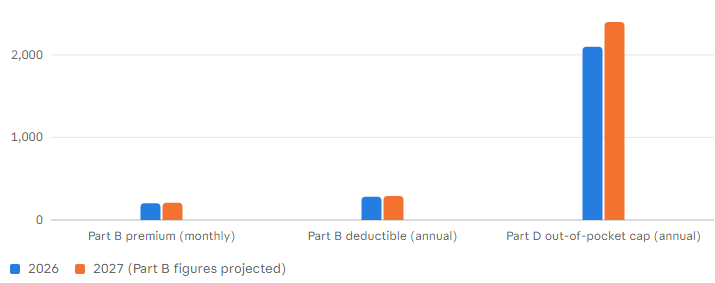
The 2027 numbers matter. The Part D out-of-pocket cap rises to $2,400 from $2,100 (+14.3%), and the standard Part D deductible is capped at $700. The Part B premium is projected at $209.50 a month, up $6.60 or 3.25% from $202.90, and the Part B deductible at about $292 from $283, though CMS had not confirmed the premium as of early November. Advantage members get one change between January 1 and March 31, 2027. Use the official plan finder or a free State Health Insurance Assistance Program counselor to enter your actual drugs and doctors, since the lowest premium is not always the lowest total cost.
Here is the math on the raise. With a $2,000 monthly benefit in 2026, you receive $1,797.10 after $202.90 for Part B. In 2027 the 3.6% increase brings the gross benefit to $2,072, and after a projected $209.50 for Part B you receive about $1,862.50: a net increase of about $65.40 a month, or about $785 a year, since Part B takes about 9% of the raise. Choosing a Part D or Advantage plan well can save more than the whole increase for people with significant prescription costs, but the result depends on your own drugs.
The numbers: 2027: COLA 3.6%; Part B premium projected $209.50 (+$6.60); Part D cap $2,400 (from $2,100); open enrollment ends December 7. On a $2,000 monthly benefit, the net raise after Part B is about $65.40 a month (about $785 a year). Home insurance averages about $3,057 a year, up 46% since 2021 (Insurify); auto insurance rose 64% in five years (BLS).
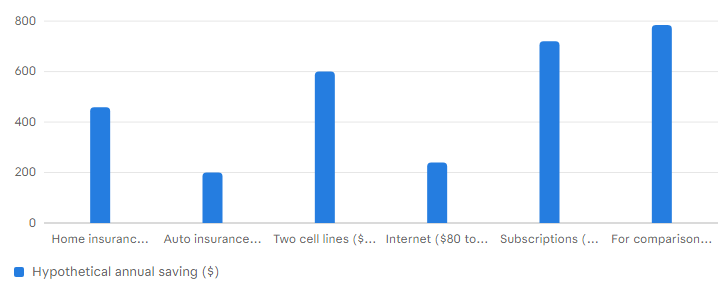
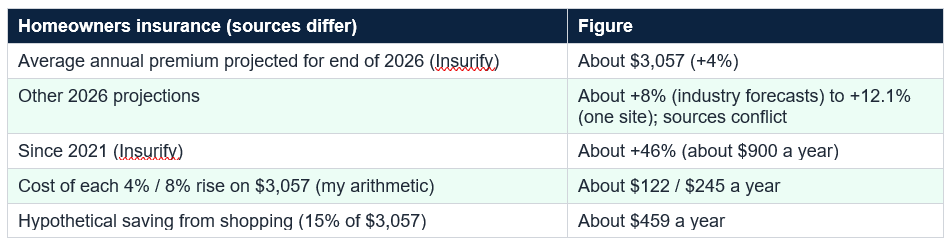
Retirees often keep the same policy for decades, which is where overpayment hides. Ask your agent for a renewal review at least 60 days before the date, then get quotes from several insurers or an independent agent, asking about discounts for a newer roof, security or smoke systems, bundling with auto and a claims-free history. Raising the deductible lowers the premium, but make sure you could afford it, and never cut coverage below your home’s replacement cost. A 15% saving on $3,057 would be about $459 a year, though your result may be smaller or larger.
Shop at every renewal, since insurers price the same driver differently. Retirees often qualify for discounts for low mileage (commuting has stopped), a defensive driving course, bundling with home and a claims-free record. Check that you are not paying for coverage you no longer need, but keep adequate liability protection, and tell your insurer if you drive much less than before. A 10% saving on $2,000 would be about $200 a year (hypothetical).
A review often finds waste: unlimited data you do not need if you mostly use Wi-Fi, or a cable package of channels you never watch. In my hypothetical illustration, moving two phone lines from $140 to $90 a month saves $600 a year and cutting internet from $80 to $60 saves $240. Check last year’s bills before calling, and write down the offer and the representative’s name when you accept it.
Property taxes deserve a look when the assessment notice arrives: check the square footage, number of rooms and other details, compare with similar nearby homes and appeal by the deadline if the value looks too high. Many localities also offer senior exemptions or freezes (general knowledge), so ask your assessor. Finally, audit subscriptions twice a year (streaming, magazines, apps, clubs, extended warranties, insurance add-ons) and cancel what you do not use.
Savings is where many retirees leave the most money. Top high-yield savings accounts pay about 4.35%, while national averages run from 0.38% to 0.63% depending on the source. In my arithmetic $50,000 earns about $190 a year at 0.38% and about $2,175 at 4.35%, a difference of about $1,985, more than several of the savings above combined. Keep deposits within insurance limits ($250,000 per depositor per bank, general knowledge), and check rates yearly, since they change.
This week, list every recurring bill with its renewal date and amount. Put Medicare’s December 7 deadline first, then call or get quotes on the biggest bill, usually homeowners insurance.
For insurance, comparison beats haggling: gather quotes with identical coverage, consider an independent agent who can check several companies and keep notes of every call. Do not let a negotiation tempt you into reducing important protection, since the cheapest policy is not the best if it leaves you exposed. For Medicare you are not haggling at all: the lever is choosing the plan that fits your drugs and doctors.
Start instead with official sources: Medicare.gov and your State Health Insurance Assistance Program for Medicare, your state insurance department for insurance complaints and the number printed on your own bill or card, not one a caller gives you. If you are unsure, hang up and call back, and consider involving a trusted family member in significant decisions.
Common mistakes include missing the December 7 Medicare deadline, picking a plan on premium alone, staying with the same insurer for decades without comparing, letting a promotion expire, keeping large savings in a near-zero account, paying upfront fees to a “negotiator” and trusting a caller who contacted you first. A single annual calendar fixes most of them.
Start now with Medicare, since open enrollment ends December 7, 25 days from today. Then work through home and auto insurance, phone and internet, credit cards, savings rates and subscriptions, using official sources and avoiding anyone who asks for money upfront. Your own savings will differ, and I cannot promise results: write the dates on a calendar, make the calls and keep the proof.
The biggest are Medicare drug and Medicare Advantage plans (during open enrollment, October 15 to December 7), home insurance, auto insurance, cell phone, internet and TV service, credit card rates, and the interest rate on savings. Subscriptions, utility plans and property tax assessments deserve an annual look too. The right order is by dollars at stake and by deadline: Medicare comes first this month because open enrollment closes December 7.
Is it too late to change my Medicare plan for 2027?
Not yet. Open enrollment runs through December 7, 2026, which is 25 days from today, and changes take effect January 1. If you are in a Medicare Advantage plan, you also get one change between January 1 and March 31. Compare your drugs and doctors on the official Medicare plan tool or with a free State Health Insurance Assistance Program counselor, in my general knowledge. Plan non-renewals, such as about 600,000 Humana members, per one summary, make checking essential.
How much does a retiree’s Social Security raise really amount to in 2027?
The cost-of-living adjustment is 3.6%. In my example, a $2,000 monthly benefit rises to $2,072, but if the projected Part B premium of $209.50 is confirmed, up from $202.90, the net increase is about $65.40 a month, or about $785 a year, since Part B is usually deducted from the check. The official premium had not been announced as of early November, so check the final figure.
Will calling to negotiate really work?
Often it can, especially with services that compete hard for customers, such as cell phone, internet and insurance, though results vary. Be polite and specific: cite a competitor’s price, ask for the retention department and ask about any senior, loyalty or bundle discounts. Savings are not guaranteed. For insurance, getting several quotes is usually more reliable than haggling. This is general education, not personal advice.
How do I avoid scams when trying to cut my bills?
Retirees are frequent targets of fake bill-reduction, Medicare and utility calls. Never give your Medicare, Social Security or bank numbers to someone who contacts you first, never pay upfront fees to a “negotiator” and start any plan comparison at official sources such as Medicare.gov or your state insurance department. Legitimate insurers and carriers will not rush you.
Table of Contents
- Why Retirees Should Do This Every Year
- The Short Answer
- Medicare Plans: Start Here (Deadline December 7)
- Homeowners Insurance
- Auto Insurance
- Phone, Internet and TV
- Utilities, Property Taxes and Subscriptions
- Credit Cards, Banks and Savings Rates
- How to Negotiate
- Protecting Yourself From Scams
- A Retiree’s Annual Calendar
- Common Mistakes
- Conclusion
- Frequently Asked Questions
Medicare is getting pricier: key amounts, 2026 vs. 2027 ($)
Dollars ($) by Kiplinger, The Hill and secondary sources citing the Medicare Trustees Report and CMS: the Part D cap of $2,400 is final; the Part B premium ($209.50) and deductible (about $292) are projections; open
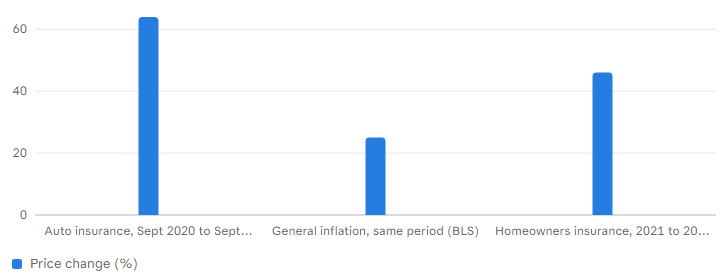
Why shopping insurance pays: price increases vs. general inflation (%)
Increase (%) by BLS data via Yahoo Finance (auto insurance +64% vs about +25% overall prices); Insurify via NewsBreak (home insurance up about 46% since 2021, about $900 a year); 2026 home insurance projections diffe
Hypothetical annual savings from renegotiating vs. the net Social Security raise ($)
Dollars per year ($) by Author's hypothetical arithmetic with stated assumptions; the five savings total about $2,219, about 2.8 times the net raise of about $785; your own savings will differ and are not guaranteed
Why Retirees Should Do This Every Year
On a fixed income, small leaks matter. A bill that creeps up $15 a month costs $180 a year, and most of us never notice because the increase arrives as a line on a renewal notice. Companies count on that inertia: insurers, phone carriers and cable providers often reserve their best prices for new customers while loyal ones quietly pay more. Retirees, who have time and long relationships with providers, are both the most likely to be overcharged and the most able to fix it.This year the case is stronger. Social Security’s 2027 cost-of-living adjustment is 3.6% (announced October 14), but Medicare premiums, usually deducted from the check, are rising too, and home insurance has climbed for five straight years. Inflation was 3.7% in September per my earlier research, so the raise barely keeps pace. This guide covers which bills to renegotiate, when and how, starting with one that has a deadline.
Start with Medicare, because open enrollment ends December 7, then work down the list by dollars at stake: home insurance, auto insurance, phone and internet, credit cards and savings rates, and finally subscriptions and utilities. In my hypothetical example, five routine moves could save about $2,219 a year, nearly three times the roughly $785 net raise a $2,000-a-month Social Security recipient gets from the 2027 adjustment after Part B. The best tool is a calendar, since most of these bills have a natural renewal date.
Medicare Plans: Start Here (Deadline December 7)
Medicare is the only bill with a hard deadline this month. Open enrollment runs October 15 to December 7, 2026, 25 days from today, and changes take effect January 1. You can switch Part D drug plans, move between Original Medicare and Medicare Advantage, or change Advantage plans. Plans change every year (premiums, deductibles, drug lists, pharmacy and doctor networks), so last year’s best plan may not be this year’s, and some are leaving altogether: one summary reports Humana sending non-renewal notices to about 600,000 members.The 2027 numbers matter. The Part D out-of-pocket cap rises to $2,400 from $2,100 (+14.3%), and the standard Part D deductible is capped at $700. The Part B premium is projected at $209.50 a month, up $6.60 or 3.25% from $202.90, and the Part B deductible at about $292 from $283, though CMS had not confirmed the premium as of early November. Advantage members get one change between January 1 and March 31, 2027. Use the official plan finder or a free State Health Insurance Assistance Program counselor to enter your actual drugs and doctors, since the lowest premium is not always the lowest total cost.
Here is the math on the raise. With a $2,000 monthly benefit in 2026, you receive $1,797.10 after $202.90 for Part B. In 2027 the 3.6% increase brings the gross benefit to $2,072, and after a projected $209.50 for Part B you receive about $1,862.50: a net increase of about $65.40 a month, or about $785 a year, since Part B takes about 9% of the raise. Choosing a Part D or Advantage plan well can save more than the whole increase for people with significant prescription costs, but the result depends on your own drugs.
The numbers: 2027: COLA 3.6%; Part B premium projected $209.50 (+$6.60); Part D cap $2,400 (from $2,100); open enrollment ends December 7. On a $2,000 monthly benefit, the net raise after Part B is about $65.40 a month (about $785 a year). Home insurance averages about $3,057 a year, up 46% since 2021 (Insurify); auto insurance rose 64% in five years (BLS).
Homeowners Insurance
Home insurance has been one of the fastest-rising household bills. Insurify data reported by ConsumerAffairs put the average premium at about $2,948 at the end of 2025 and projected about $3,057 by the end of 2026 (+4%), after a roughly 12% jump in 2025 and about 46%, or $900 a year, above 2021. Other sources project 2026 increases from about 8% to over 12%, and costs vary hugely by state, with Minnesota and Colorado above 30% in one analysis. On $3,057, each 4% is about $122 a year and 8% about $245 in my arithmetic.Retirees often keep the same policy for decades, which is where overpayment hides. Ask your agent for a renewal review at least 60 days before the date, then get quotes from several insurers or an independent agent, asking about discounts for a newer roof, security or smoke systems, bundling with auto and a claims-free history. Raising the deductible lowers the premium, but make sure you could afford it, and never cut coverage below your home’s replacement cost. A 15% saving on $3,057 would be about $459 a year, though your result may be smaller or larger.
Auto Insurance
Auto insurance has risen even faster than general prices: per the Bureau of Labor Statistics, as cited by Yahoo Finance, premiums rose more than 64% between September 2020 and September 2025, against about 25% for inflation overall. A $2,000 policy in 2020 would be about $3,280 now, against about $2,500 had it only tracked inflation. One forecast says rate growth is moderating to about 4% in 2026, which means more insurers competing for customers, good news for shoppers.Shop at every renewal, since insurers price the same driver differently. Retirees often qualify for discounts for low mileage (commuting has stopped), a defensive driving course, bundling with home and a claims-free record. Check that you are not paying for coverage you no longer need, but keep adequate liability protection, and tell your insurer if you drive much less than before. A 10% saving on $2,000 would be about $200 a year (hypothetical).
Phone, Internet and TV
These three bills share a pattern: an introductory promotion ends and the price jumps, often without a reminder. Set a calendar alert for the expiry, call the provider, ask for its best current offer and mention competitors’ prices. Ask for the retention or loyalty department, which usually has more discretion, and about senior, military or membership discounts and cheaper plans that fit your usage. This is general knowledge, since I did not retrieve current provider prices, and results vary by area and provider.A review often finds waste: unlimited data you do not need if you mostly use Wi-Fi, or a cable package of channels you never watch. In my hypothetical illustration, moving two phone lines from $140 to $90 a month saves $600 a year and cutting internet from $80 to $60 saves $240. Check last year’s bills before calling, and write down the offer and the representative’s name when you accept it.
Utilities, Property Taxes and Subscriptions
Utilities are harder to negotiate, but there are levers. In states with energy choice you can compare electricity and gas suppliers, and an expiring fixed-rate plan can roll into a higher variable rate, so check the terms. Ask about budget billing, senior or low-income assistance programs and free energy audits. I did not retrieve current utility rates, which vary widely by location, so treat this as a prompt to check your own bills.Property taxes deserve a look when the assessment notice arrives: check the square footage, number of rooms and other details, compare with similar nearby homes and appeal by the deadline if the value looks too high. Many localities also offer senior exemptions or freezes (general knowledge), so ask your assessor. Finally, audit subscriptions twice a year (streaming, magazines, apps, clubs, extended warranties, insurance add-ons) and cancel what you do not use.
Credit Cards, Banks and Savings Rates
Renegotiating works on the money side too. If you carry a card balance, the average APR actually charged was about 20.9% in the second quarter, per a Federal Reserve data summary. Ask for a lower rate, especially with a long on-time history, or consider a lower-rate card or balance transfer if the total cost, including fees, is lower: a $4,000 balance costs about $836 a year at 20.9% and $600 at 15% in my arithmetic, and paying it off beats any negotiation. Check bank fees too, since maintenance, overdraft and ATM fees can often be waived or avoided by switching accounts.Savings is where many retirees leave the most money. Top high-yield savings accounts pay about 4.35%, while national averages run from 0.38% to 0.63% depending on the source. In my arithmetic $50,000 earns about $190 a year at 0.38% and about $2,175 at 4.35%, a difference of about $1,985, more than several of the savings above combined. Keep deposits within insurance limits ($250,000 per depositor per bank, general knowledge), and check rates yearly, since they change.
This week, list every recurring bill with its renewal date and amount. Put Medicare’s December 7 deadline first, then call or get quotes on the biggest bill, usually homeowners insurance.
How to Negotiate
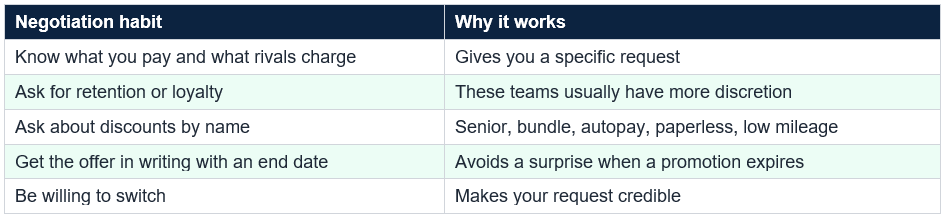
A few habits help every call. Gather your facts first: account number, what you pay now and what competitors charge. Be calm and polite, say plainly that you want to stay but need a better price, and ask for a supervisor or the retention team if the first answer is no. Ask what discounts exist, get any new rate confirmed in writing or by email with the end date of any promotion, and be willing to switch, because the request is only credible if you are ready to follow through.For insurance, comparison beats haggling: gather quotes with identical coverage, consider an independent agent who can check several companies and keep notes of every call. Do not let a negotiation tempt you into reducing important protection, since the cheapest policy is not the best if it leaves you exposed. For Medicare you are not haggling at all: the lever is choosing the plan that fits your drugs and doctors.
Protecting Yourself From Scams
Retirees are frequent targets of scams that exploit the desire to save money: fake Medicare callers, “bill reduction” services that charge upfront fees, impostor utility collectors and fake insurance agents (general knowledge from consumer-protection warnings). Never give your Medicare, Social Security or bank account number to someone who contacts you first, do not pay anyone upfront to “negotiate” a bill, and do not be rushed, since legitimate companies do not require an immediate decision.Start instead with official sources: Medicare.gov and your State Health Insurance Assistance Program for Medicare, your state insurance department for insurance complaints and the number printed on your own bill or card, not one a caller gives you. If you are unsure, hang up and call back, and consider involving a trusted family member in significant decisions.
A Retiree’s Annual Calendar
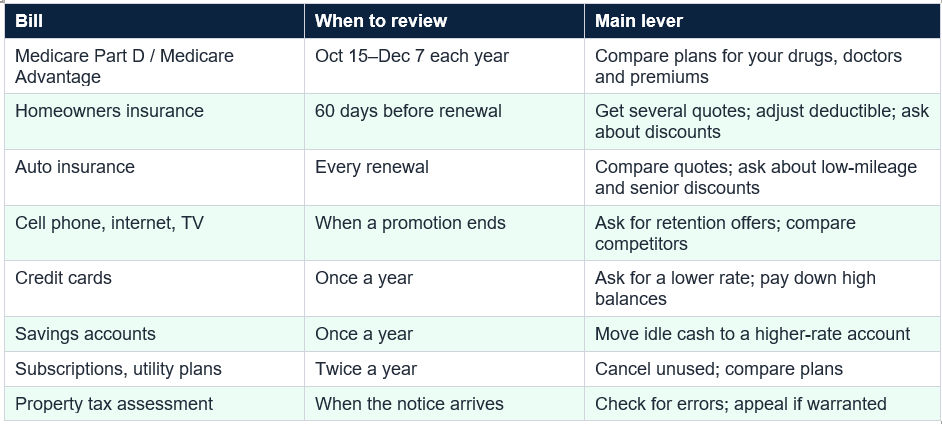
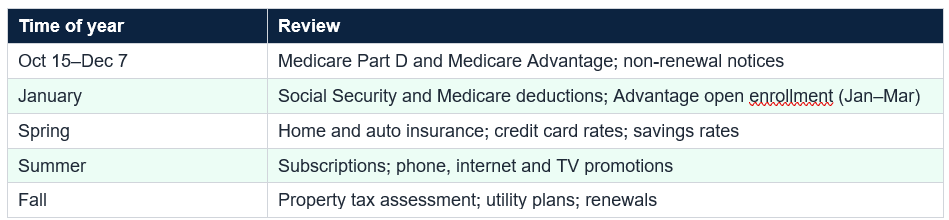
Spreading the reviews across the year keeps them manageable: Medicare plans in October and November, your Social Security and Medicare deductions in January, insurance, credit cards and savings rates in the spring, subscriptions and phone and internet promotions in the summer, and property tax notices and utility plans in the fall. A simple spreadsheet or calendar with renewal dates is enough.Common mistakes include missing the December 7 Medicare deadline, picking a plan on premium alone, staying with the same insurer for decades without comparing, letting a promotion expire, keeping large savings in a near-zero account, paying upfront fees to a “negotiator” and trusting a caller who contacted you first. A single annual calendar fixes most of them.
Conclusion
The 2027 Social Security raise is 3.6%, but after a projected Part B premium of $209.50, a $2,000 monthly benefit nets only about $65.40 more a month, about $785 a year, and home insurance, which averages about $3,057, is up about 46% since 2021. The cure is not heroic budgeting but a yearly habit: review the big bills when they renew and do it before deadlines. In my hypothetical example, five routine moves could save about $2,219 a year, nearly three times the net raise.Start now with Medicare, since open enrollment ends December 7, 25 days from today. Then work through home and auto insurance, phone and internet, credit cards, savings rates and subscriptions, using official sources and avoiding anyone who asks for money upfront. Your own savings will differ, and I cannot promise results: write the dates on a calendar, make the calls and keep the proof.
Frequently Asked Questions
Which bills should retirees renegotiate every year?The biggest are Medicare drug and Medicare Advantage plans (during open enrollment, October 15 to December 7), home insurance, auto insurance, cell phone, internet and TV service, credit card rates, and the interest rate on savings. Subscriptions, utility plans and property tax assessments deserve an annual look too. The right order is by dollars at stake and by deadline: Medicare comes first this month because open enrollment closes December 7.
Is it too late to change my Medicare plan for 2027?
Not yet. Open enrollment runs through December 7, 2026, which is 25 days from today, and changes take effect January 1. If you are in a Medicare Advantage plan, you also get one change between January 1 and March 31. Compare your drugs and doctors on the official Medicare plan tool or with a free State Health Insurance Assistance Program counselor, in my general knowledge. Plan non-renewals, such as about 600,000 Humana members, per one summary, make checking essential.
How much does a retiree’s Social Security raise really amount to in 2027?
The cost-of-living adjustment is 3.6%. In my example, a $2,000 monthly benefit rises to $2,072, but if the projected Part B premium of $209.50 is confirmed, up from $202.90, the net increase is about $65.40 a month, or about $785 a year, since Part B is usually deducted from the check. The official premium had not been announced as of early November, so check the final figure.
Will calling to negotiate really work?
Often it can, especially with services that compete hard for customers, such as cell phone, internet and insurance, though results vary. Be polite and specific: cite a competitor’s price, ask for the retention department and ask about any senior, loyalty or bundle discounts. Savings are not guaranteed. For insurance, getting several quotes is usually more reliable than haggling. This is general education, not personal advice.
How do I avoid scams when trying to cut my bills?
Retirees are frequent targets of fake bill-reduction, Medicare and utility calls. Never give your Medicare, Social Security or bank numbers to someone who contacts you first, never pay upfront fees to a “negotiator” and start any plan comparison at official sources such as Medicare.gov or your state insurance department. Legitimate insurers and carriers will not rush you.
0 Comments
Be the first to share your thoughts on this article.