
Finance
The Best and Worst Changes for Your Money in 2026/27: Key Facts

Higher inflation, big leadership changes and a consumer who keeps spending. Here is what helped your wallet this year, what hurt, and what to do next. CPI 3.7% in September; fed funds 3.75% to 4%; unemployment 4.1%; 165,000 jobs added in October; savings rate 2.6% in April; 30-year mortgage 7.11%
% year over year by Sources: IBTimes, Cresset, BLS via US Inflation Calculator. No annual rate for October
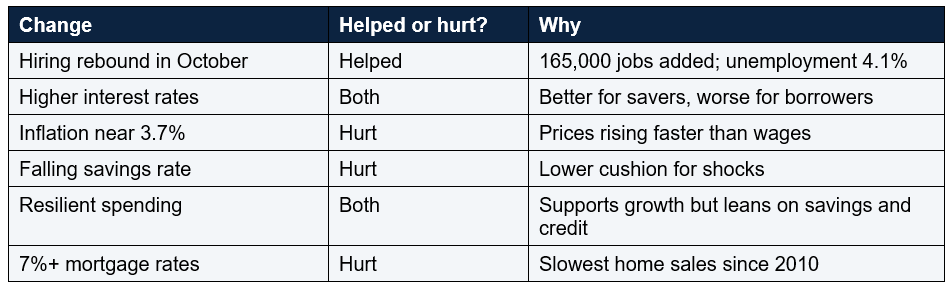
If 2026 had a theme for household money, it would be "stronger than expected, but more expensive than hoped." Hiring has held up. Spending has held up. But prices have risen faster than pay, savings have thinned out, and borrowing has become pricier, with the Federal Reserve raising rates in September for the first time since 2023. The year also brought a change at the top of the Fed. Kevin Warsh took over from Jerome Powell, whose tenure as chair ended in May. Elsewhere in markets, leadership upheavals such as Nvidia's, where CFO Colette Kress became interim chief executive, reminded investors how fast the ground can shift.Below I sort the changes into things that helped, things that hurt, and things that cut both ways. I have tried to avoid predictions, because the honest picture is mixed.
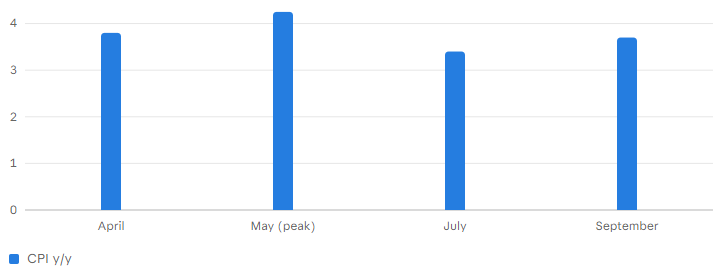
The path through the year was bumpy. One market note says headline CPI peaked at 4.25% in May and eased to 3.4% in July. Another put April at 3.8%. By September it was back up to 3.7%, helped by gas prices that jumped more than 9% in a month. Greenleaf Trust links energy pressure to uncertainty from the Iran war.
Not all of it is fuel. Shelter drove more than 30% of October's monthly rise, and motor vehicle insurance rose 0.7% in the month. Those are the bills that are hardest to shop around, which is why this inflation feels stubborn.
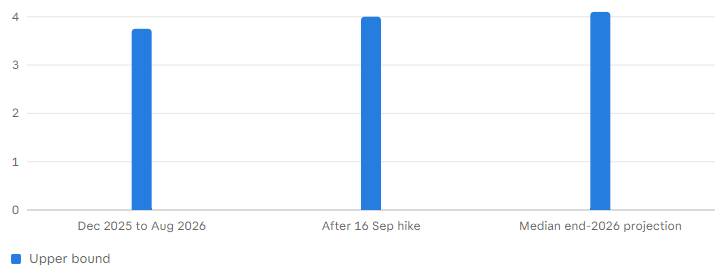
The Fed held again on 28 October, this time by a 10-2 vote, with Governor Lisa Cook and Cleveland Fed President Beth Hammack dissenting in favour of another quarter-point increase. The median official expects rates to finish 2026 at 4.1%, which implies one more hike. The next meeting is 8-9 December. For your money, this means borrowing costs are drifting up, not down, and the median projection for 2027 shows no cuts either. If you were waiting for rates to fall before taking on a loan, plan on a longer wait.
For the year so far, employers have added about 86,000 jobs a month, up from about 10,000 a month in 2025, and unemployment has stayed in a narrow 4.1%-4.3% range. That is a real help to household finances, because a steady paycheck is the single most important cushion most people have. There is a caveat. The broader U-6 unemployment rate rose to 7.9% from 7.6%, and involuntary part-time work jumped by 339,000. So the headline is strong, but more people are working fewer hours than they want.
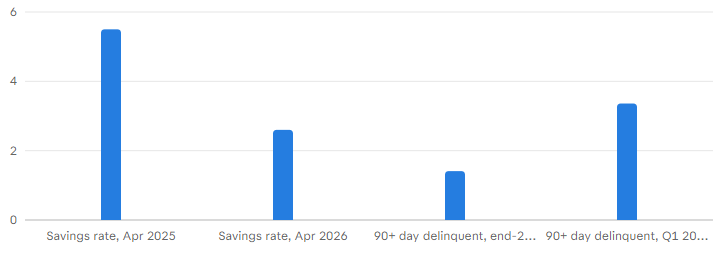
The question is how long this can continue. The savings rate fell from 5.5% a year earlier to 2.6% in April 2026, the lowest since mid-2022. IBTimes, citing the Washington Post, calls it the lowest in nearly four years. Cresset warns that spending is losing momentum as households become more selective.
Part of the answer is debt. Ryan Young of the Competitive Enterprise Institute said one answer to how people keep spending is debt, though he added that people have jobs and a steady paycheck. Another source notes wages are struggling to keep up and more money is going to gasoline. In short, the "resilient consumer" is partly a household drawing down its cushion.
Concentration risk is a general principle, not a reaction to one headline. A leadership surprise at a single company can move a holding sharply in days. CNN's live blog reported that Nvidia lost $1.76 trillion in market value around the news. A broadly diversified fund smooths that out, which is one reason many planners suggest it for core savings. And at the Fed, new leadership has meant a firm tone on prices, with Warsh telling reporters that inflation is too high and has been for too long. For savers and borrowers alike, the person at the top of the central bank matters more than most people realise.
The Fed's next meeting is on 8-9 December, and Fox Business notes that a quarter-point hike would take the range to 4% to 4.25%. The next CPI report will also matter, particularly because the missing October 2025 data complicates the annual comparison. I would also watch the savings rate, credit delinquencies and holiday spending. If households keep spending while savings run lower, the resilience story may weaken. If wages catch up with prices, the picture improves. Either way, the data will be messy, so use it as a guide rather than a forecast.
The latest official annual rate is September's 3.7%, with core at 2.6%. BLS could not publish an annual rate for October because of missing 2025 data. Prices rose 0.4% in October alone.
Did the Fed raise interest rates in 2026?
Yes. On 16 September the Fed raised the target range to 3.75%-4%, its first hike since July 2023, in a unanimous 12-0 vote. It held on 28 October.
Who is the new Fed chair?
Kevin Warsh took over after Jerome Powell's tenure as chair ended in May.
Are wages keeping up with inflation?
Not at the moment. Wage growth of 3.1% trails inflation of 3.7%, and real hourly earnings fell 0.7% in September.
Is the US consumer still spending?
Yes, but partly by drawing down savings. The savings rate fell to 2.6% in April from 5.5% a year earlier.
Table of Contents
- Inflation: still stubborn
- A new Fed chair and a rate hike
- Jobs: the best surprise of the autumn
- Paychecks versus prices
- The resilient consumer, and how it is being paid for
- Debt and delinquencies
- Housing: high rates, slow sales
- Leadership changes beyond the Fed
- What higher rates mean for savers and borrowers
- A money checklist for the rest of 2026
- Conclusion
- FAQ
US annual CPI inflation in 2026 (%): sources differ by month
% year over year by Sources: IBTimes, Cresset, BLS via US Inflation Calculator. No annual rate for October
Fed funds target range, upper bound (%)
% by Sources: Fox Business, Courthouse News, Fortune (projection is a median point estimate)
Household cushion: savings rate and 90+ day delinquency (%)
% by Source: American Action Forum (BEA, New York Fed)If 2026 had a theme for household money, it would be "stronger than expected, but more expensive than hoped." Hiring has held up. Spending has held up. But prices have risen faster than pay, savings have thinned out, and borrowing has become pricier, with the Federal Reserve raising rates in September for the first time since 2023. The year also brought a change at the top of the Fed. Kevin Warsh took over from Jerome Powell, whose tenure as chair ended in May. Elsewhere in markets, leadership upheavals such as Nvidia's, where CFO Colette Kress became interim chief executive, reminded investors how fast the ground can shift.Below I sort the changes into things that helped, things that hurt, and things that cut both ways. I have tried to avoid predictions, because the honest picture is mixed.
Inflation: still stubborn
Inflation is the story most households feel first. The Bureau of Labor Statistics reported that consumer prices rose 0.4% in October, slowing from 0.6% in September but above the 0.3% economists expected. Core inflation, which strips out food and energy, rose 0.3%. The headline annual number is awkward this time. Because of last year's government shutdown, BLS did not collect October 2025 data and could not publish a 12-month rate for October 2026. The latest annual figure is September's 3.7%, with core at 2.6%. Another source says the annual rate is more than a percentage point above the Fed's 2% target.The path through the year was bumpy. One market note says headline CPI peaked at 4.25% in May and eased to 3.4% in July. Another put April at 3.8%. By September it was back up to 3.7%, helped by gas prices that jumped more than 9% in a month. Greenleaf Trust links energy pressure to uncertainty from the Iran war.
Not all of it is fuel. Shelter drove more than 30% of October's monthly rise, and motor vehicle insurance rose 0.7% in the month. Those are the bills that are hardest to shop around, which is why this inflation feels stubborn.
A new Fed chair and a rate hike
The Fed has had a dramatic year. Powell's term as chair ended in May, and the replacement process was a political drama before it began. Warsh held his first news conference in June. One outlet describes the September meeting as the third led by Warsh, while another calls it his second, so treat the meeting count with care. The policy move is not in doubt. On 16 September, the Federal Open Market Committee voted 12-0 to raise the federal funds rate by a quarter point, from 3.5%-3.75% to 3.75%-4%, the first hike since July 2023. The Fed had held rates after its last cut in December 2025, and Euronews says the move put the new chair directly at odds with the president who appointed him. Axios adds that the Fed hinted another hike was on the way this year.The Fed held again on 28 October, this time by a 10-2 vote, with Governor Lisa Cook and Cleveland Fed President Beth Hammack dissenting in favour of another quarter-point increase. The median official expects rates to finish 2026 at 4.1%, which implies one more hike. The next meeting is 8-9 December. For your money, this means borrowing costs are drifting up, not down, and the median projection for 2027 shows no cuts either. If you were waiting for rates to fall before taking on a loan, plan on a longer wait.
4. Jobs: the best surprise of the autumn
The October jobs report was the best surprise of the autumn. Employers added 165,000 jobs against a forecast of about 65,000, and the unemployment rate fell to 4.1% from 4.2%. Revisions added 84,000 jobs to August and September. Reuters noted that the rate fell even though 421,000 people entered the labour force.For the year so far, employers have added about 86,000 jobs a month, up from about 10,000 a month in 2025, and unemployment has stayed in a narrow 4.1%-4.3% range. That is a real help to household finances, because a steady paycheck is the single most important cushion most people have. There is a caveat. The broader U-6 unemployment rate rose to 7.9% from 7.6%, and involuntary part-time work jumped by 339,000. So the headline is strong, but more people are working fewer hours than they want.
Paychecks versus prices
Here is the problem. Jobs are plentiful, but pay is not keeping up. The October jobs report showed wage growth of 3.1% a year, below the 3.7% inflation rate. AP reported that after accounting for inflation, average hourly earnings fell 0.7% in September, the sixth straight year-over-year drop. Using the numbers above, the gap between 3.1% wage growth and 3.7% inflation is about 0.6 percentage points (my calculation), which on a $60,000 income would mean roughly $360 of lost purchasing power over a year. That figure is an illustration, not a statistic about any real household. This is also why price discontent became a political issue. ABC News reported that unhappiness over prices helped fuel the midterm results. You do not need to follow politics to see the money point: when pay trails prices, small savings habits and lower fixed costs matter more.6. The resilient consumer, and how it is being paid for
Consumers have kept spending through all of this. The American Action Forum said the consumer has stayed resilient despite tariffs, geopolitical conflicts and five years of inflation above the Fed's target. Retail sales rose 6.7% year over year in June, even though gasoline station sales fell 5.3% in the month. Cresset notes year-over-year retail growth peaked at 7.2% in May and was 5.0% in July.The question is how long this can continue. The savings rate fell from 5.5% a year earlier to 2.6% in April 2026, the lowest since mid-2022. IBTimes, citing the Washington Post, calls it the lowest in nearly four years. Cresset warns that spending is losing momentum as households become more selective.
Part of the answer is debt. Ryan Young of the Competitive Enterprise Institute said one answer to how people keep spending is debt, though he added that people have jobs and a steady paycheck. Another source notes wages are struggling to keep up and more money is going to gasoline. In short, the "resilient consumer" is partly a household drawing down its cushion.
Debt and delinquencies
Signs of strain show up in the debt data. The New York Fed's survey showed the share of debt balances 90 or more days delinquent rising from 1.41% at the end of 2022 to 3.36% in the first quarter of 2026. For credit cards, the 90-day delinquent share reached 13.12% even though overall balances declined. Fidelity data cited in the same report show 2.4% of workers took out a new 401(k) loan in the first quarter, up from 2.3% a year earlier. That is a small move, but it is the sort of quiet signal worth noticing. Cresset adds that delinquencies are rising among lower-income households. With the Fed lifting rates, the cost of carrying a card balance is not heading down. Credit card balances have climbed in 2026, according to New York Fed data cited by one report. If you carry a balance, paying it down is one of the few guaranteed returns available.Housing: high rates, slow sales
Housing felt the rate move most. Freddie Mac's 30-year average was 7.11% on 12 November, up from 6.24% a year earlier. Existing-home sales ran at a seasonally adjusted annual pace of 3.75 million in October, the slowest since August 2010. A healthy pace is typically around 5 million. That is the downside of the Fed's inflation fight: it protects the value of your cash over time but makes it harder to buy a home today. If you already own with a low fixed rate, you are comparatively well placed. If you are a first-time buyer, the numbers are tougher than they have been in years. For a deeper look at how much house fits a savings plan, see my earlier post on the topic. The short version is to count maintenance and keep your investing on track before you stretch for a bigger loan.9. Leadership changes beyond the Fed
The leadership theme goes beyond the Fed. Nvidia, one of the most valuable companies in the world, saw its founder step down as CEO in November, with Colette Kress taking over as interim chief while the board searches for a permanent replacement. Whatever you think of the story, it is a useful reminder for investors who hold a big share of their portfolio in a single stock or sector.Concentration risk is a general principle, not a reaction to one headline. A leadership surprise at a single company can move a holding sharply in days. CNN's live blog reported that Nvidia lost $1.76 trillion in market value around the news. A broadly diversified fund smooths that out, which is one reason many planners suggest it for core savings. And at the Fed, new leadership has meant a firm tone on prices, with Warsh telling reporters that inflation is too high and has been for too long. For savers and borrowers alike, the person at the top of the central bank matters more than most people realise.
What higher rates mean for savers and borrowers
Higher rates cut both ways, and this is my inference rather than a sourced fact. Savers benefit when banks and money-market funds pass on a higher policy rate, so cash accounts may pay more than they did when the Fed was cutting. Borrowers lose, because credit cards, auto loans and mortgages tend to follow the same direction. The catch is that inflation is also running near 3.7%, so a savings account paying less than that is losing purchasing power even while it looks like it is earning. The goal for short-term money is to find the best insured yield you can, and the goal for debt is to pay down the most expensive balances first. If you hold a mortgage at a low fixed rate, resist the urge to pay it off early at the expense of emergency savings. If you hold a variable-rate loan, it may be worth asking your lender about fixing it. Those are general ideas, and a licensed adviser can tell you what fits your situation.A money checklist for the rest of 2026
Here is a simple checklist for what remains of 2026. First, review your emergency fund. With the savings rate low and delinquencies rising, a cushion of several months of expenses is more valuable than ever. Second, check your pay against inflation and consider asking for a raise if you are behind. Third, tackle high-interest debt, since card rates are not falling. Fourth, shop around for insurance, since motor vehicle insurance rose 0.7% in October alone. Fifth, review whether your savings are earning a competitive rate. Sixth, keep investing on schedule and avoid putting too much into any single company or theme. None of this is dramatic, but little decisions made now compound over years. If your finances are complicated, a fee-only planner is worth the cost.The Fed's next meeting is on 8-9 December, and Fox Business notes that a quarter-point hike would take the range to 4% to 4.25%. The next CPI report will also matter, particularly because the missing October 2025 data complicates the annual comparison. I would also watch the savings rate, credit delinquencies and holiday spending. If households keep spending while savings run lower, the resilience story may weaken. If wages catch up with prices, the picture improves. Either way, the data will be messy, so use it as a guide rather than a forecast.
Conclusion
The best change of 2026 was the labour market: steady hiring, unemployment at 4.1% and a surprisingly strong October. The worst was the squeeze between prices and pay, made sharper by a thin savings cushion and more expensive borrowing. A new Fed chair, a rate hike and political upheavals mean the rules keep shifting. The good news is that the basics still work: build the emergency fund, pay down expensive debt, stay diversified and review your bills. Do those, and you are far better placed for whatever the next few months bring.FAQ
What is the inflation rate right now?The latest official annual rate is September's 3.7%, with core at 2.6%. BLS could not publish an annual rate for October because of missing 2025 data. Prices rose 0.4% in October alone.
Did the Fed raise interest rates in 2026?
Yes. On 16 September the Fed raised the target range to 3.75%-4%, its first hike since July 2023, in a unanimous 12-0 vote. It held on 28 October.
Who is the new Fed chair?
Kevin Warsh took over after Jerome Powell's tenure as chair ended in May.
Are wages keeping up with inflation?
Not at the moment. Wage growth of 3.1% trails inflation of 3.7%, and real hourly earnings fell 0.7% in September.
Is the US consumer still spending?
Yes, but partly by drawing down savings. The savings rate fell to 2.6% in April from 5.5% a year earlier.
0 Comments
Be the first to share your thoughts on this article.