

Retirement
First Money Move to Make the Year Before Retirement
Fidelity estimates a 65-year-old retiring in 2026 will spend $185,000 on healthcare in retirement. Morningstar's 2026 safe withdrawal rate is 3.9%. A bad first year of returns can permanently damage a portfolio that took 30 years to build. The year before retirement is the most consequential planning window of a financial life — and most people spend it doing almost nothing differently. This guide identifies the single most important first move, then builds the complete pre-retirement checklist around it.

Fitzwilliams Financial's May 2026 retirement planning guide makes the point directly: 'The five years before retirement are often more important than the first five years after retirement.' This is the transition phase where mistakes are made that are difficult to recover from. It is also the window where the most powerful planning levers are still available — before the income stops, before Medicare decisions are locked in, before the withdrawal sequence begins, and before the portfolio is exposed to the sequence of returns risk that Morningstar's 2026 research identifies as the defining threat to early retiree portfolios.
The data that frames the stakes: Fidelity estimates a 65-year-old retiring in 2026 will spend an average of $185,000 on healthcare throughout retirement. Morningstar's 2026 base-case safe withdrawal rate is 3.9% — meaning a million-dollar portfolio can only safely support $39,000 per year in withdrawals. A bad first few years of returns, while withdrawals are running, can permanently reduce what the portfolio supports for the following twenty-five years, even if markets recover strongly afterward. And the S&P 500 was down approximately 4% in the first quarter of 2026, following a strong 18% total return in 2025 — a reminder that the market's next move is never guaranteed, and never more consequential than in the year you retire.
Fidelity (July 2026): a 65-year-old retiring in 2026 will spend an average $185,000 on healthcare throughout retirement. Morningstar 2026 base-case safe withdrawal rate: 3.9% (up from 3.7% in 2025). Guardrails approach: supports 5.2% starting rate on 40/60 portfolio. S&P 500: down ~4% YTD through early April 2026, after +18% in 2025. Forbes/David Rae (September 8, 2026 — 1 week ago): eight costly mistakes for people retiring in the next five years. 401(k) super catch-up ages 60–63: $35,750/year (2026 IRS limit). IRMAA surcharges: begin at $109,000 income for individuals in 2026 (Fidelity). Charles Schwab: 1 year cash + 2–4 years short-term bonds = baseline retirement buffer.
This is not a conventional emergency fund. It is a retirement income buffer — a pool of liquid, stable cash that can fund an entire year of spending without requiring a single share of equity or bond to be sold. It sits in a high-yield savings account or money market fund (both currently yielding 4–4.5% as of September 2026) and its function is structural: it prevents the most financially destructive behaviour a new retiree can engage in, which is selling investments at market lows to fund living expenses.
Charles Schwab's recommendation, cited in the Cedar Gold Group's August 2026 sequence of returns guide, is to maintain approximately one year of living expenses in cash, after accounting for Social Security and other guaranteed income sources, plus two to four years of expenses in high-quality short-term bonds. This combined buffer of three to five years means that a retiree who enters a bear market in year one of retirement can fund living costs entirely from cash and bonds — leaving equities untouched for the duration of most historical bear markets — without being forced to crystallise losses at the worst possible moment.
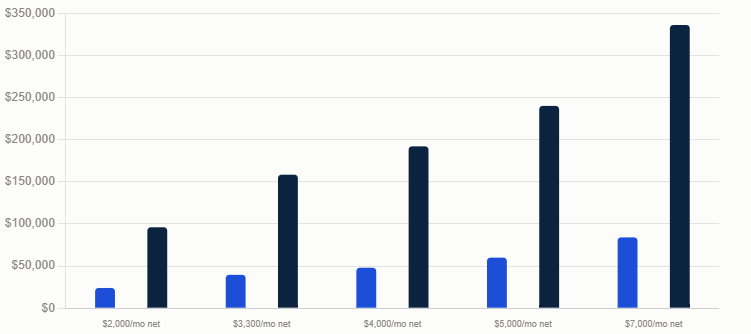
The first money move the year before retirement is to build this cash buffer while still employed. Here is why it must happen before retirement rather than after: during the final year of employment, income is still flowing and the buffer can be funded without touching investments. In retirement, the only way to build the buffer is to sell investments — which is exactly what the buffer is designed to avoid. Build it on the last year of salary, not the first year of withdrawals. Target: twelve months of net living expenses (after Social Security and any pension) in a dedicated high-yield savings account. This single step changes the sequence risk exposure from critical to manageable.
Cash buffer calculation example (2026). Monthly living expenses: $5,500. Monthly Social Security income (at 67, full retirement age): $2,200. Monthly net spending requirement (to fund from portfolio/buffer): $3,300. One-year cash buffer target: $3,300 × 12 = $39,600. Best HYSA rate September 2026: 4.21% (NerdWallet). Annual interest on $39,600 at 4.21%: approximately $1,667/year while buffer is held. The buffer earns income rather than sitting idle. After the buffer is funded, the next layer is 2–4 years of net spending in short-term bonds (per Schwab): $3,300 × 24 to $3,300 × 48 = $79,200–$158,400 in bond/CD ladder. Total first-year priority: fund the cash layer ($39,600) while still employed. Not financial advice.
The problem works as follows. A retiree who begins withdrawing 4% per year from a portfolio that immediately suffers a 25% drawdown is withdrawing from a much smaller base in year two, year three, and year four. Those early withdrawals permanently reduce the share count of the portfolio — shares sold at depressed prices can never participate in the eventual recovery. Even if the same portfolio then enjoys excellent returns for the next twenty years, the early depletion may have already made the portfolio unsustainable for the full retirement period.
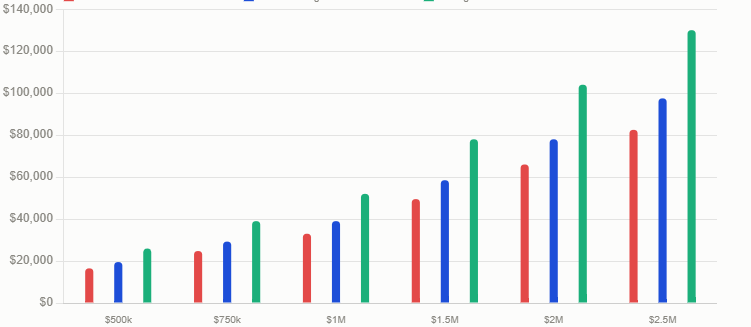
Morningstar's 2026 research places the base-case safe withdrawal rate at 3.9% — the rate at which a diversified portfolio has historically survived a 30-year retirement with high probability, accounting for current market valuations, interest rates, and inflation expectations (up from 3.7% in 2025, per hffinancial.com April 2026). The guardrails approach — rules-based spending flexibility where withdrawals are cut when the portfolio falls below predetermined thresholds — supports a 5.2% starting rate on a 40/60 portfolio, according to the same Morningstar research cited in myfinancialfreedomtracker.com's May 2026 guide. In dollar terms: on a $1 million portfolio, the difference between 3.9% and 5.2% is $39,000 versus $52,000 per year — a $13,000 annual income gap determined entirely by planning discipline.
The cash buffer described in Section 2 is specifically designed to counter sequence of returns risk. When the portfolio falls in early retirement, the retiree draws from the cash layer rather than selling investments. The portfolio has time to recover before equity sales become necessary. Charles Schwab's framework — one year cash, two to four years short-term bonds — covers the historical duration of most bear markets. The median US bear market since 1929 has lasted approximately ten months. The worst on record (2000–2002 and 2007–2009) lasted approximately two to three years. A three-to-five-year combined cash and bond buffer has historically been sufficient to weather these events without forced equity selling.
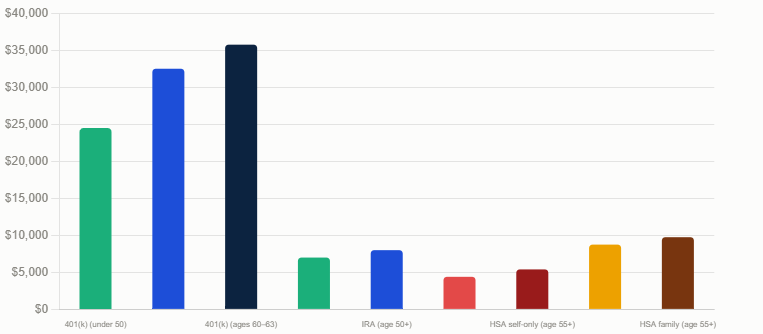
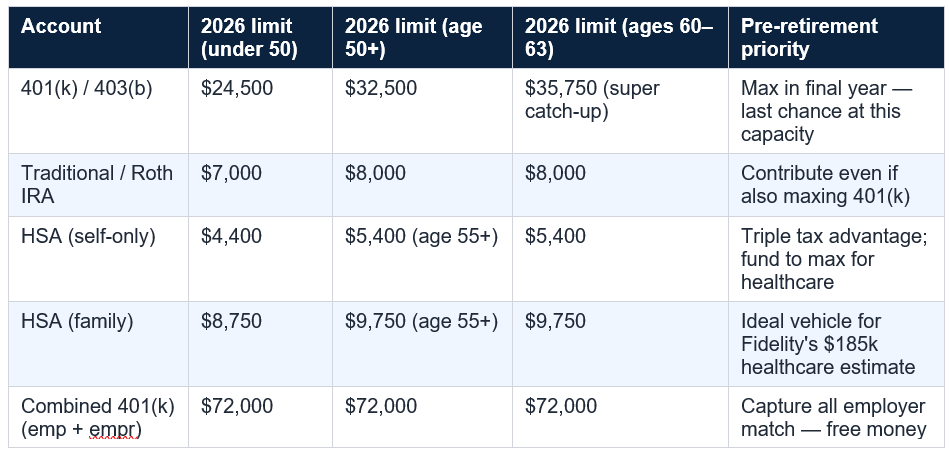
The 2026 IRS limits provide significant room, particularly for workers in their sixties. The standard 401(k) employee deferral limit is $24,500. Workers aged 50 and over can add an $8,000 catch-up contribution for a total of $32,500. Workers aged 60 to 63 receive a new 'super catch-up' under SECURE 2.0, raising their total to $35,750 per year — the most generous 401(k) contribution limit ever available to any age group. When employer matching is included, the combined employee and employer limit reaches $72,000 per year.
The HSA deserves special attention in the pre-retirement year. For 2026, the HSA contribution limit is $4,400 for self-only coverage and $8,750 for family coverage, with an additional $1,000 catch-up for anyone aged 55 or over. The HSA is the only account in the US tax code that is triple-advantaged: contributions are pre-tax, growth is tax-free, and withdrawals for qualifying medical expenses are tax-free. Given Fidelity's estimate of $185,000 in lifetime healthcare costs per retiree, building the HSA balance to its maximum in the final working year is one of the highest-return financial moves available.
The reason the pre-retirement year is the ideal window is income timing. Most people's final working year generates their highest earned income — making it appear to be the worst time to add more taxable income through a conversion. But the year immediately after retirement, before Social Security begins and before Required Minimum Distributions start (at age 73), often represents the lowest income period in a retiree's adult life. This 'income valley' is the prime Roth conversion window — but the pre-retirement year is when the planning for it must begin.
Specifically: identify how much income you will have in the first one to five years of retirement, before RMDs and Social Security stack on top. Project the tax brackets you will occupy. Then determine how much can be converted annually from traditional accounts — up to the top of the 22% or 24% bracket — before retirement income fills those brackets. Execute partial conversions each year through that window. The goal is to reduce the eventual traditional IRA/401(k) balance that will generate mandatory taxable distributions from age 73, while sheltering more of the portfolio in a tax-free Roth wrapper.
Pre-retirement Roth conversion planning steps. Step 1: project your income for years 1–5 of retirement (Social Security, pension, any part-time income). Step 2: identify how much space exists in the 12% and 22% federal income tax brackets before additional income pushes into the 24% bracket (2026: 22% bracket tops out at $103,350 for single filers, $206,700 for married filing jointly). Step 3: calculate the annual Roth conversion amount that fills that bracket space. Step 4: monitor IRMAA thresholds — conversion income that pushes MAGI above $109,000 (individual) or $218,000 (joint) will trigger Medicare surcharges two years later (Fidelity 2026). Step 5: execute conversions before retirement income reduces the available bracket space. Not tax advice — engage a qualified tax professional.
The reason this matters is that the retirement income plan — withdrawal rate, cash buffer size, Social Security timing — is built on a spending estimate. An inaccurate spending estimate produces an inaccurate plan. The most common direction of error is underestimation: people think they will spend less in retirement because the mortgage is paid off and the children are independent, but fail to account for the discretionary spending increase that comes with available time, the healthcare costs that rise with age, and the inflation that erodes purchasing power over two to three decades.
The year before retirement is the time to conduct a genuine spending audit — not a projected budget but an actual tracking of twelve months of real expenditure, categorised by fixed (mortgage, insurance, utilities) and discretionary (travel, dining, hobbies). The fixed costs reveal the floor — the minimum monthly income required regardless of lifestyle choices. The discretionary costs reveal the retirement lifestyle premium — the additional income that makes the difference between a retirement of constraint and one of genuine comfort.
Spending audit process for the pre-retirement year. Download twelve months of bank and credit card statements. Categorise every transaction into fixed (non-negotiable monthly costs) and discretionary (lifestyle spending). Calculate the monthly average for each category. Add the expected retirement-specific increases: Medicare Part B premium ($202.90/month, 2026), any gap in healthcare coverage before Medicare eligibility, increased travel or leisure spending that retirement makes possible, and any planned home maintenance or modification costs for ageing in place. The resulting figure is your actual retirement spending target — the number the entire income plan should be built around. Not financial advice.
The mechanics are straightforward. Claiming at 62 (the earliest eligibility) produces a benefit permanently reduced by up to 30% compared with claiming at full retirement age (67 for those born in 1960 or later). Delaying from full retirement age to 70 adds 8% per year — a 24% increase for three additional years of patience. A monthly benefit of $2,200 at 67 becomes approximately $2,728 at 70, a $528 per month difference that compounds across a potentially long retirement. For a couple where both spouses have meaningful benefit records, coordinating claiming strategies — with one spouse claiming earlier and the other delaying to 70 — can optimise lifetime household income substantially.
The break-even calculation is the correct framework for the timing decision. At what age would total cumulative Social Security income be identical whether claimed at 62, 67, or 70? For most scenarios, the break-even between claiming at 67 versus 70 falls between ages 80 and 83. A person who lives beyond that age — and average life expectancy for a 65-year-old in 2026 is approximately 84 to 86 — collects more total income by delaying. Health status, other income sources, and spousal considerations all modify this calculation, but the default assumption that 'taking it early is always safer' is demonstrably wrong for most retirees in good health.
IRMAA and Social Security interact in a way that surprises many retirees. IRMAA (Income-Related Monthly Adjustment Amount) surcharges on Medicare Part B and Part D premiums are based on MAGI from two years prior. In 2026, IRMAA surcharges begin at income above $109,000 for individuals and $218,000 for couples (Fidelity July 2026). Social Security benefits become up to 85% taxable when combined income exceeds certain thresholds ($34,000 for single filers). A large Roth conversion in the final pre-retirement year, combined with employment income, can push MAGI into IRMAA territory two years later — triggering Medicare surcharges on top of the ordinary income tax on the conversion. This interaction must be modelled as a complete picture, not in isolation.
What most pre-retirees overlook is the healthcare gap: the period between the last day of employment and Medicare eligibility at 65. For anyone retiring before 65, this gap must be bridged with private health insurance — either COBRA continuation coverage from the former employer (available for up to 18 months but typically expensive, as the retiree pays both the employee and employer share of the premium), Affordable Care Act marketplace plans (with premiums dependent on income, including any Roth conversion income), or a spouse's employer plan.
Medicare itself carries ongoing costs that many retirees underestimate. The standard Medicare Part B premium for 2026 is $202.90 per month. IRMAA surcharges — additional premiums for higher-income beneficiaries — begin at income above $109,000 for individuals. Critically, IRMAA is based on income from two years prior: the 2026 IRMAA assessment uses 2024 MAGI, while 2027 IRMAA will use 2025 MAGI (Singh PWM, June 2026). This means that income in the final working years directly determines Medicare premium costs in the early retirement years — another reason that pre-retirement income management is a healthcare cost management issue, not just a tax issue.
Healthcare cost modelling (2026 benchmarks). Medicare Part B: $202.90/month = $2,434.80/year. Medicare Part D (prescription): varies; budget $40–$80/month average = $480–$960/year. Medicare Supplement / Medigap: Plan G approximately $120–$180/month in 2026 for a 65-year-old = $1,440–$2,160/year. Total estimated annual Medicare baseline (Parts B + D + Medigap Plan G): approximately $4,000–$5,500/year per person. Over 20 years of retirement: $80,000–$110,000 per person in premiums alone — before deductibles, co-pays, dental, vision, and hearing (typically not covered by Medicare). Plus long-term care: 70% of people turning 65 today will require some form of long-term care (HHS). Average annual cost of a private nursing home room 2026: approximately $108,000. Not financial advice — individual healthcare costs vary significantly by health status and location.
The boldin.com July 2026 retirement mistakes guide quantifies the problem with precision: 'The average American household carries $105,444 in total consumer debt (including mortgages), according to Experian. In retirement, those payments don't disappear. They consume income that would otherwise go toward healthcare, travel, or building a cash buffer. High-interest debt is the most damaging. Credit card debt at 20% compounds in the wrong direction while retirement savings grow at 5–7%.'
The year before retirement is the last full year in which earned income — the most powerful debt-repayment tool available — flows at maximum capacity. Every dollar of high-interest debt eliminated before retirement permanently reduces the minimum monthly income requirement in retirement. A household carrying $15,000 in credit card debt at 22% APR faces an approximately $450–$500 monthly minimum payment — equivalent to $135,000 to $150,000 of additional retirement savings at Morningstar's 3.9% withdrawal rate. Eliminating that debt before retirement is the equivalent of saving that additional sum.
Debt pre-retirement priority list. Year before retirement: 1) Eliminate all credit card and high-interest consumer debt (above 8% APR) — this is the highest guaranteed return available on any financial action; 2) Pay off any personal loans, vehicle finance, or unsecured debt; 3) Evaluate the mortgage — whether to accelerate payoff depends on the rate relative to portfolio return expectations and the psychological value of housing security in retirement; 4) Do not take on new debt for any purpose in the 12 months before retirement. The Forbes September 2026 checklist specifically warns: 'Avoid taking on new debt that your retirement income can't sustain, especially high-interest credit.' Not financial advice.
The agemy.com April 2026 retirement planning guide warns against the 'set it and forget it' approach that many retirees take: 'There is a tendency to want to simplify everything in retirement by putting money into a single Target Date Fund or a basic 60/40 portfolio and forgetting it. In 2026's volatile market, that's a mistake. We are in an era where Sequence of Returns Risk is higher than ever. A set it and forget it mentality doesn't account for the tactical adjustments needed to handle 2026's unique economic pressures.'
The myfinancialfreedomtracker.com May 2026 sequence of returns guide describes a dividend layering approach: building 40–60% of portfolio income from dividends, so that in a market downturn, income arrives without requiring any sales. When dividends cover a substantial portion of monthly expenses, the cash and bond buffer only needs to bridge the remaining gap — and the equity portfolio continues generating income passively even when prices are temporarily depressed.
The three-bucket structure works as follows. Bucket One holds one to two years of net spending in cash and cash equivalents — the HYSA and money market layer described in Section 2. This bucket is never invested in equities; it funds living expenses in the near term without any market dependency. Bucket Two holds three to seven years of net spending in lower-volatility assets: short-term bonds, bond funds, CDs, or Treasury ladders. This bucket is designed to be drawn down and replenished from Bucket Three during market recoveries. Bucket Three holds the long-term growth assets — equities, dividend stocks, REIT ETFs — with a 7+ year time horizon. During a market downturn, only Bucket One is tapped. Bucket Three is left completely untouched to recover.
The myfinancialfreedomtracker.com May 2026 guide notes that the bucket structure 'makes it easier for real retirees to stay invested through drawdowns, because they can see exactly where the next three years of income is coming from.' The psychological benefit is as important as the mathematical one: knowing that three years of expenses are funded in stable assets prevents the emotional panic selling that destroys sequence of returns outcomes in practice.
The year before retirement is the optimal time to populate Bucket One and begin Bucket Two — before the employment income stops. Bucket One (12 months cash): fund entirely from salary or bonus in the final year. Bucket Two (24–48 months in short bonds/CDs): begin building using CD ladders and T-bill rollovers, capturing the current 5.84% best CD rate and 4–5% T-bill yields as of September 2026. Bucket Three (long-term equities): reduce any late-cycle speculative positions and confirm the allocation reflects a true 7–10 year time horizon.
The bucket structure transforms the retirement income question from 'how do I not run out of money?' to 'which bucket do I draw from this month?' — a question that has a concrete, reassuring answer regardless of what markets are doing.
The estate/gift tax exemption landscape has changed significantly. The One Big Beautiful Bill Act signed July 4, 2025 permanently set the federal estate and gift tax exemption at $15 million per individual and $30 million per couple, indexed to inflation. This removes the urgency around large pre-death gifting that previously existed when the exemption was scheduled to halve in 2026. However, state estate taxes — which vary significantly and often have much lower thresholds — require separate attention.
Beneficiary designations on retirement accounts, life insurance policies, and bank accounts override the will entirely. A person who listed an ex-spouse as beneficiary on a 401(k) twenty years ago and never updated it will have that money transferred to the ex-spouse regardless of what the will says. The year before retirement is the time to audit every account: confirm that beneficiaries are current, that primary and contingent designations are both completed, and that the designations align with the current estate plan. This review takes approximately two hours and can prevent outcomes that no amount of legal drafting can correct after death.
Estate audit checklist for the pre-retirement year. 1) Confirm beneficiary designations on all retirement accounts (401k, IRA, Roth IRA), life insurance policies, and bank or brokerage accounts. 2) Review and update the will — particularly if family structure has changed since it was drafted. 3) Confirm powers of attorney (financial and healthcare) are current and that the named agents are willing and able to serve. 4) Review any trust structures for alignment with the current estate plan and the new One Big Beautiful Bill Act exemption. 5) Consider whether a healthcare directive (living will) is in place and current. 6) If approaching the state estate tax threshold, consult an estate attorney about state-specific planning. Not legal or financial advice — consult a qualified estate attorney.
The first move — building the cash buffer before the last payslip arrives — is the one action that structurally protects everything else. It creates the time buffer that prevents sequence of returns risk from destroying a portfolio that took decades to build. It is funded by employment income, which will never flow again. And it is the foundation on which every other pre-retirement move rests: the Roth conversion, the contribution max-up, the spending audit, the Social Security modelling, the healthcare cost projection, the debt elimination, and the bucket strategy.
The stakes in 2026 are concrete. Fidelity's $185,000 healthcare estimate. Morningstar's 3.9% safe withdrawal rate. Forbes' September 2026 list of eight costly mistakes that people make in the five years before retirement. Charles Schwab's buffer recommendation that has held through every bear market in modern history. None of these require special financial sophistication. They require planning — and they require it twelve months before the final working day, not the day after.
The most important single move is building a dedicated cash buffer of twelve months of net living expenses in a high-yield savings account or money market fund before the last payslip arrives. This buffer — kept completely separate from the investment portfolio — prevents the most destructive behaviour a new retiree can engage in: selling investments at market lows to fund living expenses. Charles Schwab's published recommendation is one year of living expenses in cash (after Social Security and guaranteed income) plus two to four years in short-term bonds. This combined three-to-five-year buffer has historically been sufficient to cover the duration of most bear markets without requiring forced equity sales. The key is to build it while still employed, because once employment income stops, the only way to build the buffer is to sell investments — which is exactly what the buffer is designed to prevent.
What are the 401(k) contribution limits for 2026, including catch-up contributions?
The 2026 IRS limits are as follows, per Fidelity's published guidance (May 2026). Standard employee deferral limit: $24,500 (up $1,000 from 2025). Age 50+ catch-up: $8,000 extra, bringing the total to $32,500. Super catch-up for ages 60–63 (introduced by SECURE 2.0): $11,250 extra, bringing the total to $35,750 — the highest 401(k) employee contribution limit ever available. Combined employee and employer limit: $72,000. IRA limit (Traditional or Roth) 2026: $7,000; $8,000 with the age 50+ catch-up. HSA 2026: $4,400 self-only; $8,750 family; $1,000 additional catch-up for age 55+. An important SECURE 2.0 change effective January 1, 2026: workers earning over $150,000 per year are required to make catch-up contributions on a Roth (after-tax) basis. The pre-retirement year is the last full year at full employment-based contribution capacity — maximising these limits in the final year is a priority for anyone within reach of the limits.
What is sequence of returns risk and why does it matter the year before retirement?
Sequence of returns risk is the risk that poor investment returns in the early years of retirement — while withdrawals are running — permanently damage the sustainability of a portfolio, even if markets recover strongly afterward. During accumulation, the sequence of returns is largely irrelevant: good and bad years average out over time. In retirement, early losses compound against withdrawals: shares sold at depressed prices cannot participate in the subsequent recovery. Morningstar's 2026 base-case safe withdrawal rate is 3.9% — the rate at which a diversified portfolio has historically survived 30-year retirements with high confidence (up from 3.7% in 2025 per hffinancial.com April 2026). The S&P 500 was down approximately 4% in the first quarter of 2026, following an 18% return in 2025 — an environment that makes sequence risk particularly relevant for anyone retiring this year. The cash buffer (Section 2) and the bucket strategy (Section 11) are the two primary structural defences against this risk.
How much will healthcare cost in retirement in 2026?
Fidelity estimates that a 65-year-old retiring in 2026 will spend an average of $185,000 on healthcare and medical expenses throughout retirement (Fidelity, July 27, 2026). This figure covers Medicare premiums, deductibles, co-pays, and out-of-pocket costs — but does not include long-term care. The Medicare Part B standard premium for 2026 is $202.90 per month. IRMAA surcharges begin at income above $109,000 for individuals and $218,000 for couples filing jointly (Fidelity 2026). Critically, IRMAA uses income from two years prior: 2026 IRMAA is based on 2024 MAGI; 2027 IRMAA will be based on 2025 MAGI. This means that income in the final working years directly affects Medicare premium costs in the early retirement years. A Roth conversion in the pre-retirement year must be sized to avoid pushing MAGI into IRMAA territory two years later. Before Medicare eligibility at 65, retirees must bridge with private insurance — ACA marketplace plans in 2026 range from approximately $300–$500/month (Bronze) to $500–$800/month (Gold) for individuals.
When should I claim Social Security to maximise lifetime income?
Social Security timing is among the most consequential financial decisions in retirement planning, and the break-even calculation is the correct framework. Claiming at 62 (earliest eligibility) permanently reduces the benefit by up to 30% compared with claiming at full retirement age (67 for those born in 1960 or later). Delaying from 67 to 70 adds 8% per year — a 24% total increase. The break-even between claiming at 67 versus 70 typically falls at age 80 to 83. For a 65-year-old in 2026, average life expectancy is approximately 84 to 86 years — meaning most people in good health collect more total income by delaying to 70. The boldin.com July 2026 guide describes Social Security timing as 'often the highest-return financial decision available' for people who can bridge the income gap from savings or part-time work in the early retirement years. For couples, coordinating claiming strategies — one spouse taking earlier while the other delays to 70 — can optimise lifetime household income. Always model at least two claiming ages against actual health and financial circumstances before deciding.
What is the bucket strategy for retirement income?
The bucket strategy divides retirement assets into three time-based segments, each with a different risk profile, to manage income needs across a long retirement without being forced to sell equities during market downturns. Bucket One holds one to two years of net spending in cash (HYSA or money market): this funds near-term living expenses with zero market dependency and is never invested in equities. Bucket Two holds three to seven years of net spending in lower-volatility assets: short-term bonds, CDs, Treasury ladders. This layer provides the medium-term income bridge. Bucket Three holds long-term growth assets — equities, dividend ETFs, REITs — with a 7+ year time horizon. During a bear market, spending draws from Bucket One only, leaving Bucket Three untouched to recover. The myfinancialfreedomtracker.com May 2026 guide notes that the structure 'makes it easier for real retirees to stay invested through drawdowns, because they can see exactly where the next three years of income is coming from.' The year before retirement is the optimal time to populate Bucket One and begin Bucket Two — while employment income is still available to fund them without requiring investment sales.
Table of Contents
- Why the Year Before Retirement Is the Most Consequential
- The First Move: Build a Cash Buffer Before You Touch a Single Investment
- Understanding Sequence of Returns Risk — The Threat Nobody Explains Clearly
- Max Out Every Available Contribution in the Final Year
- The Roth Conversion Window: A Closing Door
- Audit Your Actual Retirement Spending — Not Your Projected Spending
- Social Security: The Highest-Return Decision Most People Get Wrong
- Healthcare: Model the $185,000 Number Before You Retire
- Debt: The Fixed Cost That Doesn't Care What Markets Do
- Rebalance Your Portfolio for Income, Not Just Growth
- The Bucket Strategy: Building an Income Engine That Survives Downturns
- The Estate and Beneficiary Audit
- Conclusion: The Year Before Is the Year That Matters Most
- Frequently Asked Questions
Cash Buffer: How Much You Need And What It Protects
2026 Contribution Limit: The Final year Max - Up
Safe Withdrawal: $1 Portfolio Income At Different Rate
Why the Year Before Retirement Is the Most Consequential
Most financial planning conversations about retirement focus on the accumulation phase — how much to save, what to invest in, how to maximise contributions across thirty years. These conversations are important. But they miss the most consequential window in the entire retirement planning journey: the twelve months immediately before the final working day.Fitzwilliams Financial's May 2026 retirement planning guide makes the point directly: 'The five years before retirement are often more important than the first five years after retirement.' This is the transition phase where mistakes are made that are difficult to recover from. It is also the window where the most powerful planning levers are still available — before the income stops, before Medicare decisions are locked in, before the withdrawal sequence begins, and before the portfolio is exposed to the sequence of returns risk that Morningstar's 2026 research identifies as the defining threat to early retiree portfolios.
The data that frames the stakes: Fidelity estimates a 65-year-old retiring in 2026 will spend an average of $185,000 on healthcare throughout retirement. Morningstar's 2026 base-case safe withdrawal rate is 3.9% — meaning a million-dollar portfolio can only safely support $39,000 per year in withdrawals. A bad first few years of returns, while withdrawals are running, can permanently reduce what the portfolio supports for the following twenty-five years, even if markets recover strongly afterward. And the S&P 500 was down approximately 4% in the first quarter of 2026, following a strong 18% total return in 2025 — a reminder that the market's next move is never guaranteed, and never more consequential than in the year you retire.
Fidelity (July 2026): a 65-year-old retiring in 2026 will spend an average $185,000 on healthcare throughout retirement. Morningstar 2026 base-case safe withdrawal rate: 3.9% (up from 3.7% in 2025). Guardrails approach: supports 5.2% starting rate on 40/60 portfolio. S&P 500: down ~4% YTD through early April 2026, after +18% in 2025. Forbes/David Rae (September 8, 2026 — 1 week ago): eight costly mistakes for people retiring in the next five years. 401(k) super catch-up ages 60–63: $35,750/year (2026 IRS limit). IRMAA surcharges: begin at $109,000 income for individuals in 2026 (Fidelity). Charles Schwab: 1 year cash + 2–4 years short-term bonds = baseline retirement buffer.
The First Move: Build a Cash Buffer Before You Touch a Single Investment
If there is one move to make in the year before retirement — one action that changes the risk profile of everything that follows — it is this: build a dedicated cash buffer of twelve months of living expenses, completely separate from the investment portfolio, before the last payslip arrives.This is not a conventional emergency fund. It is a retirement income buffer — a pool of liquid, stable cash that can fund an entire year of spending without requiring a single share of equity or bond to be sold. It sits in a high-yield savings account or money market fund (both currently yielding 4–4.5% as of September 2026) and its function is structural: it prevents the most financially destructive behaviour a new retiree can engage in, which is selling investments at market lows to fund living expenses.
Charles Schwab's recommendation, cited in the Cedar Gold Group's August 2026 sequence of returns guide, is to maintain approximately one year of living expenses in cash, after accounting for Social Security and other guaranteed income sources, plus two to four years of expenses in high-quality short-term bonds. This combined buffer of three to five years means that a retiree who enters a bear market in year one of retirement can fund living costs entirely from cash and bonds — leaving equities untouched for the duration of most historical bear markets — without being forced to crystallise losses at the worst possible moment.
The first money move the year before retirement is to build this cash buffer while still employed. Here is why it must happen before retirement rather than after: during the final year of employment, income is still flowing and the buffer can be funded without touching investments. In retirement, the only way to build the buffer is to sell investments — which is exactly what the buffer is designed to avoid. Build it on the last year of salary, not the first year of withdrawals. Target: twelve months of net living expenses (after Social Security and any pension) in a dedicated high-yield savings account. This single step changes the sequence risk exposure from critical to manageable.
Cash buffer calculation example (2026). Monthly living expenses: $5,500. Monthly Social Security income (at 67, full retirement age): $2,200. Monthly net spending requirement (to fund from portfolio/buffer): $3,300. One-year cash buffer target: $3,300 × 12 = $39,600. Best HYSA rate September 2026: 4.21% (NerdWallet). Annual interest on $39,600 at 4.21%: approximately $1,667/year while buffer is held. The buffer earns income rather than sitting idle. After the buffer is funded, the next layer is 2–4 years of net spending in short-term bonds (per Schwab): $3,300 × 24 to $3,300 × 48 = $79,200–$158,400 in bond/CD ladder. Total first-year priority: fund the cash layer ($39,600) while still employed. Not financial advice.
Understanding Sequence of Returns Risk — The Threat Nobody Explains Clearly
Sequence of returns risk is the single most important concept for anyone within five years of retirement — and the one most poorly understood by people who have spent decades focused on accumulation. During the accumulation phase, the sequence in which investment returns arrive is largely irrelevant: a 10% gain in year one and a 10% loss in year two, or vice versa, produces roughly the same ending balance. But in retirement, once withdrawals begin, the order of returns becomes critically important.The problem works as follows. A retiree who begins withdrawing 4% per year from a portfolio that immediately suffers a 25% drawdown is withdrawing from a much smaller base in year two, year three, and year four. Those early withdrawals permanently reduce the share count of the portfolio — shares sold at depressed prices can never participate in the eventual recovery. Even if the same portfolio then enjoys excellent returns for the next twenty years, the early depletion may have already made the portfolio unsustainable for the full retirement period.
Morningstar's 2026 research places the base-case safe withdrawal rate at 3.9% — the rate at which a diversified portfolio has historically survived a 30-year retirement with high probability, accounting for current market valuations, interest rates, and inflation expectations (up from 3.7% in 2025, per hffinancial.com April 2026). The guardrails approach — rules-based spending flexibility where withdrawals are cut when the portfolio falls below predetermined thresholds — supports a 5.2% starting rate on a 40/60 portfolio, according to the same Morningstar research cited in myfinancialfreedomtracker.com's May 2026 guide. In dollar terms: on a $1 million portfolio, the difference between 3.9% and 5.2% is $39,000 versus $52,000 per year — a $13,000 annual income gap determined entirely by planning discipline.
The cash buffer described in Section 2 is specifically designed to counter sequence of returns risk. When the portfolio falls in early retirement, the retiree draws from the cash layer rather than selling investments. The portfolio has time to recover before equity sales become necessary. Charles Schwab's framework — one year cash, two to four years short-term bonds — covers the historical duration of most bear markets. The median US bear market since 1929 has lasted approximately ten months. The worst on record (2000–2002 and 2007–2009) lasted approximately two to three years. A three-to-five-year combined cash and bond buffer has historically been sufficient to weather these events without forced equity selling.
Max Out Every Available Contribution in the Final Year
The year before retirement is the last full year in which employer-sponsored retirement contributions can be made at full capacity. Once employment ends, the 401(k) or 403(b) contribution window closes, and the only tax-advantaged options are the IRA ($8,000 per year if 50+ in 2026) and the HSA (if still enrolled in a high-deductible plan). The final year of employment is therefore the last opportunity to move the largest possible sums into tax-advantaged wrappers before the retirement income phase begins.The 2026 IRS limits provide significant room, particularly for workers in their sixties. The standard 401(k) employee deferral limit is $24,500. Workers aged 50 and over can add an $8,000 catch-up contribution for a total of $32,500. Workers aged 60 to 63 receive a new 'super catch-up' under SECURE 2.0, raising their total to $35,750 per year — the most generous 401(k) contribution limit ever available to any age group. When employer matching is included, the combined employee and employer limit reaches $72,000 per year.
The HSA deserves special attention in the pre-retirement year. For 2026, the HSA contribution limit is $4,400 for self-only coverage and $8,750 for family coverage, with an additional $1,000 catch-up for anyone aged 55 or over. The HSA is the only account in the US tax code that is triple-advantaged: contributions are pre-tax, growth is tax-free, and withdrawals for qualifying medical expenses are tax-free. Given Fidelity's estimate of $185,000 in lifetime healthcare costs per retiree, building the HSA balance to its maximum in the final working year is one of the highest-return financial moves available.
The Roth Conversion Window: A Closing Door
The year before retirement is often the optimal window for Roth IRA conversions — and one that many people allow to close without acting on it. A Roth conversion moves money from a traditional IRA or 401(k) into a Roth account. The converted amount is taxable as ordinary income in the year of conversion, but all subsequent growth and withdrawals are entirely tax-free.The reason the pre-retirement year is the ideal window is income timing. Most people's final working year generates their highest earned income — making it appear to be the worst time to add more taxable income through a conversion. But the year immediately after retirement, before Social Security begins and before Required Minimum Distributions start (at age 73), often represents the lowest income period in a retiree's adult life. This 'income valley' is the prime Roth conversion window — but the pre-retirement year is when the planning for it must begin.
Specifically: identify how much income you will have in the first one to five years of retirement, before RMDs and Social Security stack on top. Project the tax brackets you will occupy. Then determine how much can be converted annually from traditional accounts — up to the top of the 22% or 24% bracket — before retirement income fills those brackets. Execute partial conversions each year through that window. The goal is to reduce the eventual traditional IRA/401(k) balance that will generate mandatory taxable distributions from age 73, while sheltering more of the portfolio in a tax-free Roth wrapper.
Pre-retirement Roth conversion planning steps. Step 1: project your income for years 1–5 of retirement (Social Security, pension, any part-time income). Step 2: identify how much space exists in the 12% and 22% federal income tax brackets before additional income pushes into the 24% bracket (2026: 22% bracket tops out at $103,350 for single filers, $206,700 for married filing jointly). Step 3: calculate the annual Roth conversion amount that fills that bracket space. Step 4: monitor IRMAA thresholds — conversion income that pushes MAGI above $109,000 (individual) or $218,000 (joint) will trigger Medicare surcharges two years later (Fidelity 2026). Step 5: execute conversions before retirement income reduces the available bracket space. Not tax advice — engage a qualified tax professional.
Audit Your Actual Retirement Spending — Not Your Projected Spending
One of the most consistent findings across retirement planning research is that people approaching retirement know their income clearly but have only a vague understanding of their actual spending. Fitzwilliams Financial's May 2026 guide identifies this as a distinct problem: 'Many people approaching retirement know their income but not their actual spending. That is a problem.'The reason this matters is that the retirement income plan — withdrawal rate, cash buffer size, Social Security timing — is built on a spending estimate. An inaccurate spending estimate produces an inaccurate plan. The most common direction of error is underestimation: people think they will spend less in retirement because the mortgage is paid off and the children are independent, but fail to account for the discretionary spending increase that comes with available time, the healthcare costs that rise with age, and the inflation that erodes purchasing power over two to three decades.
The year before retirement is the time to conduct a genuine spending audit — not a projected budget but an actual tracking of twelve months of real expenditure, categorised by fixed (mortgage, insurance, utilities) and discretionary (travel, dining, hobbies). The fixed costs reveal the floor — the minimum monthly income required regardless of lifestyle choices. The discretionary costs reveal the retirement lifestyle premium — the additional income that makes the difference between a retirement of constraint and one of genuine comfort.
Spending audit process for the pre-retirement year. Download twelve months of bank and credit card statements. Categorise every transaction into fixed (non-negotiable monthly costs) and discretionary (lifestyle spending). Calculate the monthly average for each category. Add the expected retirement-specific increases: Medicare Part B premium ($202.90/month, 2026), any gap in healthcare coverage before Medicare eligibility, increased travel or leisure spending that retirement makes possible, and any planned home maintenance or modification costs for ageing in place. The resulting figure is your actual retirement spending target — the number the entire income plan should be built around. Not financial advice.
Social Security: The Highest-Return Decision Most People Get Wrong
Social Security claiming age is among the most consequential financial decisions in a retiree's life — and among the most commonly mishandled. The boldin.com July 2026 guide on retirement planning mistakes describes Social Security timing as 'often the highest-return financial decision available' — but only when made correctly through break-even analysis rather than emotional or conventional wisdom-driven timing.The mechanics are straightforward. Claiming at 62 (the earliest eligibility) produces a benefit permanently reduced by up to 30% compared with claiming at full retirement age (67 for those born in 1960 or later). Delaying from full retirement age to 70 adds 8% per year — a 24% increase for three additional years of patience. A monthly benefit of $2,200 at 67 becomes approximately $2,728 at 70, a $528 per month difference that compounds across a potentially long retirement. For a couple where both spouses have meaningful benefit records, coordinating claiming strategies — with one spouse claiming earlier and the other delaying to 70 — can optimise lifetime household income substantially.
The break-even calculation is the correct framework for the timing decision. At what age would total cumulative Social Security income be identical whether claimed at 62, 67, or 70? For most scenarios, the break-even between claiming at 67 versus 70 falls between ages 80 and 83. A person who lives beyond that age — and average life expectancy for a 65-year-old in 2026 is approximately 84 to 86 — collects more total income by delaying. Health status, other income sources, and spousal considerations all modify this calculation, but the default assumption that 'taking it early is always safer' is demonstrably wrong for most retirees in good health.
IRMAA and Social Security interact in a way that surprises many retirees. IRMAA (Income-Related Monthly Adjustment Amount) surcharges on Medicare Part B and Part D premiums are based on MAGI from two years prior. In 2026, IRMAA surcharges begin at income above $109,000 for individuals and $218,000 for couples (Fidelity July 2026). Social Security benefits become up to 85% taxable when combined income exceeds certain thresholds ($34,000 for single filers). A large Roth conversion in the final pre-retirement year, combined with employment income, can push MAGI into IRMAA territory two years later — triggering Medicare surcharges on top of the ordinary income tax on the conversion. This interaction must be modelled as a complete picture, not in isolation.
Healthcare: Model the $185,000 Number Before You Retire
Healthcare is the largest unbudgeted expense in most retirement plans. Fidelity's 2026 estimate — that a 65-year-old retiring this year can expect to spend an average of $185,000 on healthcare and medical expenses throughout retirement — is a lifetime total that covers premiums, deductibles, co-pays, and out-of-pocket costs under Medicare. It does not include long-term care, which represents a separate and potentially much larger liability.What most pre-retirees overlook is the healthcare gap: the period between the last day of employment and Medicare eligibility at 65. For anyone retiring before 65, this gap must be bridged with private health insurance — either COBRA continuation coverage from the former employer (available for up to 18 months but typically expensive, as the retiree pays both the employee and employer share of the premium), Affordable Care Act marketplace plans (with premiums dependent on income, including any Roth conversion income), or a spouse's employer plan.
Medicare itself carries ongoing costs that many retirees underestimate. The standard Medicare Part B premium for 2026 is $202.90 per month. IRMAA surcharges — additional premiums for higher-income beneficiaries — begin at income above $109,000 for individuals. Critically, IRMAA is based on income from two years prior: the 2026 IRMAA assessment uses 2024 MAGI, while 2027 IRMAA will use 2025 MAGI (Singh PWM, June 2026). This means that income in the final working years directly determines Medicare premium costs in the early retirement years — another reason that pre-retirement income management is a healthcare cost management issue, not just a tax issue.
Healthcare cost modelling (2026 benchmarks). Medicare Part B: $202.90/month = $2,434.80/year. Medicare Part D (prescription): varies; budget $40–$80/month average = $480–$960/year. Medicare Supplement / Medigap: Plan G approximately $120–$180/month in 2026 for a 65-year-old = $1,440–$2,160/year. Total estimated annual Medicare baseline (Parts B + D + Medigap Plan G): approximately $4,000–$5,500/year per person. Over 20 years of retirement: $80,000–$110,000 per person in premiums alone — before deductibles, co-pays, dental, vision, and hearing (typically not covered by Medicare). Plus long-term care: 70% of people turning 65 today will require some form of long-term care (HHS). Average annual cost of a private nursing home room 2026: approximately $108,000. Not financial advice — individual healthcare costs vary significantly by health status and location.
Debt: The Fixed Cost That Doesn't Care What Markets Do
Debt in retirement is a fundamentally different problem from debt during employment. In working life, income flows in regularly; debt payments are one outflow among many, manageable because the income replaces what goes out. In retirement, debt payments remain fixed while portfolio balances fluctuate — and in a down market, the withdrawal required to meet debt payments accelerates the portfolio depletion that sequence of returns risk already threatens.The boldin.com July 2026 retirement mistakes guide quantifies the problem with precision: 'The average American household carries $105,444 in total consumer debt (including mortgages), according to Experian. In retirement, those payments don't disappear. They consume income that would otherwise go toward healthcare, travel, or building a cash buffer. High-interest debt is the most damaging. Credit card debt at 20% compounds in the wrong direction while retirement savings grow at 5–7%.'
The year before retirement is the last full year in which earned income — the most powerful debt-repayment tool available — flows at maximum capacity. Every dollar of high-interest debt eliminated before retirement permanently reduces the minimum monthly income requirement in retirement. A household carrying $15,000 in credit card debt at 22% APR faces an approximately $450–$500 monthly minimum payment — equivalent to $135,000 to $150,000 of additional retirement savings at Morningstar's 3.9% withdrawal rate. Eliminating that debt before retirement is the equivalent of saving that additional sum.
Debt pre-retirement priority list. Year before retirement: 1) Eliminate all credit card and high-interest consumer debt (above 8% APR) — this is the highest guaranteed return available on any financial action; 2) Pay off any personal loans, vehicle finance, or unsecured debt; 3) Evaluate the mortgage — whether to accelerate payoff depends on the rate relative to portfolio return expectations and the psychological value of housing security in retirement; 4) Do not take on new debt for any purpose in the 12 months before retirement. The Forbes September 2026 checklist specifically warns: 'Avoid taking on new debt that your retirement income can't sustain, especially high-interest credit.' Not financial advice.
Rebalance Your Portfolio for Income, Not Just Growth
A portfolio built for the accumulation phase — tilted toward equities for maximum long-run growth — is not the same portfolio required for the income phase. The year before retirement is when this transition must begin, if it has not already. The required shift is not from growth to preservation entirely; it is toward a portfolio that can generate income and withstand early drawdowns while maintaining enough growth exposure to fund a potentially 25–30 year retirement.The agemy.com April 2026 retirement planning guide warns against the 'set it and forget it' approach that many retirees take: 'There is a tendency to want to simplify everything in retirement by putting money into a single Target Date Fund or a basic 60/40 portfolio and forgetting it. In 2026's volatile market, that's a mistake. We are in an era where Sequence of Returns Risk is higher than ever. A set it and forget it mentality doesn't account for the tactical adjustments needed to handle 2026's unique economic pressures.'
The myfinancialfreedomtracker.com May 2026 sequence of returns guide describes a dividend layering approach: building 40–60% of portfolio income from dividends, so that in a market downturn, income arrives without requiring any sales. When dividends cover a substantial portion of monthly expenses, the cash and bond buffer only needs to bridge the remaining gap — and the equity portfolio continues generating income passively even when prices are temporarily depressed.
- Move one to two years of net spending into short-term Treasuries or CDs in the final pre-retirement year.
- Build a dividend layer in the equity portfolio: allocate 30–40% to dividend-paying stocks or ETFs (SCHD, VYM) capable of funding 40–60% of monthly spending from dividend income alone.
- Reduce speculative positions and concentrated single-stock holdings that carry idiosyncratic risk in the year before retirement.
- Confirm that the overall equity allocation reflects a genuine risk tolerance for the retirement phase — not the risk tolerance of the accumulation phase. Most retirees should not hold more equity than they could tolerate seeing fall 40% without selling.
The Bucket Strategy: Building an Income Engine That Survives Downturns
The bucket strategy — dividing retirement assets into time-based segments with different risk profiles — has become one of the most widely recommended approaches for managing retirement income in a volatile market environment. Both Fitzwilliams Financial (May 2026) and Cedar Gold Group (August 2026) describe it as a primary tool against sequence of returns risk.The three-bucket structure works as follows. Bucket One holds one to two years of net spending in cash and cash equivalents — the HYSA and money market layer described in Section 2. This bucket is never invested in equities; it funds living expenses in the near term without any market dependency. Bucket Two holds three to seven years of net spending in lower-volatility assets: short-term bonds, bond funds, CDs, or Treasury ladders. This bucket is designed to be drawn down and replenished from Bucket Three during market recoveries. Bucket Three holds the long-term growth assets — equities, dividend stocks, REIT ETFs — with a 7+ year time horizon. During a market downturn, only Bucket One is tapped. Bucket Three is left completely untouched to recover.
The myfinancialfreedomtracker.com May 2026 guide notes that the bucket structure 'makes it easier for real retirees to stay invested through drawdowns, because they can see exactly where the next three years of income is coming from.' The psychological benefit is as important as the mathematical one: knowing that three years of expenses are funded in stable assets prevents the emotional panic selling that destroys sequence of returns outcomes in practice.
The year before retirement is the optimal time to populate Bucket One and begin Bucket Two — before the employment income stops. Bucket One (12 months cash): fund entirely from salary or bonus in the final year. Bucket Two (24–48 months in short bonds/CDs): begin building using CD ladders and T-bill rollovers, capturing the current 5.84% best CD rate and 4–5% T-bill yields as of September 2026. Bucket Three (long-term equities): reduce any late-cycle speculative positions and confirm the allocation reflects a true 7–10 year time horizon.
The bucket structure transforms the retirement income question from 'how do I not run out of money?' to 'which bucket do I draw from this month?' — a question that has a concrete, reassuring answer regardless of what markets are doing.
The Estate and Beneficiary Audit
The year before retirement is also the most appropriate time to conduct a complete audit of estate documents and beneficiary designations — not because death is imminent, but because retirement changes the financial picture in ways that often make prior arrangements outdated or suboptimal.The estate/gift tax exemption landscape has changed significantly. The One Big Beautiful Bill Act signed July 4, 2025 permanently set the federal estate and gift tax exemption at $15 million per individual and $30 million per couple, indexed to inflation. This removes the urgency around large pre-death gifting that previously existed when the exemption was scheduled to halve in 2026. However, state estate taxes — which vary significantly and often have much lower thresholds — require separate attention.
Beneficiary designations on retirement accounts, life insurance policies, and bank accounts override the will entirely. A person who listed an ex-spouse as beneficiary on a 401(k) twenty years ago and never updated it will have that money transferred to the ex-spouse regardless of what the will says. The year before retirement is the time to audit every account: confirm that beneficiaries are current, that primary and contingent designations are both completed, and that the designations align with the current estate plan. This review takes approximately two hours and can prevent outcomes that no amount of legal drafting can correct after death.
Estate audit checklist for the pre-retirement year. 1) Confirm beneficiary designations on all retirement accounts (401k, IRA, Roth IRA), life insurance policies, and bank or brokerage accounts. 2) Review and update the will — particularly if family structure has changed since it was drafted. 3) Confirm powers of attorney (financial and healthcare) are current and that the named agents are willing and able to serve. 4) Review any trust structures for alignment with the current estate plan and the new One Big Beautiful Bill Act exemption. 5) Consider whether a healthcare directive (living will) is in place and current. 6) If approaching the state estate tax threshold, consult an estate attorney about state-specific planning. Not legal or financial advice — consult a qualified estate attorney.
Conclusion
The accumulation phase of retirement planning is thirty years long. The year before retirement is twelve months. But the evidence from 2026's planning research is unambiguous: those twelve months carry more consequence than most of the preceding thirty years combined.The first move — building the cash buffer before the last payslip arrives — is the one action that structurally protects everything else. It creates the time buffer that prevents sequence of returns risk from destroying a portfolio that took decades to build. It is funded by employment income, which will never flow again. And it is the foundation on which every other pre-retirement move rests: the Roth conversion, the contribution max-up, the spending audit, the Social Security modelling, the healthcare cost projection, the debt elimination, and the bucket strategy.
The stakes in 2026 are concrete. Fidelity's $185,000 healthcare estimate. Morningstar's 3.9% safe withdrawal rate. Forbes' September 2026 list of eight costly mistakes that people make in the five years before retirement. Charles Schwab's buffer recommendation that has held through every bear market in modern history. None of these require special financial sophistication. They require planning — and they require it twelve months before the final working day, not the day after.
Frequently Asked Questions
What is the most important financial move to make the year before retirement?The most important single move is building a dedicated cash buffer of twelve months of net living expenses in a high-yield savings account or money market fund before the last payslip arrives. This buffer — kept completely separate from the investment portfolio — prevents the most destructive behaviour a new retiree can engage in: selling investments at market lows to fund living expenses. Charles Schwab's published recommendation is one year of living expenses in cash (after Social Security and guaranteed income) plus two to four years in short-term bonds. This combined three-to-five-year buffer has historically been sufficient to cover the duration of most bear markets without requiring forced equity sales. The key is to build it while still employed, because once employment income stops, the only way to build the buffer is to sell investments — which is exactly what the buffer is designed to prevent.
What are the 401(k) contribution limits for 2026, including catch-up contributions?
The 2026 IRS limits are as follows, per Fidelity's published guidance (May 2026). Standard employee deferral limit: $24,500 (up $1,000 from 2025). Age 50+ catch-up: $8,000 extra, bringing the total to $32,500. Super catch-up for ages 60–63 (introduced by SECURE 2.0): $11,250 extra, bringing the total to $35,750 — the highest 401(k) employee contribution limit ever available. Combined employee and employer limit: $72,000. IRA limit (Traditional or Roth) 2026: $7,000; $8,000 with the age 50+ catch-up. HSA 2026: $4,400 self-only; $8,750 family; $1,000 additional catch-up for age 55+. An important SECURE 2.0 change effective January 1, 2026: workers earning over $150,000 per year are required to make catch-up contributions on a Roth (after-tax) basis. The pre-retirement year is the last full year at full employment-based contribution capacity — maximising these limits in the final year is a priority for anyone within reach of the limits.
What is sequence of returns risk and why does it matter the year before retirement?
Sequence of returns risk is the risk that poor investment returns in the early years of retirement — while withdrawals are running — permanently damage the sustainability of a portfolio, even if markets recover strongly afterward. During accumulation, the sequence of returns is largely irrelevant: good and bad years average out over time. In retirement, early losses compound against withdrawals: shares sold at depressed prices cannot participate in the subsequent recovery. Morningstar's 2026 base-case safe withdrawal rate is 3.9% — the rate at which a diversified portfolio has historically survived 30-year retirements with high confidence (up from 3.7% in 2025 per hffinancial.com April 2026). The S&P 500 was down approximately 4% in the first quarter of 2026, following an 18% return in 2025 — an environment that makes sequence risk particularly relevant for anyone retiring this year. The cash buffer (Section 2) and the bucket strategy (Section 11) are the two primary structural defences against this risk.
How much will healthcare cost in retirement in 2026?
Fidelity estimates that a 65-year-old retiring in 2026 will spend an average of $185,000 on healthcare and medical expenses throughout retirement (Fidelity, July 27, 2026). This figure covers Medicare premiums, deductibles, co-pays, and out-of-pocket costs — but does not include long-term care. The Medicare Part B standard premium for 2026 is $202.90 per month. IRMAA surcharges begin at income above $109,000 for individuals and $218,000 for couples filing jointly (Fidelity 2026). Critically, IRMAA uses income from two years prior: 2026 IRMAA is based on 2024 MAGI; 2027 IRMAA will be based on 2025 MAGI. This means that income in the final working years directly affects Medicare premium costs in the early retirement years. A Roth conversion in the pre-retirement year must be sized to avoid pushing MAGI into IRMAA territory two years later. Before Medicare eligibility at 65, retirees must bridge with private insurance — ACA marketplace plans in 2026 range from approximately $300–$500/month (Bronze) to $500–$800/month (Gold) for individuals.
When should I claim Social Security to maximise lifetime income?
Social Security timing is among the most consequential financial decisions in retirement planning, and the break-even calculation is the correct framework. Claiming at 62 (earliest eligibility) permanently reduces the benefit by up to 30% compared with claiming at full retirement age (67 for those born in 1960 or later). Delaying from 67 to 70 adds 8% per year — a 24% total increase. The break-even between claiming at 67 versus 70 typically falls at age 80 to 83. For a 65-year-old in 2026, average life expectancy is approximately 84 to 86 years — meaning most people in good health collect more total income by delaying to 70. The boldin.com July 2026 guide describes Social Security timing as 'often the highest-return financial decision available' for people who can bridge the income gap from savings or part-time work in the early retirement years. For couples, coordinating claiming strategies — one spouse taking earlier while the other delays to 70 — can optimise lifetime household income. Always model at least two claiming ages against actual health and financial circumstances before deciding.
What is the bucket strategy for retirement income?
The bucket strategy divides retirement assets into three time-based segments, each with a different risk profile, to manage income needs across a long retirement without being forced to sell equities during market downturns. Bucket One holds one to two years of net spending in cash (HYSA or money market): this funds near-term living expenses with zero market dependency and is never invested in equities. Bucket Two holds three to seven years of net spending in lower-volatility assets: short-term bonds, CDs, Treasury ladders. This layer provides the medium-term income bridge. Bucket Three holds long-term growth assets — equities, dividend ETFs, REITs — with a 7+ year time horizon. During a bear market, spending draws from Bucket One only, leaving Bucket Three untouched to recover. The myfinancialfreedomtracker.com May 2026 guide notes that the structure 'makes it easier for real retirees to stay invested through drawdowns, because they can see exactly where the next three years of income is coming from.' The year before retirement is the optimal time to populate Bucket One and begin Bucket Two — while employment income is still available to fund them without requiring investment sales.

0 Comments Comments