
Investing
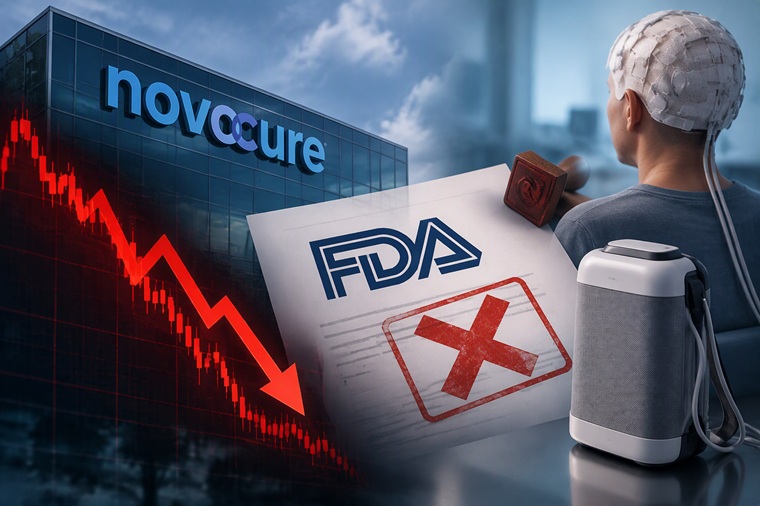
Novocure Stock Falls After FDA Rejects Optune Mya: Key Facts

A Not Approvable Letter for the Optune Mya PMA (brain metastases from non-small cell lung cancer after stereotactic radiation); the FDA cited uncertainty about the degree of clinical benefit and raised no safety concerns; Novocure plans to meet the FDA to see whether any option avoids new clinical studies; the pivotal METIS trial enrolled nearly 300 patients. The quarter (Q3 2026, October 29): revenue $193.4 million (+16%); gross margin 77%; net loss $10.4 million versus $37.3 million; adjusted EBITDA $15.7 million; cash and short-term investments $463.5 million; 5,260 active patients (+19%); guidance raised to $736–$743 million of revenue and $24–$34 million of adjusted EBITDA. The stock and my arithmetic: NVCR $11.67, down 6.86% on November 10 (52-week range $9.82–$21.45, about 46% below the high); guidance implies fourth-quarter revenue of about $185–$192 million, below Q3’s $193.4 million; Lua and Pax were 6% of Q3 revenue; net cash was about $267 million after $196 million of debt.
This post covers what Novocure’s SEC filings say, what the rejection does and does not change, why the stock fell despite a strong quarter and what to watch next. I also found inconsistencies in a widely read news article on the event, which I flag.
In plain terms, the FDA did not say the device is unsafe; it said the evidence did not convince it that the benefit was large or certain enough. The application rested on the pivotal METIS trial, which randomized nearly 300 patients with newly diagnosed brain metastases who had stereotactic radiosurgery, per MassDevice. I did not retrieve the trial data or the FDA’s letter, so I cannot say which results drew the concern. A PMA is the FDA’s most stringent device pathway (general knowledge).
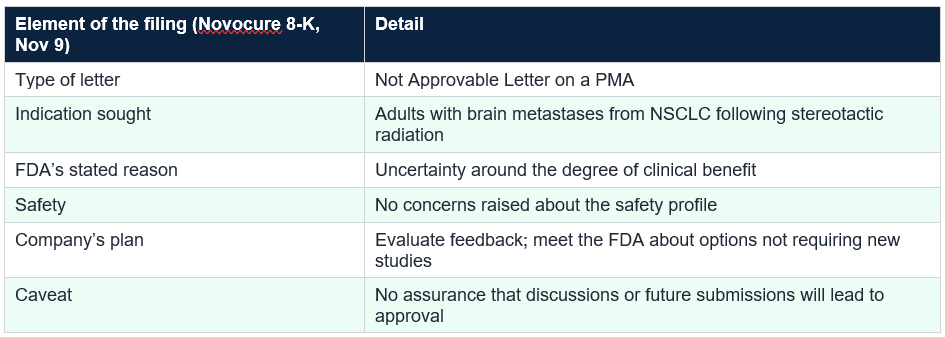
Novocure 8-K, Nov 9, 2026: Not Approvable Letter for Optune Mya; FDA cited uncertainty about the degree of clinical benefit; no safety concerns; plans to meet the FDA about options without additional clinical studies. NVCR $11.67 (−6.86%) on Nov 10; 52-week range $9.82–$21.45.
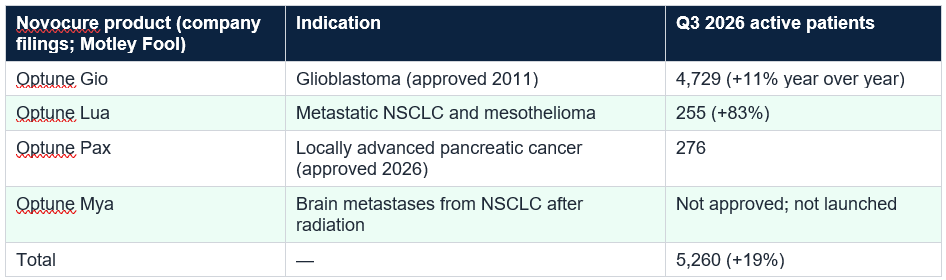
The target population is meaningful: researchers say about 10% of patients with non-small cell lung cancer have brain metastases at diagnosis and about 40% develop them later, per MassDevice. For a company whose revenue is concentrated in glioblastoma, a new indication was a way to broaden growth. I did not retrieve any estimate of Mya’s revenue potential, and Novocure’s guidance states Lua and Pax contributions of $30 million to $34 million for 2026 without a stated Mya contribution.
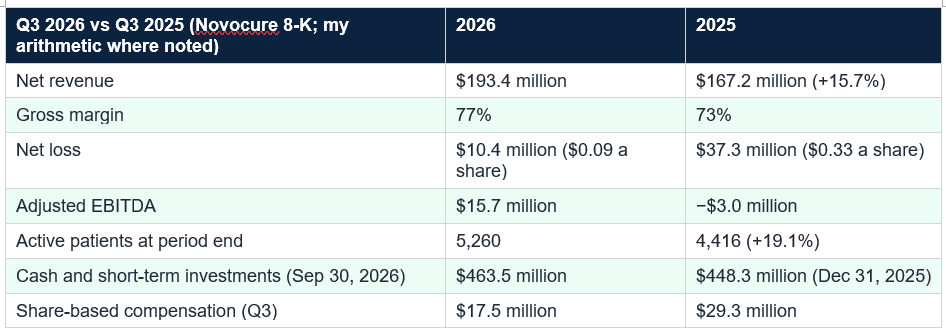
Management raised full-year guidance: net revenue to $736 million to $743 million from $710 million to $725 million, and adjusted EBITDA to $24 million to $34 million from $0 to $15 million, assuming mid-to-high single-digit Gio growth and $30 million to $34 million from Lua and Pax combined. The quarter included $4.4 million of one-time revenue benefits in the US and Germany tied to claims approval rates, so growth excluding them was about 13% in my arithmetic.
The Motley Fool added a concern I could not verify independently: investors worried about the timing of the Pax rollout, which coincides with the FDA’s late-August approval of Revolution Medicines’ Rasonque pill for stage 4 metastatic cancer. It calls Gio a maturing product (patients grew 11%) and Lua’s patient base small. So by the time the Mya letter arrived, the market had been asking where the next leg of growth would come from, and the rejection removed one answer. That framing is the market’s, not a finding.
The Motley Fool article I used contains statements that conflict with Novocure’s filings: it says shares fell on a trial that met its primary endpoint but missed key secondary endpoints (the announced news was an FDA letter), and that the stock ended the day less than 6% lower while its own quote shows −6.86% at 2:17 PM. Rely on the company filings and check current prices.
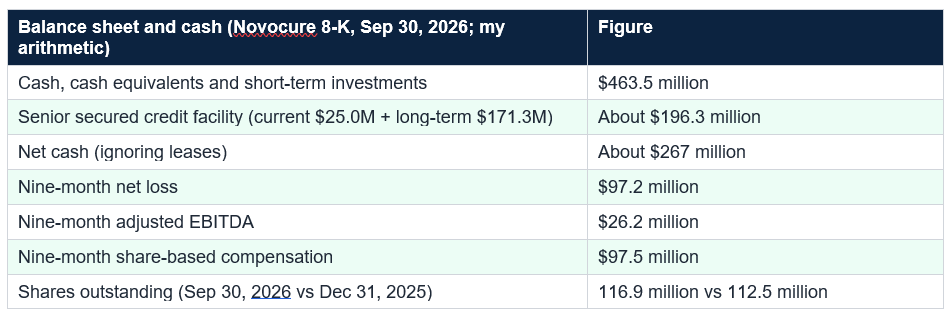
That cushion matters for a regulatory setback. A Not Approvable Letter does not itself consume cash; the risk is on the spending side, since another study would raise development costs, and R&D was already $58.1 million in the third quarter, about 30% of revenue. Share-based compensation is also large ($97.5 million over nine months), and shares outstanding rose to 116.9 million from 112.5 million.
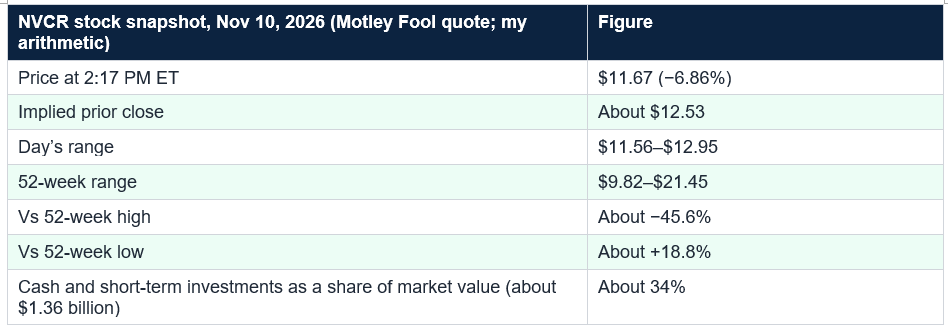
Valuation arithmetic like this is only a guide, since value depends on future cash flows, pipeline risk and competition. But it shows the market was not pricing a distressed company: much of the value sits in a business with record revenue, a large cash balance and positive adjusted EBITDA. The decline from $21.45 reflects a view that growth is slowing and that new indications are hard to win, and the Mya letter reinforces the second point.
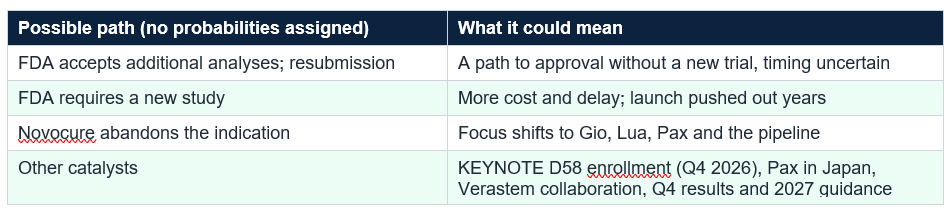
Other catalysts continue. The October release lists completing enrollment in the Phase 3 KEYNOTE D58 trial in newly diagnosed glioblastoma in the fourth quarter, Optune Pax’s approval in Japan, a trial collaboration with Verastem Oncology in pancreatic cancer and the continued rollout of Lua and Pax. Fourth-quarter results and 2027 guidance will show how much Gio is growing and how much Lua and Pax are adding, which will drive the business more than one letter.
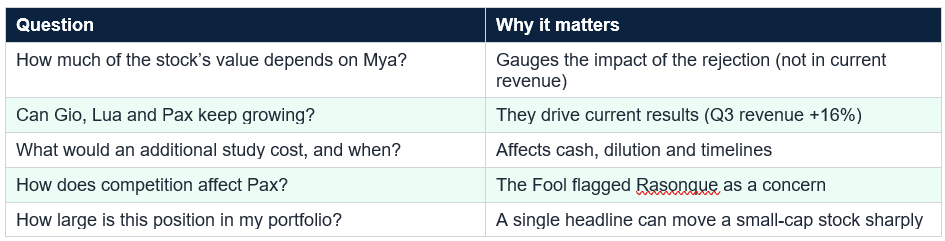
Useful questions include how much of the current value depends on Mya, how fast Gio, Lua and Pax can grow, what an additional study would cost and how competition might affect Pax. Also consider how much you can afford to lose and whether you are reacting to a headline. Remember the source too: the Fool states it recommends NovoCure while its article’s tone is cautious. This article does not recommend any action.
Before acting on any headline, read Novocure’s two 8-Ks (the November 9 letter and the October 29 results), then decide how much of your portfolio you are comfortable holding in a single regulated-device company. Common mistakes include assuming a Not Approvable Letter means the product is unsafe or finished, ignoring that Mya was not yet in revenue, treating a single article’s summary as fact when it conflicts with filings, reading a strong quarter and a falling stock as a contradiction instead of checking implied guidance and ignoring position size. Treatment choices belong with patients and their doctors.
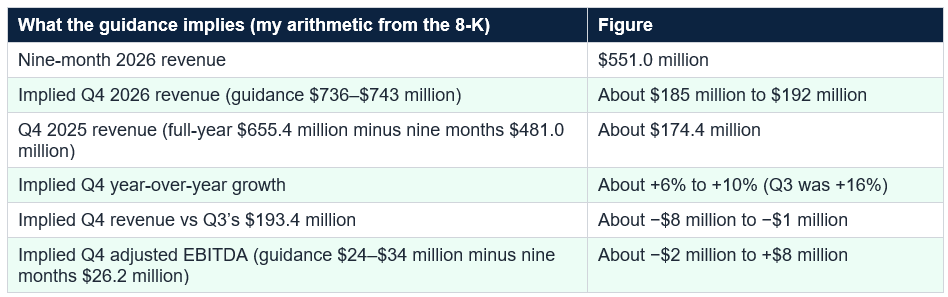
The sharper issue is growth. The new guidance implies fourth-quarter revenue of about $185 million to $192 million, slightly below the third quarter, Gio patients grew only 11% and Lua and Pax together were about 6% of revenue. Mya was one way to broaden growth, and its path is now uncertain. Watch the FDA meeting, the fourth-quarter report and 2027 guidance, and size any position accordingly.
On November 9, 2026, Novocure announced that it received a Not Approvable Letter from the FDA for its premarket approval (PMA) application for Optune Mya, a Tumor Treating Fields device for adults with brain metastases from non-small cell lung cancer following stereotactic radiation. The FDA said uncertainty about the degree of clinical benefit prevented approval and did not raise safety concerns, according to Novocure’s SEC filing.
Is Optune Mya dead?
Not necessarily, but the path is unclear. Novocure said it is evaluating the FDA’s feedback and plans to meet with the agency to see whether any option could support approval without additional clinical studies. It warned there is no assurance those discussions or any future submission will lead to approval. The outcome could range from a resubmission to a new study, and timing is uncertain.
Why did the stock fall if Novocure just raised guidance?
The rejection removed a growth catalyst, and the guidance itself implies fourth-quarter revenue of about $185 million to $192 million, slightly below the third quarter’s $193.4 million, in my arithmetic. The Motley Fool also pointed to concerns about competition for Optune Pax. Shares were down about 6.9% on November 10 at $11.67, and about 46% below the 52-week high.
How big is Optune Mya to Novocure’s business?
It is not in current results. Third-quarter revenue was $193.4 million, and Optune Lua and Optune Pax together contributed only $11.9 million, about 6% of the total, with Optune Gio for glioblastoma providing most of the rest. Mya’s launch had been planned for early next year, according to MedTech reporting, so the rejection affects future growth, not current revenue.
Is Novocure stock a buy after the FDA rejection?
I cannot say, and this article does not recommend buying or selling any stock. The company is close to profitable on an adjusted basis, has $463.5 million of cash and short-term investments and raised guidance, but it faces regulatory risk, competition and a net loss. A single regulatory setback can be volatile. This is general education, not personal investment or medical advice.
Table of Contents
- What Happened
- The Short Answer
- What the FDA Letter Says
- Why Mya Mattered
- The Quarter That Came First
- Why the Stock Fell Anyway
- The Balance Sheet
- Where the Stock Stands
- What Could Happen Next
- How to Think About It as an Investor
- Common Mistakes
- Conclusion
- Frequently Asked Questions
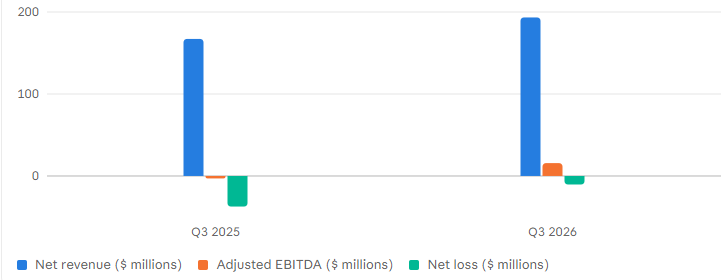
A strong quarter on the numbers: Novocure Q3 2026 vs. Q3 2025 ($ millions)
$ millions by Novocure Form 8-K, October 29, 2026 (SEC filing): revenue +16%, adjusted EBITDA swung to a profit, net loss narrowed; the same release raised 2026 guidance
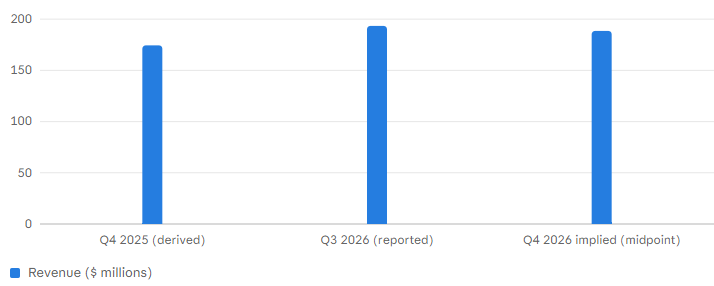
The catch inside the raised guidance: implied Q4 2026 revenue vs. Q3 2026 and Q4 2025 ($ millions)
$ millions by Author's arithmetic from Novocure's 8-K: 2026 guidance of $736-$743 million minus nine-month revenue of $551.0 million implies about $185-$192 million (midpoint $188.5 million), about 6-10% above Q4 2025 (full-year 2025 $655.4 million minus nine months $481.0 million); Q3 included a $4.4 million one-time benefit
What Happened
On Monday, November 9, 2026, Novocure, a Swiss-domiciled oncology device company listed on Nasdaq as NVCR, announced that the US Food and Drug Administration had issued a Not Approvable Letter for its premarket approval application for Optune Mya, a wearable Tumor Treating Fields device for adults whose non-small cell lung cancer has spread to the brain and who have had stereotactic radiation. The news arrived less than two weeks after Novocure reported third-quarter results and raised its 2026 guidance, which the market nonetheless met with a shrug.This post covers what Novocure’s SEC filings say, what the rejection does and does not change, why the stock fell despite a strong quarter and what to watch next. I also found inconsistencies in a widely read news article on the event, which I flag.
The Short Answer
The FDA said uncertainty about the degree of clinical benefit prevented approval of Optune Mya and raised no safety concerns. Novocure plans to meet the agency to see whether there is a path to approval without additional clinical studies, but cautioned there is no assurance. The stock fell about 6.9% to $11.67 on November 10. The setback affects future growth, not current revenue: Mya was not yet selling, Q3 revenue rose 16% to $193.4 million and full-year guidance was raised. But that guidance implies a slower fourth quarter, and the stock was already down after earnings.
What the FDA Letter Says
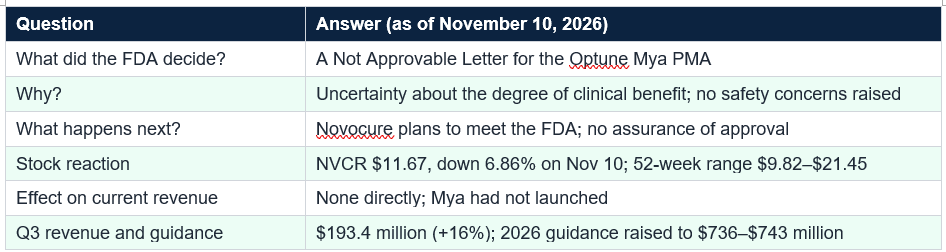
Novocure’s filing is short. It received a Not Approvable Letter in response to its PMA for Optune Mya for adults with brain metastases from non-small cell lung cancer following stereotactic radiation; the FDA determined that uncertainty around the degree of clinical benefit prevented approval and raised no concerns about the safety profile. Novocure said it is evaluating the feedback and plans to meet the FDA to see whether options exist to support approval without additional clinical studies, with no assurance that these discussions or any future submissions will lead to approval.In plain terms, the FDA did not say the device is unsafe; it said the evidence did not convince it that the benefit was large or certain enough. The application rested on the pivotal METIS trial, which randomized nearly 300 patients with newly diagnosed brain metastases who had stereotactic radiosurgery, per MassDevice. I did not retrieve the trial data or the FDA’s letter, so I cannot say which results drew the concern. A PMA is the FDA’s most stringent device pathway (general knowledge).
Novocure 8-K, Nov 9, 2026: Not Approvable Letter for Optune Mya; FDA cited uncertainty about the degree of clinical benefit; no safety concerns; plans to meet the FDA about options without additional clinical studies. NVCR $11.67 (−6.86%) on Nov 10; 52-week range $9.82–$21.45.
Why Mya Mattered
Optune Mya was meant to be Novocure’s fourth FDA-approved product, after Optune Gio for glioblastoma (approved 2011), Optune Lua for thoracic cancers including metastatic non-small cell lung cancer, and Optune Pax for locally advanced pancreatic cancer (approved earlier this year). All use Tumor Treating Fields, low-intensity electric fields that aim to disrupt cancer-cell division, alongside standard treatments. Novocure had planned a Mya launch for early next year, per MassDevice.The target population is meaningful: researchers say about 10% of patients with non-small cell lung cancer have brain metastases at diagnosis and about 40% develop them later, per MassDevice. For a company whose revenue is concentrated in glioblastoma, a new indication was a way to broaden growth. I did not retrieve any estimate of Mya’s revenue potential, and Novocure’s guidance states Lua and Pax contributions of $30 million to $34 million for 2026 without a stated Mya contribution.
The Quarter That Came First
Novocure reported third-quarter results on October 29, and on the numbers they were strong. Net revenue rose 16% to $193.4 million from $167.2 million, driven by 19% growth in active patients to 5,260; gross margin improved to 77% from 73%; the net loss narrowed to $10.4 million, or $0.09 a share, from $37.3 million; and adjusted EBITDA swung to a $15.7 million profit from a $3.0 million loss. Nine-month revenue was $551.0 million, up 14.6%, with adjusted EBITDA of $26.2 million.Management raised full-year guidance: net revenue to $736 million to $743 million from $710 million to $725 million, and adjusted EBITDA to $24 million to $34 million from $0 to $15 million, assuming mid-to-high single-digit Gio growth and $30 million to $34 million from Lua and Pax combined. The quarter included $4.4 million of one-time revenue benefits in the US and Germany tied to claims approval rates, so growth excluding them was about 13% in my arithmetic.
Why the Stock Fell Anyway
If the quarter was strong, why did the stock slide? The raised guidance holds a clue. With nine-month revenue of $551.0 million, the new range implies fourth-quarter revenue of about $185 million to $192 million in my arithmetic, below the third quarter’s $193.4 million (which included the $4.4 million one-time benefit) and only about 6% to 10% above the fourth quarter of 2025, versus 16% growth in the third. Implied fourth-quarter adjusted EBITDA is about −$2 million to +$8 million, against $15.7 million in the third.The Motley Fool added a concern I could not verify independently: investors worried about the timing of the Pax rollout, which coincides with the FDA’s late-August approval of Revolution Medicines’ Rasonque pill for stage 4 metastatic cancer. It calls Gio a maturing product (patients grew 11%) and Lua’s patient base small. So by the time the Mya letter arrived, the market had been asking where the next leg of growth would come from, and the rejection removed one answer. That framing is the market’s, not a finding.
The Motley Fool article I used contains statements that conflict with Novocure’s filings: it says shares fell on a trial that met its primary endpoint but missed key secondary endpoints (the announced news was an FDA letter), and that the stock ended the day less than 6% lower while its own quote shows −6.86% at 2:17 PM. Rely on the company filings and check current prices.
The Balance Sheet
Novocure’s finances are steadier than the headlines suggest. At September 30 it held $463.5 million of cash, cash equivalents and short-term investments, up from $448.3 million at the end of 2025 even after repaying $561 million of convertible notes in November 2025. Its senior secured credit facility stood at about $196.3 million ($25.0 million due within a year), so net cash was about $267 million in my arithmetic. It is profitable on an adjusted basis but still loses money after share-based compensation: the nine-month net loss was $97.2 million.That cushion matters for a regulatory setback. A Not Approvable Letter does not itself consume cash; the risk is on the spending side, since another study would raise development costs, and R&D was already $58.1 million in the third quarter, about 30% of revenue. Share-based compensation is also large ($97.5 million over nine months), and shares outstanding rose to 116.9 million from 112.5 million.
Where the Stock Stands
NVCR traded at $11.67 at 2:17 PM on November 10, down $0.86 or 6.86% from about $12.53, with a day’s range of $11.56 to $12.95 and a 52-week range of $9.82 to $21.45, per the Fool’s quote box: about 46% below the high and 19% above the low in my arithmetic. At roughly 116.9 million shares the market value is about $1.36 billion, so cash and short-term investments of $463.5 million equal about 34% of it, and net cash about 20%. The Fool’s market cap of about $1.46 billion matches the prior close.Valuation arithmetic like this is only a guide, since value depends on future cash flows, pipeline risk and competition. But it shows the market was not pricing a distressed company: much of the value sits in a business with record revenue, a large cash balance and positive adjusted EBITDA. The decline from $21.45 reflects a view that growth is slowing and that new indications are hard to win, and the Mya letter reinforces the second point.
What Could Happen Next
Novocure will meet the FDA to see whether options exist that would not require new clinical studies. I will not assign probabilities: the FDA could agree that additional analyses of existing data suffice and a resubmission could follow; it could ask for a new trial, which would take time and money; or the company could decide the indication is not worth pursuing. The timing of any meeting or decision is unknown, and there is no assurance of approval.Other catalysts continue. The October release lists completing enrollment in the Phase 3 KEYNOTE D58 trial in newly diagnosed glioblastoma in the fourth quarter, Optune Pax’s approval in Japan, a trial collaboration with Verastem Oncology in pancreatic cancer and the continued rollout of Lua and Pax. Fourth-quarter results and 2027 guidance will show how much Gio is growing and how much Lua and Pax are adding, which will drive the business more than one letter.
How to Think About It as an Investor
Regulatory decisions are a classic source of sudden moves in health care stocks, and a single letter can move a price by double digits in hours; the Fool noted shares initially fell at a double-digit rate before recovering some losses, though its end-of-day claim conflicts with its own quote. The lesson is about position sizing: if a stock’s story depends on one approval, a rejection can hurt badly. Novocure is more diversified, with three marketed products, but its growth story leans on new indications.Useful questions include how much of the current value depends on Mya, how fast Gio, Lua and Pax can grow, what an additional study would cost and how competition might affect Pax. Also consider how much you can afford to lose and whether you are reacting to a headline. Remember the source too: the Fool states it recommends NovoCure while its article’s tone is cautious. This article does not recommend any action.
Before acting on any headline, read Novocure’s two 8-Ks (the November 9 letter and the October 29 results), then decide how much of your portfolio you are comfortable holding in a single regulated-device company. Common mistakes include assuming a Not Approvable Letter means the product is unsafe or finished, ignoring that Mya was not yet in revenue, treating a single article’s summary as fact when it conflicts with filings, reading a strong quarter and a falling stock as a contradiction instead of checking implied guidance and ignoring position size. Treatment choices belong with patients and their doctors.
Conclusion
The FDA’s Not Approvable Letter for Optune Mya, announced November 9, says uncertainty about the degree of clinical benefit prevented approval, with no safety concerns, and Novocure plans to meet the agency to look for options that would not require new studies, with no assurance of approval. The stock fell 6.86% to $11.67 on November 10, about 46% below its 52-week high. But the rejection does not touch current results: Mya had not launched, Q3 revenue rose 16% to $193.4 million, adjusted EBITDA was $15.7 million, guidance was raised and the company holds $463.5 million of cash against about $196 million of debt.The sharper issue is growth. The new guidance implies fourth-quarter revenue of about $185 million to $192 million, slightly below the third quarter, Gio patients grew only 11% and Lua and Pax together were about 6% of revenue. Mya was one way to broaden growth, and its path is now uncertain. Watch the FDA meeting, the fourth-quarter report and 2027 guidance, and size any position accordingly.
Frequently Asked Questions
What did the FDA decide about Optune Mya?On November 9, 2026, Novocure announced that it received a Not Approvable Letter from the FDA for its premarket approval (PMA) application for Optune Mya, a Tumor Treating Fields device for adults with brain metastases from non-small cell lung cancer following stereotactic radiation. The FDA said uncertainty about the degree of clinical benefit prevented approval and did not raise safety concerns, according to Novocure’s SEC filing.
Is Optune Mya dead?
Not necessarily, but the path is unclear. Novocure said it is evaluating the FDA’s feedback and plans to meet with the agency to see whether any option could support approval without additional clinical studies. It warned there is no assurance those discussions or any future submission will lead to approval. The outcome could range from a resubmission to a new study, and timing is uncertain.
Why did the stock fall if Novocure just raised guidance?
The rejection removed a growth catalyst, and the guidance itself implies fourth-quarter revenue of about $185 million to $192 million, slightly below the third quarter’s $193.4 million, in my arithmetic. The Motley Fool also pointed to concerns about competition for Optune Pax. Shares were down about 6.9% on November 10 at $11.67, and about 46% below the 52-week high.
How big is Optune Mya to Novocure’s business?
It is not in current results. Third-quarter revenue was $193.4 million, and Optune Lua and Optune Pax together contributed only $11.9 million, about 6% of the total, with Optune Gio for glioblastoma providing most of the rest. Mya’s launch had been planned for early next year, according to MedTech reporting, so the rejection affects future growth, not current revenue.
Is Novocure stock a buy after the FDA rejection?
I cannot say, and this article does not recommend buying or selling any stock. The company is close to profitable on an adjusted basis, has $463.5 million of cash and short-term investments and raised guidance, but it faces regulatory risk, competition and a net loss. A single regulatory setback can be volatile. This is general education, not personal investment or medical advice.
0 Comments
Be the first to share your thoughts on this article.