
Investing
What Are Premium Bonds? The Basics, Odds and Prize Rate

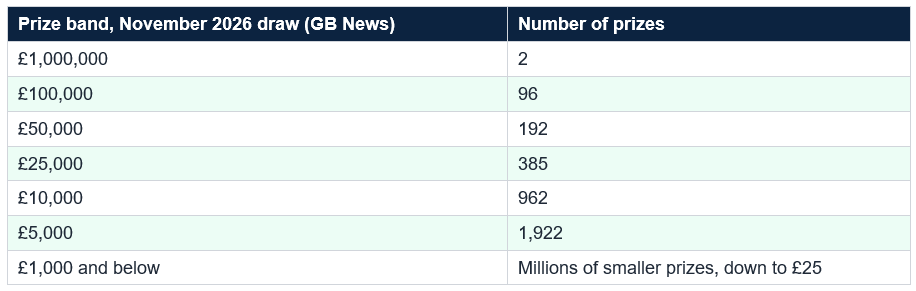
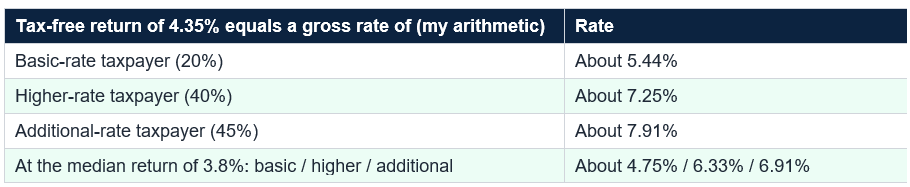
Prize fund rate 4.35% variable and odds 21,000 to 1 per £1 Bond a month, from the September 2026 draw (3.30% and 23,000 to 1 earlier in 2026); £25 minimum, £50,000 maximum; prizes £25 to £1 million, tax-free; about 22 million holders; the October draw paid about £498.4 million; the November draw had two £1 million prizes, 96 of £100,000, 192 of £50,000, 385 of £25,000, 962 of £10,000 and 1,922 of £5,000. What it means for you (my arithmetic): £50,000 gives about 2.4 prizes a month and a 91% chance of at least one each month; £1,000 gives about a 56% chance of no prize at all in a year and £5,000 about 6%; the 4.35% headline equals £2,175 on £50,000 but the median holder wins about £1,900 (3.8%); the chance of £1 million with £50,000 is about 1 in 1.37 million a month and 1 in 114,000 a year.Tax angle (my arithmetic): a 4.35% tax-free return equals a gross rate of about 5.44% for a basic-rate taxpayer, 7.25% for a higher-rate and 7.91% for an additional-rate taxpayer, if you won exactly the prize rate, which most people will not.
This guide gives you the basics: what Premium Bonds are, how the monthly draw works, what the headline prize fund rate of 4.35% does and does not mean, your odds at different holdings, how tax comes into it and who they might suit. I use NS&I’s own figures and recent news reports, and flag where they disagree.
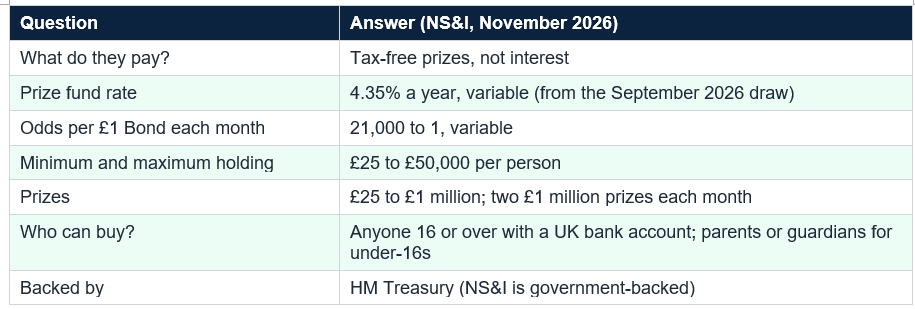
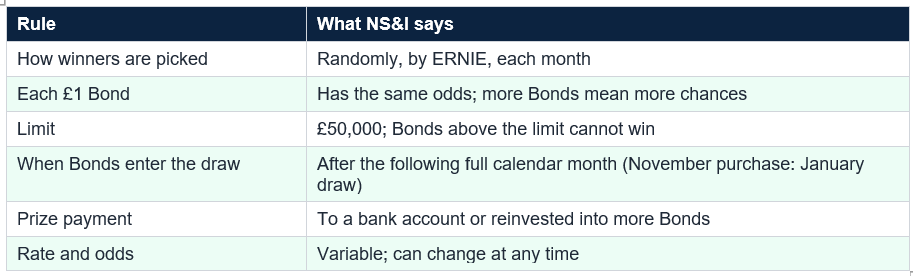
You can invest from £25 up to £50,000, the limit since 2015, and Bonds above £50,000 are not eligible for prizes. Anyone aged 16 or over with a UK bank account can buy, and parents or guardians can buy for children under 16, with the same limit for each child. New Bonds do not enter the draw immediately: buy any time in November and they join the January draw. Prizes can be paid to your bank account or reinvested into more Bonds, which are immediately eligible for the next draw within the limit.
NS&I, November 2026: prize fund rate 4.35% variable (from the September draw; 3.30% earlier in 2026); odds 21,000 to 1 per £1 Bond a month; £25 to £50,000; prizes £25 to £1 million, tax-free; about 22 million holders; the October draw paid about £498.4 million.
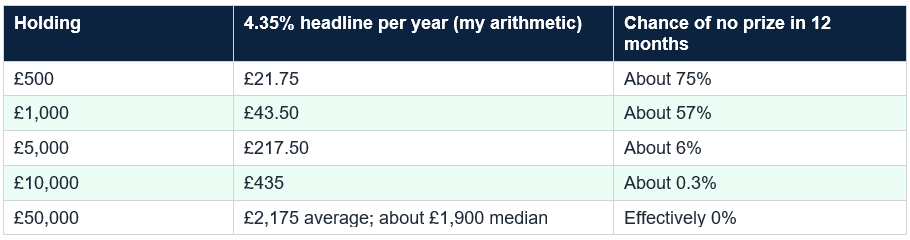
On the maximum £50,000, 4.35% works out at £2,175 a year, but the median holder wins about £1,900, or 3.8%, according to Wikipedia and a prize calculator. With a smaller holding the gap is wider: on £1,000 the headline implies £43.50 a year, but my arithmetic suggests a 56% chance of winning nothing at all in 12 months. The prize rate is an average that includes the rare jackpot winners, so the typical holder gets less.
The other 90% is mostly small prizes, with millions each month of £25, £50 and £100, which is where most winners find themselves. At the maximum holding, with about 28.6 prizes a year, if every prize were the lowest £25 you would win about £714 in my arithmetic, well below the £2,175 headline; the difference comes from larger prizes you win only sometimes.
The £1 million prize is a different matter. The estimated odds are about 1 in 68.56 billion per £1 Bond each month, so for £50,000 about 1 in 1.37 million a month, or 1 in 114,000 a year; holding £50,000 for 50 years, or 600 draws, gives only about a 1 in 2,300 chance. Yet winners exist: the smallest holding ever to win £1 million was £17. A jackpot is possible but should never be the reason you hold them.
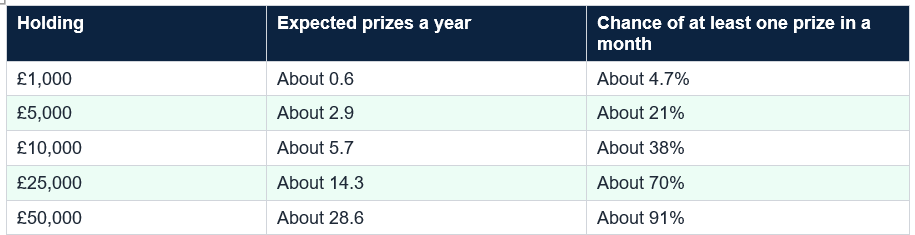
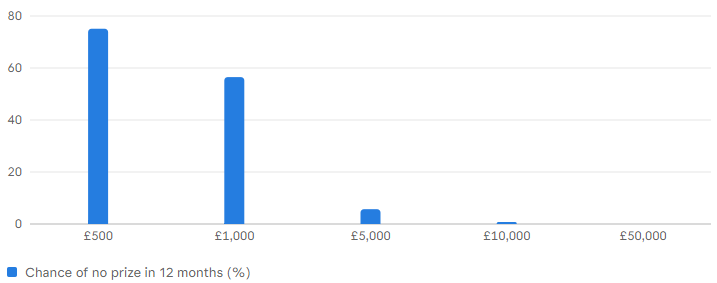
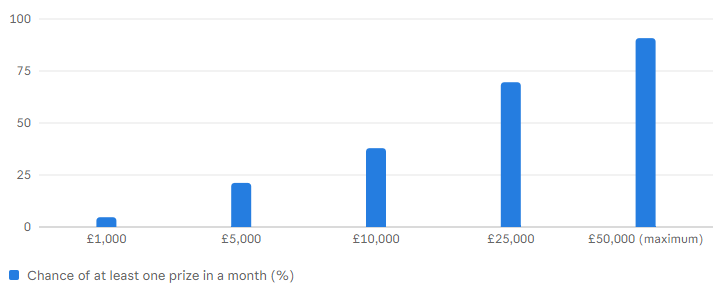
At 21,000 to 1 per £1 Bond, £50,000 gives about 2.4 prizes a month and a 91% chance of at least one; £1,000 has a 56.5% chance of no prize in 12 months. The £1 million odds are about 1 in 1.37 million a month for £50,000, or about 1 in 114,000 a year.
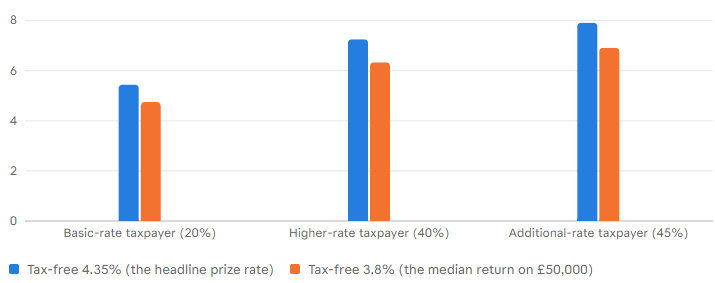
Two caveats. First, this assumes you win exactly the prize rate, which most people do not: at the median return of about 3.8% the equivalents would be about 4.75%, 6.33% and 6.91%. Second, compare with the best tax-free alternatives, particularly cash ISAs, which have a £20,000 annual allowance and may pay a fixed, known rate. I did not retrieve current ISA or easy-access rates, so I cannot say which is better today.
What they do not protect against is inflation, and the prize rate is variable. NS&I can and does change it: 3.30% with odds of 23,000 to 1 until the June 2026 draw, 3.80% for a time and 4.35% with 21,000 to 1 from the September draw, according to NS&I and others. If the rate falls, expected prizes fall too, and with no fixed interest you cannot plan on a particular amount. Safe capital and an uncertain return is the basic trade-off.
As a general observation, not advice, Premium Bonds tend to suit people who want secure savings with tax-free prizes, higher-rate and additional-rate taxpayers who have used their ISA allowance and people who enjoy the draw and can live with an uncertain return, and suit less well someone who needs a predictable income or would be upset by a year with no prizes. A good test is to compare your equivalent gross rate with the best alternatives and ask whether you would accept the median result.
Keep an eye on the prize rate, since it can change, and consider how Premium Bonds fit alongside your ISA and other savings. Avoid putting in money you may need within days, since purchases take time to join the draw and withdrawals take time. And be wary of scams: use NS&I’s official website and app, and never pay anyone who contacts you claiming you have won.
Work out your equivalent gross rate: divide 4.35% by one minus your tax rate (for example, 4.35 ÷ 0.6 = 7.25% for a higher-rate taxpayer), then compare it with the best taxable savings rate you can find.
But the 4.35% is not what you will earn. At £50,000 the average is £2,175 but the median holder wins about £1,900, and with £1,000 you have about a 56% chance of winning nothing in a year. A jackpot is possible, about 1 in 114,000 a year at the maximum, but not something to rely on. Compare the equivalent gross rate with the best alternatives, check NS&I’s latest rate and decide whether you are comfortable with an uncertain return for secure, tax-free prizes.
Premium Bonds are a savings product from NS&I (National Savings and Investments), which is backed by HM Treasury. They pay no interest. Instead, each £1 Bond is entered into a monthly prize draw for tax-free prizes from £25 to £1 million, funded by an annual prize fund rate, currently 4.35% and variable. Your original money is generally returned in full, though inflation can erode its value.
What are the odds of winning with Premium Bonds?
NS&I gives odds of 21,000 to 1 for each £1 Bond in a monthly draw, from the September 2026 draw, and the odds are variable. With the maximum £50,000 you would expect about 2.4 prizes a month, a roughly 91% chance of at least one prize in any month, though most prizes are the lowest £25. The chance of the £1 million prize for a £50,000 holding is about 1 in 1.37 million each month.
Is the 4.35% prize fund rate what I will earn?
No. It is the rate used to fund the draw, not a guaranteed or typical return. Because many prizes are small and a few are huge, most holders win less than the headline. At the maximum £50,000 the average is about £2,175 a year, but the median holder wins about £1,900, or 3.8%, according to one source, and smaller holders can easily win nothing in a year.
How much can I invest in Premium Bonds?
From £25 up to £50,000 in total per person. Anyone aged 16 or over with a UK bank account can buy, and parents or guardians can buy for children under 16, with the same £50,000 limit per child. Bonds above the limit are not eligible for prizes. Bonds bought in a month join the draw after the following full calendar month, so November purchases enter the January draw.
Are Premium Bonds right for me?
They can suit people who want capital security, like the idea of a draw and, especially, higher-rate or additional-rate taxpayers who value tax-free prizes. They are less suitable if you need a guaranteed income or return. It is worth comparing the equivalent gross rate with the best easy-access and cash ISA rates. This is general information, not personal financial advice.
Table of Contents
- Savings With a Twist
- The Short Answer
- How Premium Bonds Work
- The Prize Fund Rate Is Not Your Return
- What the Prizes Look Like
- Your Odds, in Plain Numbers
- The Tax Angle
- How Safe Are They?
- Pros, Cons and Who They Suit
- How to Buy and Use Them
- Common Mistakes
- Conclusion
- Frequently Asked Questions
Can you go a year with no prize? Chance of winning nothing, by holding (%)
% chance of no prize in 12 months by Author's probability calculation at NS&I's published odds of 21,000 to 1 per £1 Bond per month (from the September 2026 draw), assuming independent entries; an illustration, not a prediction
More Bonds, more chances: chance of at least one prize in a month, by holding (%)
% chance in a given month by Author's calculation at 21,000 to 1 per £1 Bond a month; about 2.4 prizes a month expected at £50,000, though most prizes are the lowest £25; matches the 91% figure from a prize calculator
The tax angle: the gross savings rate you would need to match a tax-free return (%)
Equivalent gross rate (%) by Author's arithmetic: gross equivalent = tax-free rate / (1 - tax rate); 4.35% is NS&I's prize rate; 3.8% is the median return for a £50,000 holder per Wikipedia and a prize calculator; ignores the personal savings allowance
Savings With a Twist
Premium Bonds have been part of British life since 1956, and most of us know the basic idea even if we cannot quite explain it. You hand over some money and, instead of earning interest, you get a chance each month to win a prize. Occasionally a winner bags £1 million, sometimes with a surprisingly small holding. It sounds a bit like a lottery and a bit like a savings account, which is why people are unsure what to make of it.This guide gives you the basics: what Premium Bonds are, how the monthly draw works, what the headline prize fund rate of 4.35% does and does not mean, your odds at different holdings, how tax comes into it and who they might suit. I use NS&I’s own figures and recent news reports, and flag where they disagree.
The Short Answer
Premium Bonds are a government-backed savings product from NS&I that pay no interest. Each £1 Bond is entered into a monthly draw for tax-free prizes from £25 to £1 million, funded by a variable prize fund rate, currently 4.35% a year. You can hold between £25 and £50,000, and each £1 Bond has odds of 21,000 to 1 of winning a prize in a given month. The 4.35% is not what you will earn: it is an average across everyone, skewed by big prizes, so many holders win less and some win nothing. They suit people who value security and tax-free prizes, especially higher-rate taxpayers.
How Premium Bonds Work
Premium Bonds do not pay interest. Instead, NS&I applies a prize fund rate to all the Bonds in the draw and pays the resulting fund out in tax-free prizes each month. Every £1 Bond has a number and the same odds of winning, and winning numbers are chosen at random by ERNIE, the Electronic Random Number Indicator Equipment, which has operated since 1957. If you hold £1,000, you hold 1,000 Bonds, and each is a separate entry.You can invest from £25 up to £50,000, the limit since 2015, and Bonds above £50,000 are not eligible for prizes. Anyone aged 16 or over with a UK bank account can buy, and parents or guardians can buy for children under 16, with the same limit for each child. New Bonds do not enter the draw immediately: buy any time in November and they join the January draw. Prizes can be paid to your bank account or reinvested into more Bonds, which are immediately eligible for the next draw within the limit.
NS&I, November 2026: prize fund rate 4.35% variable (from the September draw; 3.30% earlier in 2026); odds 21,000 to 1 per £1 Bond a month; £25 to £50,000; prizes £25 to £1 million, tax-free; about 22 million holders; the October draw paid about £498.4 million.
The Prize Fund Rate Is Not Your Return
The 4.35% looks like an interest rate, and many people read it that way. It is not: it is the rate used to work out the total prize fund, which is then spread very unevenly. The smallest prize is £25 and the largest £1 million, with only two of those a month, so a lot of prize money is tied up in rare big wins. As Ms Coles, quoted by GB News, put it, you might think average luck would win you the prize rate, but it does not.On the maximum £50,000, 4.35% works out at £2,175 a year, but the median holder wins about £1,900, or 3.8%, according to Wikipedia and a prize calculator. With a smaller holding the gap is wider: on £1,000 the headline implies £43.50 a year, but my arithmetic suggests a 56% chance of winning nothing at all in 12 months. The prize rate is an average that includes the rare jackpot winners, so the typical holder gets less.
What the Prizes Look Like
Each month NS&I pays out hundreds of millions of pounds. The October 2026 draw paid about £498.4 million, according to a prize calculator, and the November draw included two prizes of £1 million, 96 of £100,000, 192 of £50,000, 385 of £25,000, 962 of £10,000 and 1,922 of £5,000, per GB News. Those top six bands add up to about £50 million, roughly a tenth of a monthly fund, in line with the high-value tier being about 10% of the total. The November jackpot winners held £50,000 (Shropshire) and £30,000 (Outer London).The other 90% is mostly small prizes, with millions each month of £25, £50 and £100, which is where most winners find themselves. At the maximum holding, with about 28.6 prizes a year, if every prize were the lowest £25 you would win about £714 in my arithmetic, well below the £2,175 headline; the difference comes from larger prizes you win only sometimes.
Your Odds, in Plain Numbers
The odds are 21,000 to 1 for each £1 Bond each month, which sounds terrible until you remember how many Bonds you hold. With the maximum £50,000 you have 50,000 chances a month, so you would expect about 2.4 prizes a month, or about 28.6 a year, with about a 91% chance of at least one prize in any given month. With £5,000 the chance in a month is about 21%; with £1,000 about 4.7%, and over a year a £1,000 holder has about a 43.5% chance of winning something.The £1 million prize is a different matter. The estimated odds are about 1 in 68.56 billion per £1 Bond each month, so for £50,000 about 1 in 1.37 million a month, or 1 in 114,000 a year; holding £50,000 for 50 years, or 600 draws, gives only about a 1 in 2,300 chance. Yet winners exist: the smallest holding ever to win £1 million was £17. A jackpot is possible but should never be the reason you hold them.
At 21,000 to 1 per £1 Bond, £50,000 gives about 2.4 prizes a month and a 91% chance of at least one; £1,000 has a 56.5% chance of no prize in 12 months. The £1 million odds are about 1 in 1.37 million a month for £50,000, or about 1 in 114,000 a year.
The Tax Angle
Premium Bonds prizes are tax-free: no income tax or capital gains tax, and they do not use your personal savings allowance (general knowledge). That is the main attraction for higher-rate and additional-rate taxpayers, who have a smaller or no allowance on savings interest. To compare fairly, calculate the gross rate a taxable account would need to match a tax-free return: in my arithmetic, 4.35% tax-free is equivalent to about 5.44% gross for a basic-rate taxpayer, 7.25% for a higher-rate and 7.91% for an additional-rate taxpayer.Two caveats. First, this assumes you win exactly the prize rate, which most people do not: at the median return of about 3.8% the equivalents would be about 4.75%, 6.33% and 6.91%. Second, compare with the best tax-free alternatives, particularly cash ISAs, which have a £20,000 annual allowance and may pay a fixed, known rate. I did not retrieve current ISA or easy-access rates, so I cannot say which is better today.
How Safe Are They?
Premium Bonds are run by NS&I, which is backed by HM Treasury, so your capital is considered extremely safe (general knowledge). You can generally withdraw it to your bank account, which usually takes a few working days, though I did not retrieve NS&I’s withdrawal timings, and that accessibility is why many people use them for spare cash.What they do not protect against is inflation, and the prize rate is variable. NS&I can and does change it: 3.30% with odds of 23,000 to 1 until the June 2026 draw, 3.80% for a time and 4.35% with 21,000 to 1 from the September draw, according to NS&I and others. If the rate falls, expected prizes fall too, and with no fixed interest you cannot plan on a particular amount. Safe capital and an uncertain return is the basic trade-off.
Pros, Cons and Who They Suit
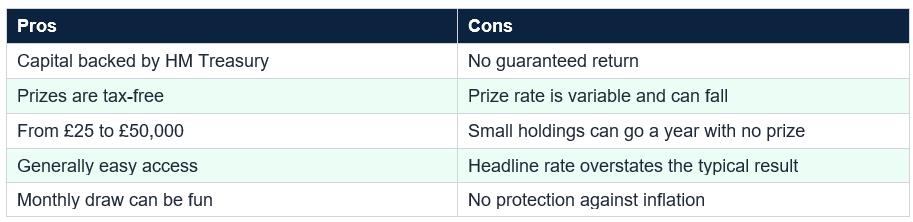
The pros are real: your capital is secure, prizes are tax-free, access is generally easy, you can start with £25, the £50,000 limit is generous and the monthly draw is enjoyable. So are the cons: no guaranteed return, small holders may win little or nothing for long stretches, the rate and odds are variable and the headline overstates the typical result. For a basic-rate taxpayer whose interest is covered by their savings allowance, the tax advantage matters less.As a general observation, not advice, Premium Bonds tend to suit people who want secure savings with tax-free prizes, higher-rate and additional-rate taxpayers who have used their ISA allowance and people who enjoy the draw and can live with an uncertain return, and suit less well someone who needs a predictable income or would be upset by a year with no prizes. A good test is to compare your equivalent gross rate with the best alternatives and ask whether you would accept the median result.
How to Buy and Use Them
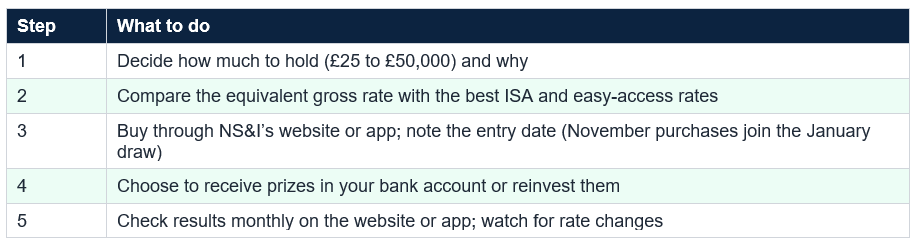
Buying is simple: online or through the NS&I app (and, in my general knowledge, by phone or post), using a UK bank account. Decide how much to hold, within £25 to £50,000, and whether to take prizes into your bank account or reinvest them; NS&I says that is the best way to avoid unclaimed prizes. Check results on the NS&I website or prize checker app, available from the third of the month.Keep an eye on the prize rate, since it can change, and consider how Premium Bonds fit alongside your ISA and other savings. Avoid putting in money you may need within days, since purchases take time to join the draw and withdrawals take time. And be wary of scams: use NS&I’s official website and app, and never pay anyone who contacts you claiming you have won.
Work out your equivalent gross rate: divide 4.35% by one minus your tax rate (for example, 4.35 ÷ 0.6 = 7.25% for a higher-rate taxpayer), then compare it with the best taxable savings rate you can find.
Common mistakes include treating the 4.35% as guaranteed interest, holding Premium Bonds for the jackpot, ignoring that small holdings can win nothing for a year, comparing the prize rate with taxable rates without adjusting for tax, putting in money you may need immediately and not claiming or reinvesting prizes. The only lever that improves your odds is holding more Bonds, up to the limit.
Conclusion
Premium Bonds are a simple idea with a few subtleties. Each £1 Bond enters a monthly draw for tax-free prizes from £25 to £1 million, funded by a prize fund rate that is currently 4.35% and variable, with odds of 21,000 to 1 per Bond. You can hold £25 to £50,000, your capital is backed by HM Treasury and prizes are tax-free, which matters most for higher-rate and additional-rate taxpayers, for whom a 4.35% tax-free return is equivalent to about 7.25% or 7.91% gross.But the 4.35% is not what you will earn. At £50,000 the average is £2,175 but the median holder wins about £1,900, and with £1,000 you have about a 56% chance of winning nothing in a year. A jackpot is possible, about 1 in 114,000 a year at the maximum, but not something to rely on. Compare the equivalent gross rate with the best alternatives, check NS&I’s latest rate and decide whether you are comfortable with an uncertain return for secure, tax-free prizes.
Frequently Asked Questions
What are Premium Bonds?Premium Bonds are a savings product from NS&I (National Savings and Investments), which is backed by HM Treasury. They pay no interest. Instead, each £1 Bond is entered into a monthly prize draw for tax-free prizes from £25 to £1 million, funded by an annual prize fund rate, currently 4.35% and variable. Your original money is generally returned in full, though inflation can erode its value.
What are the odds of winning with Premium Bonds?
NS&I gives odds of 21,000 to 1 for each £1 Bond in a monthly draw, from the September 2026 draw, and the odds are variable. With the maximum £50,000 you would expect about 2.4 prizes a month, a roughly 91% chance of at least one prize in any month, though most prizes are the lowest £25. The chance of the £1 million prize for a £50,000 holding is about 1 in 1.37 million each month.
Is the 4.35% prize fund rate what I will earn?
No. It is the rate used to fund the draw, not a guaranteed or typical return. Because many prizes are small and a few are huge, most holders win less than the headline. At the maximum £50,000 the average is about £2,175 a year, but the median holder wins about £1,900, or 3.8%, according to one source, and smaller holders can easily win nothing in a year.
How much can I invest in Premium Bonds?
From £25 up to £50,000 in total per person. Anyone aged 16 or over with a UK bank account can buy, and parents or guardians can buy for children under 16, with the same £50,000 limit per child. Bonds above the limit are not eligible for prizes. Bonds bought in a month join the draw after the following full calendar month, so November purchases enter the January draw.
Are Premium Bonds right for me?
They can suit people who want capital security, like the idea of a draw and, especially, higher-rate or additional-rate taxpayers who value tax-free prizes. They are less suitable if you need a guaranteed income or return. It is worth comparing the equivalent gross rate with the best easy-access and cash ISA rates. This is general information, not personal financial advice.
0 Comments
Be the first to share your thoughts on this article.