

Financial Literacy
Basic Financial Concepts Everyone Should Know

Key Statistics: Only 57% of US adults are financially literate (TIAA Institute / GFLEC 2024). 34% of Americans have no emergency savings (Bankrate 2026 Annual Emergency Savings Report). Average American credit card debt: $6,380 (TransUnion 2026). 78% of Americans live paycheck to paycheck at some point (LendingTree, 2025). Median US household net worth: $192,700 (Federal Reserve SCF 2022; last full survey). Rule of 72: divide 72 by your return rate to estimate how many years to double your money. At 7%: 10.3 years. A 3% annual inflation rate halves your purchasing power in approximately 24 years. Average US consumer debt (excluding mortgage): ~$21,800 (Experian 2025). Only 33% of high school students receive personal finance education (NGPF 2025). 84% of Americans have new financial resolutions for 2026 (Vanguard survey).
Financial literacy is not taught consistently in American schools. Only 33 percent of high school students receive any personal finance education, according to the Next Gen Personal Finance 2025 data. Yet the decisions that determine most people’s long-term financial outcomes — whether to invest, how to use credit, how much to save, how to protect income — are made in the first decade of adult life, often without the foundational knowledge to make them well.
This article changes that. It covers the 14 most important financial concepts in plain English, with concrete examples and the specific numbers that make them actionable. You do not need a finance degree. You need these 14 ideas, held clearly, and applied consistently.
Expenses are everything that flows out: rent or mortgage, groceries, utilities, subscriptions, insurance, transportation, dining, entertainment, debt payments, and taxes. Fixed expenses (rent, loan payments) are the same every month. Variable expenses (groceries, entertainment) fluctuate.
The gap between net income and total expenses is the most important number in your financial life. A positive gap means you have money available to save, invest, or repay debt. A negative gap means you are spending more than you earn, and debt is growing. Every other financial concept in this article is about how to make that gap positive and what to do with it once it is.
The 50/30/20 Rule: A simple starting framework: allocate 50% of net income to needs (rent, utilities, groceries), 30% to wants (dining, entertainment, subscriptions), and 20% to savings and debt repayment. It is not perfect for everyone, but it provides a sensible baseline for anyone starting to think about their income-expense gap.
The two most effective budgeting approaches in 2026 are zero-based budgeting (every dollar of income is allocated to a specific category until nothing is left unassigned) and envelope budgeting (a fixed cash or digital allocation for each spending category that cannot be exceeded).
Eighty-four percent of Americans have new financial resolutions for 2026, according to a Vanguard survey. The majority of financial resolutions fail not because of lack of willpower but because of the absence of a concrete system. A budget is that system. It converts financial intentions into scheduled, automated, tracked decisions.
Budgeting tools available in 2026 — including YNAB (You Need a Budget), Monarch Money, and built-in banking app features — have made real-time tracking easier than at any previous point. The barrier to budgeting is no longer technical. It is the willingness to know what your spending actually is.
The median US household net worth was $192,700, according to the Federal Reserve’s most recent Survey of Consumer Finances. But the mean (average) was $1,063,700 — distorted dramatically upward by the very wealthy. The median is the more meaningful number for most people: it tells you where the middle of the distribution actually is, not where the rich outliers pull it.
Net worth is a snapshot, not a verdict. A negative net worth at age 25 (common with student loans) is very different from a negative net worth at 55. The direction and rate of change matter as much as the current figure. Tracking net worth quarterly creates a simple, honest feedback mechanism: is the gap between assets and liabilities growing in the right direction?
The family home is a nuanced case. It is an asset in the accounting sense (it appears on the balance sheet as a positive item). But for most primary residence owners, it is also a liability in the cash flow sense: it generates monthly mortgage payments, property taxes, maintenance costs, and insurance premiums. The home may appreciate and build equity, but it does not generate income while you live in it. This is different from a rental property, which is both an asset and an income generator.
Wealthy people systematically acquire income-producing assets. They do not treat every financial decision as an opportunity for lifestyle consumption. The pattern documented in Wealthvieu’s April 2026 millionaire statistics research is consistent: 75 percent of American millionaires invested outside their company retirement plans — building asset portfolios that generate returns independent of their employment income.
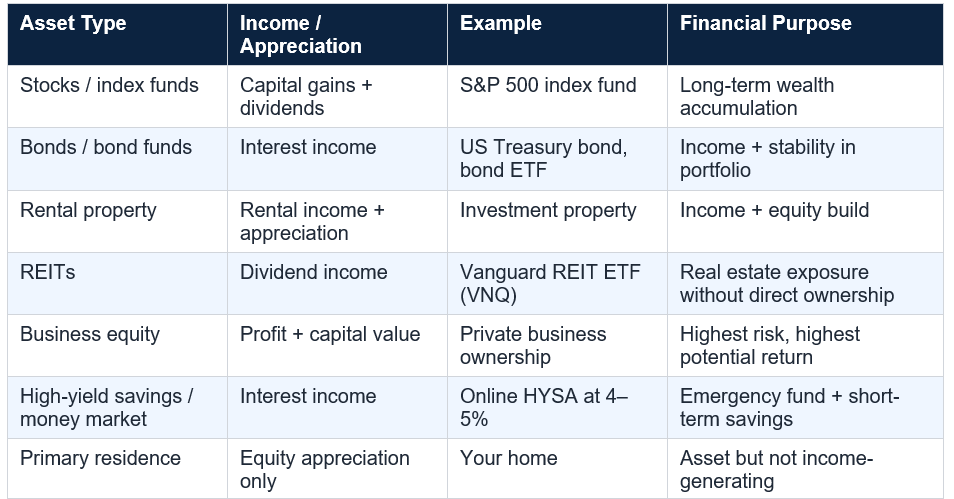
The standard recommendation is three to six months of essential living expenses held in a liquid, instantly accessible account — not invested in the stock market, not locked in a CD, not in a retirement account. The purpose is speed and certainty, not maximum return. A high-yield savings account earning 4 to 5 percent in 2026 provides meaningful return without sacrificing the instant access that an emergency fund requires.
The emergency fund is the financial equivalent of your immune system. You do not notice it when things are going well. You desperately need it the moment a crisis hits. Its presence means that an unexpected expense is an inconvenience. Its absence means the same expense becomes a debt spiral that can take years to unwind.
Building the emergency fund comes before aggressive investing, before extra mortgage payments, and before most other savings goals. It is the financial foundation that makes every other goal possible without catastrophic interruption.
Example: $10,000 invested at 7 percent annual return for 30 years. With simple interest, you earn $700 per year for 30 years: $21,000 in total interest, for a final balance of $31,000. With compound interest (reinvesting returns each year), the final balance is $76,123 — more than double the simple interest outcome, from the same initial investment and the same annual rate.
The Rule of 72 makes compound interest intuitive: divide 72 by your annual return rate to estimate the number of years required to double your investment. At 7 percent (a reasonable long-term equity market expectation): 72 ÷ 7 equals approximately 10.3 years to double. At 10 percent: 7.2 years. At 1 percent (a typical cash savings account): 72 years.
The enemy of compounding is interruption. Withdrawing investments early, selling in market downturns, or taking extended breaks from contributions all reduce the compounding effect. Consistent contributions over the longest possible time horizon are the mechanism by which compounding produces life-changing results. This is why starting at 22 rather than 32 produces dramatically different retirement outcomes, even with the same contribution amounts.
Inflation affects every financial decision. Money sitting in a checking account earning zero interest is actively losing purchasing power at the rate of inflation. A savings account earning 1 percent during a period of 3 percent inflation is also losing purchasing power in real terms. Only returns above the inflation rate represent genuine wealth growth.
This is the fundamental reason why simply saving money in cash is insufficient for long-term wealth building. The stock market’s historical real return (above inflation) has been approximately 7 percent per year over very long periods. A bond-heavy portfolio may just keep pace with inflation in some environments. Cash, over long periods, consistently loses purchasing power.
Inflation and the Fixed-Income Problem: Retirees on fixed pensions face a specific inflation risk: their income stays constant while prices rise. A pension of $3,000 per month in 2026 will have the purchasing power of approximately $2,220 per month in 2036 if inflation averages 3% annually. Investment portfolios that grow above inflation provide a hedge. Fixed cash savings do not.
The five factors that determine a FICO credit score are:
Bad debt is debt used to fund consumption that does not generate any future return. Credit card balances carrying 20 to 29 percent APR for purchases that have already been consumed. Car loans for vehicles that depreciate immediately. Buy-now-pay-later arrangements for discretionary items. The average American carries approximately $21,800 in non-mortgage consumer debt, according to Experian 2025 data. At 20 percent APR, the interest alone on $21,800 is approximately $4,360 per year — money that builds no asset and generates no return.
The practical implication: prioritise paying off high-interest consumer debt before investing, except for capturing an employer 401(k) match (which provides an immediate 50 to 100 percent return). A dollar that pays off a 20 percent credit card balance earns a guaranteed 20 percent return — better than almost any investment available.
Understanding your own risk tolerance is essential before investing. Risk tolerance is your ability to remain emotionally and financially stable when your portfolio declines in value — which it will, periodically, for any investor in growth assets. A portfolio that declines 20 percent in a market correction is not a failure if your time horizon is 30 years; it is a normal event in a long-term investment journey. But a portfolio decline that causes you to sell in panic is a problem regardless of its size, because selling at a low point converts a temporary paper loss into a real, permanent one.
Time Horizon and Risk: The longer your investment time horizon, the more short-term volatility you can afford to accept because you have time to recover from downturns. A 25-year-old with 40 years to retirement can accept a high allocation to stocks. A 62-year-old planning to retire in three years needs a more conservative allocation to avoid a market downturn eliminating retirement savings just before they are needed.
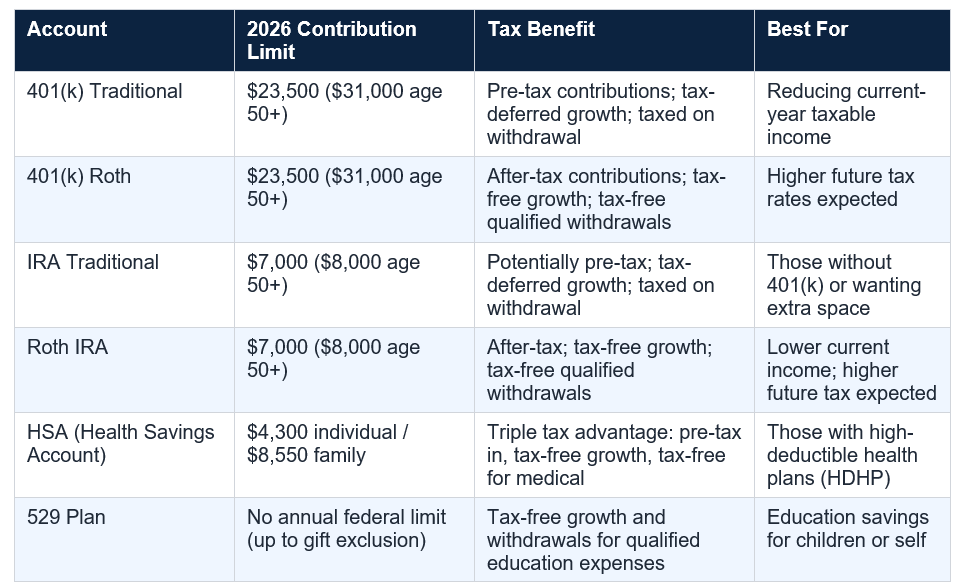
The employer 401(k) match is the closest thing to free money in personal finance. If your employer matches 50 cents for every dollar you contribute up to 6 percent of salary, and you do not contribute the full 6 percent, you are declining part of your compensation. Capturing the full employer match is always the first priority before any other savings goal.
The essential insurance types for most Americans:
This principle explains why it is financially better to receive a lump sum today rather than monthly instalments over five years (assuming the lump sum can be invested), why mortgages charge interest (the lender foregoes the use of their money for 30 years), why a government bond pays a coupon (the investor foregoes present use of their capital), and why paying off debt early saves money (you eliminate future interest payments).
In practical terms: if someone offers you $10,000 today or $10,000 in three years, taking the money today and investing it at 7 percent gives you $12,250 in three years. The present value of the future payment is less than $10,000 in today’s dollars because it cannot earn returns during the waiting period.
The time value of money is the mathematical foundation for compound interest, investment valuation, mortgage calculations, pension present values, and virtually every financial calculation in existence. Understanding it intuitively — time gives money more time to work — is sufficient for most personal finance decisions.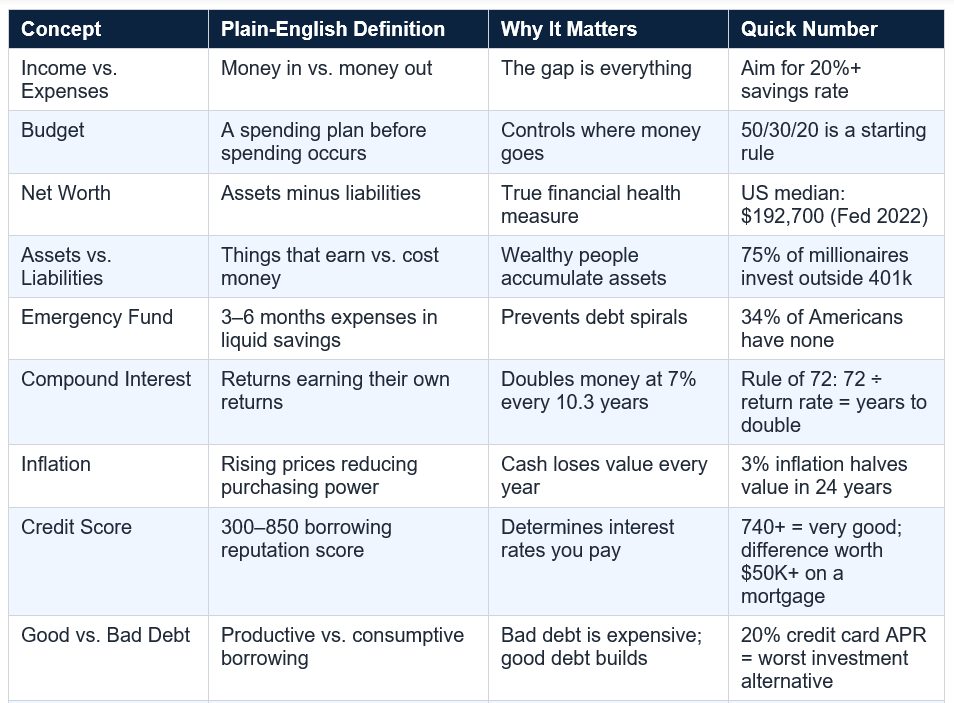
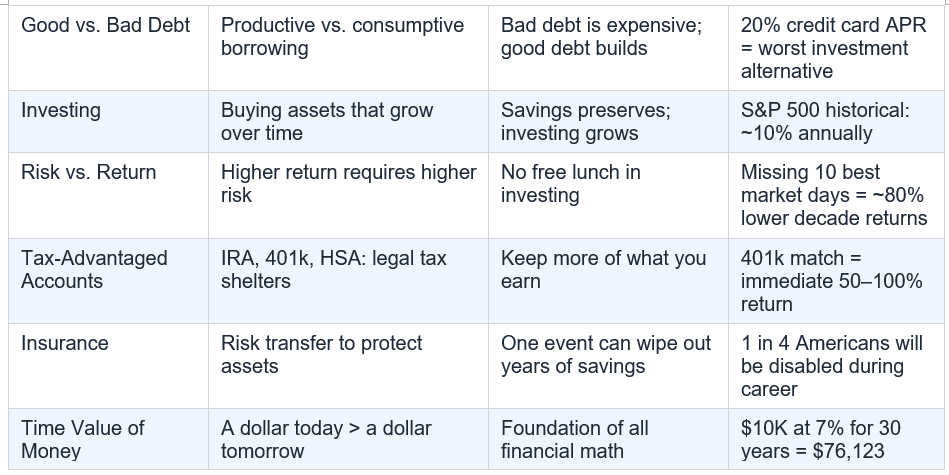
You do not need to master all 14 simultaneously. You need to apply them in sequence. Start by understanding your income-expense gap. Build a budget that makes the gap positive. Establish an emergency fund. Pay off high-interest debt. Begin investing in tax-advantaged accounts. Protect what you build with appropriate insurance. And allow compounding to work, consistently, over the longest possible time horizon.
Only 57 percent of US adults are financially literate. The adults who understand these concepts make materially better financial decisions, accumulate more wealth, carry less debt, and face fewer financial crises over their lifetimes. Financial literacy is not a luxury. It is the most practical and highest-return skill available to any person willing to invest the time to learn it. You have just invested that time.
The income-expense gap — the difference between what you earn and what you spend — is the foundation of all personal finance. Without a positive gap, no other financial goal (saving, investing, debt repayment) is possible. Understanding and widening this gap through budgeting and income growth is the prerequisite for every other concept in this article.
What is compound interest and how does it work?
Compound interest means earning returns on both your original principal and all previously earned returns. At 7% annual return, $10,000 grows to $76,123 after 30 years through compounding, compared to $31,000 through simple interest (returns on principal only). The Rule of 72 provides a quick estimate: divide 72 by your annual return rate to find the number of years required to double your money. At 7%: approximately 10.3 years.
How much should I have in an emergency fund?
The standard recommendation is three to six months of essential living expenses in a liquid, instantly accessible account such as a high-yield savings account. Essential expenses include rent/mortgage, utilities, groceries, insurance, minimum debt payments, and transportation. Emergency funds should not be invested in the stock market or locked in time-deposit accounts because the purpose is instant availability, not maximum return.
What is the difference between saving and investing?
Saving is preserving money with minimal risk, typically in a savings account or similar instrument. It protects purchasing power in the very short term but provides minimal growth over time. Investing is putting money into assets (stocks, bonds, real estate, funds) that are expected to grow in value over time. Saving is for money you may need within one to two years. Investing is for money you will not need for five or more years. Both are necessary; they serve different purposes.
What is a good credit score and how do I improve mine?
A credit score of 670 to 739 is considered good; 740 to 799 is very good; 800 and above is exceptional. The most effective ways to improve your score: pay every bill on time (35% of your score); keep credit card balances below 30% of your credit limit, ideally below 10% (30% of your score); avoid applying for multiple new credit accounts in a short period; and maintain older accounts to build credit history length. Consistent on-time payment over time is the single most effective improvement strategy.
What is the difference between a 401(k) and an IRA?
A 401(k) is an employer-sponsored retirement savings plan with a 2026 contribution limit of $23,500 ($31,000 for those 50 or older). Many employers match a portion of contributions. An IRA (Individual Retirement Account) is opened independently, with a 2026 limit of $7,000 ($8,000 for 50+). Both can be traditional (pre-tax contributions, taxed on withdrawal) or Roth (after-tax contributions, tax-free on qualified withdrawal). The 401(k) employer match should always be maximised first before funding an IRA.
Why does inflation matter for my finances?
Inflation means prices rise over time, so the same amount of money buys less. At 3% annual inflation, $100 today will have the purchasing power of approximately $74 in ten years and $55 in twenty years. Money sitting in a zero-interest checking account or a very low-rate savings account is actively losing purchasing power in real terms. Only investments that produce returns above the inflation rate — historically, a diversified stock portfolio — provide genuine real-terms wealth growth over the long term.
Table of Contents
- Why Financial Literacy Is the Most Valuable Skill You Can Learn
- Concept 1: Income, Expenses, and the Space Between Them
- Concept 2: Budgeting — Giving Every Dollar a Job
- Concept 3: Net Worth — Your Financial Scoreboard
- Concept 4: Assets vs. Liabilities — The Rich Get This Right
- Concept 5: The Emergency Fund — Your Financial Immune System
- Concept 6: Compound Interest — The Most Powerful Force in Finance
- Concept 7: Inflation — The Silent Wealth Thief
- Concept 8: Credit Scores — Your Financial Reputation Score
- Concept 9: Good Debt vs. Bad Debt
- Concept 10: Investing Basics — Making Your Money Work
- Concept 11: Risk and Return — The Fundamental Trade-Off
- Concept 12: Tax-Advantaged Accounts — Legal Ways to Keep More
- Concept 13: Insurance — Protecting What You Build
- Concept 14: The Time Value of Money
- The Financial Concepts Master Reference Table
- Conclusion: The Concepts That Change Everything
- Frequently Asked Questions
- External References and Further Reading
Why Financial Literacy Is the Most Valuable Skill You Can Learn
Only 57 percent of US adults are financially literate, according to the TIAA Institute and Global Financial Literacy Excellence Center’s 2024 survey. This means nearly half of American adults do not have a working understanding of the financial concepts that govern their money, their debt, their retirement, and their economic future. The consequences are not abstract: the same research finds that financially literate people are significantly more likely to have emergency savings, retirement accounts, and lower debt-to-income ratios than their peers.Financial literacy is not taught consistently in American schools. Only 33 percent of high school students receive any personal finance education, according to the Next Gen Personal Finance 2025 data. Yet the decisions that determine most people’s long-term financial outcomes — whether to invest, how to use credit, how much to save, how to protect income — are made in the first decade of adult life, often without the foundational knowledge to make them well.
This article changes that. It covers the 14 most important financial concepts in plain English, with concrete examples and the specific numbers that make them actionable. You do not need a finance degree. You need these 14 ideas, held clearly, and applied consistently.
Concept 1: Income, Expenses, and the Space Between Them
The most important number in personal finance is not what you earn. It is what you keep.
Income is the money that flows into your financial life: salary, wages, freelance payments, side-business revenue, rental income, dividends, and interest. Gross income is the total before taxes and deductions. Net income is what actually arrives in your bank account after tax, Social Security, Medicare, and any employer deductions. Most people spend based on gross income expectations and are perpetually surprised by what net income actually is.Expenses are everything that flows out: rent or mortgage, groceries, utilities, subscriptions, insurance, transportation, dining, entertainment, debt payments, and taxes. Fixed expenses (rent, loan payments) are the same every month. Variable expenses (groceries, entertainment) fluctuate.
The gap between net income and total expenses is the most important number in your financial life. A positive gap means you have money available to save, invest, or repay debt. A negative gap means you are spending more than you earn, and debt is growing. Every other financial concept in this article is about how to make that gap positive and what to do with it once it is.
The 50/30/20 Rule: A simple starting framework: allocate 50% of net income to needs (rent, utilities, groceries), 30% to wants (dining, entertainment, subscriptions), and 20% to savings and debt repayment. It is not perfect for everyone, but it provides a sensible baseline for anyone starting to think about their income-expense gap.
Concept 2: Budgeting — Giving Every Dollar a Job
A budget is not a restriction. It is a plan for your money to do what you want it to do.
A budget is a forward-looking plan that allocates income across expense and savings categories before spending occurs. Without a budget, spending decisions are made reactively — whatever seems affordable in the moment — which systematically under-allocates to savings and over-allocates to impulse and convenience spending.The two most effective budgeting approaches in 2026 are zero-based budgeting (every dollar of income is allocated to a specific category until nothing is left unassigned) and envelope budgeting (a fixed cash or digital allocation for each spending category that cannot be exceeded).
Eighty-four percent of Americans have new financial resolutions for 2026, according to a Vanguard survey. The majority of financial resolutions fail not because of lack of willpower but because of the absence of a concrete system. A budget is that system. It converts financial intentions into scheduled, automated, tracked decisions.
Budgeting tools available in 2026 — including YNAB (You Need a Budget), Monarch Money, and built-in banking app features — have made real-time tracking easier than at any previous point. The barrier to budgeting is no longer technical. It is the willingness to know what your spending actually is.
Concept 3: Net Worth — Your Financial Scoreboard
Net worth = Total Assets minus Total Liabilities. This single number is the truest measure of your financial position.
Net worth is the difference between everything you own (assets) and everything you owe (liabilities). A 35-year-old who owns a home worth $350,000, has a $280,000 mortgage, $50,000 in a 401(k), and $15,000 in car loans has a net worth of $350,000 + $50,000 minus $280,000 minus $15,000 equals $105,000.The median US household net worth was $192,700, according to the Federal Reserve’s most recent Survey of Consumer Finances. But the mean (average) was $1,063,700 — distorted dramatically upward by the very wealthy. The median is the more meaningful number for most people: it tells you where the middle of the distribution actually is, not where the rich outliers pull it.
Net worth is a snapshot, not a verdict. A negative net worth at age 25 (common with student loans) is very different from a negative net worth at 55. The direction and rate of change matter as much as the current figure. Tracking net worth quarterly creates a simple, honest feedback mechanism: is the gap between assets and liabilities growing in the right direction?
Concept 4: Assets vs. Liabilities — The Rich Get This Right
Assets put money into your pocket. Liabilities take money out of your pocket.
Robert Kiyosaki popularised this framing in Rich Dad Poor Dad, and while his broader investment philosophy is debated, this specific distinction is genuinely useful. An asset is something that generates income or appreciates in value over time: a rental property, a stock portfolio, a business, savings bonds, or a marketable skill. A liability is something that generates ongoing costs: a car loan, credit card debt, a depreciating asset financed with debt.The family home is a nuanced case. It is an asset in the accounting sense (it appears on the balance sheet as a positive item). But for most primary residence owners, it is also a liability in the cash flow sense: it generates monthly mortgage payments, property taxes, maintenance costs, and insurance premiums. The home may appreciate and build equity, but it does not generate income while you live in it. This is different from a rental property, which is both an asset and an income generator.
Wealthy people systematically acquire income-producing assets. They do not treat every financial decision as an opportunity for lifestyle consumption. The pattern documented in Wealthvieu’s April 2026 millionaire statistics research is consistent: 75 percent of American millionaires invested outside their company retirement plans — building asset portfolios that generate returns independent of their employment income.
Concept 5: The Emergency Fund — Your Financial Immune System
An emergency fund is not a savings goal. It is the prerequisite for every other financial goal.
Thirty-four percent of Americans have no emergency savings, according to Bankrate’s 2026 Annual Emergency Savings Report. This means more than one in three Americans is one car breakdown, one medical bill, or one job loss away from a financial crisis that forces them into high-interest debt. The emergency fund exists to prevent this.The standard recommendation is three to six months of essential living expenses held in a liquid, instantly accessible account — not invested in the stock market, not locked in a CD, not in a retirement account. The purpose is speed and certainty, not maximum return. A high-yield savings account earning 4 to 5 percent in 2026 provides meaningful return without sacrificing the instant access that an emergency fund requires.
The emergency fund is the financial equivalent of your immune system. You do not notice it when things are going well. You desperately need it the moment a crisis hits. Its presence means that an unexpected expense is an inconvenience. Its absence means the same expense becomes a debt spiral that can take years to unwind.
Building the emergency fund comes before aggressive investing, before extra mortgage payments, and before most other savings goals. It is the financial foundation that makes every other goal possible without catastrophic interruption.
Concept 6: Compound Interest — The Most Powerful Force in Finance
Compound interest is earning returns on your returns. Over time, it turns modest savings into substantial wealth.
Simple interest is calculated on your principal only. Compound interest is calculated on your principal plus all previously earned interest. The difference between these two calculations, over long time periods, is extraordinary.Example: $10,000 invested at 7 percent annual return for 30 years. With simple interest, you earn $700 per year for 30 years: $21,000 in total interest, for a final balance of $31,000. With compound interest (reinvesting returns each year), the final balance is $76,123 — more than double the simple interest outcome, from the same initial investment and the same annual rate.
The Rule of 72 makes compound interest intuitive: divide 72 by your annual return rate to estimate the number of years required to double your investment. At 7 percent (a reasonable long-term equity market expectation): 72 ÷ 7 equals approximately 10.3 years to double. At 10 percent: 7.2 years. At 1 percent (a typical cash savings account): 72 years.
The enemy of compounding is interruption. Withdrawing investments early, selling in market downturns, or taking extended breaks from contributions all reduce the compounding effect. Consistent contributions over the longest possible time horizon are the mechanism by which compounding produces life-changing results. This is why starting at 22 rather than 32 produces dramatically different retirement outcomes, even with the same contribution amounts.
Concept 7: Inflation — The Silent Wealth Thief
Inflation is the gradual reduction in the purchasing power of money over time. One dollar today will buy less in ten years.
The Consumer Price Index (CPI) measures the average change in prices for a basket of consumer goods and services. US CPI inflation was 3.3 percent in March 2026, above the Federal Reserve’s 2 percent long-term target. At 3 percent annual inflation, the purchasing power of $100 today falls to approximately $74 in ten years and $55 in twenty years.Inflation affects every financial decision. Money sitting in a checking account earning zero interest is actively losing purchasing power at the rate of inflation. A savings account earning 1 percent during a period of 3 percent inflation is also losing purchasing power in real terms. Only returns above the inflation rate represent genuine wealth growth.
This is the fundamental reason why simply saving money in cash is insufficient for long-term wealth building. The stock market’s historical real return (above inflation) has been approximately 7 percent per year over very long periods. A bond-heavy portfolio may just keep pace with inflation in some environments. Cash, over long periods, consistently loses purchasing power.
Inflation and the Fixed-Income Problem: Retirees on fixed pensions face a specific inflation risk: their income stays constant while prices rise. A pension of $3,000 per month in 2026 will have the purchasing power of approximately $2,220 per month in 2036 if inflation averages 3% annually. Investment portfolios that grow above inflation provide a hedge. Fixed cash savings do not.
Concept 8: Credit Scores — Your Financial Reputation Score
A credit score is a number between 300 and 850 that summarises your history of borrowing and repaying debt. It is used by lenders, landlords, and sometimes employers to assess financial trustworthiness.
The average American carries $6,380 in credit card debt, according to TransUnion’s 2026 data. The way that debt is managed — or mismanaged — directly determines your credit score, which in turn determines the interest rate you pay on mortgages, car loans, and other credit. The difference between a 620 credit score and a 750 credit score on a 30-year $300,000 mortgage can be $50,000 to $100,000 in total interest paid over the life of the loan.The five factors that determine a FICO credit score are:
- Payment history (35%): the single most important factor. Paying every bill on time, every time, is the most powerful thing you can do for your score.
- Credit utilisation (30%): how much of your available credit you are using. Staying below 30 percent of your credit limit is the general guideline; below 10 percent is optimal.
- Length of credit history (15%): how long your accounts have been open. Closing old accounts can hurt your score.
- New credit (10%): how many recent applications for new credit you have made. Multiple applications in a short period signal risk.
- Credit mix (10%): having a variety of credit types (credit card, mortgage, auto loan) demonstrates ability to manage different forms of credit.
Concept 9: Good Debt vs. Bad Debt
Not all debt is equal. Debt used to acquire appreciating assets or build income capacity is different from debt used to fund consumption.
Good debt, broadly, is debt that is used to acquire an asset that will grow in value or generate income greater than the cost of the debt itself. A mortgage on a home that appreciates; a student loan that enables a career commanding a salary well above the loan cost; a business loan that funds revenue-generating capacity. The debt has a productive purpose and a reasonable expectation of paying for itself through the return it enables.Bad debt is debt used to fund consumption that does not generate any future return. Credit card balances carrying 20 to 29 percent APR for purchases that have already been consumed. Car loans for vehicles that depreciate immediately. Buy-now-pay-later arrangements for discretionary items. The average American carries approximately $21,800 in non-mortgage consumer debt, according to Experian 2025 data. At 20 percent APR, the interest alone on $21,800 is approximately $4,360 per year — money that builds no asset and generates no return.
The practical implication: prioritise paying off high-interest consumer debt before investing, except for capturing an employer 401(k) match (which provides an immediate 50 to 100 percent return). A dollar that pays off a 20 percent credit card balance earns a guaranteed 20 percent return — better than almost any investment available.
Concept 10: Investing Basics — Making Your Money Work
Investing is the process of putting money into assets that are expected to generate returns over time. Saving preserves money. Investing grows it. The fundamental investing concepts every financially literate person should understand are:
Stocks
A share of stock is a proportional ownership stake in a publicly traded company. Stock prices reflect investor expectations about the company’s future earnings. Over long periods, a diversified portfolio of stocks has historically returned approximately 7 to 10 percent per year in nominal terms. Individual stocks carry significant risk; diversification reduces this risk.Bonds
A bond is a debt instrument: the investor lends money to a company or government, which promises to pay interest at regular intervals and return the principal at maturity. Bonds are generally less volatile than stocks but produce lower long-term returns. They provide stability in a diversified portfolio.Mutual Funds and ETFs
A mutual fund or exchange-traded fund (ETF) pools money from many investors to buy a diversified portfolio of securities. Index funds track a specific market index (like the S&P 500) at very low cost. For most individual investors, a portfolio of low-cost index funds provides the best risk-adjusted return available without requiring stock-picking expertise.Asset Allocation
Asset allocation is how you divide your portfolio among different asset classes — stocks, bonds, cash, real estate. The appropriate allocation depends on your time horizon, risk tolerance, and financial goals. A common starting framework: subtract your age from 110 to determine your approximate stock allocation (e.g., at age 30: 80 percent stocks, 20 percent bonds). More aggressive variations use 120 or 130 minus age.Concept 11: Risk and Return — The Fundamental Trade-Off
Higher potential returns always come with higher risk. There is no investment that offers exceptional returns with no risk.
Risk in investing means the possibility that an investment will not produce the expected return — or that it will lose value. Return is the gain or income generated by an investment. The risk-return trade-off is one of the most consistent relationships in all of finance: investors demand higher expected returns for bearing higher risk. This is why stocks historically return more than bonds, and bonds return more than cash.Understanding your own risk tolerance is essential before investing. Risk tolerance is your ability to remain emotionally and financially stable when your portfolio declines in value — which it will, periodically, for any investor in growth assets. A portfolio that declines 20 percent in a market correction is not a failure if your time horizon is 30 years; it is a normal event in a long-term investment journey. But a portfolio decline that causes you to sell in panic is a problem regardless of its size, because selling at a low point converts a temporary paper loss into a real, permanent one.
Time Horizon and Risk: The longer your investment time horizon, the more short-term volatility you can afford to accept because you have time to recover from downturns. A 25-year-old with 40 years to retirement can accept a high allocation to stocks. A 62-year-old planning to retire in three years needs a more conservative allocation to avoid a market downturn eliminating retirement savings just before they are needed.
Concept 12: Tax-Advantaged Accounts — Legal Ways to Keep More
Tax-advantaged accounts are one of the most powerful and underutilised tools in personal finance. They allow your investments to grow sheltered from tax, either now or in retirement.
The primary tax-advantaged accounts available to US individuals in 2026:The employer 401(k) match is the closest thing to free money in personal finance. If your employer matches 50 cents for every dollar you contribute up to 6 percent of salary, and you do not contribute the full 6 percent, you are declining part of your compensation. Capturing the full employer match is always the first priority before any other savings goal.
14. Concept 13: Insurance — Protecting What You Build
Insurance converts the risk of a catastrophic financial loss into a predictable, manageable cost.
Every financial plan that builds assets without protecting them is incomplete. One uninsured health crisis, disability, lawsuit, or natural disaster can eliminate years of careful wealth accumulation in a single event. Insurance is not an investment; it does not grow in value. It is a risk transfer mechanism: you pay a premium to shift the financial consequences of low-probability, high-impact events to an insurer.The essential insurance types for most Americans:
- Health insurance: medical costs are the leading cause of personal bankruptcy in the United States. Health insurance, whether employer-sponsored or purchased through the ACA marketplace, is non-negotiable for financial protection.
- Disability insurance: approximately one in four Americans will experience a disability that prevents work for 90 days or more during their career. Short-term disability (covering 3 to 6 months) and long-term disability (covering years or decades) protect income — the asset from which all other assets are built.
- Life insurance: for anyone with dependents who rely on their income, life insurance provides replacement income if they die. Term life insurance (a fixed death benefit for a fixed period) is generally the most cost-effective option for most families.
- Homeowners or renters insurance: protects the largest single asset most people own. Renters insurance is remarkably inexpensive and covers personal property and liability.
- Umbrella liability insurance: an affordable policy that provides additional liability coverage above the limits of home and auto policies, protecting accumulated assets from lawsuits.
15. Concept 14: The Time Value of Money
A dollar today is worth more than a dollar tomorrow. This is the foundational principle of all of finance.
The time value of money reflects the fact that money available now can be invested and earn a return, making it worth more than the same nominal amount received in the future. Equivalently, money received in the future is worth less than money received today, because it has not had time to earn returns.This principle explains why it is financially better to receive a lump sum today rather than monthly instalments over five years (assuming the lump sum can be invested), why mortgages charge interest (the lender foregoes the use of their money for 30 years), why a government bond pays a coupon (the investor foregoes present use of their capital), and why paying off debt early saves money (you eliminate future interest payments).
In practical terms: if someone offers you $10,000 today or $10,000 in three years, taking the money today and investing it at 7 percent gives you $12,250 in three years. The present value of the future payment is less than $10,000 in today’s dollars because it cannot earn returns during the waiting period.
The time value of money is the mathematical foundation for compound interest, investment valuation, mortgage calculations, pension present values, and virtually every financial calculation in existence. Understanding it intuitively — time gives money more time to work — is sufficient for most personal finance decisions.
16. The Financial Concepts Master Reference Table
Conclusion: The Concepts That Change Everything
Financial literacy is not complicated. It is simply knowledge that most of us were never systematically taught. The 14 concepts in this article — income gaps, budgeting, net worth, assets, emergency funds, compound interest, inflation, credit scores, debt, investing, risk, tax efficiency, insurance, and time value of money — are the complete framework for making confident financial decisions.You do not need to master all 14 simultaneously. You need to apply them in sequence. Start by understanding your income-expense gap. Build a budget that makes the gap positive. Establish an emergency fund. Pay off high-interest debt. Begin investing in tax-advantaged accounts. Protect what you build with appropriate insurance. And allow compounding to work, consistently, over the longest possible time horizon.
Only 57 percent of US adults are financially literate. The adults who understand these concepts make materially better financial decisions, accumulate more wealth, carry less debt, and face fewer financial crises over their lifetimes. Financial literacy is not a luxury. It is the most practical and highest-return skill available to any person willing to invest the time to learn it. You have just invested that time.
Frequently Asked Questions
What is the most important financial concept to understand first?The income-expense gap — the difference between what you earn and what you spend — is the foundation of all personal finance. Without a positive gap, no other financial goal (saving, investing, debt repayment) is possible. Understanding and widening this gap through budgeting and income growth is the prerequisite for every other concept in this article.
What is compound interest and how does it work?
Compound interest means earning returns on both your original principal and all previously earned returns. At 7% annual return, $10,000 grows to $76,123 after 30 years through compounding, compared to $31,000 through simple interest (returns on principal only). The Rule of 72 provides a quick estimate: divide 72 by your annual return rate to find the number of years required to double your money. At 7%: approximately 10.3 years.
How much should I have in an emergency fund?
The standard recommendation is three to six months of essential living expenses in a liquid, instantly accessible account such as a high-yield savings account. Essential expenses include rent/mortgage, utilities, groceries, insurance, minimum debt payments, and transportation. Emergency funds should not be invested in the stock market or locked in time-deposit accounts because the purpose is instant availability, not maximum return.
What is the difference between saving and investing?
Saving is preserving money with minimal risk, typically in a savings account or similar instrument. It protects purchasing power in the very short term but provides minimal growth over time. Investing is putting money into assets (stocks, bonds, real estate, funds) that are expected to grow in value over time. Saving is for money you may need within one to two years. Investing is for money you will not need for five or more years. Both are necessary; they serve different purposes.
What is a good credit score and how do I improve mine?
A credit score of 670 to 739 is considered good; 740 to 799 is very good; 800 and above is exceptional. The most effective ways to improve your score: pay every bill on time (35% of your score); keep credit card balances below 30% of your credit limit, ideally below 10% (30% of your score); avoid applying for multiple new credit accounts in a short period; and maintain older accounts to build credit history length. Consistent on-time payment over time is the single most effective improvement strategy.
What is the difference between a 401(k) and an IRA?
A 401(k) is an employer-sponsored retirement savings plan with a 2026 contribution limit of $23,500 ($31,000 for those 50 or older). Many employers match a portion of contributions. An IRA (Individual Retirement Account) is opened independently, with a 2026 limit of $7,000 ($8,000 for 50+). Both can be traditional (pre-tax contributions, taxed on withdrawal) or Roth (after-tax contributions, tax-free on qualified withdrawal). The 401(k) employer match should always be maximised first before funding an IRA.
Why does inflation matter for my finances?
Inflation means prices rise over time, so the same amount of money buys less. At 3% annual inflation, $100 today will have the purchasing power of approximately $74 in ten years and $55 in twenty years. Money sitting in a zero-interest checking account or a very low-rate savings account is actively losing purchasing power in real terms. Only investments that produce returns above the inflation rate — historically, a diversified stock portfolio — provide genuine real-terms wealth growth over the long term.
0 Comments
Be the first to share your thoughts on this article.